Pattern recognition Geometry Worksheets for Ages 3-4
3 filtered results
-
From - To
Discover our Pattern Recognition Geometry Worksheets for ages 3-4 at Kids Academy. Designed to enhance your child’s early cognitive development, these fun and engaging activities will captivate young learners. Our worksheets encourage children to recognize and create patterns using various shapes, fostering essential problem-solving and analytical skills. Vibrant and interactive, they promote hands-on learning while building a strong foundation in geometry. Perfect for at-home practice or classroom use, these worksheets aim to make learning enjoyable and effective. Help your child identify, organize, and understand the basics of geometry with our expertly crafted worksheets. Start their educational journey today!
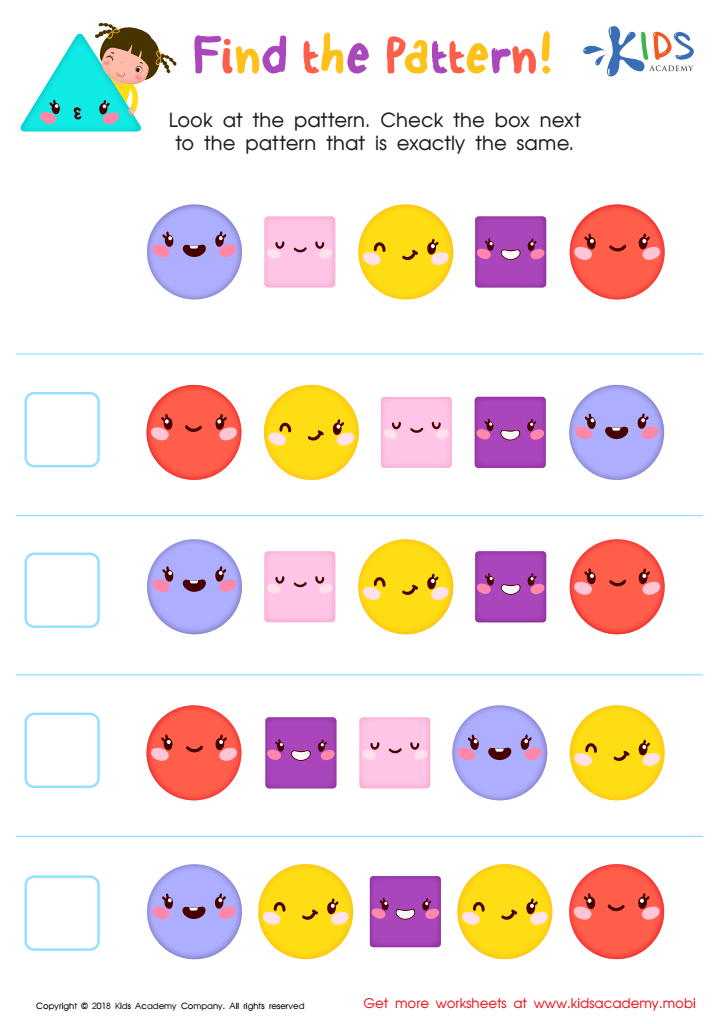
Find the Pattern Worksheet
 Assign to My Students











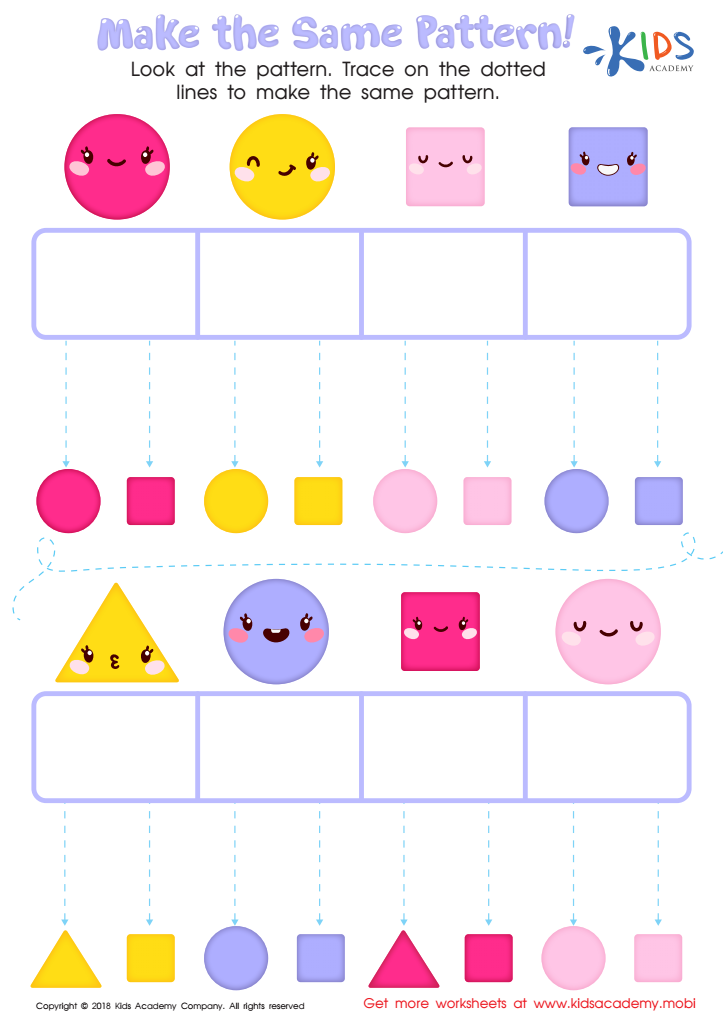
Make the Same Pattern Worksheet
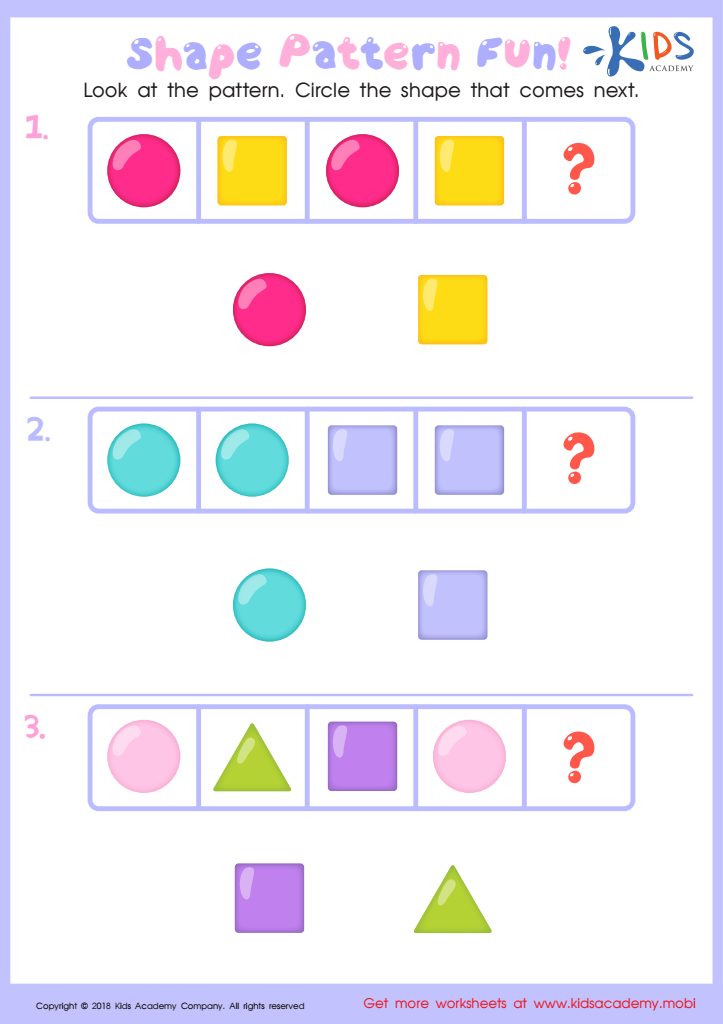
Shape Pattern Fun Worksheet








Pattern recognition and geometry are foundational skills in early childhood education that play a crucial role in cognitive development for ages 3-4. Understanding patterns helps children recognize and predict regularities in their world, which enhances their logical thinking and problem-solving abilities. These skills are vital for later success in mathematics, reading, and science.
Practicing pattern recognition helps young children to sharpen their memory and attention to detail. For example, identifying sequences such as red-blue-red-blue teaches the child how to anticipate what comes next and reinforces their ability to categorize and sequence information. These abilities are not only crucial for future academic tasks but also for everyday activities, such as following a routine or organizing their thoughts.
Geometry introduces basic concepts such as shape, size, and spatial relationships. When children learn to identify and manipulate shapes like circles, squares, and triangles, they are developing their spatial awareness. These skills are the building blocks for understanding more complex geometric concepts and aid in the development of fine motor skills.
Therefore, parental and educator involvement in pattern recognition and geometry at an early age fosters a strong foundation for lifelong learning. Engaging children in playful and educational activities that involve these concepts can significantly enhance their intellectual growth and prepare them for future academic challenges.








