Basic Math Skills Numbers Worksheets for Ages 3-4 - Page 2
25 filtered results
-
From - To
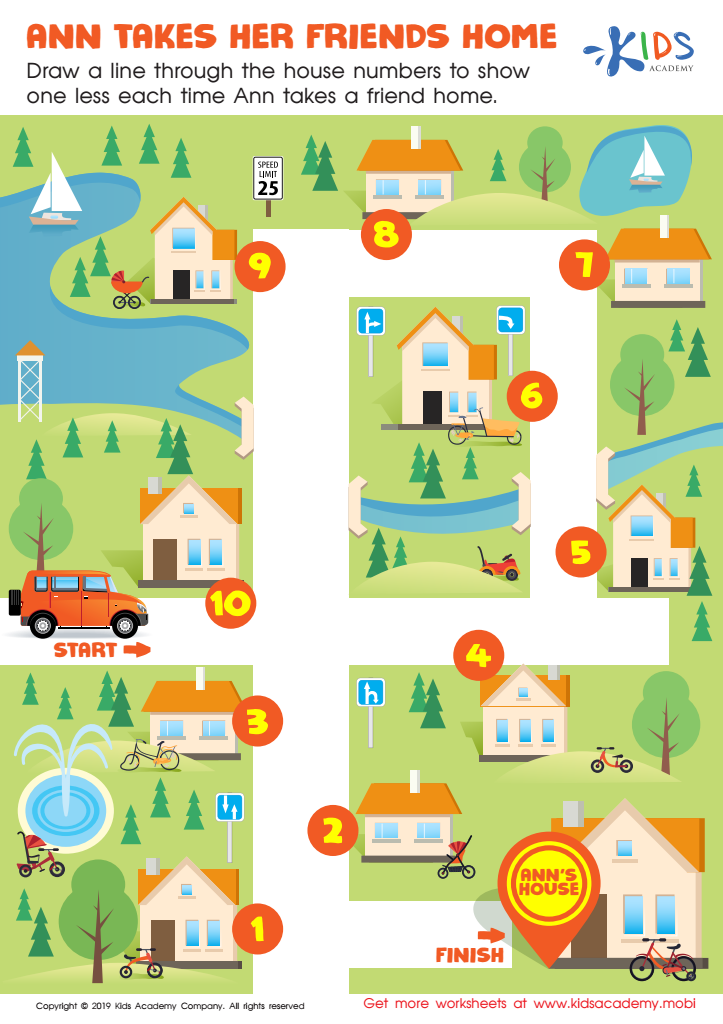
Ann Takes her Friends Home Worksheet
 Assign to My Students







Parents and teachers should prioritize basic math skills for children aged 3-4 because these early learning experiences form the foundation for future academic success. At this age, children are naturally curious and eager to learn, making it an ideal time to introduce fundamental concepts such as counting, number recognition, and simple addition and subtraction through engaging play.
Mastery of basic math skills enhances cognitive development and critical thinking. As children explore numbers, they learn to categorize, compare, and understand relationships between quantities. These skills promote problem-solving abilities essential not just in math, but across all areas of learning.
Furthermore, basic math is linked to daily life skills. Recognizing numbers and understanding simple concepts can help children with activities like sharing toys, measuring ingredients in cooking, or even concepts of time when involved in daily routines.
Early exposure to math also reduces anxiety around the subject later in life. When children feel confident in their math abilities, they are more likely to engage and participate in further learning opportunities.
In essence, engaging young children with basic math not only nurtures essential skills but also fosters a positive attitude towards learning, setting the stage for lifelong educational success.








