Fruit identification Numbers Worksheets for Ages 3-4
3 filtered results
-
From - To
Help your little ones master number recognition and counting with our engaging "Fruit Identification Numbers Worksheets for Ages 3-4." Designed specifically for preschoolers, these printable worksheets combine colorful fruit illustrations with fun number exercises. Children will delight in identifying and counting their favorite fruits while developing important early math skills. Perfect for home or classroom use, these worksheets foster learning through play, enhancing your child’s ability to recognize numbers and practice counting in a joyful and interactive way. Give your child a head start in mathematics with these charming, educational activities today!
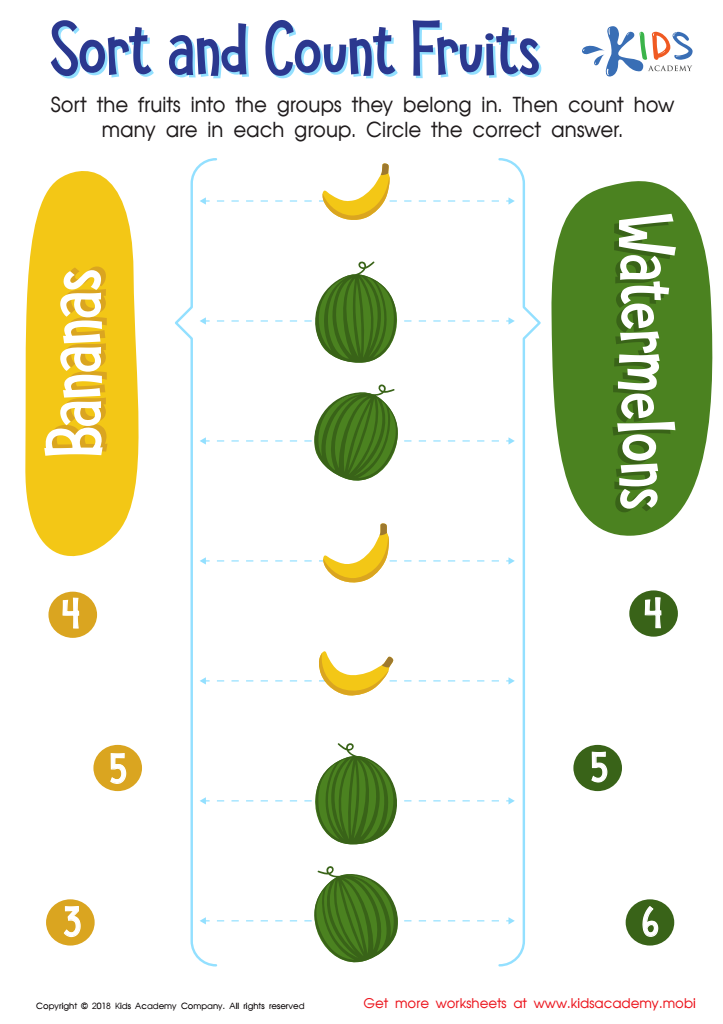
Sort and Count Fruits Worksheet
 Assign to My Students
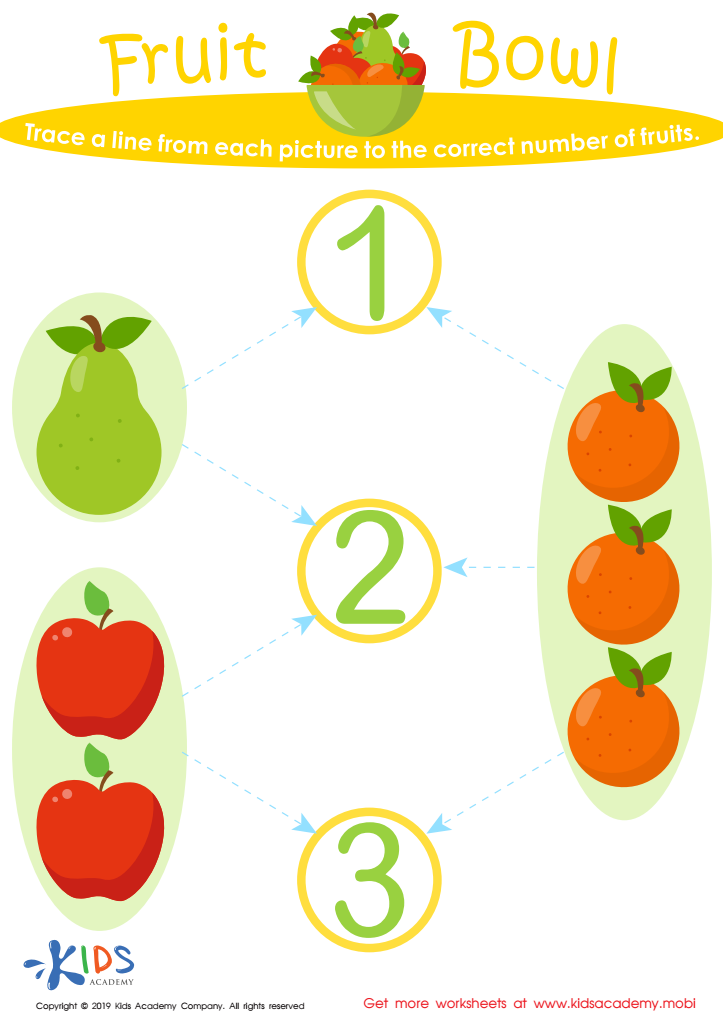
Fruit Bowl Worksheet
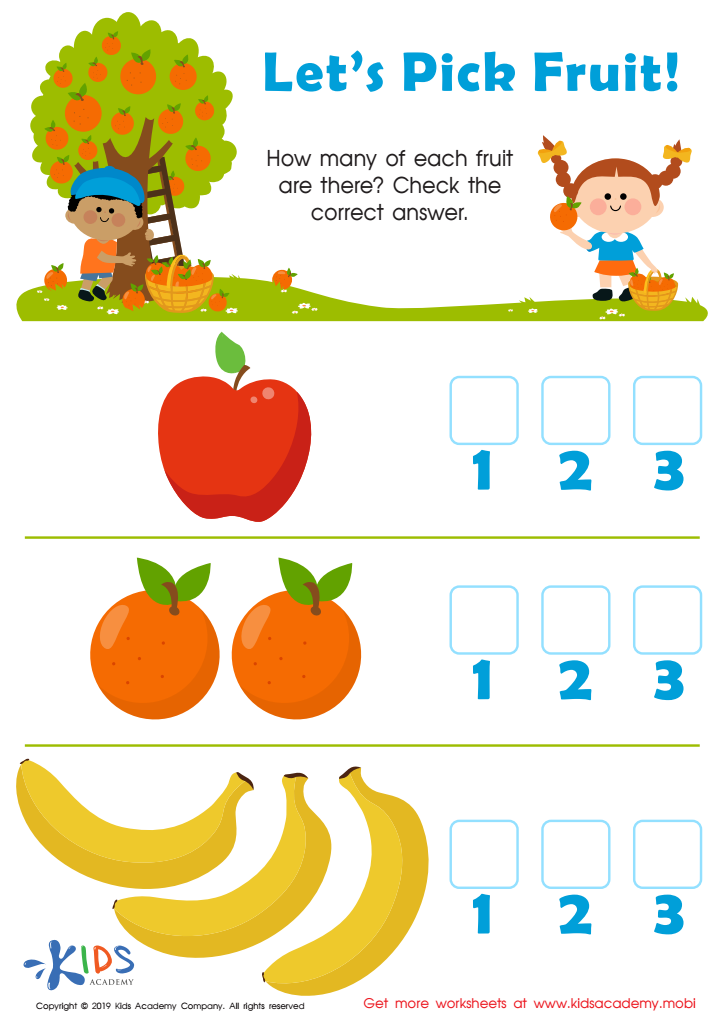
Let's Pick Fruit Worksheet








Parents and teachers should care about fruit identification for children aged 3-4 because it fosters early learning in several vital areas of development. At this age, children are rapidly expanding their language skills, and discussing various fruits helps enrich their vocabulary with new words and descriptors like color, size, and taste. This practice also stimulates cognitive development as children learn to categorize and differentiate between different types of fruit.
Introducing fruit identification also has health benefits. Early exposure to a variety of fruits can encourage healthy eating habits. When children are familiar with different fruits, they are more likely to try and enjoy them, setting up a foundation for a balanced diet as they grow.
Moreover, activities that involve sorting and identifying fruits can enhance fine motor skills. For instance, picking up and handling small fruits like berries develops dexterity and hand-eye coordination. Additionally, counting fruit pieces also incorporates an element of basic math, which is essential for early numeracy skills.
Lastly, incorporating fruit identification into learning can make lessons more engaging. Through fun and interactive activities like games or hands-on exploration, children are more likely to stay interested and retain the information. Therefore, integrating fruit identification into early childhood education is a holistic approach that benefits linguistic, cognitive, and physical development, as well as fostering healthy habits.








