Pattern recognition Numbers Worksheets for Ages 3-4
4 filtered results
-
From - To
Unlock your child's potential with our Pattern Recognition Numbers Worksheets, specially designed for ages 3-4. These engaging, colorful worksheets help young learners identify, predict, and extend number patterns, enhancing their mathematical skills and cognitive development. Perfect for both classroom and home activities, they foster critical thinking and sequential learning while providing a fun, interactive experience. Encourage your child to explore numbers through captivating exercises and lay a strong foundation in early math skills with our expertly crafted worksheets, available at Kids Academy. Inspire lifelong confidence and curiosity in your little one's educational journey today!
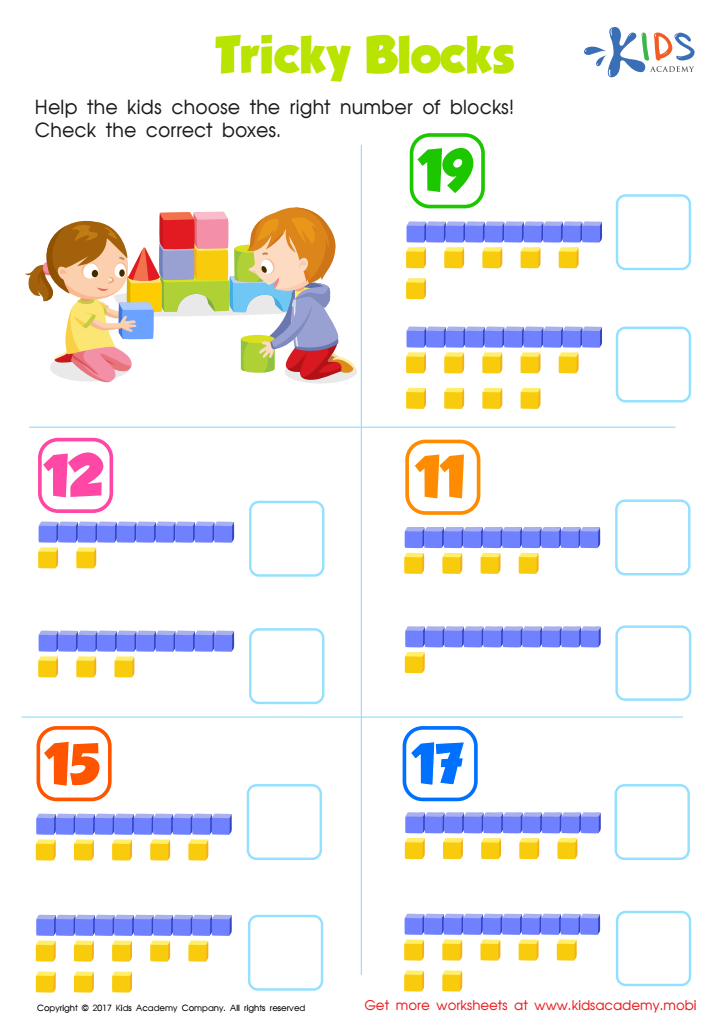
Tricky Blocks Worksheet
 Assign to My Students
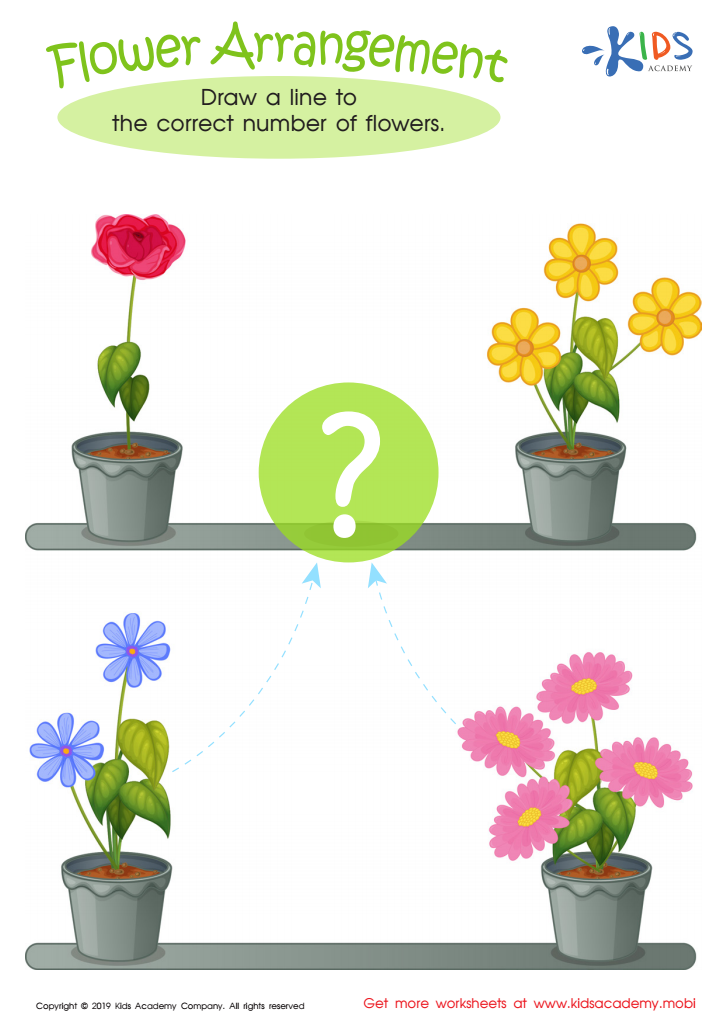
Flower Arrangement Worksheet
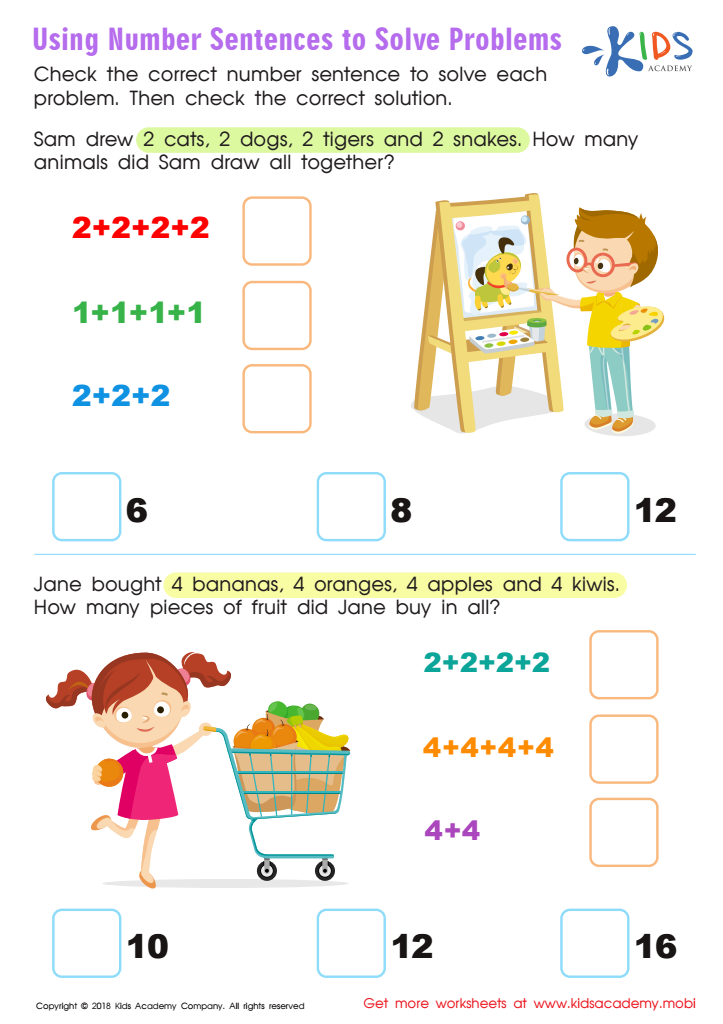
Using Number Sentences to Solve Problems Worksheet
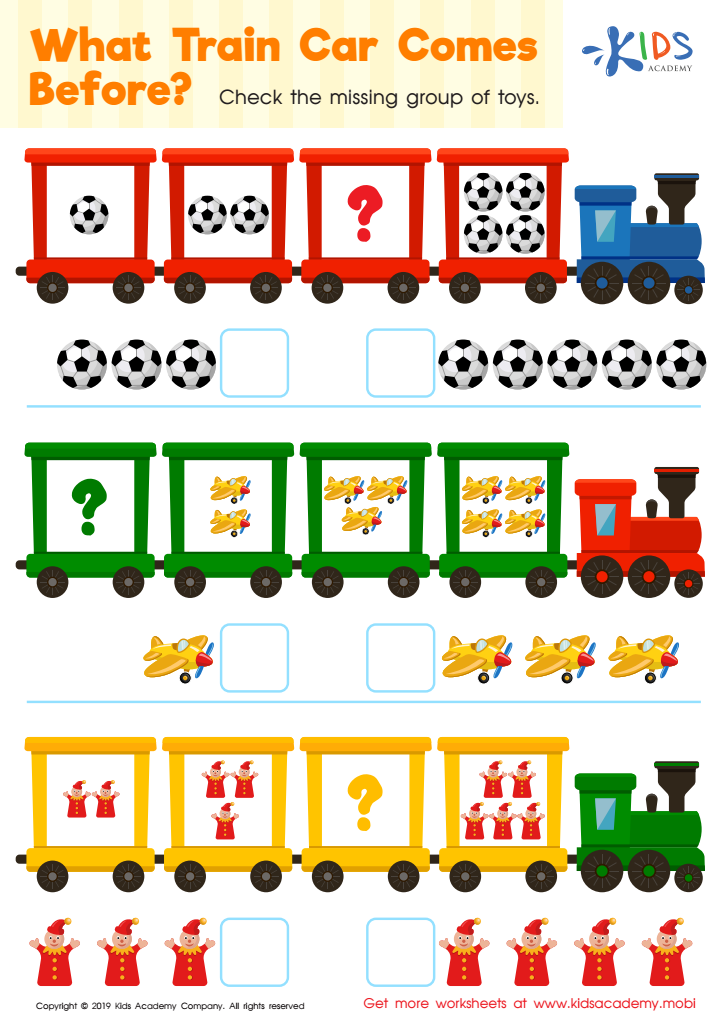
What Train Car Comes Before? Worksheet







%20(1).jpg)
Pattern recognition, particularly with numbers, is a crucial skill for young children, especially those ages 3-4. At this developmental stage, their brains are rapidly growing, soaking up new information. Recognizing patterns helps establish an essential foundation for more complex mathematical concepts that they will encounter later in school, such as addition, subtraction, and multiplication.
When children practice recognizing and predicting numerical patterns, they are building critical thinking and problem-solving skills. For example, identifying a sequence like 1-2-1-2, children start understanding order and parts making a whole. This foundational grasp boosts their ability to decipher complex problems in the future.
Moreover, pattern recognition extends beyond math. It enhances a child's cognitive development, attention to detail, and memory. It supports language acquisition as well; recognizing repetitive patterns in songs or stories bolsters their ability to predict and understand the structure of language.
Engaging in pattern-related activities is enjoyable and interactive, sparking curiosity and love for learning. Simple games, puzzles, and day-to-day activities highlighting sequences can naturally incorporate these vital skills into their routine. By encouraging pattern recognition in numbers at an early age, parents and teachers equip children with tools essential for academic success and everyday problem-solving skills.








