Understanding Quantities Numbers Worksheets for Ages 3-4
5 filtered results
-
From - To
Explore our "Understanding Quantities Numbers Worksheets" designed specifically for ages 3-4, offering a fun and engaging way to introduce young learners to basic math concepts. These printable worksheets help children identify and compare quantities, enhancing their number recognition skills. Through playful activities, kids will learn to count objects, associate numbers with real-world items, and grasp the fundamental idea of more or less. Each worksheet is carefully crafted to cater to early childhood development, fostering an enjoyable learning experience. Dive into our collection and spark your child's interest in mathematics with creativity and fun! Perfect for parents and educators alike.
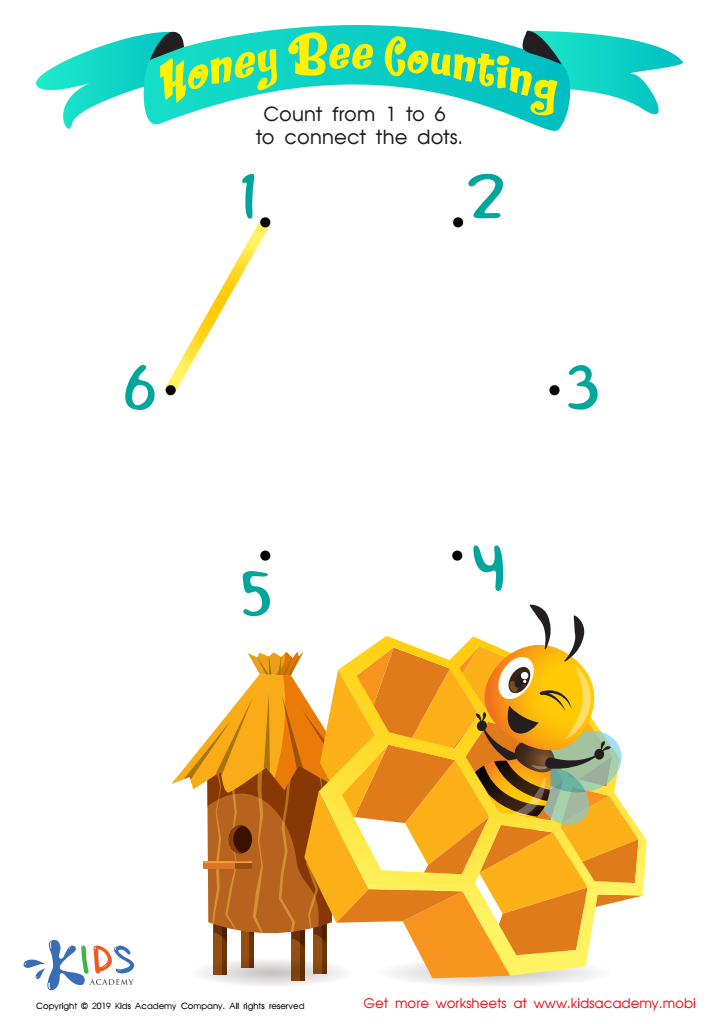
Honey Bee Counting Worksheet
 Assign to My Students
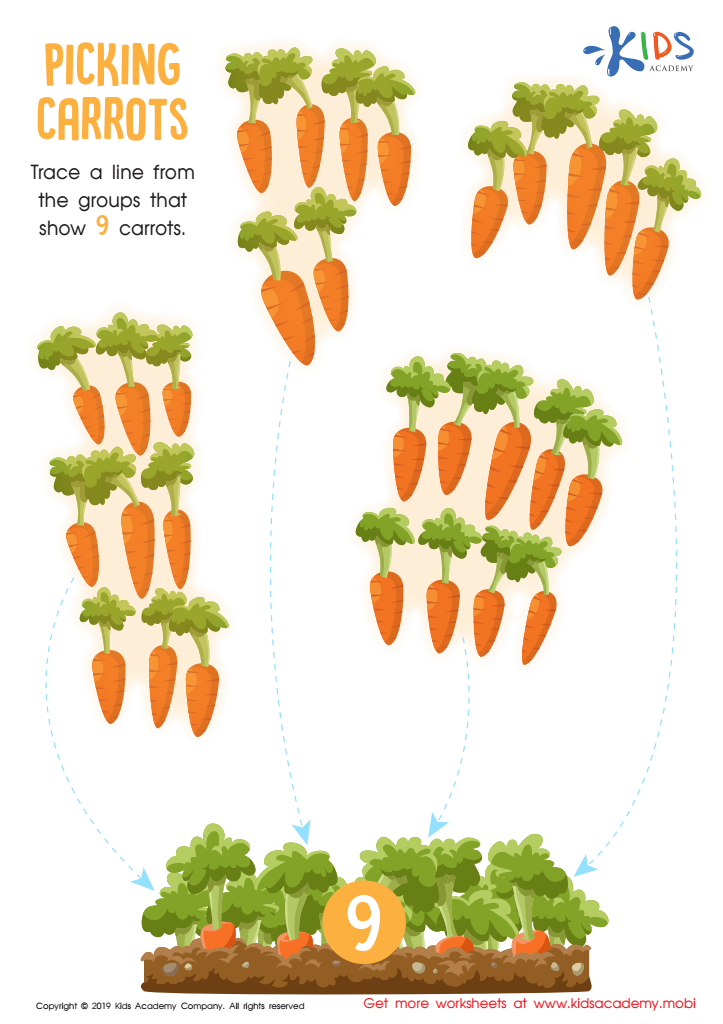
Picking Carrots Worksheet
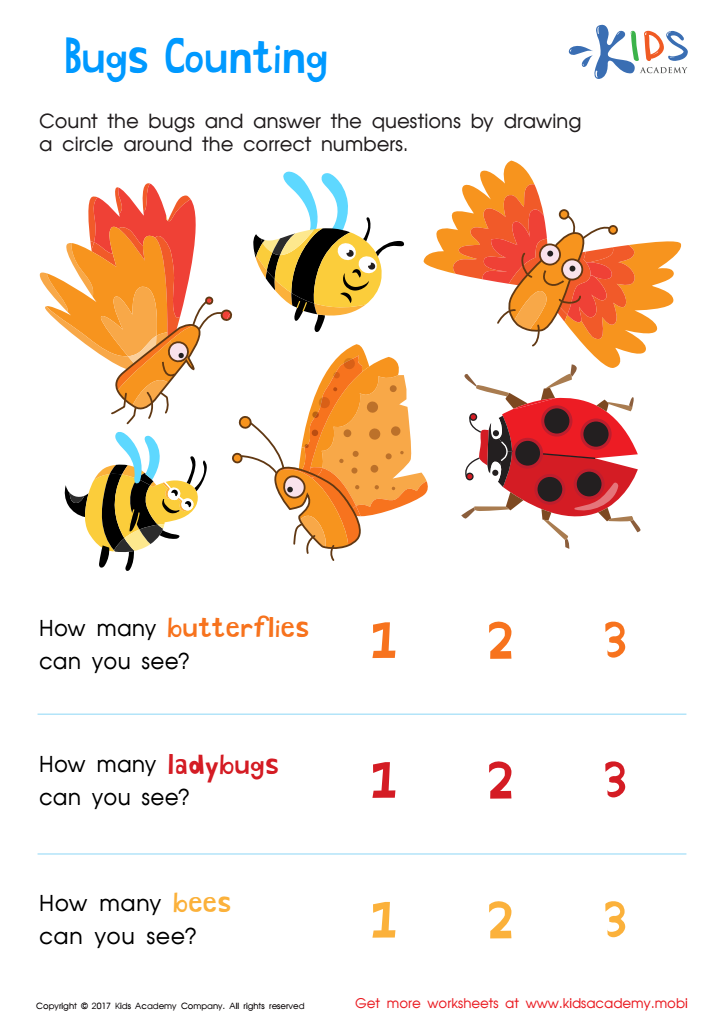
Bugs Counting Worksheet
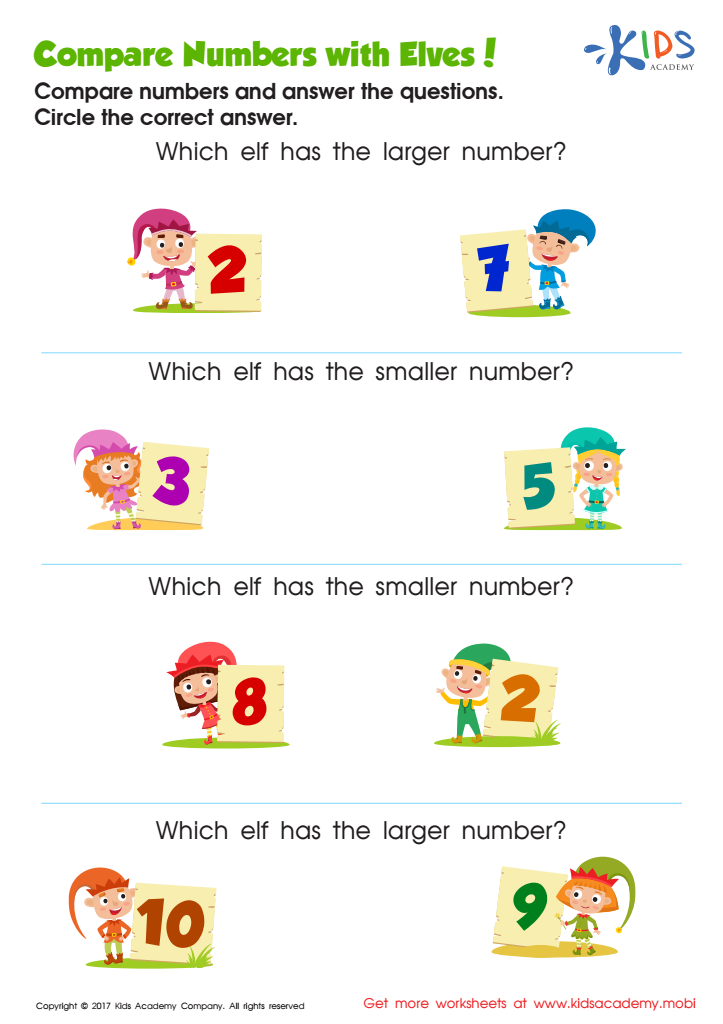
Comparing Numbers Worksheet for Kindergarten
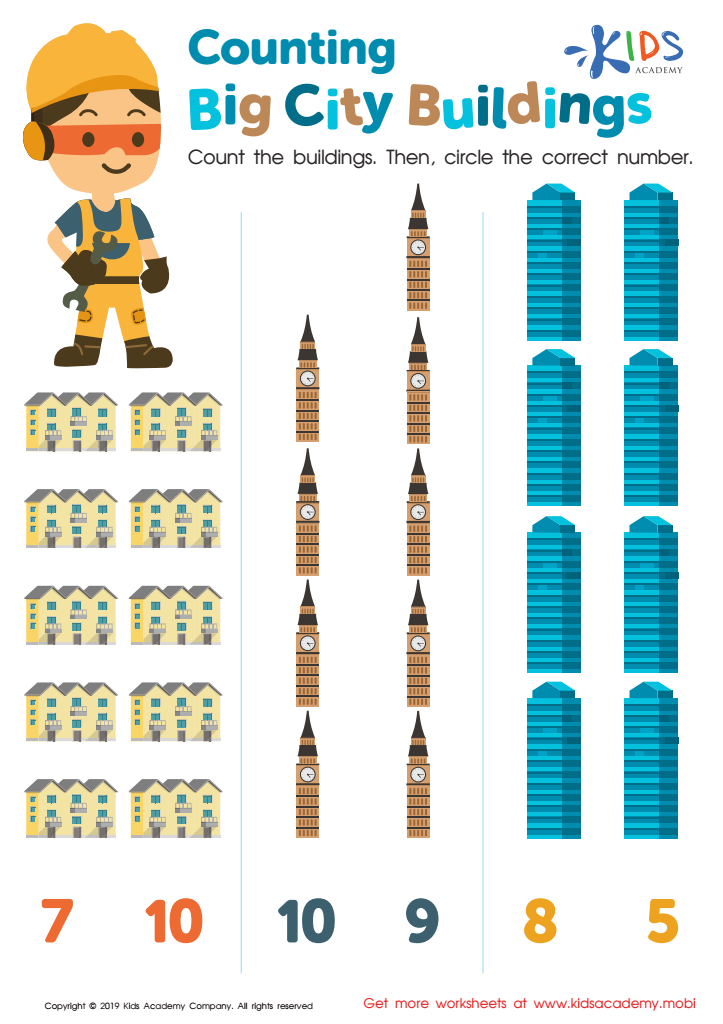
Counting Big City Buildings Worksheet







Understanding quantities and numbers at the age of 3-4 lays the foundational block for a child's future mathematical skills and overall cognitive development. At this crucial stage, children begin to recognize and internalize the concept of quantity, which aids in developing their problem-solving skills and logical thinking. Cultivating this understanding helps children identify patterns, compare objects, and engage in basic counting, which are essential skills in math and everyday life.
Moreover, early exposure to numbers supports language development. As children learn to express quantities, they enhance their vocabulary and communication skills. Engaging in activities that focus on numbers can foster a child's curiosity, promote active learning through play, and boost their confidence as they accomplish small mathematical tasks.
Parents and teachers play a vital role by integrating counting and quantity concepts into daily routines. Simple activities like counting toys during playtime or sorting objects by size can transform learning into fun experiences. Supporting children at this age not only prepares them academically but also nurtures their love for learning. This early investment in number understanding effectively sets the stage for lifelong success in mathematics and critical thinking.








