
Basic addition practice Math Worksheets for Ages 3-4
11 filtered results
Difficulty Level
Grade
Age
-
From - To
Subject
Activity
Standards
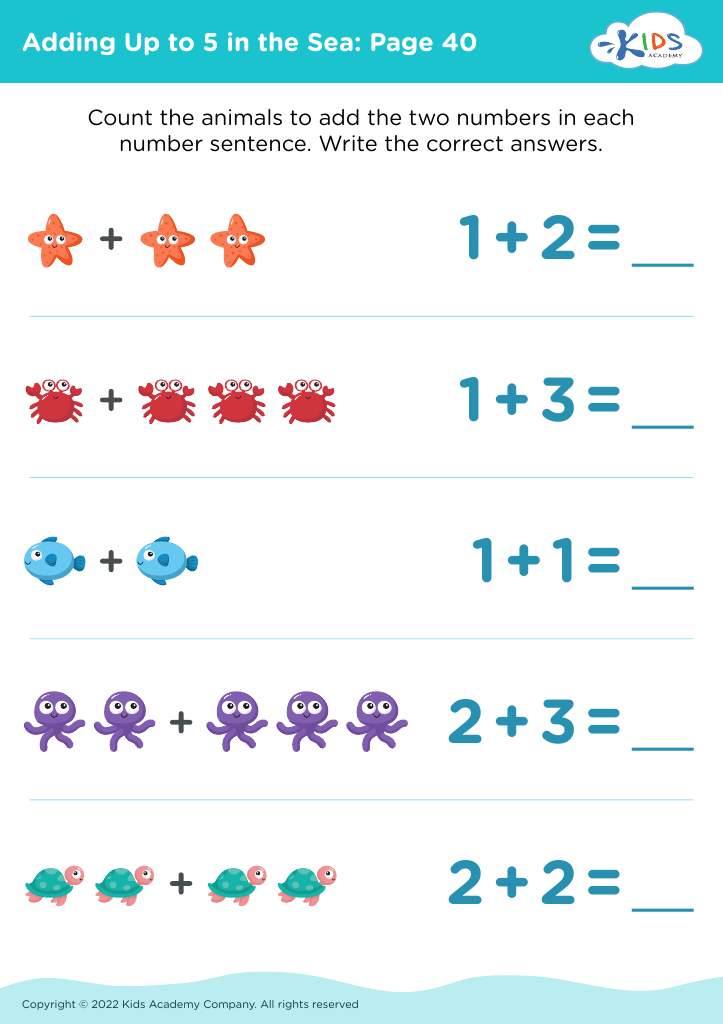
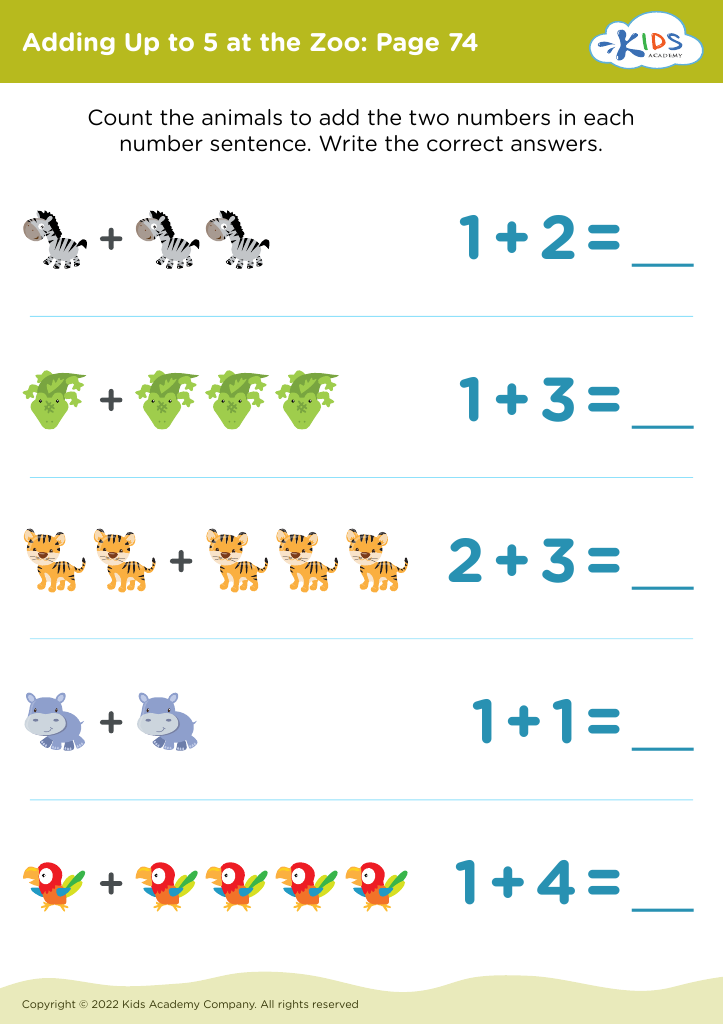
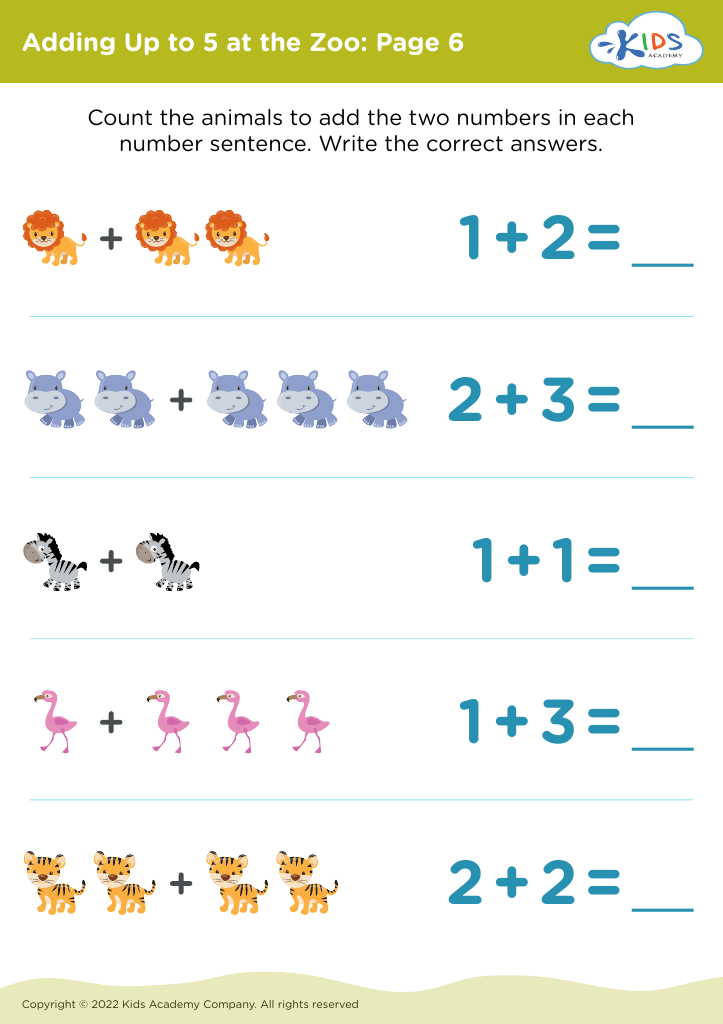
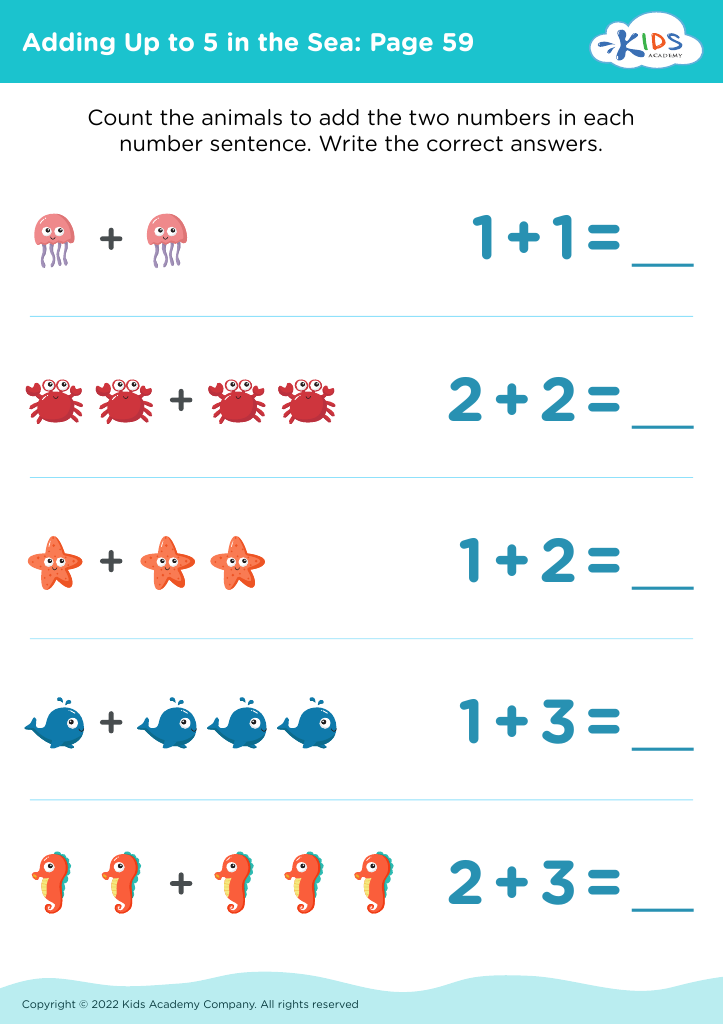
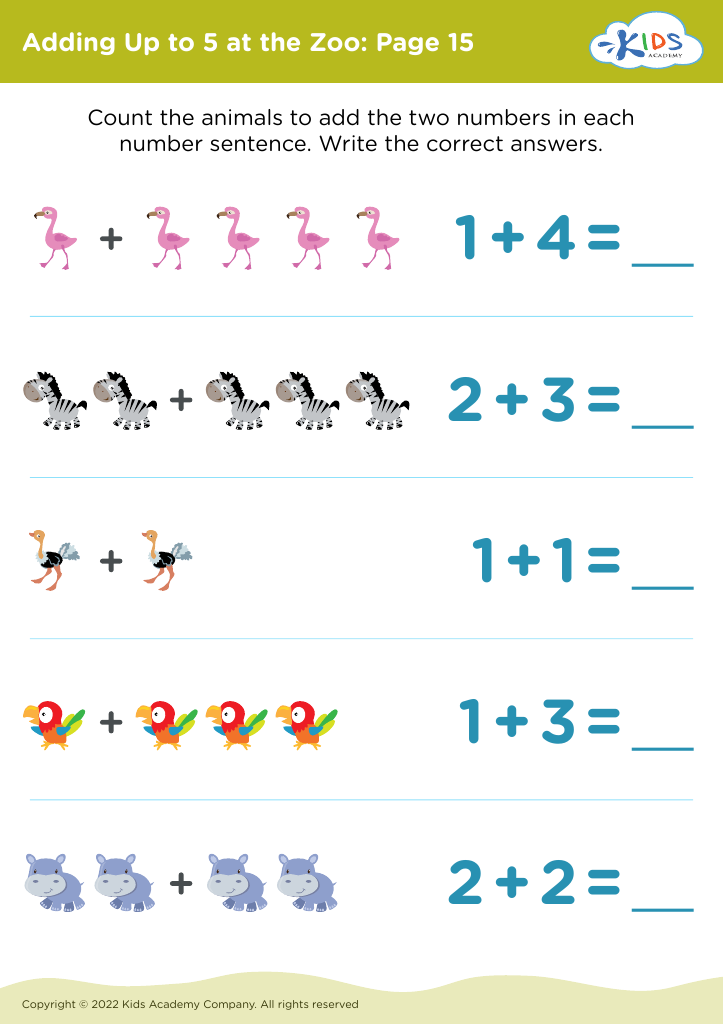
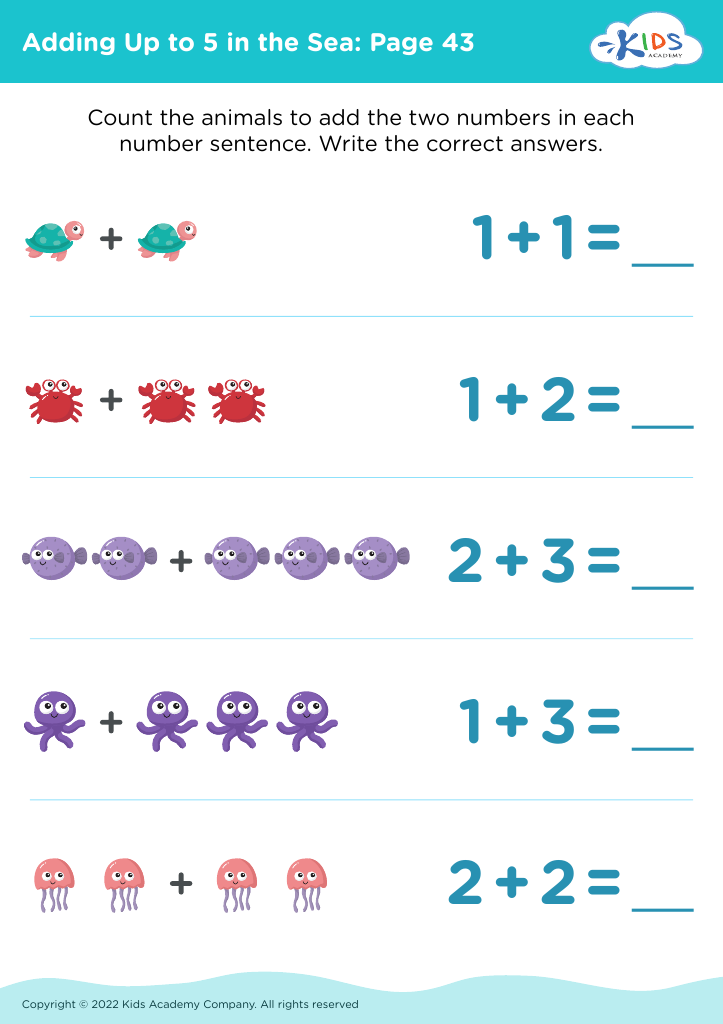
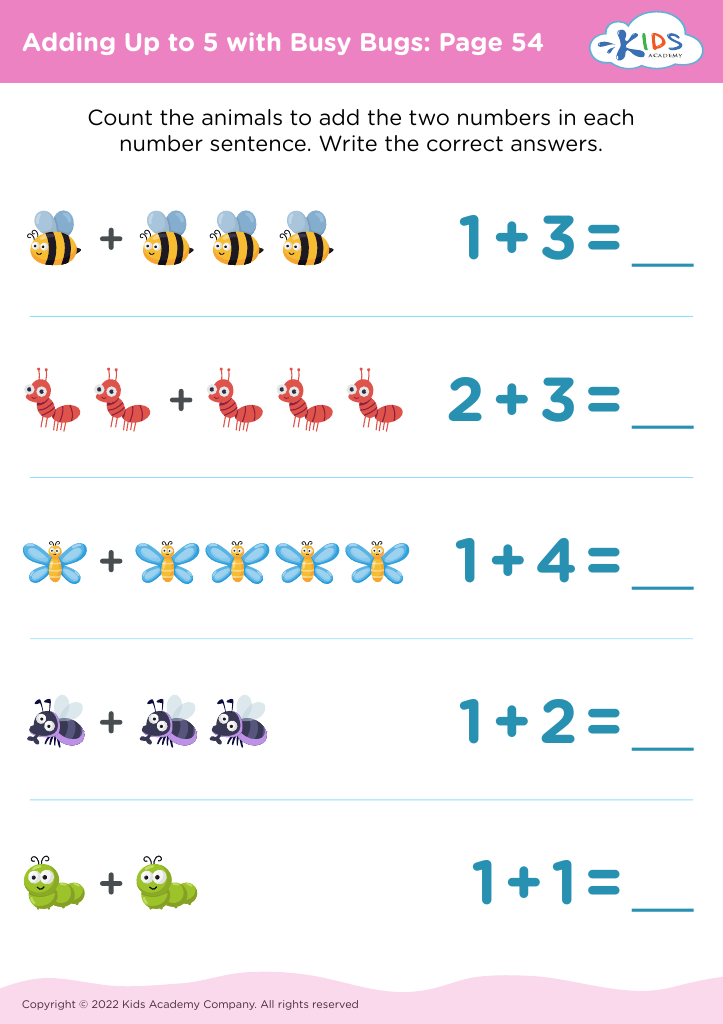
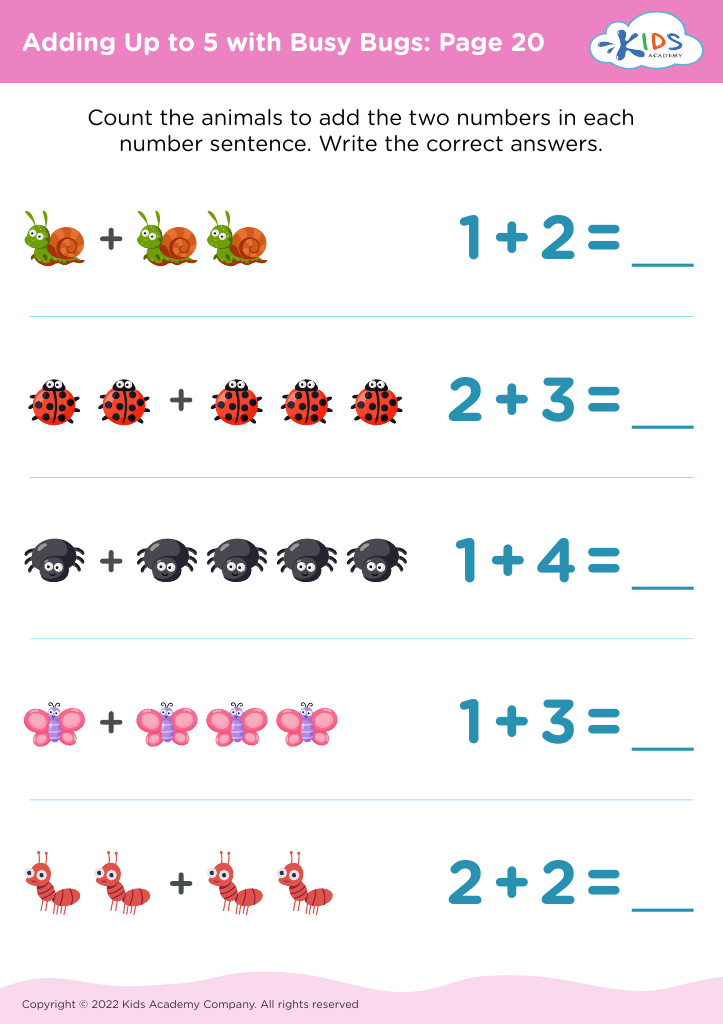
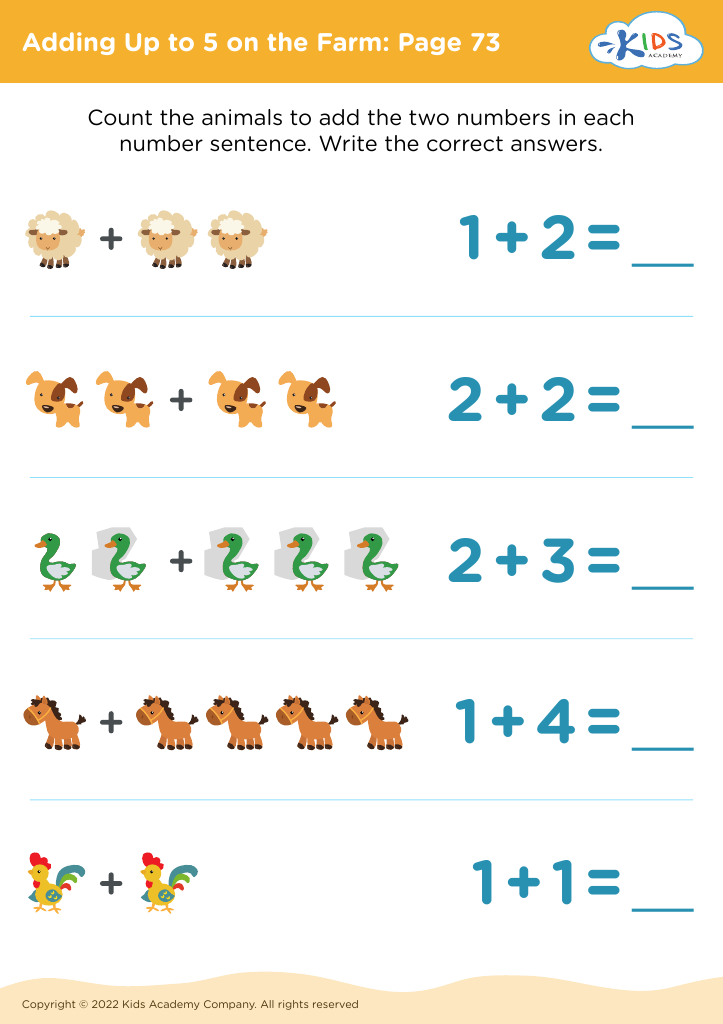
Boost your child's mathematical development with our Basic Addition Practice Math Worksheets tailored for ages 3-4. These engaging, colorful worksheets are designed to make learning the essentials of addition both fun and effective. Featuring simple problems with visual cues, our resources help young learners grasp fundamental addition concepts through engaging activities. Perfect for at-home practice or classroom use, these worksheets aim to build a solid foundation in early math skills. Allow your child to build confidence and a love for mathematics from the start with Kids Academy’s expertly crafted resources. Explore and download now to get started!
Favorites
With answer key
Interactive
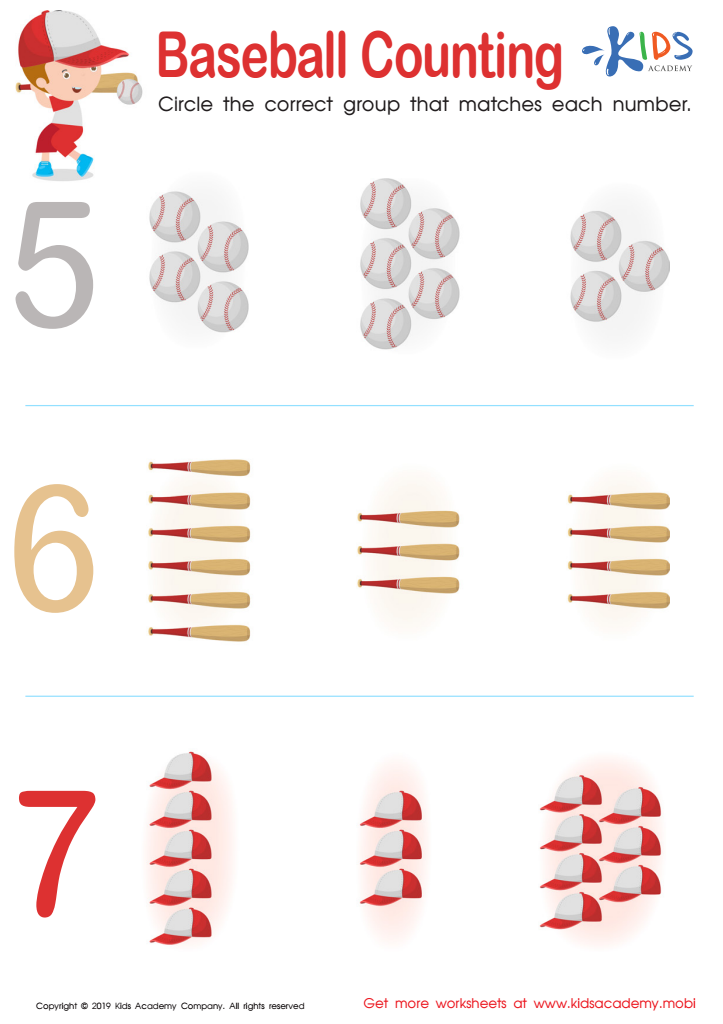
Baseball Counting Worksheet
Does your family like baseball? Refresh their minds by asking them to count items in a baseball game. To begin, have them count from 1 to 10. Point out each object and read out the numbers. Then, help them circle the group that matches each number. It will be a fun way to test their counting skills!
 Assign to My Students
Baseball Counting Worksheet
Worksheet
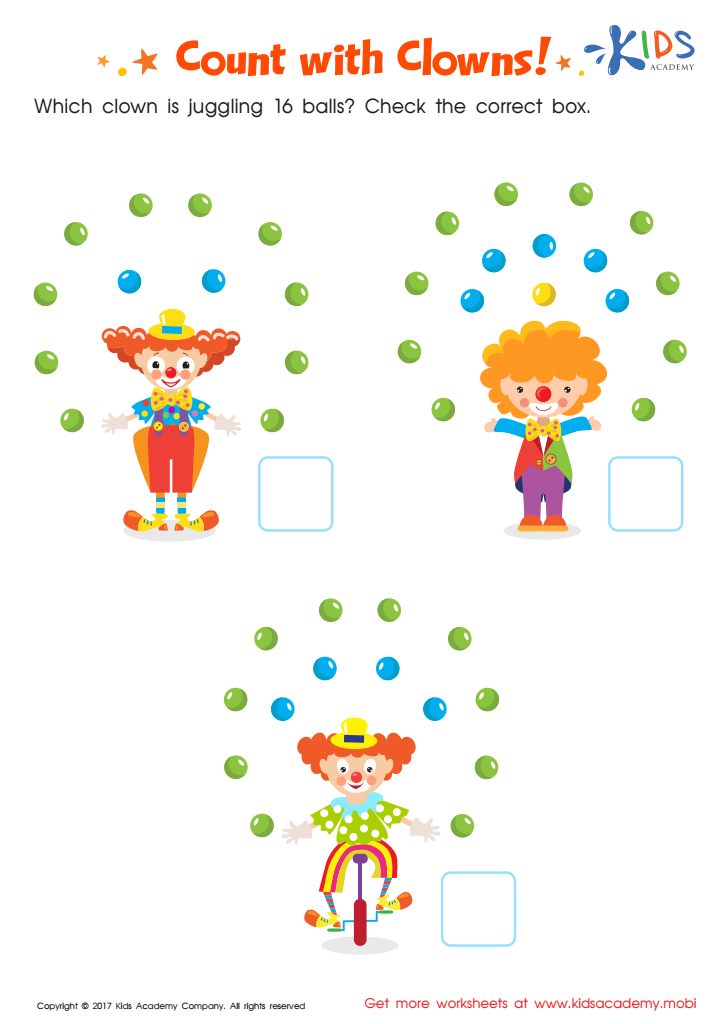
Count with Clowns Worksheet
Math may not be a laughing matter, but this worksheet sure is! Download the PDF and get ready to count balls with the clowns! Your child will have a blast and learn how to count at the same time. It's an easy, fun way to practice math!
Count with Clowns Worksheet
Worksheet
Join Kids Academy for Free
Who is primarily going to use this learning content?





.jpg)

Parents and teachers should prioritize basic addition practice for children aged 3-4 because it introduces fundamental math skills crucial for later academic success. At this early stage, young brains are particularly receptive and adept at absorbing new concepts. Introducing addition helps to acclimate children to numbers and mathematical thinking, fostering an intuitive sense for numeric relationships and problem-solving from an early age.
Familiarity with basic addition bolsters confidence in handling mathematical tasks, curbing the potential anxiety often associated with math in later years. It lays the groundwork for understanding more complex mathematical principles, improving their ability to grasp subsequent lessons quickly. Engaging in addition activities at this age also cultivates focus, patience, and perseverance.
Moreover, addition practice can be designed to be fun and engaging through games, songs, and hands-on activities, seamlessly integrated into daily routines. This not only sustains a child's interest but also enables natural learning environments where children are encouraged to explore numbers joyfully.
Ultimately, early exposure to basic addition sets a constructive attitude towards mathematics, ensuring children are not only prepared but also excited about their educational journey ahead. By fostering these early math skills, parents and teachers invest in the child’s comprehensive cognitive development and future academic achievements.








