Enhance your child's early education with our "Fine Motor Skills (Writing Numbers) Math Worksheets for Ages 3-4." Designed to develop essential fine motor skills, these engaging worksheets guide children through tracing and writing numbers, promoting dexterity and number recognition. Perfectly suited for preschoolers, each worksheet provides fun and interactive activities that blend learning with play. With vibrant illustrations and simple exercises, your little one will build confidence and handwriting skills essential for future math success. Start transforming learning into an enjoyable adventure! Download our worksheets today and watch your child thrive.

Check out this FREE Trial Lesson on Math for age 3-4!

Sorting Objects into 3 Categories

Favorites
With answer key
Interactive
  • 3-4
  • Fine motor skills (writing numbers)
  • Math
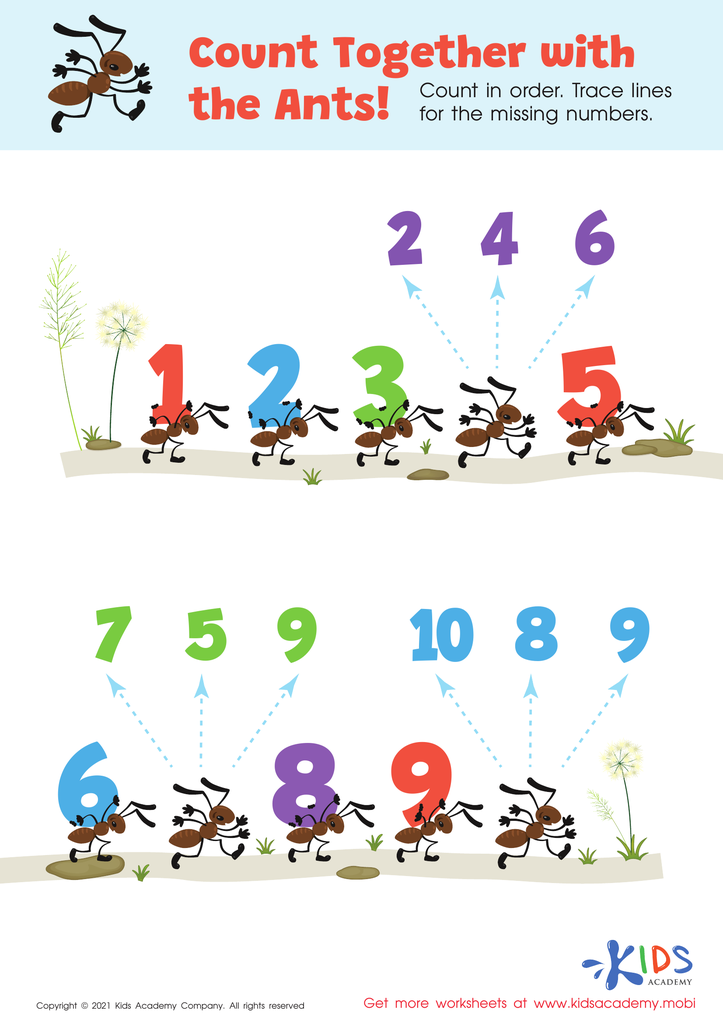
Count Together with the Ants Worksheet
Count Together with the Ants Worksheet
Rather than letting kids get too deep in online games, keep them engaged with learning worksheets. Ask them to identify the insect in the picture, then count the ants. Help them trace lines to the missing numbers. It's simple and straightforward for young children to comprehend.
Count Together with the Ants Worksheet
Worksheet
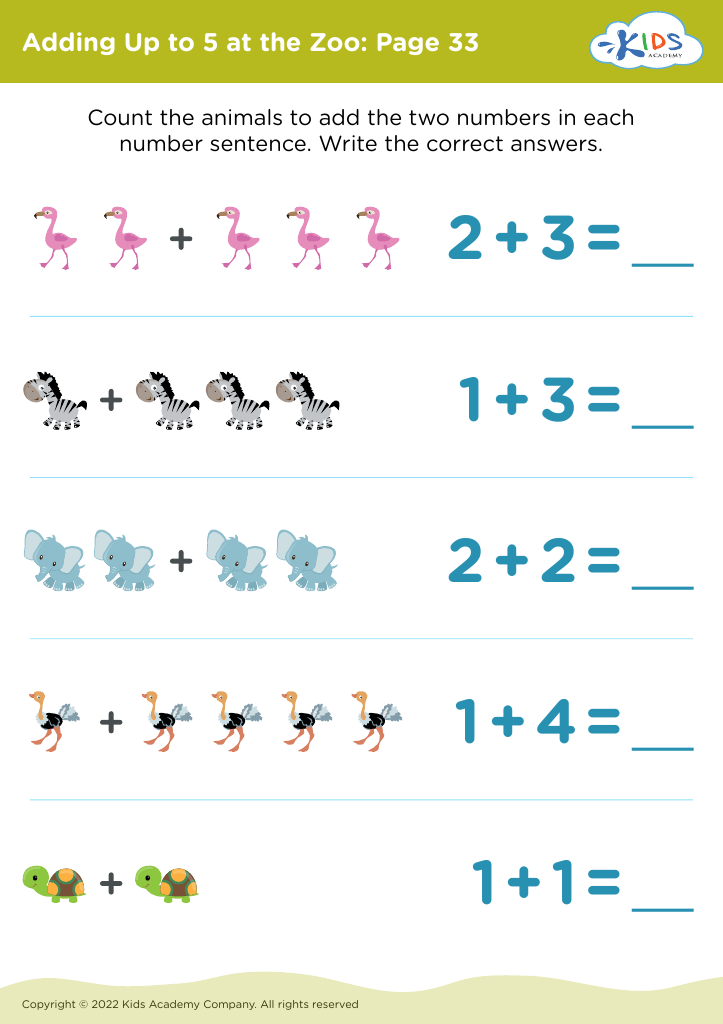
Adding Up to 5 at the Zoo: Page 33
Worksheet
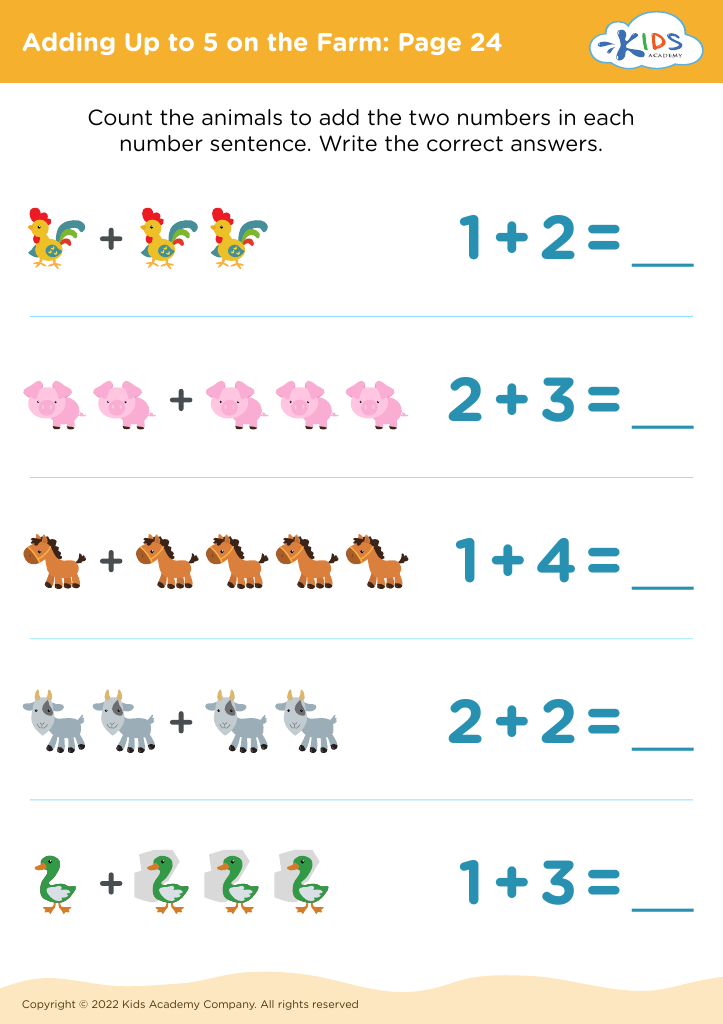
Adding Up to 5 on the Farm: Page 24
Worksheet
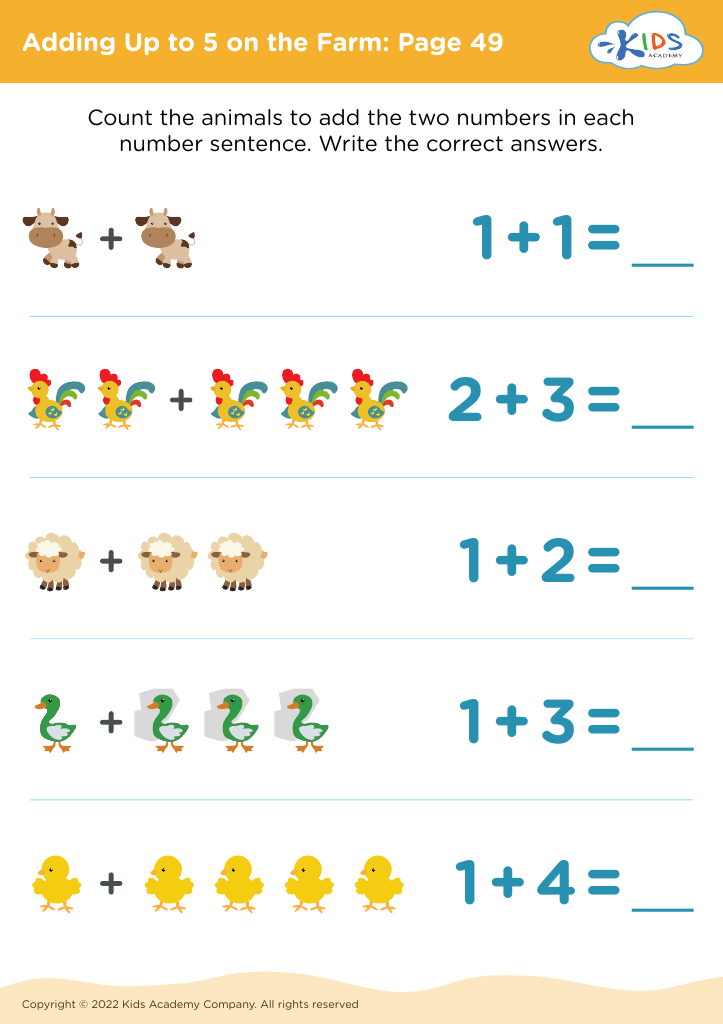
Adding Up to 5 on the Farm: Page 49
Worksheet
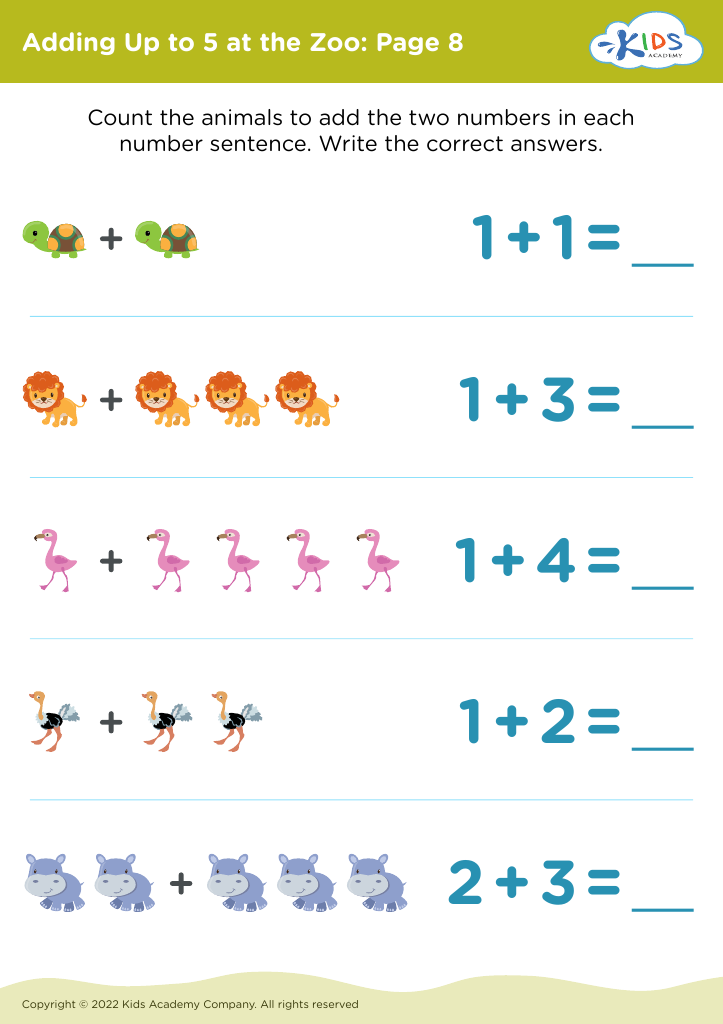
Adding Up to 5 at the Zoo: Page 8

Adding Up to 5 at the Zoo: Page 8

Adding Up to 5 at the Zoo: Page 8
Worksheet
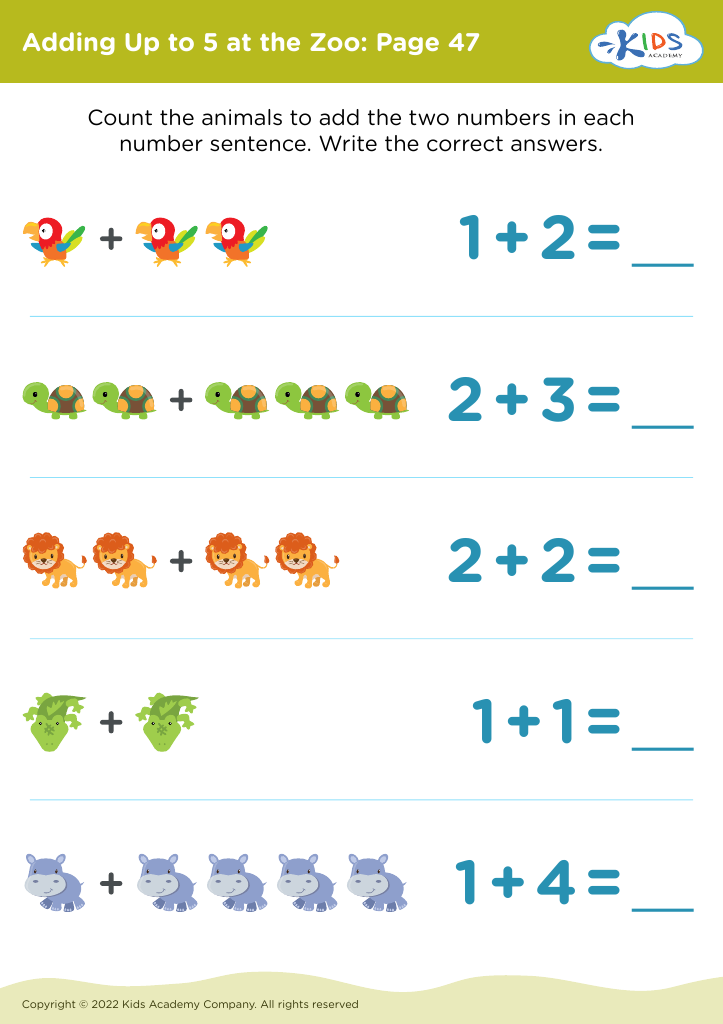
Adding Up to 5 at the Zoo: Page 47
Worksheet
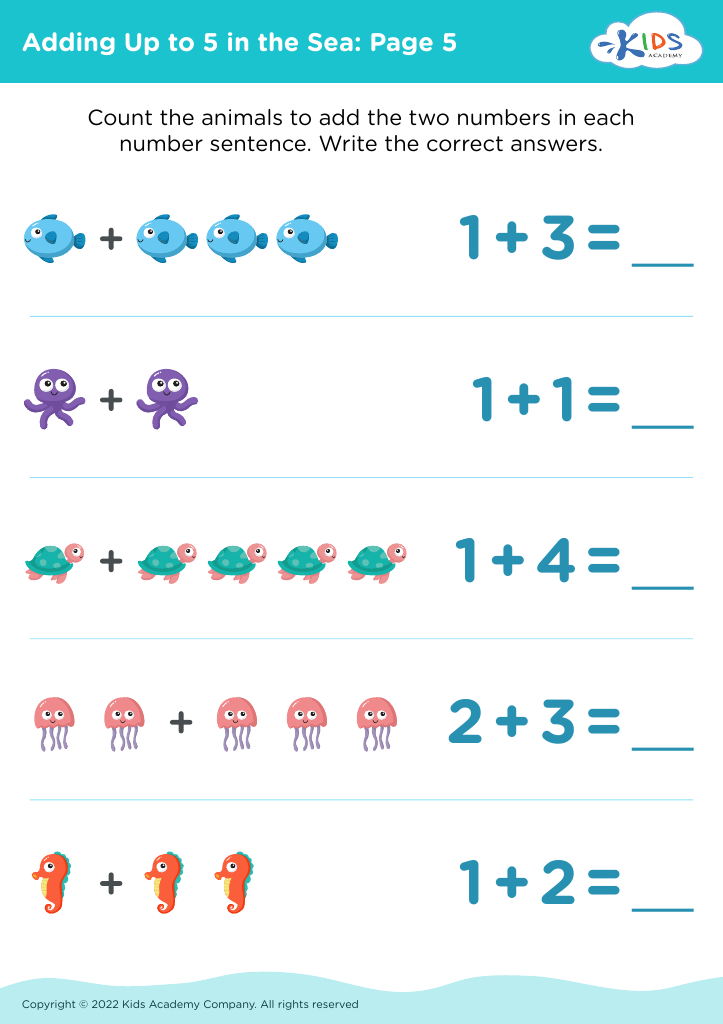
Adding Up to 5 in the Sea: Page 5

Adding Up to 5 in the Sea: Page 5

Adding Up to 5 in the Sea: Page 5
Worksheet
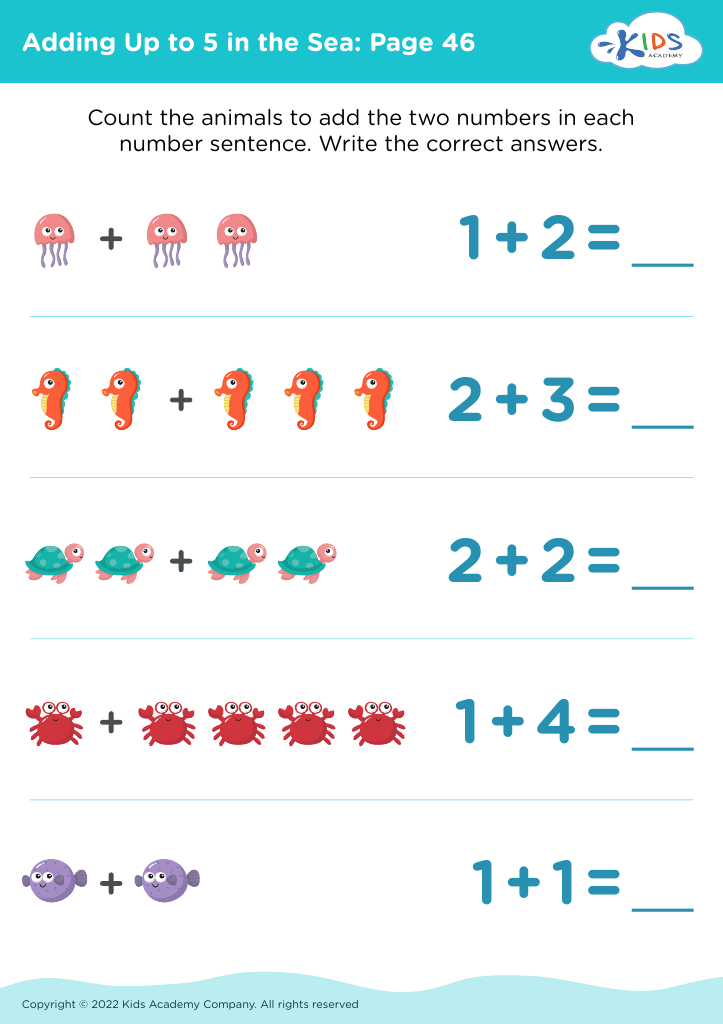
Adding Up to 5 in the Sea: Page 46
Worksheet
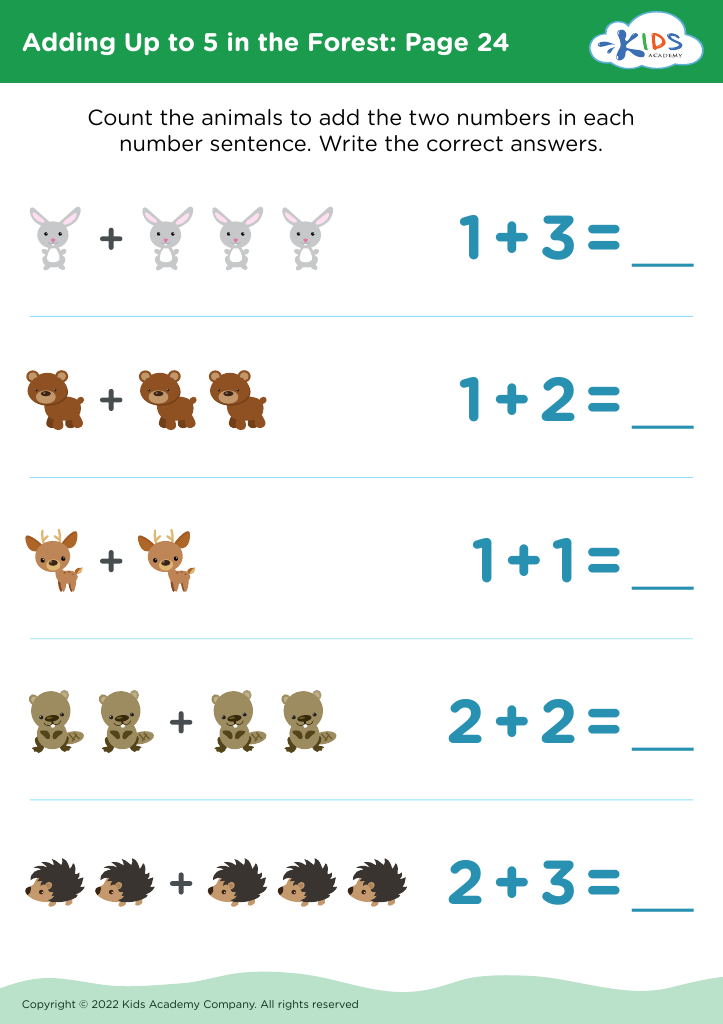
Adding Up to 5 in the Forest: Page 24
Worksheet
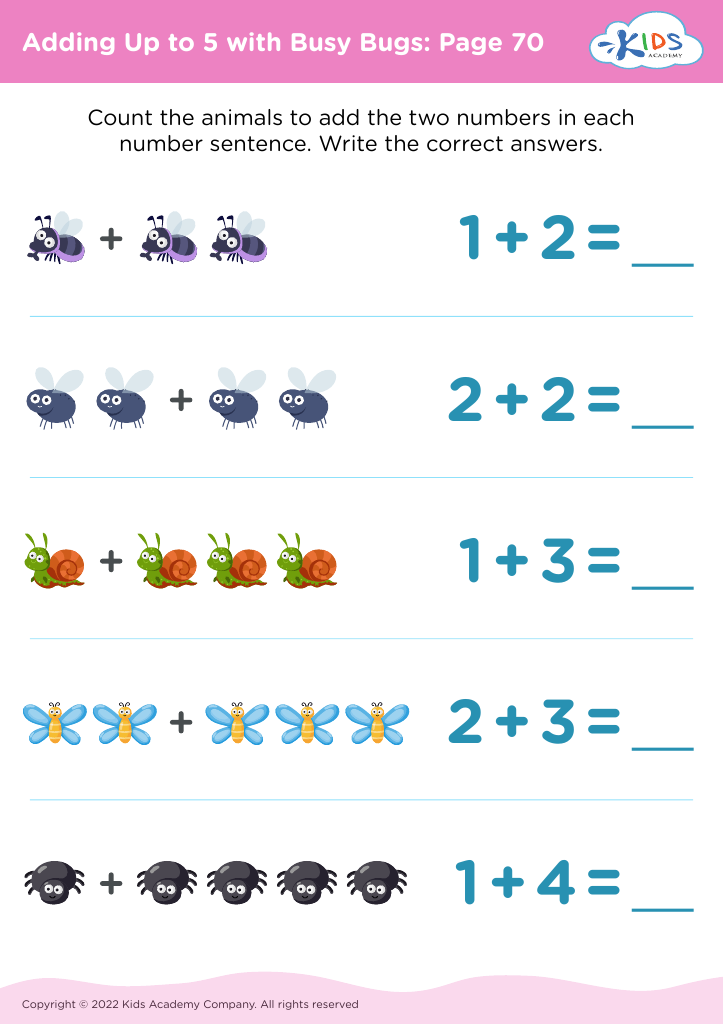
Adding Up to 5 with Busy Bugs: Page 70
Worksheet
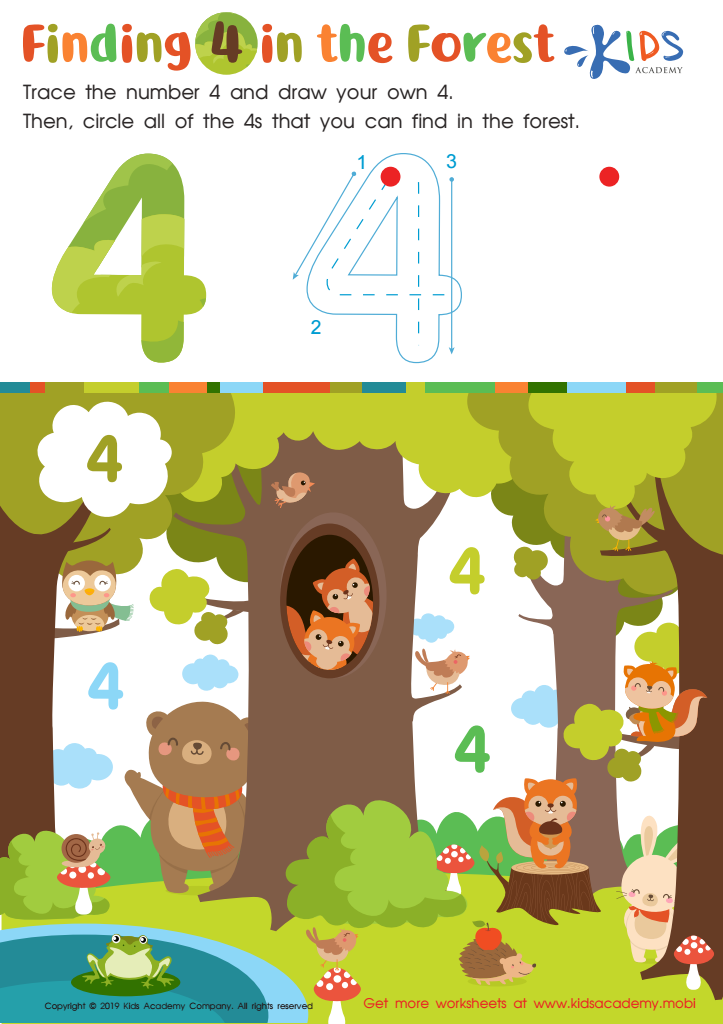
Finding 4 in the Forest Worksheet

Finding 4 in the Forest Worksheet

Before starting, have your kids count as high as they can. Ask them to identify the setting and point out the 4s. Trace 4 and draw your own. Help your kids circle all the 4s they can find in the forest. How far can they count? How well did they find the hidden 4s?
Finding 4 in the Forest Worksheet
Worksheet
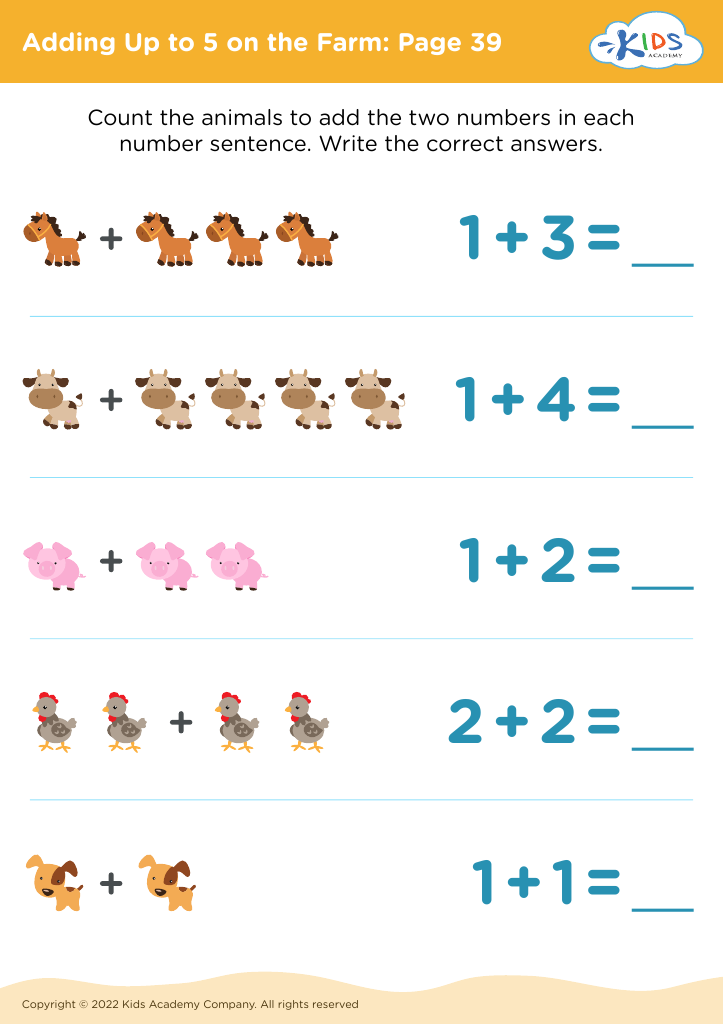
Adding Up to 5 on the Farm: Page 39
Worksheet
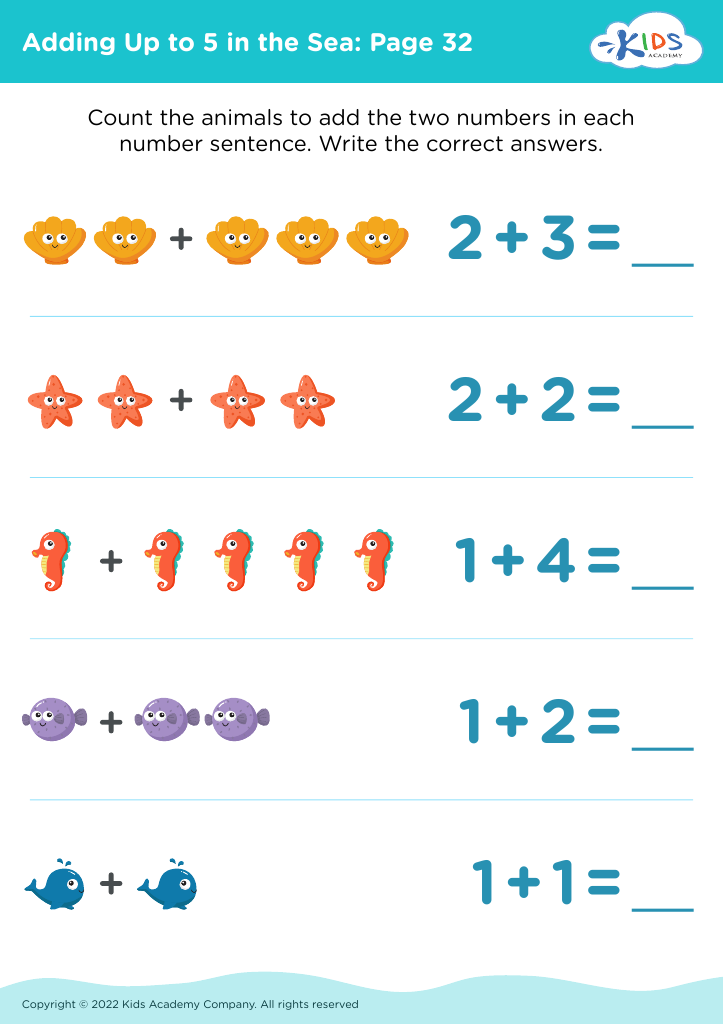
Adding Up to 5 in the Sea: Page 32
Worksheet
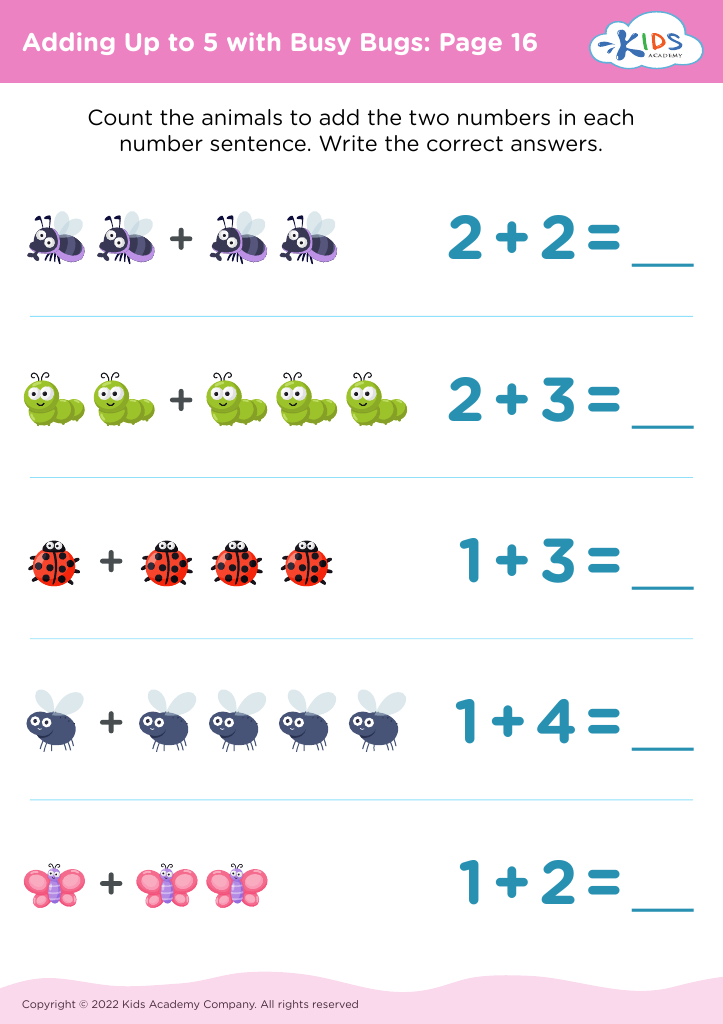
Adding Up to 5 with Busy Bugs: Page 16
Worksheet
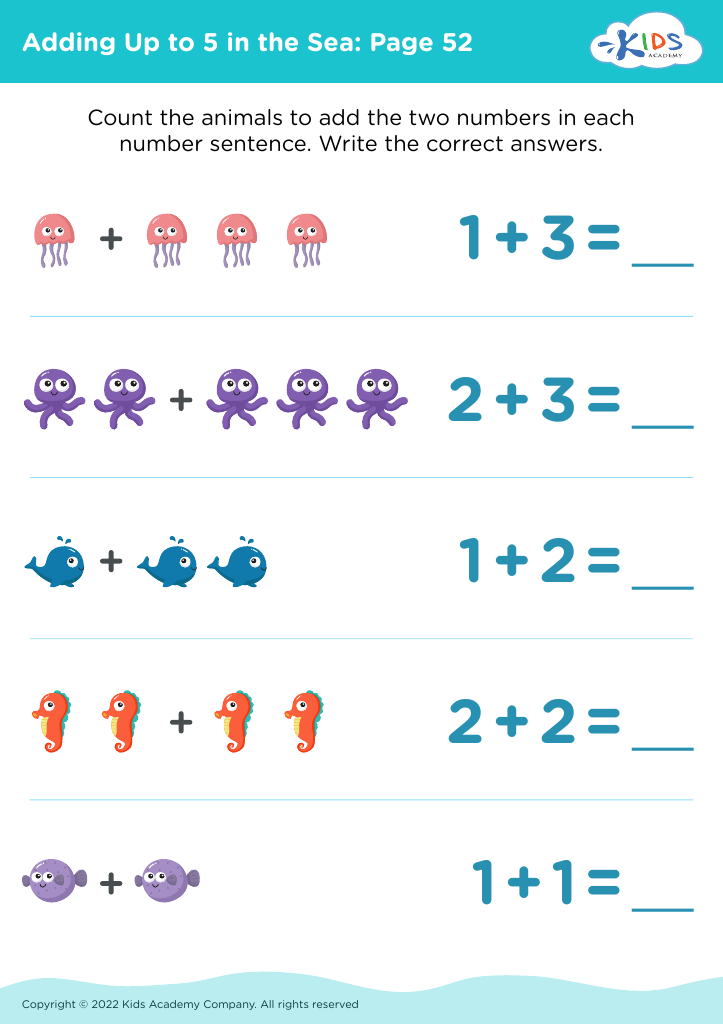
Adding Up to 5 in the Sea: Page 52
Worksheet


Fine motor skills refer to the small movements we make with our hands, fingers, and wrists. For children aged 3-4, developing these skills is crucial as it lays the foundation for essential tasks like writing numbers, a fundamental aspect of early math education. When children practice writing numbers, they enhance their hand-eye coordination, muscle control, and dexterity. These skills are not only critical for writing but also for a range of daily activities such as dressing, eating, and playing.

Moreover, early proficiency in writing numbers supports cognitive development. As children learn to form numbers correctly, they simultaneously reinforce their understanding and memory of numerical concepts. This dual benefit helps build their confidence and prepares them for more complex mathematical tasks later in school.

Parents and teachers should prioritize fine motor development because it impacts both academic success and everyday life. By fostering fine motor skills through fun activities like drawing, playing with building blocks, or stringing beads, adults create a nurturing environment for comprehensive growth. Fine motor skill development can sometimes be overlooked, but attentive encouragement in these early stages ensures that children are well-prepared for the academic and practical challenges ahead, giving them a solid start in both school and life.