Logical thinking development Math Worksheets for Ages 3-4
5 filtered results
-
From - To
Discover our engaging "Logical Thinking Development Math Worksheets" designed specifically for children aged 3-4! These interactive worksheets cater to the essential early learning needs of young minds, fostering critical thinking and problem-solving skills. Each activity encourages children to recognize patterns, solve puzzles, and develop reasoning abilities in a fun, age-appropriate manner. Our resources are tailored to spark curiosity while laying a strong foundation for future math concepts. Parents and educators will find these worksheets perfect for enhancing cognitive development in a playful setting. Explore our collection today and watch your little learners thrive as they embark on their mathematical journey!
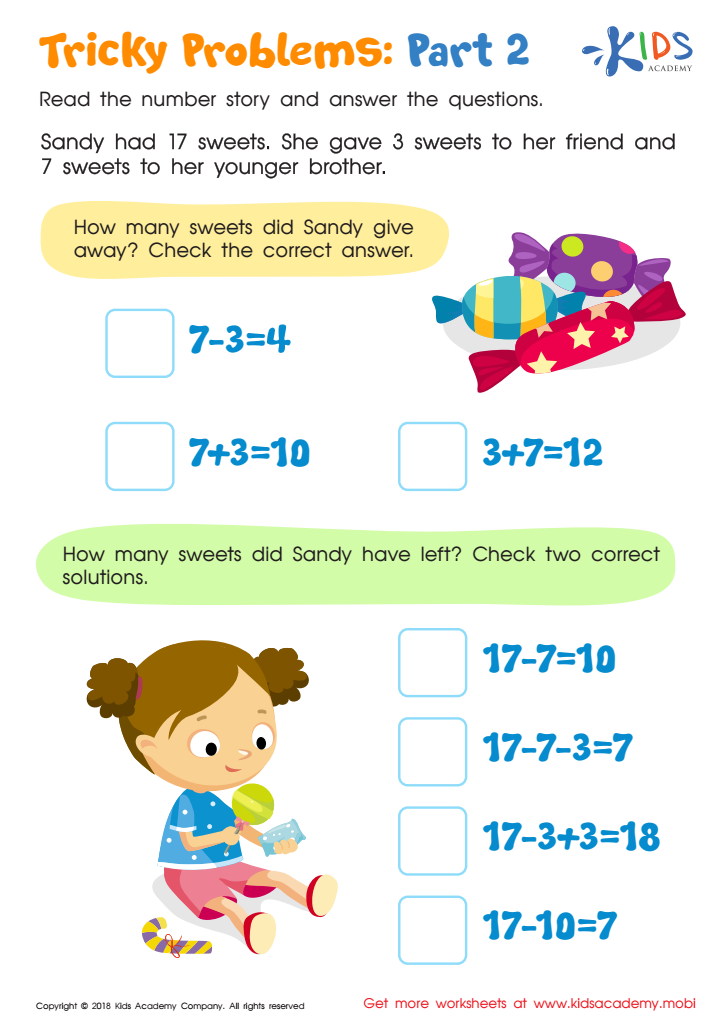
Tricky Problems Worksheet: Part 2
 Assign to My Students
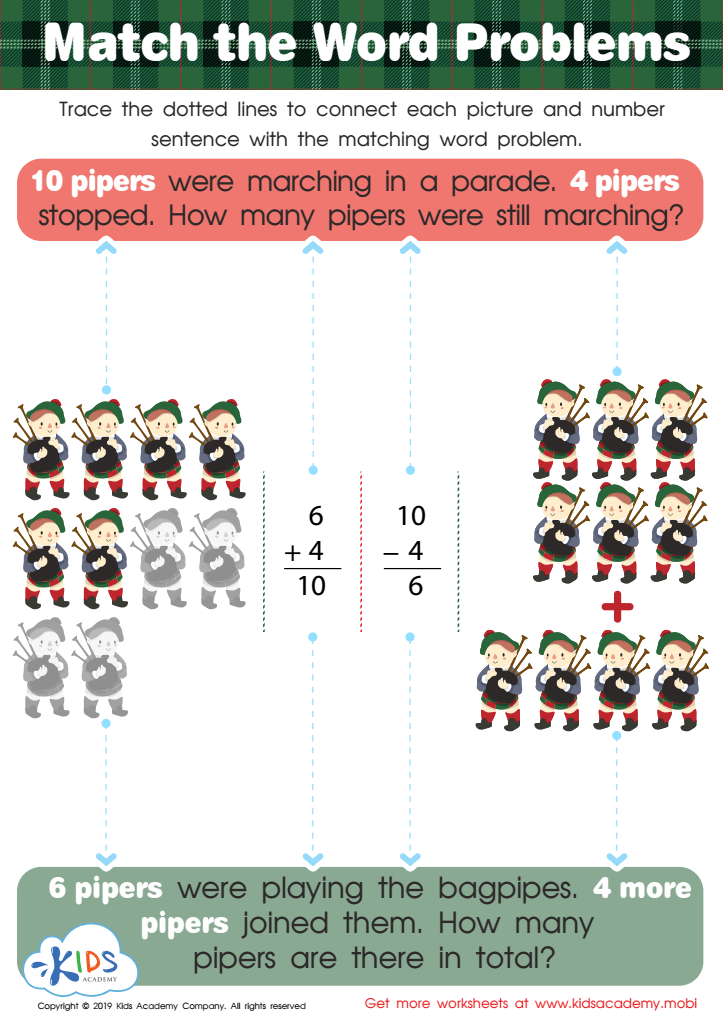
Match the Word Problems Worksheet
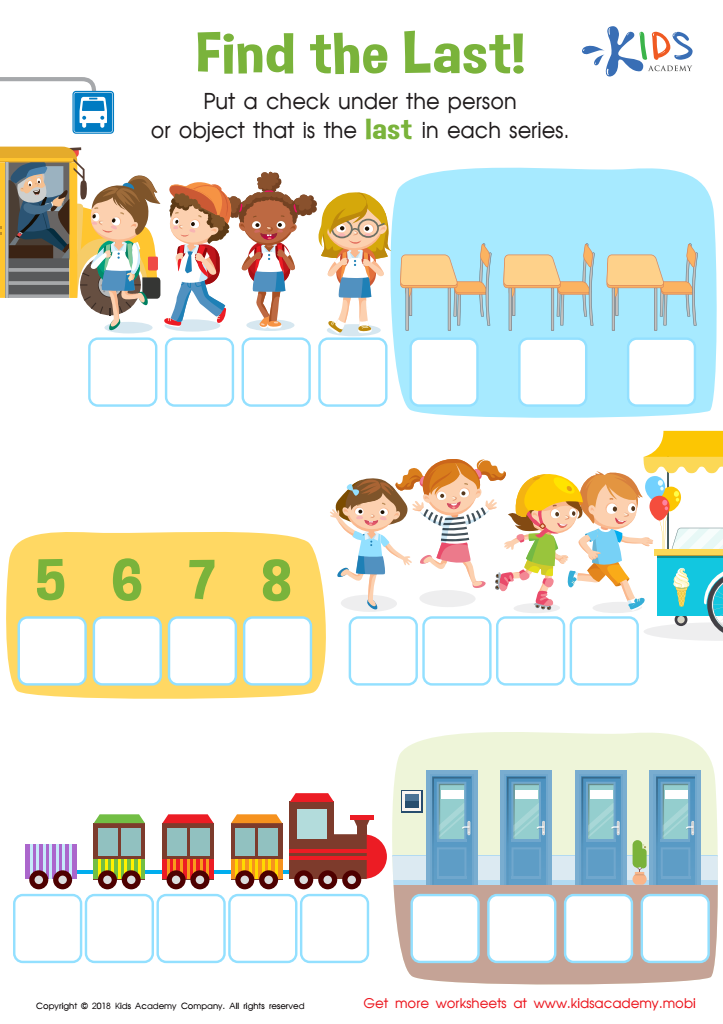
Find the Last! Worksheet
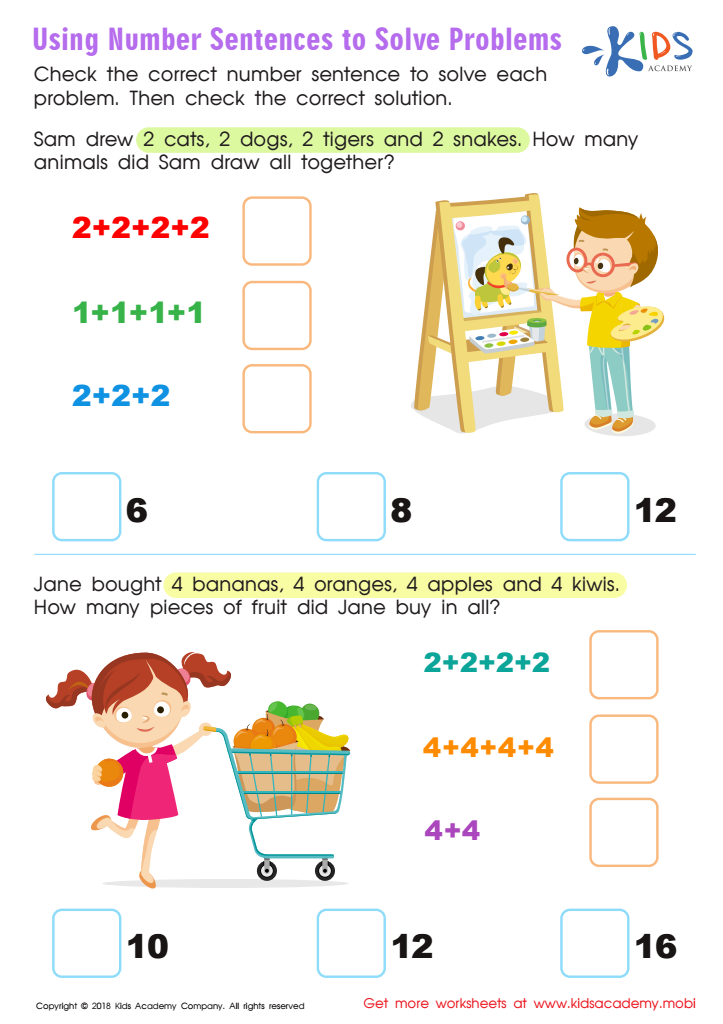
Using Number Sentences to Solve Problems Worksheet
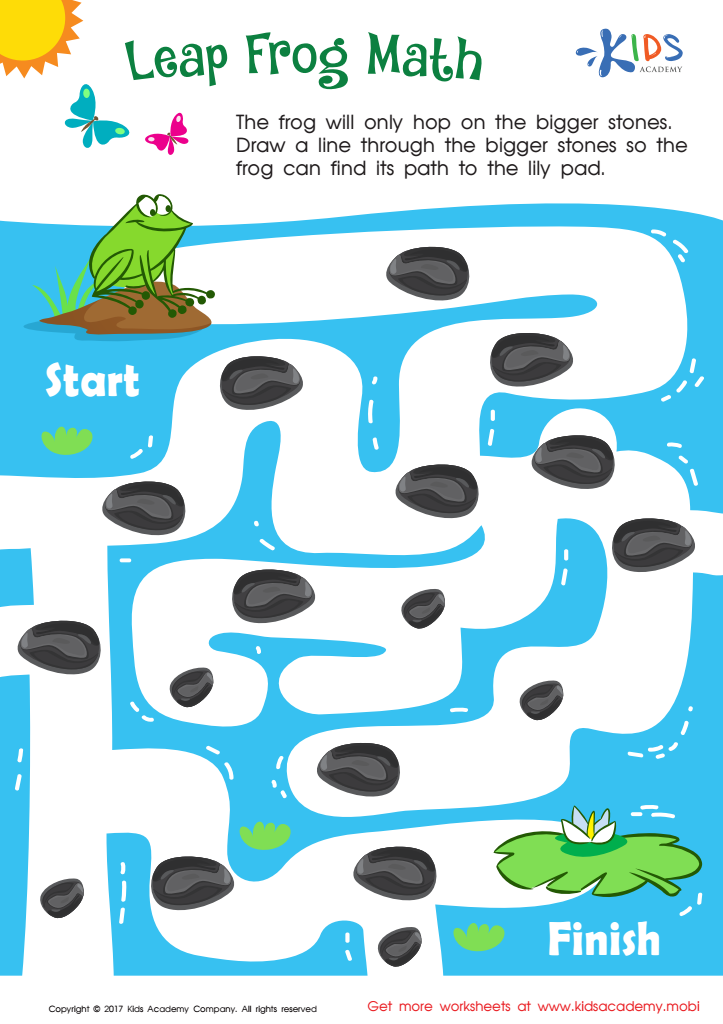
Math Puzzle Worksheet








Logical thinking development in mathematics for ages 3-4 is vital as it forms the foundation for future learning and problem-solving skills. At this early stage, children are naturally curious and eager to explore their surroundings, and introducing them to basic mathematical concepts can enhance their cognitive development. Engaging in activities that promote logical thinking, such as sorting objects, identifying patterns, and understanding quantity, encourages children to make connections and process information systematically.
Parents and teachers should care about this development because it equips children with essential skills they will use throughout their lives. Logical reasoning helps to foster critical thinking, encouraging children to approach problems methodically and make informed decisions. Furthermore, mathematical concepts are intertwined with everyday situations – from sharing toys to counting snacks – making them relevant to children's daily experiences.
By nurturing logical thinking in early childhood, we enhance children's confidence and enjoyment of learning, laying the groundwork for academic success in STEM fields later on. Investing in these foundational skills also supports emotional and social development, as children learn to play, share, and engage collaboratively with peers. Overall, early mathematical engagement is key in shaping well-rounded, capable learners ready to face future challenges.








