Problem-solving practice Math Worksheets for Ages 3-4
4 filtered results
-
From - To
Explore our engaging Problem-Solving Practice Math Worksheets designed specifically for ages 3-4! These worksheets provide a fun and interactive way for young learners to enhance their critical thinking and problem-solving skills. Featuring colorful illustrations and age-appropriate challenges, children will enjoy practicing counting, shape recognition, and basic addition and subtraction. Each activity is crafted to promote logical reasoning and boost confidence in mathematical concepts. Ideal for both classroom settings and at-home learning, our worksheets will encourage curiosity and a love for math in your little ones. Start their exciting math journey today with our easy-to-use printable materials!
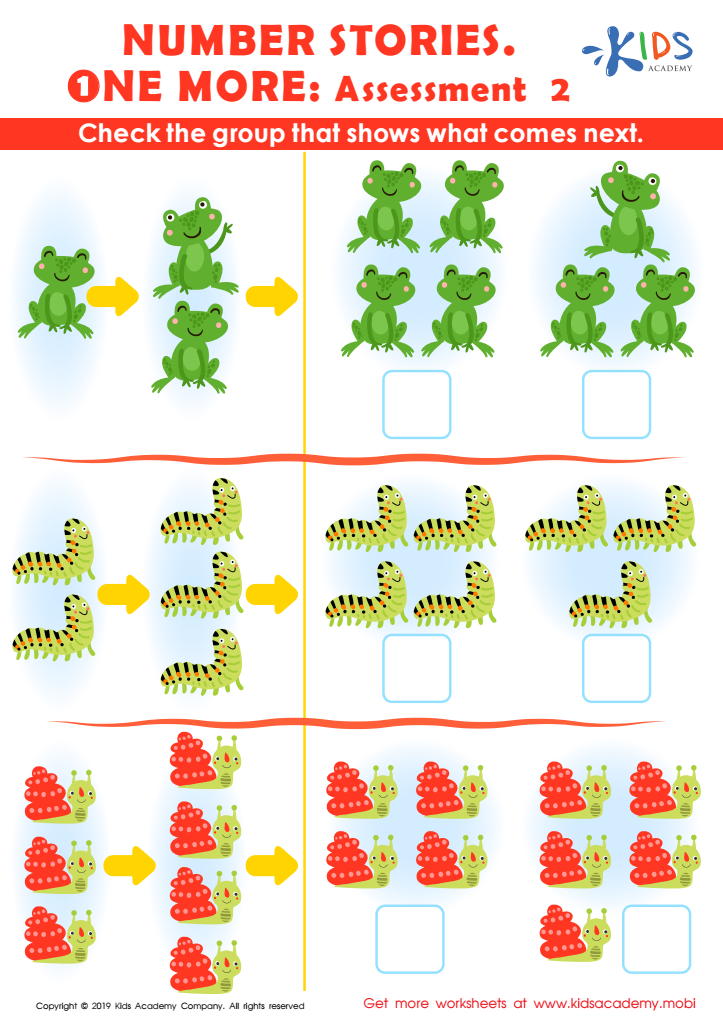
Number Stories One More – Assessment 2 Worksheet
 Assign to My Students
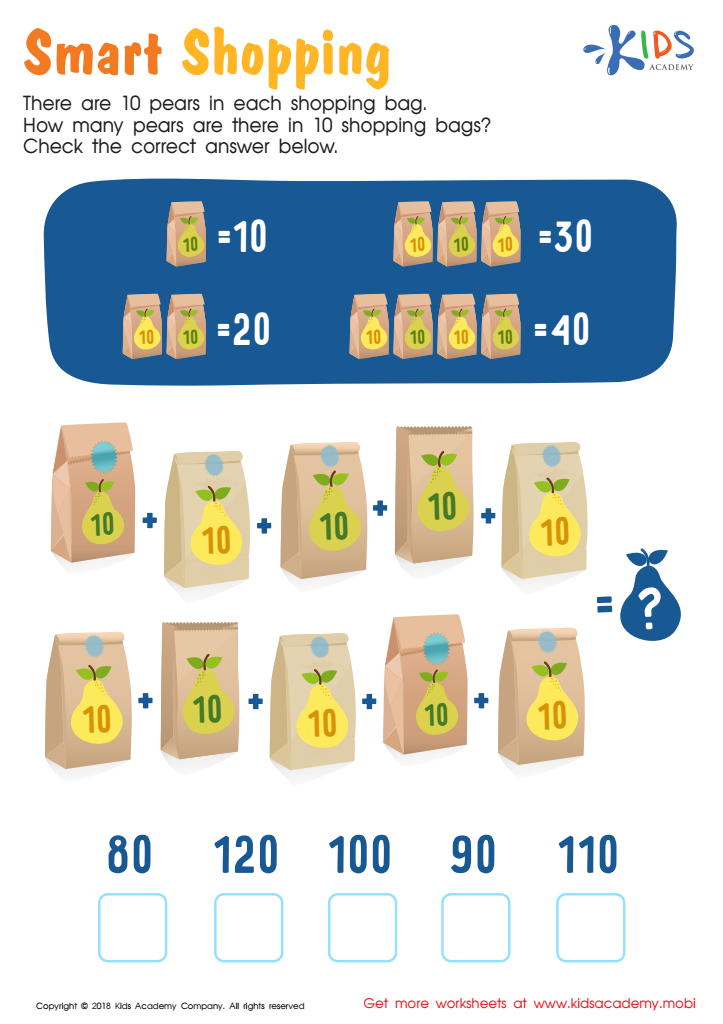
Smart Shopping: Trade Tens for a Hundred Worksheet








Problem-solving practice in math for ages 3-4 is crucial for early childhood development and lays the foundation for future learning. During these formative years, children are naturally curious and eager to explore their surroundings. Engaging them in problem-solving activities helps to enhance critical thinking skills, cognitive development, and logical reasoning.
Research indicates that early mathematical experiences positively correlate with later academic success. By introducing young learners to basic concepts such as counting, simple addition and subtraction, and recognizing patterns through playful problem-solving tasks, parents and teachers equip children with essential tools for understanding more complex math concepts in the future.
Moreover, problem-solving fosters resilience and persistence. When children encounter a challenge, they learn to think creatively and explore different strategies for resolution. This process enhances their confidence and independence as learners.
Finally, engaging parents in their child's math journey encourages positive attitudes towards learning and strengthens the parent-child bond. When teachers collaborate with families, it creates a support system that reinforces the importance of math, making the subject more approachable and enjoyable. Overall, prioritizing problem-solving practice in math at this age fuels lifelong skills that children will carry throughout their education.








