Reading comprehension Multiplication and Division Word Problems Worksheets for Ages 3-4
4 filtered results
-
From - To
Introduce your child to the exciting world of numbers with our delightful multiplication and division word problems worksheets, specifically designed for ages 3-4. Crafted to enhance reading comprehension, these engaging exercises blend math skills with storytelling, fostering critical thinking and problem-solving abilities. Each worksheet is colorful and captivating, turning learning into a playful adventure. Perfect for early learners, our resources aim to build a strong foundation in both math and language arts, ensuring your child develops a love for learning while grasping essential concepts. Explore Kids Academy's worksheets and watch your child's math confidence soar!
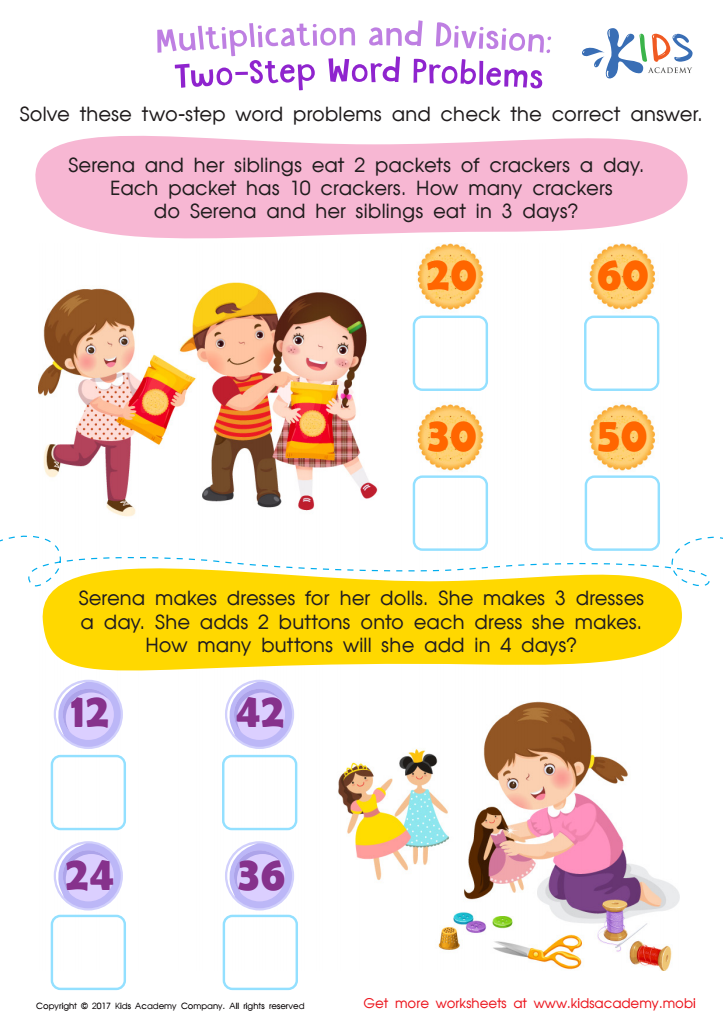
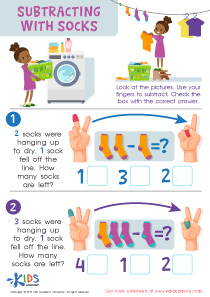
Two Step Word Problems Worksheet
 Assign to My Students
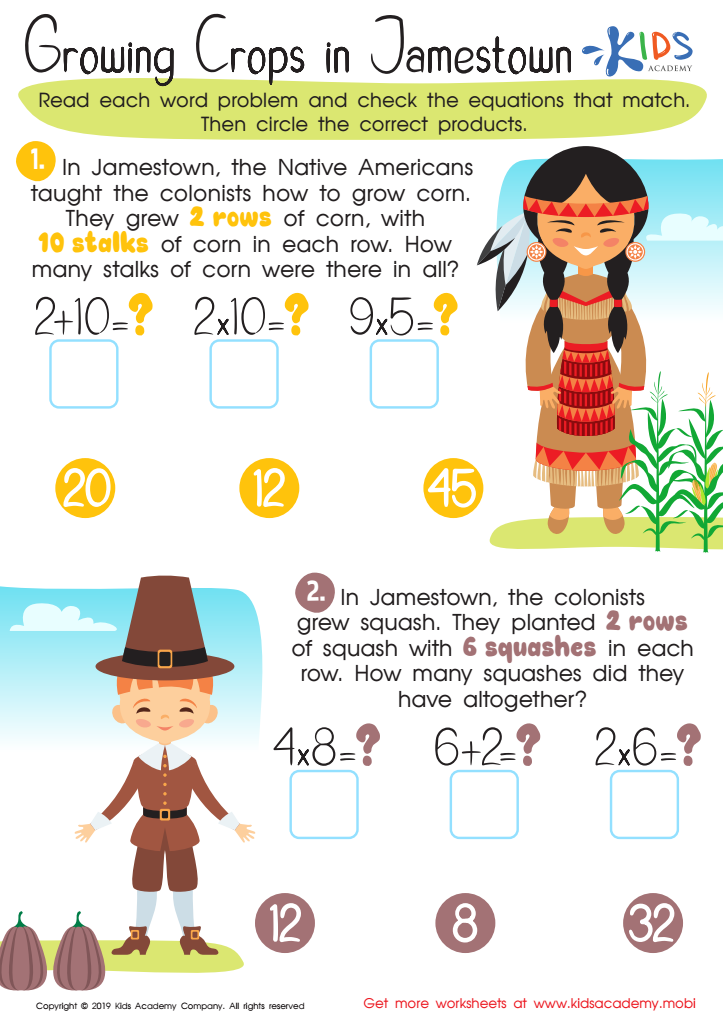
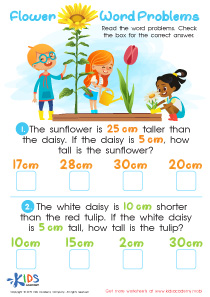
Growing Jamestown Worksheet
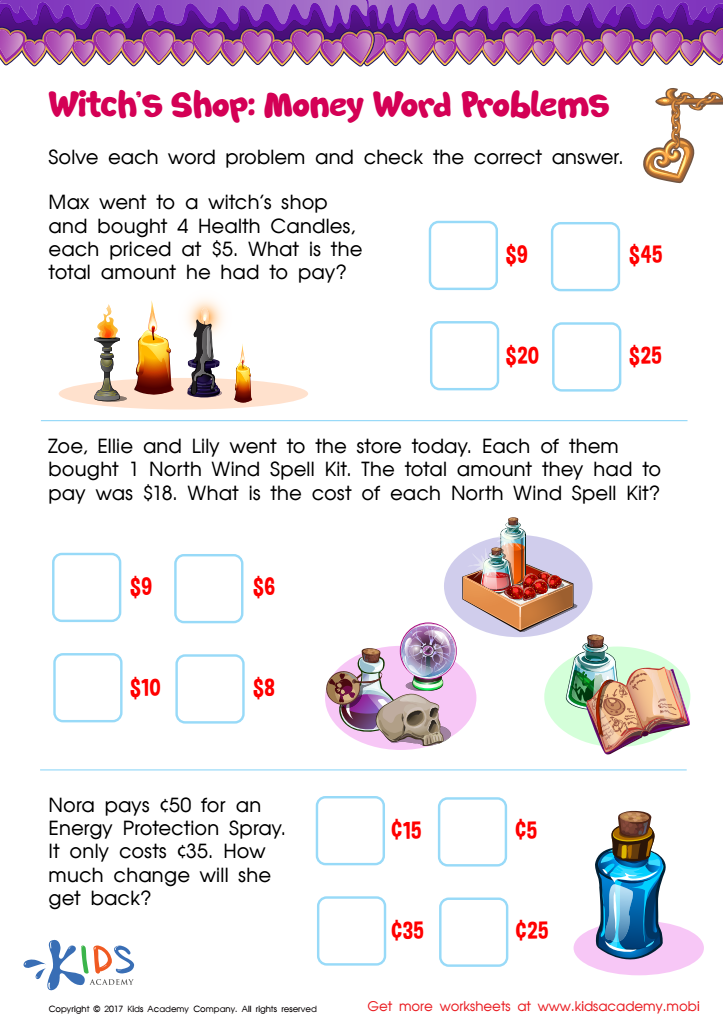
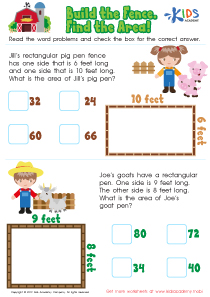
Money Word Problems Printable
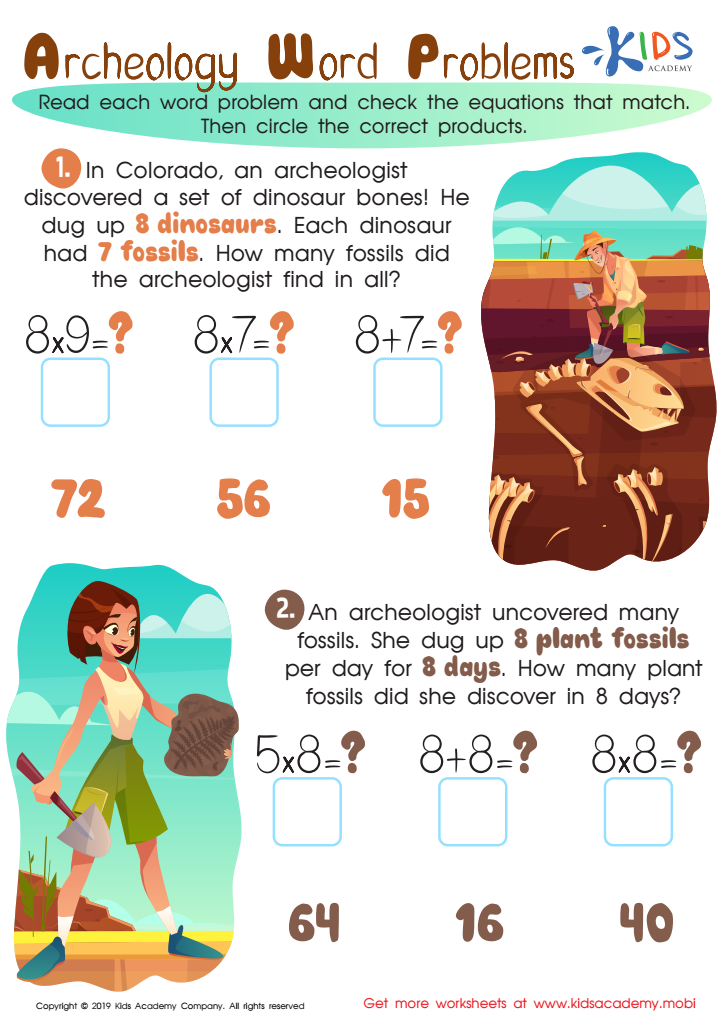
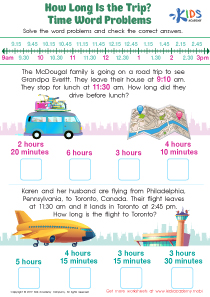
Archeology Word Problems Worksheet








At ages 3-4, foundational skills such as reading comprehension and basic mathematical concepts are crucial for cognitive and intellectual development. Even though direct multiplication and division are advanced, introducing foundational elements through age-appropriate word problems sets the stage for future understanding.
Firstly, reading comprehension is the ability to understand a text, which fuels the thirst for knowledge. Through storytelling and interactive play, children enhance vocabulary, listening skills, and cognitive abilities. Understanding simple instructions and storylines lays the groundwork for grasping more complex ideas.
Incorporating multiplication and division concepts through play and simple word problems nurtures early mathematical thinking. For example, sharing toys equally among friends introduces the basic principle of division, while combining groups of objects hints at multiplication. These activities foster problem-solving skills, attention to detail, and logical reasoning.
Furthermore, integrating these themes in playful and engaging ways reinforces the connection between learning and fun. Parents and teachers can use everyday scenarios to create little challenges that pique curiosity and encourage exploration. Early exposure ensures children build confidence and familiarity with these concepts, making the transition to formal education smoother. Therefore, investing time in these areas supports well-rounded development and creates a solid foundation for future academic success.