Cognitive Development Numbers 0–10 Worksheets for Ages 3-4
12 filtered results
Difficulty Level
Grade
Age
-
From - To
Subject
Activity
Standards
Boost your child's cognitive skills with our engaging Cognitive Development Numbers 0–10 Worksheets designed specifically for ages 3-4. These worksheets offer a fun and interactive way for young learners to familiarize themselves with numbers while enhancing their counting, recognition, and problem-solving abilities. Each activity is carefully crafted to encourage critical thinking and improve memory retention, allowing children to explore basic math concepts in a playful environment. Parents and educators can use these resources to support cognitive growth, making learning an enjoyable journey for little ones. Discover the joy of learning with our thoughtfully designed worksheets that inspire curiosity and confidence in early mathematics!
Favorites
With answer key
Interactive
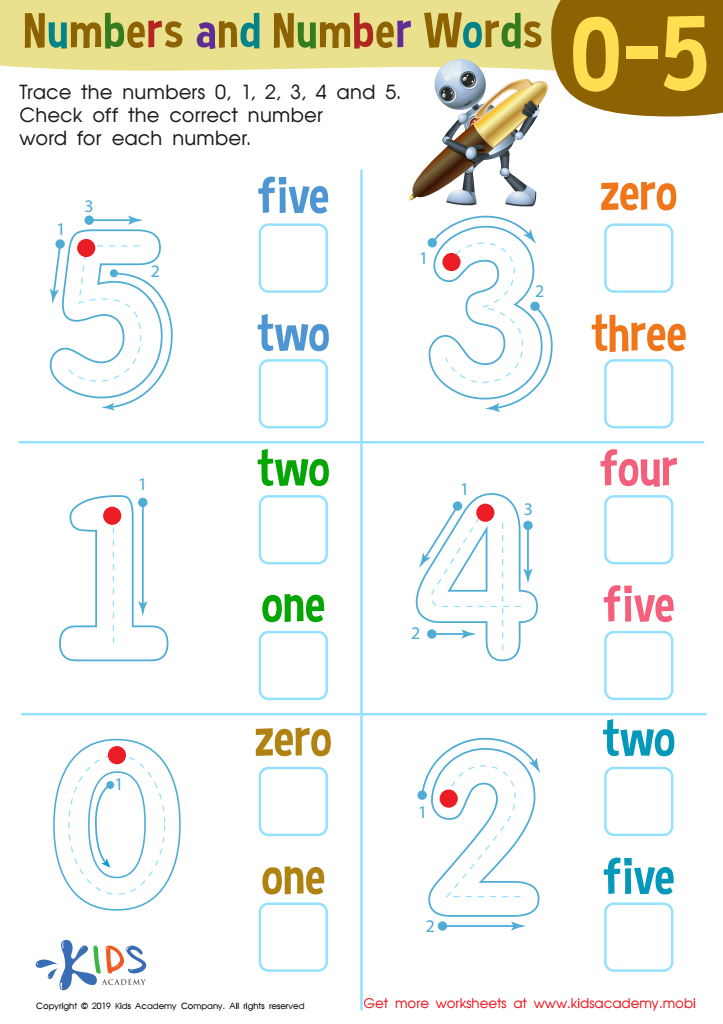
Numbers and Number Words Worksheet
Preschoolers can practice counting and recognizing numbers with this worksheet. Students trace the numbers zero through five and check the boxes next to each number to show the correct number word. Ideal for young kids, this printable helps them learn early math and number words.
Numbers and Number Words Worksheet
Worksheet
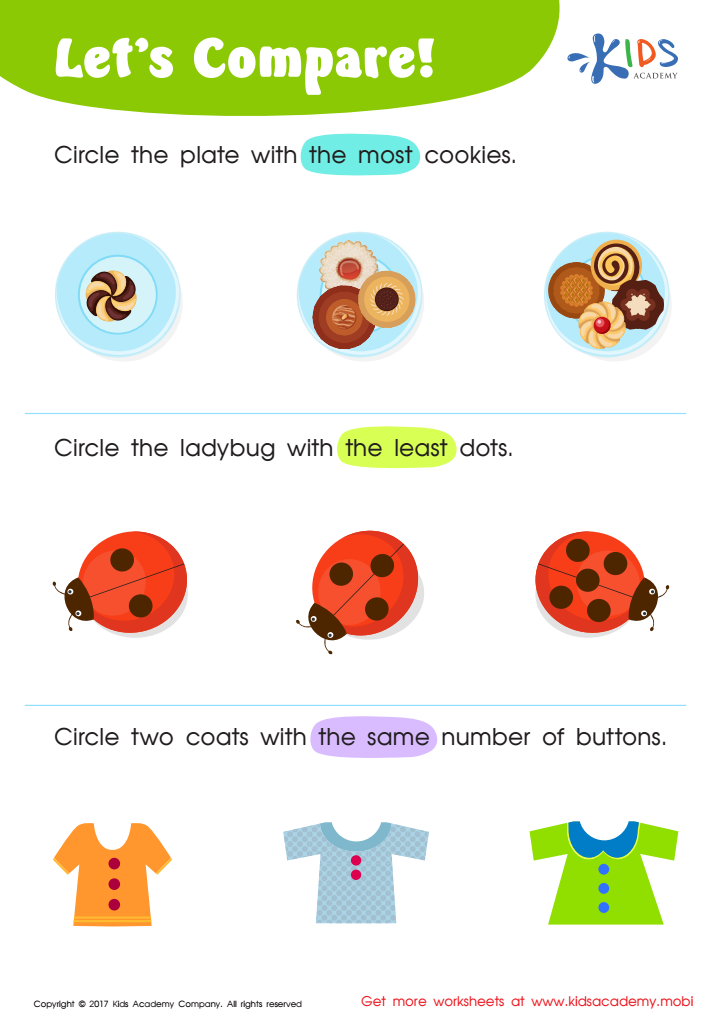
Matching: Classifying Toys by Size Worksheet
.
Have your young one's observation and counting skills ready for this worksheet; carefully look through the images and count the objects, then circle the plates with the least, most or equal number of patterns. Pay attention and have good counting abilities to make this task easy.
Matching: Classifying Toys by Size Worksheet
Worksheet
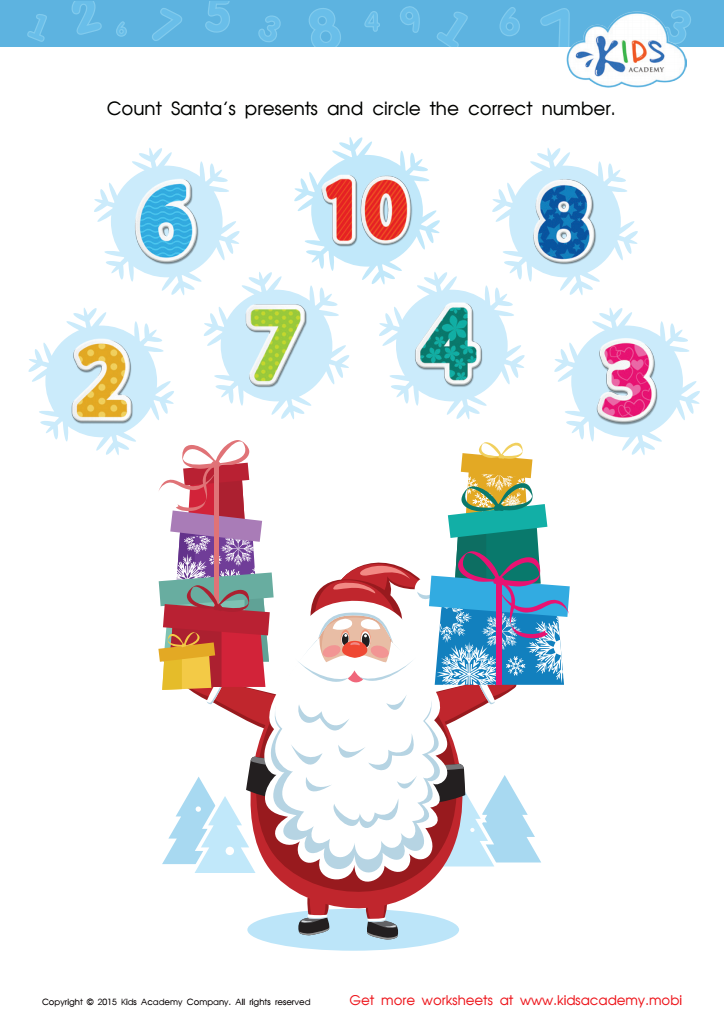
Count Santa's Presents Worksheet
With Kids Academy's free Christmas math worksheet, your kindergartener can help Santa count presents. The worksheet encourages recognizing and counting numbers, fostering the Christmas spirit. Print it out, have fun, and get ready to circle the right number! Get more math printables to learn numbers in a fun way.
Count Santa's Presents Worksheet
Worksheet
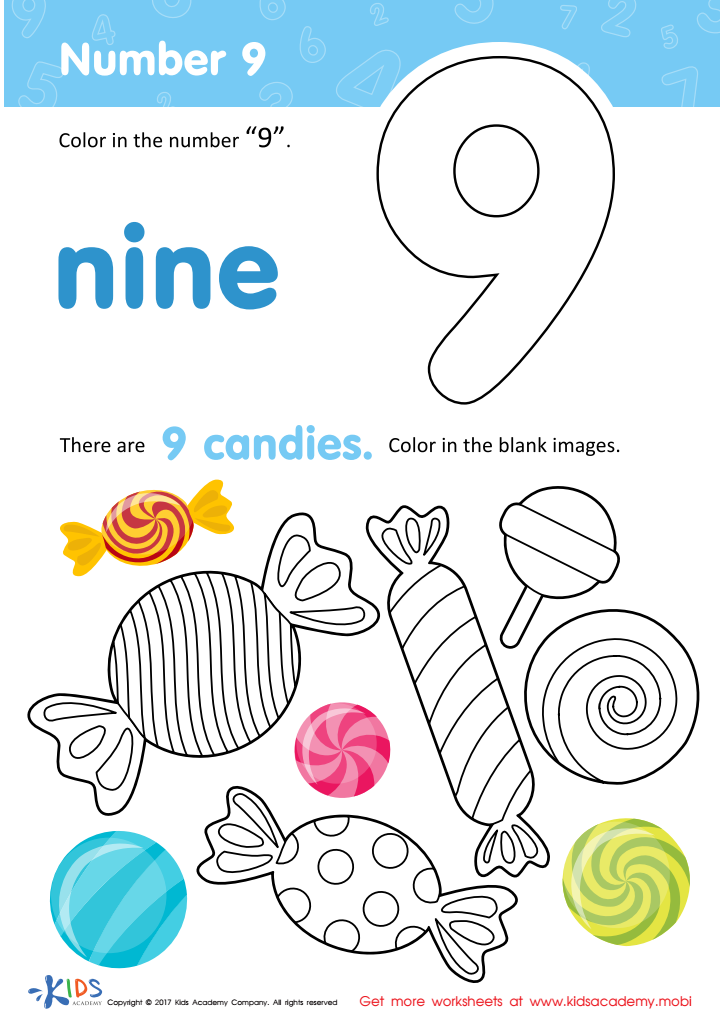
Number 9 Printable
Let your child hone their reading and counting skills with this fun coloring page! With the number 9 candies, your child can decorate their own favorite treats. Make learning a sweet experience and let their mouth water! Help them count and recognize the numbers while having fun.
Download (PDF)
 Assign to My Students
Assign to My Students
Number 9 Printable
Worksheet
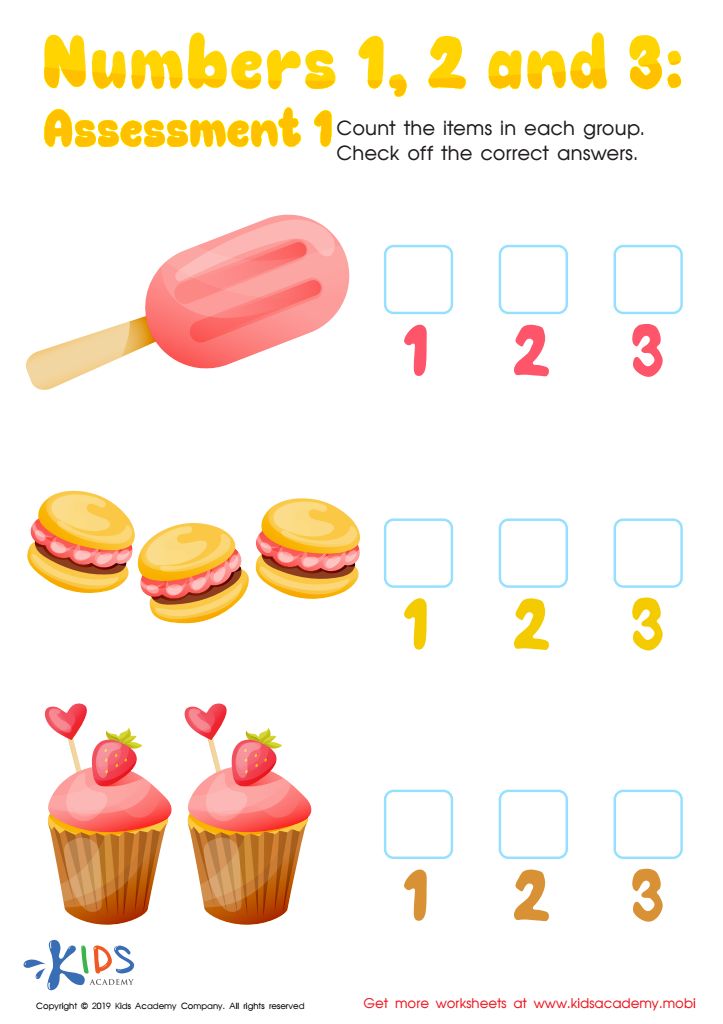
Numbers 1, 2 and 3: Assessment 1 Worksheet
This bright and colorful numbers assessment worksheet is a great way to assess your child's numeracy skills. It provides a sweet treat for them, and helps them recognise 1, 2 or 3 objects. One-to-one representation is key for foundational math skills, and this PDF helps your child build these essential skills.
Numbers 1, 2 and 3: Assessment 1 Worksheet
Worksheet
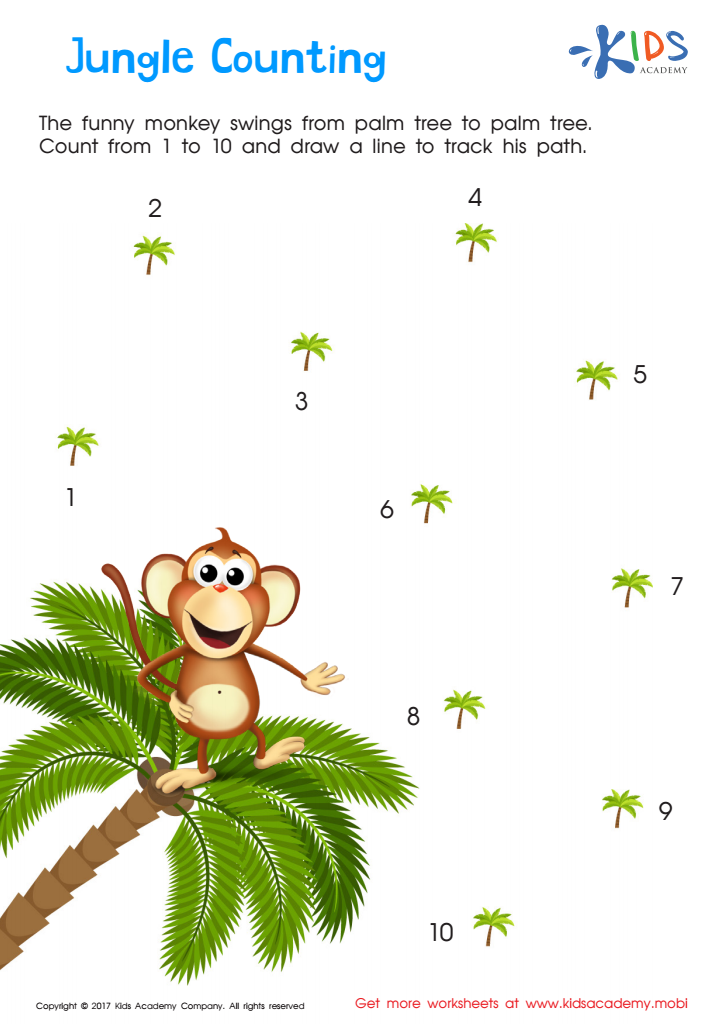
Jungle Counting Connect Dots Worksheet
Help your child count from 1-10 and practice problem solving skills with this dot to dot worksheet. Your child will enjoy helping the cute monkey swing from tree to tree while honing their math skills. Let them have a jungle-themed counting adventure!
Jungle Counting Connect Dots Worksheet
Worksheet
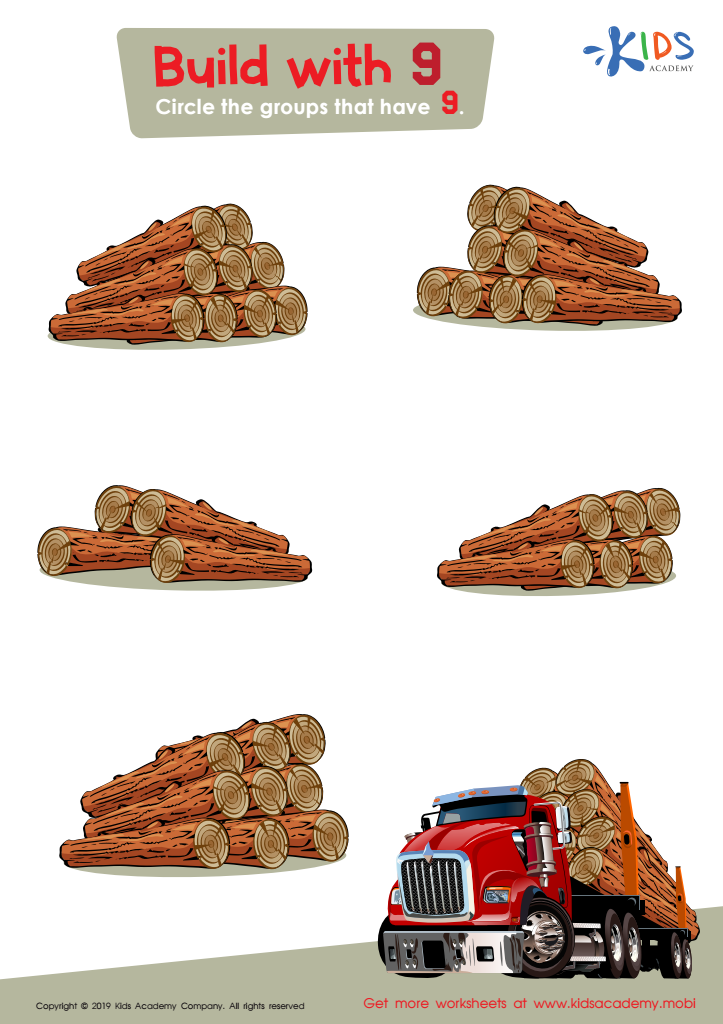
Build with 9 Worksheet
Your students' learning journey can be challenging, but ultimately rewarding. This worksheet helps them practice counting: count the logs in all the groups and circle those with 9 logs.
Build with 9 Worksheet
Worksheet
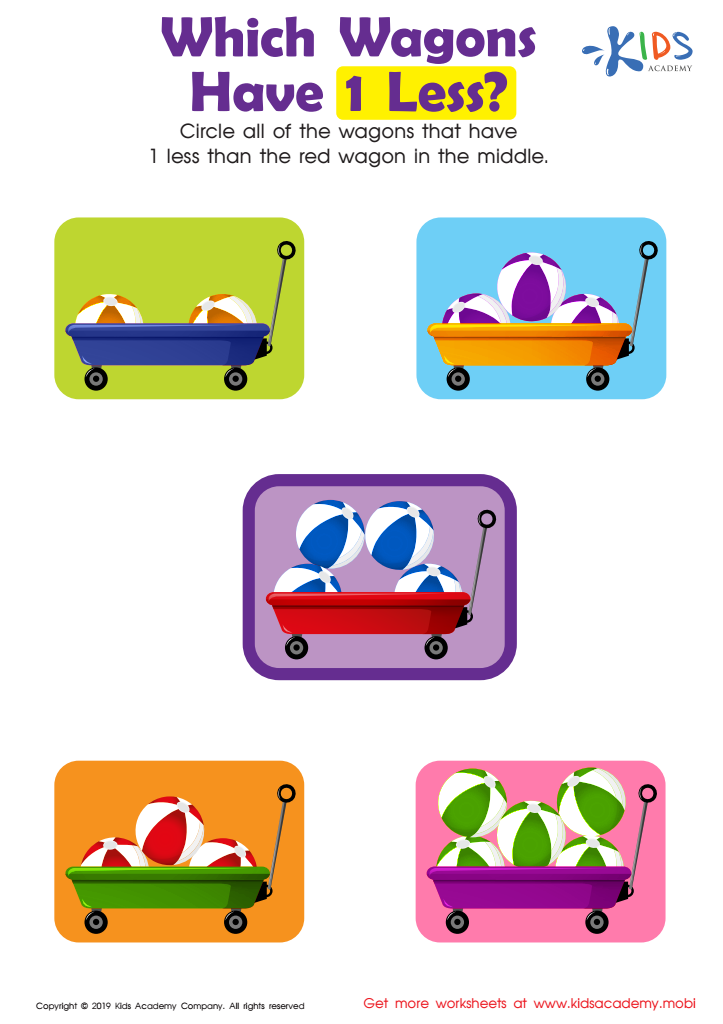
Which Wagons Have 1 Less? Worksheet
Test your kid's counting skills with a simple exercise. Ask them to count the balls in the five wagons shown and to circle the wagons with one less than the red wagon in the middle. This will give their brains a simple task that tests their knowledge of numbers.
Which Wagons Have 1 Less? Worksheet
Worksheet
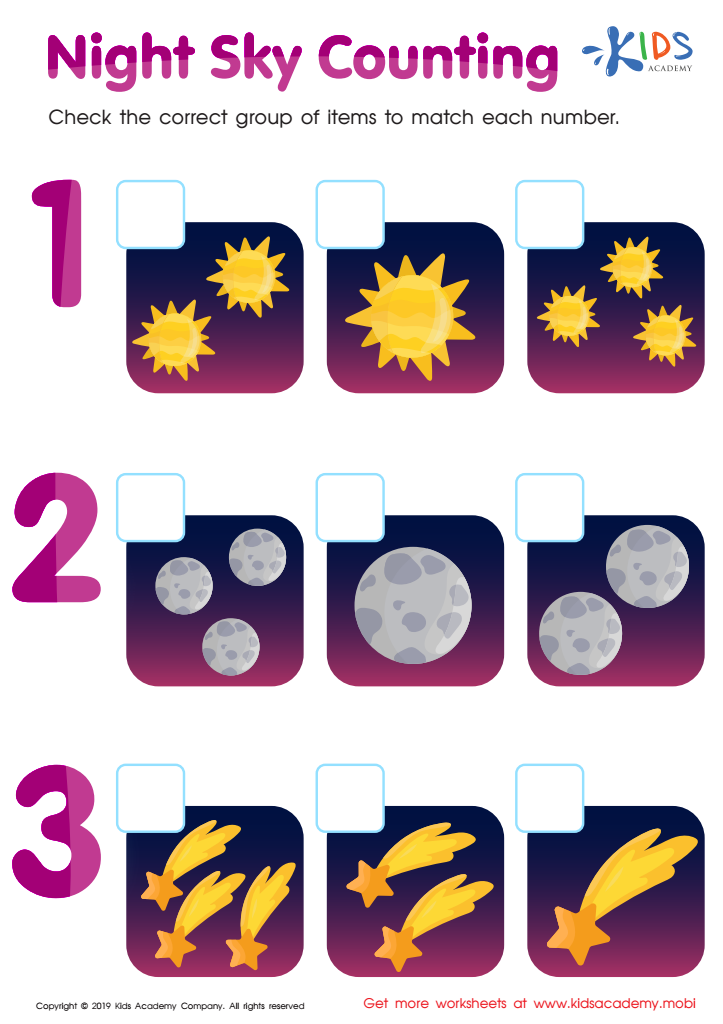
Night Sky Counting Worksheet
Twinkle, little star! Counting is fun with this Night Sky worksheet. Kids use colorful pictures and basic counting skills to match numerals with their corresponding group of items. It's a great way to let them practice number sense and one-to-one representation while having fun!
Night Sky Counting Worksheet
Worksheet
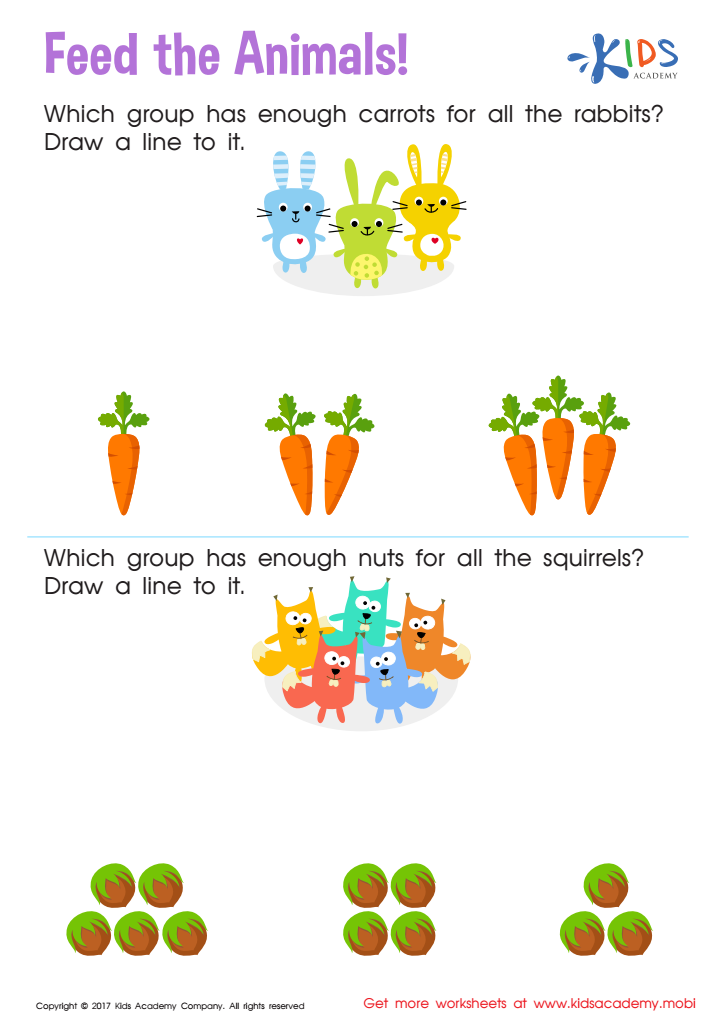
Count and Match: Feed the Animals Worksheet
Learning and growing involves more than just numbers, phonics and comparison. This Feed the Animals worksheet helps kids to exercise their reasoning skills. They must work out how many rabbits and carrots there are, and then repeat the process for the squirrels. This encourages problem solving and counting skills.
Count and Match: Feed the Animals Worksheet
Worksheet
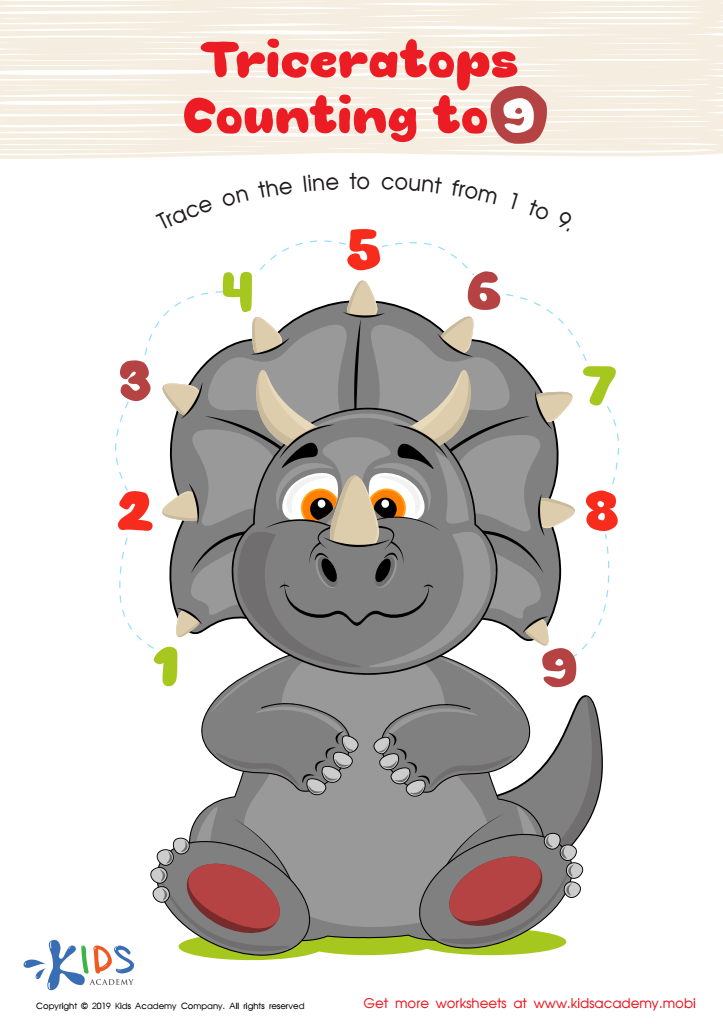
Triceratops Counting to 9 Worksheet
This little triceratops is here to help kids learn to count! Dinosaurs lived long before us and we've never seen one alive, but through research, we know a lot about them. Let the dinosaur help trace on the line from 1 to 9 for a fun counting practice.
Triceratops Counting to 9 Worksheet
Worksheet
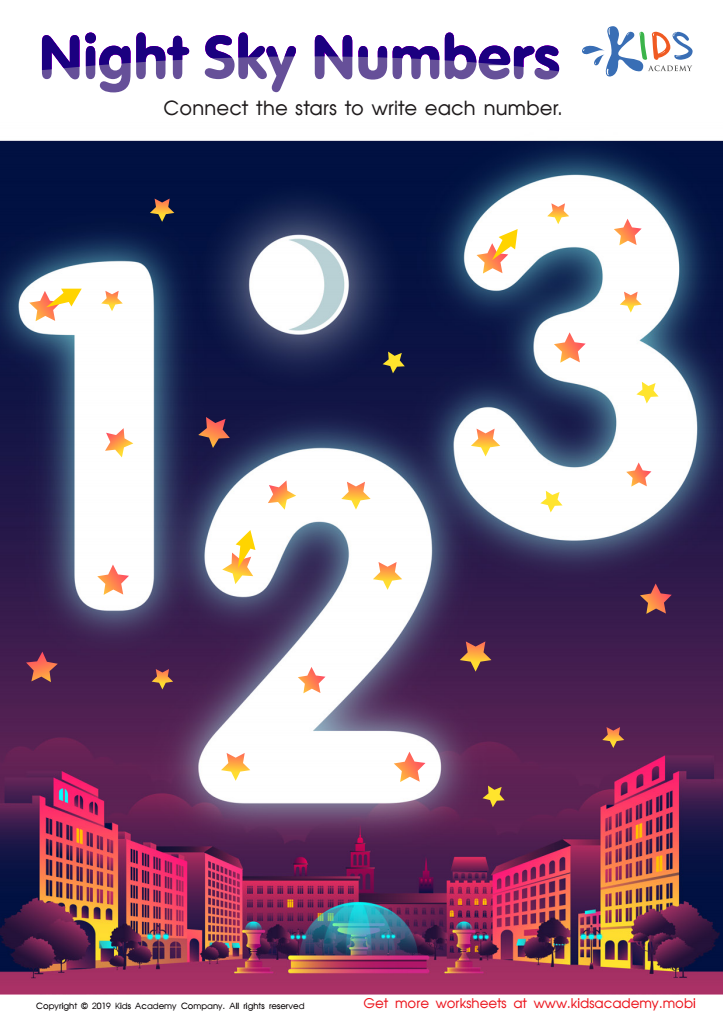
Night Sky Numbers Worksheet
Help your child develop their writing skills with this fun PDF worksheet! Using guiding stars, it teaches them the correct patterns for numbers 1, 2 and 3. They'll have a great time tracing their way from the top and will feel a sense of achievement when they finish.
Night Sky Numbers Worksheet
Worksheet
Join Kids Academy for Free
Who is primarily going to use this learning content?








Cognitive development in the early years, particularly regarding numbers 0-10 for children ages 3-4, is crucial for building foundational mathematical skills. During this period, children's brains are like sponges, absorbing information and learning concepts that will influence their future academic success. Understanding numbers lays the groundwork for essential skills such as counting, recognizing patterns, and problem-solving.
When parents and teachers engage children in activities involving numbers, they promote critical thinking and enhance memory retention. For instance, simple games involving counting objects, singing number songs, or engaging in everyday contexts, like shopping or cooking, can make learning fun and meaningful.
Furthermore, early exposure to numbers helps cultivate a positive attitude towards math, reducing anxiety around the subject as they advance in their educational journey. Teachers can incorporate play-based learning techniques, and parents can reinforce these concepts at home, creating a consistent learning environment.
Investing time in recognizing numbers 0-10 can significantly impact children's success in future math concepts, as early cognitive skills often correlate to later academic achievement. Therefore, involving parents and teachers in fostering these foundational skills is essential for holistic child development and lifelong learning.