Pattern recognition Patterns Worksheets for Ages 3-4
5 filtered results
-
From - To
Discover our engaging Pattern Recognition Worksheets designed specifically for children ages 3-4! These worksheets aim to develop essential early math skills through fun and interactive activities. Young learners will explore various patterns using colorful visuals that capture their interest and spark creativity. Each worksheet encourages critical thinking as children identify and complete patterns, enhancing their cognitive development while having fun. Perfect for use at home or in the classroom, our resources foster independent learning and promote fine motor skills as kids color and draw. Start your child's math journey today with our delightful and educational pattern recognition worksheets!
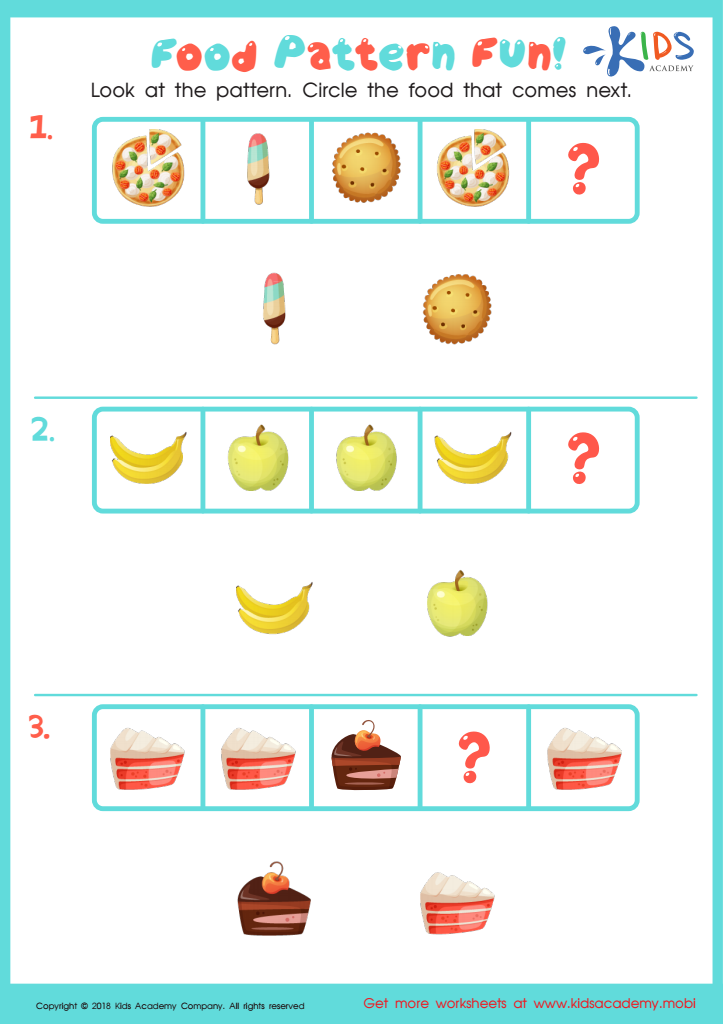
Food Pattern Fun Worksheet
 Assign to My Students
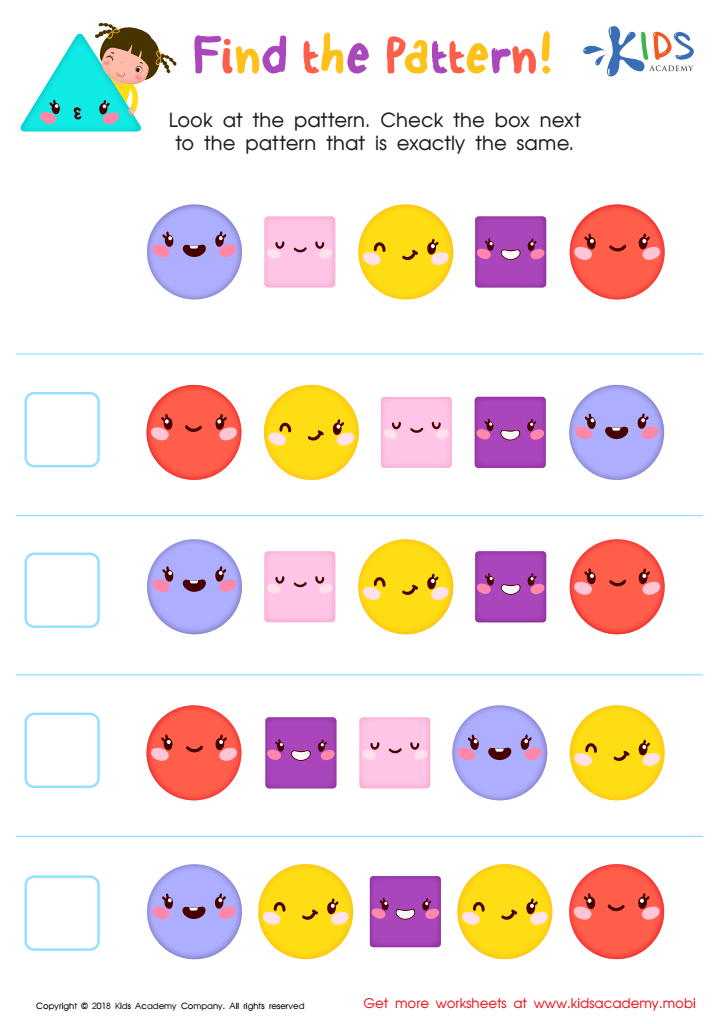
Find the Pattern Worksheet
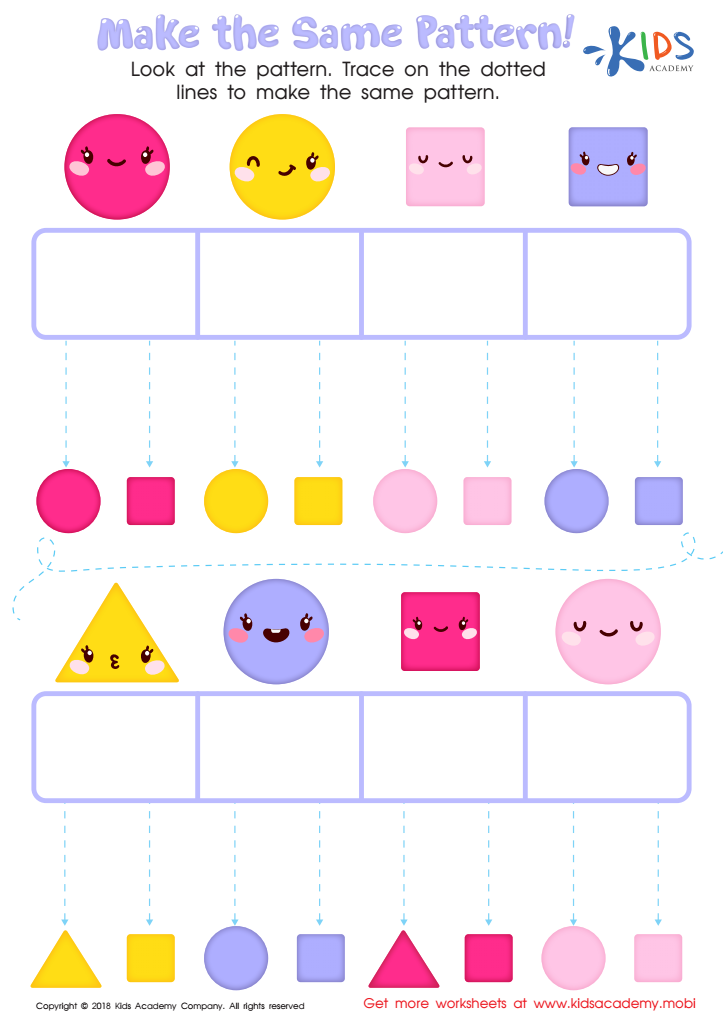
Make the Same Pattern Worksheet
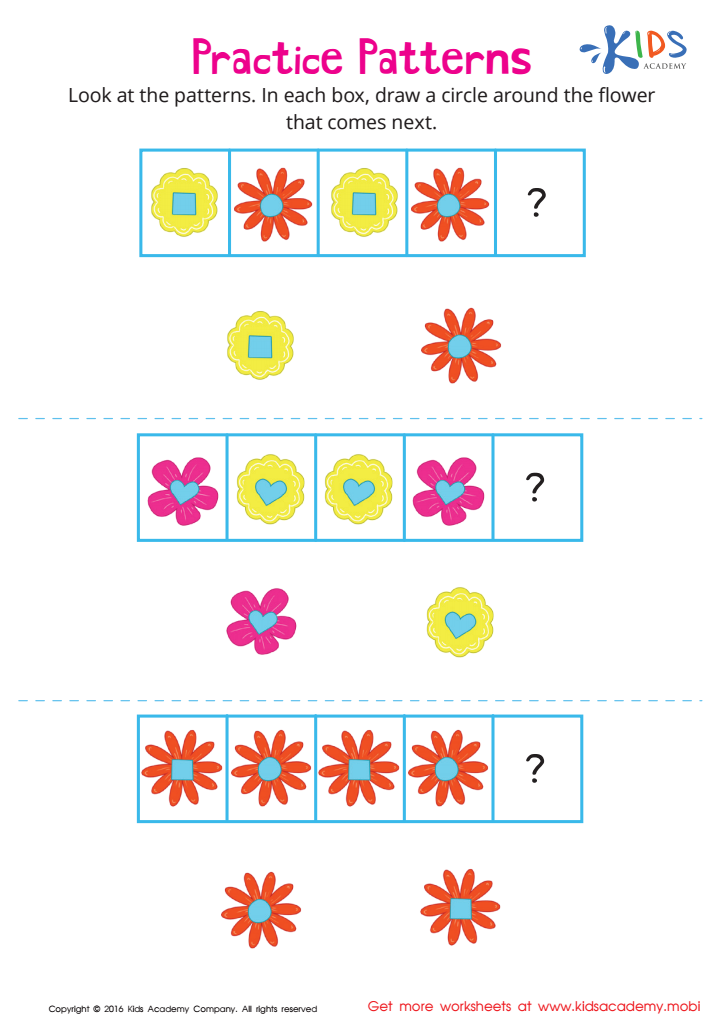
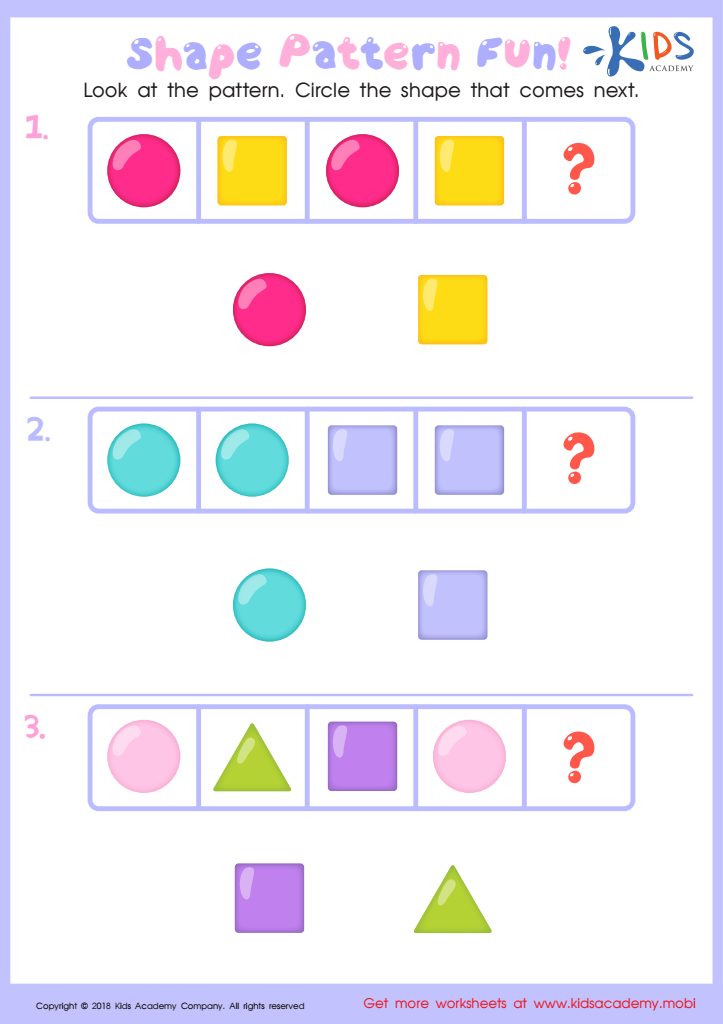
Shape Pattern Fun Worksheet






Pattern recognition is a fundamental cognitive skill that significantly impacts a child's learning and development, especially for ages 3-4. During this stage, children are naturally curious and eager to make sense of the world around them. By recognizing patterns, they begin to understand sequences, relationships, and predictability, which are crucial for later learning in mathematics, language, and even social skills.
For parents and teachers, fostering pattern recognition helps create a strong foundation for problem-solving abilities. Engaging children in activities such as sorting, sequencing, and identifying patterns in daily life (like colors, shapes, and sounds) not only enhances their cognitive development but also promotes critical thinking. Furthermore, it can boost their confidence as they learn to decipher complexities in their environment.
Additionally, pattern recognition allows for the development of language and communication skills. When children articulate patterns, they practice vocabulary, learn to express thoughts, and strengthen their reasoning abilities. For these reasons, it’s essential for parents and teachers to provide opportunities and environments that encourage exploration of patterns, making learning not just fun, but also integral to holistic development. By investing time in this area, adults can effectively support children's growth in numerous cognitive and social dimensions.








