Counting skills Sorting Worksheets for Ages 3-4
3 filtered results
-
From - To
Unlock the joy of learning numbers with our Counting Skills Sorting Worksheets designed for ages 3-4! These engaging printables are expertly crafted to develop early math skills through fun sorting activities. Each worksheet helps preschoolers practice counting, recognizing numbers, and organizing objects by various attributes. With colorful visuals and simple instructions, children enjoy building a strong numerical foundation while preparing for kindergarten. Perfect for parents and educators, these worksheets make learning math an exciting adventure. Enhance your little one's counting prowess today for a brighter, math-friendly future! Download now and watch your child excel.
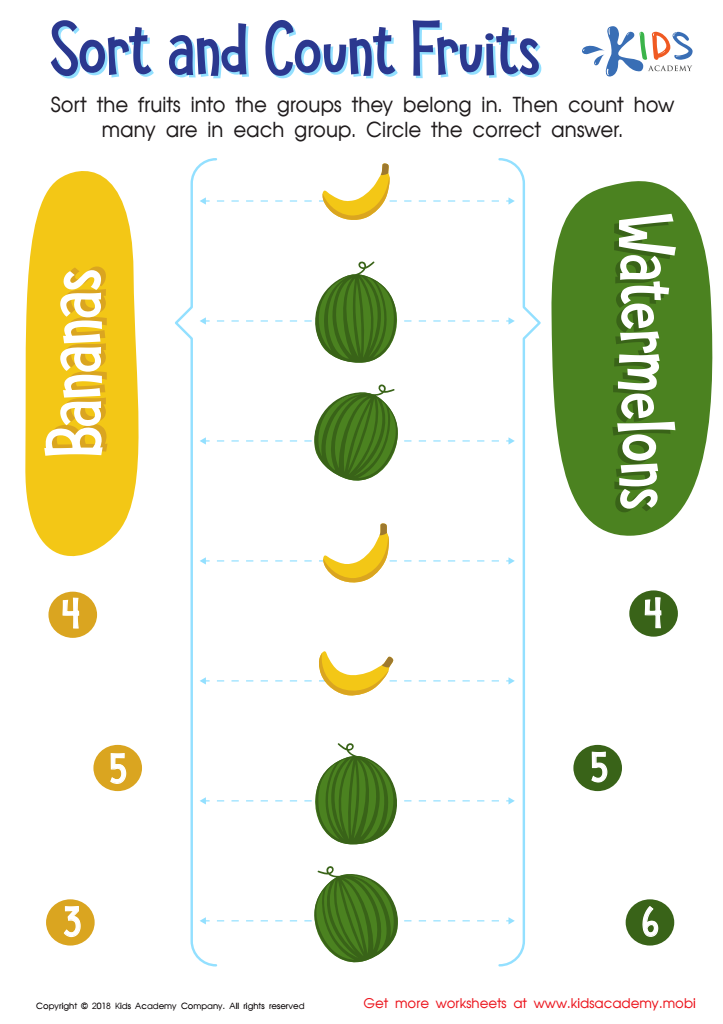
Sort and Count Fruits Worksheet
 Assign to My Students
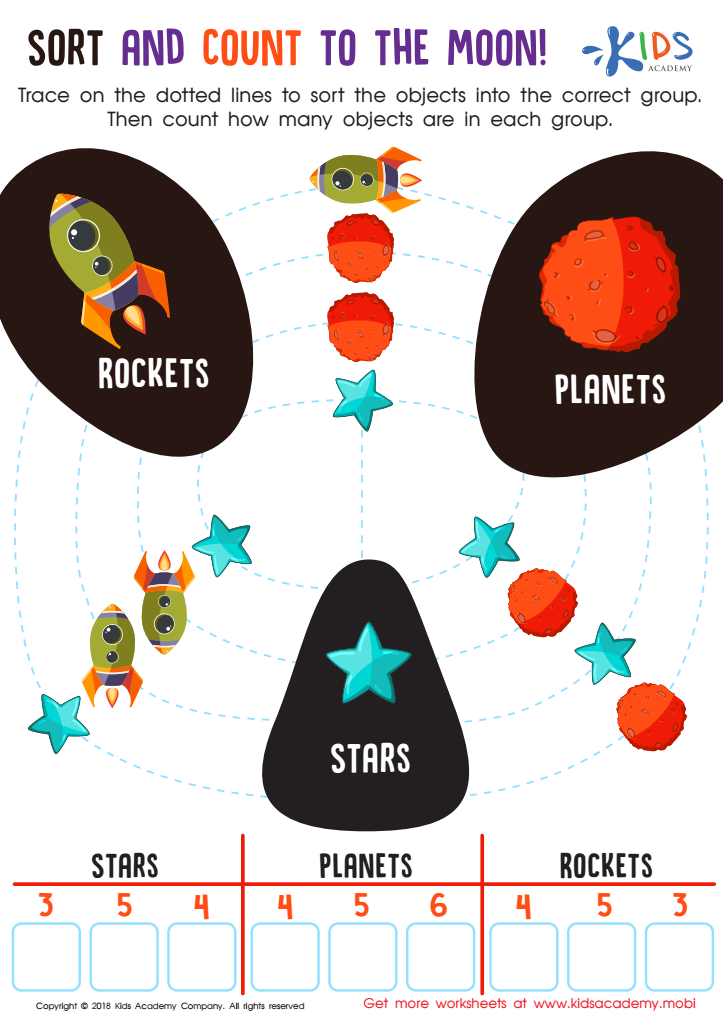
Sort and Count to the Moon Worksheet
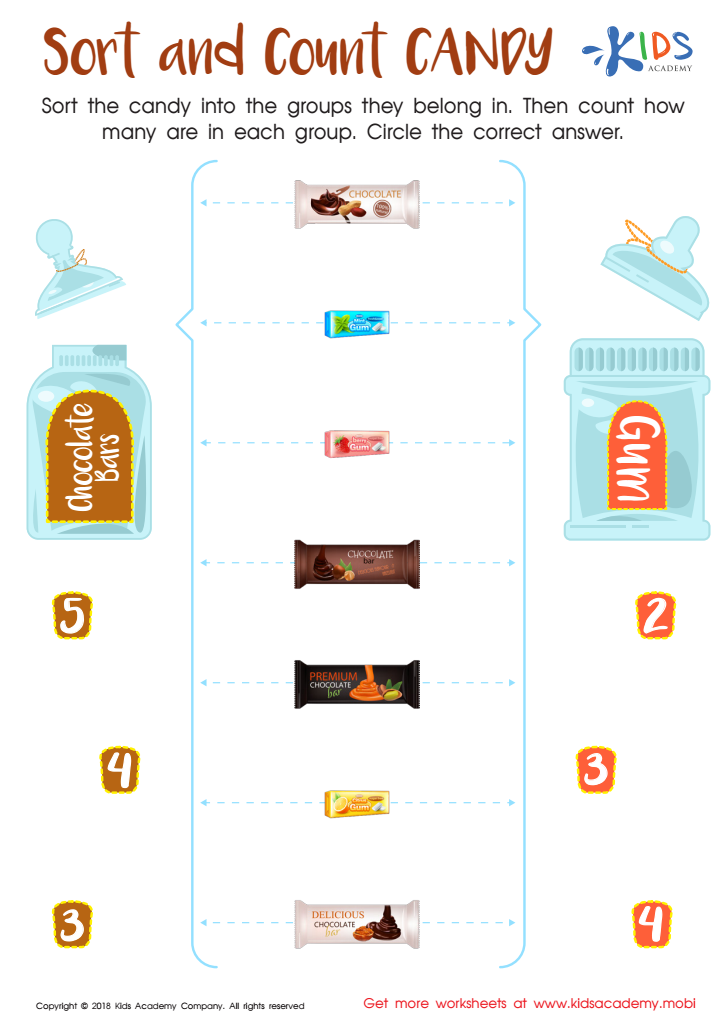
Sort and Count Candy Worksheet








Counting and sorting skills are fundamental building blocks in early childhood education, forming the cornerstone of future math proficiency for children aged 3-4. These activities lay the groundwork for understanding number sense, critical thinking, and cognitive development.
For parents and teachers, investing time in developing a child's counting skills helps them grasp the basic concept of numbers, sequencing, and the relationship between quantities. Counting involves recognizing patterns and order, which are crucial for more advanced mathematical operations they will encounter later in school.
Sorting, on the other hand, enhances a child's ability to categorize and organize objects based on different attributes such as shapes, sizes, or colors. This skill is vital for problem-solving and logical reasoning and helps children understand the concept of similarities, differences, and classification.
Moreover, engaging pre-schoolers in counting and sorting activities supports language development as they learn to articulate number names and categorize descriptions. It also fosters fine motor skills as they manipulate small objects, and promotes social interactions if done in group settings, bolstering emotional and social development.
In summary, fostering counting and sorting skills at an early age is an investment in a child's holistic growth, equipping them with essential tools for academic success and everyday problem-solving. By prioritizing these foundational activities, parents and teachers set the stage for lifelong learning.








