Visual discrimination Sorting Worksheets for Ages 3-4
3 filtered results
-
From - To
Introduce young learners to the wonderful world of sorting with our engaging Visual Discrimination Sorting Worksheets designed specifically for ages 3-4. These vibrant, easy-to-follow worksheets help children develop critical pre-reading skills, improve focus, and enhance cognitive abilities. By identifying differences and similarities, children will learn to categorize items by shape, size, and color. Our worksheets provide a fun, interactive way to bolster visual perception, helping kids understand the basics of organization and classification. Perfect for home or classroom use, these activities will keep young minds engaged while offering a valuable educational foundation. Start your child's learning journey today!
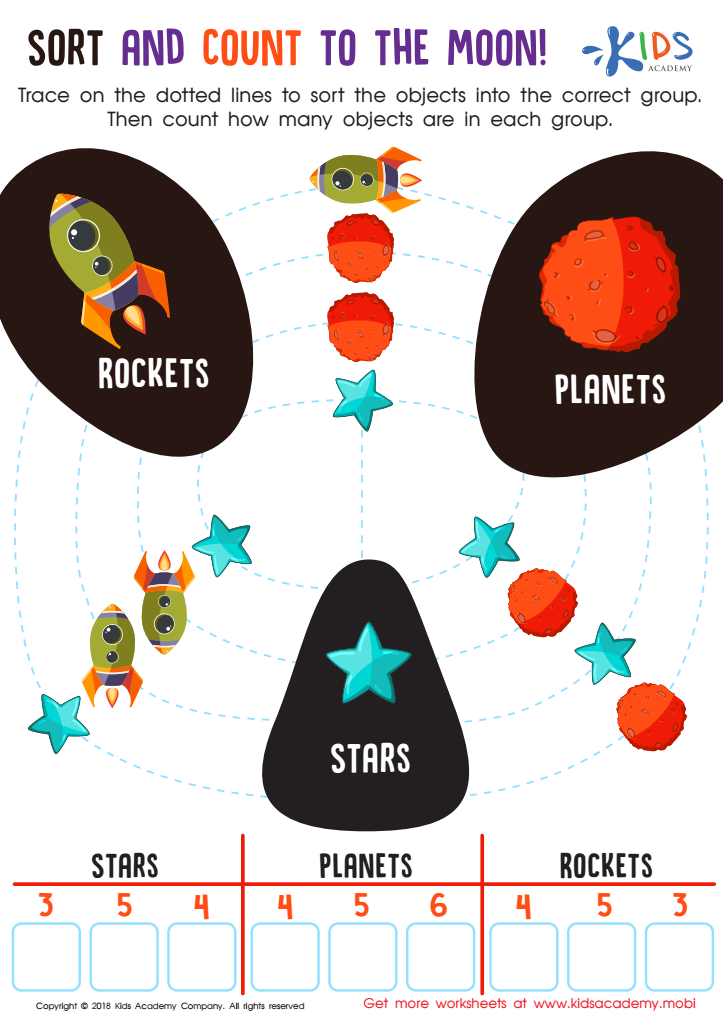
Sort and Count to the Moon Worksheet
 Assign to My Students
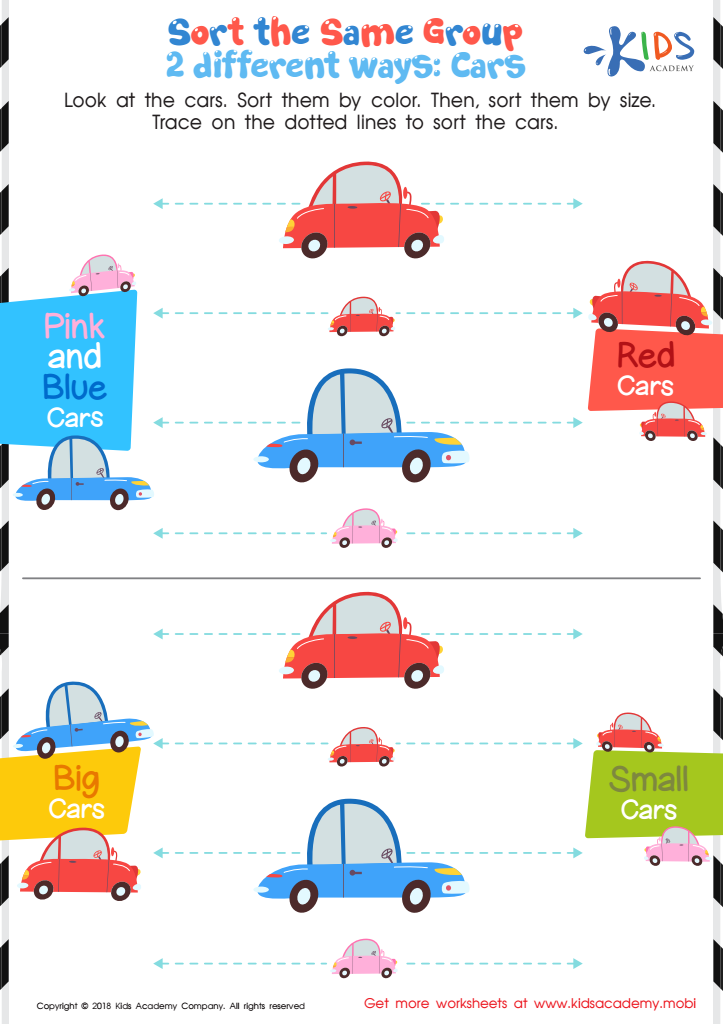
Sort the Same Group 2 Different Ways: Cars Worksheet
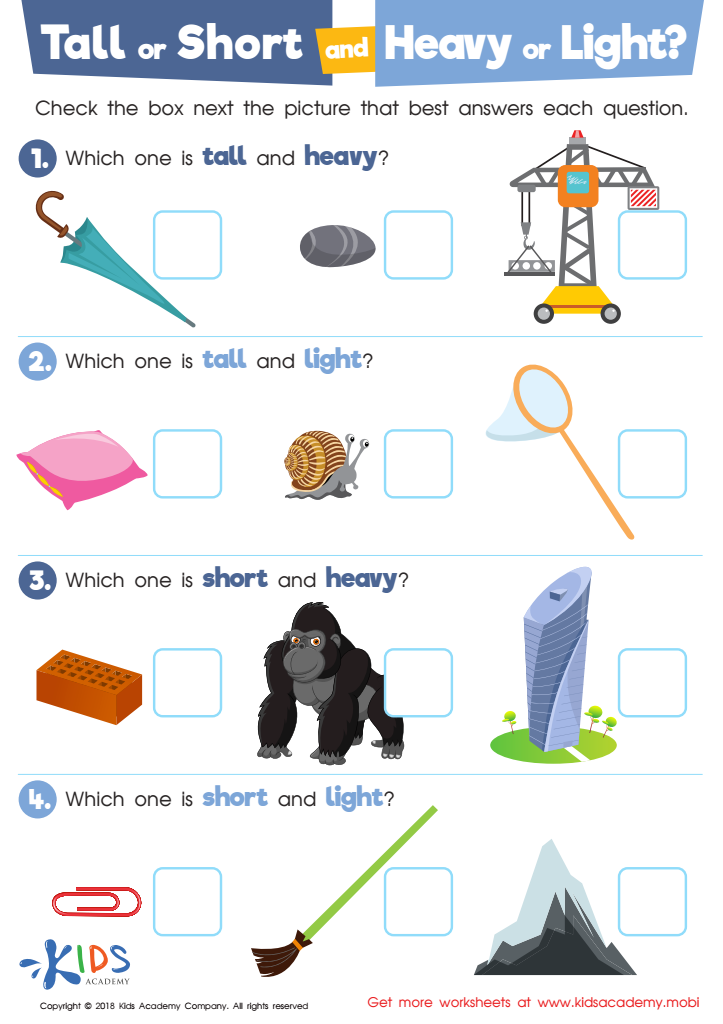
Tall or Short and Heavy or Light? Worksheet








Visual discrimination sorting is a foundational skill that parents and teachers should prioritize for children aged 3-4. This cognitive ability involves the recognition of differences and similarities in visual stimuli, such as shapes, colors, sizes, and patterns, which is essential for overall cognitive development. Fostering visual discrimination at an early age lays the groundwork for more complex learning tasks, including reading and mathematics.
In reading, visual discrimination helps children distinguish between letters and words. For example, recognizing the difference between 'b' and 'd' is crucial for literacy. In mathematics, sorting and categorizing objects according to attributes such as size or color helps children grasp early mathematical concepts such as counting and sorting.
Moreover, visual discrimination strengthens observational skills and attention to detail. These critical skills are not only important for academic success but also for everyday tasks. For example, being able to differentiate between various signs and symbols can aid in navigation and safety.
Engaging children in sorting activities can be both educational and enjoyable. Simple exercises like sorting blocks by color or size, playing matching games, or completing puzzles can make learning fun and effective. By investing time in developing visual discrimination skills, parents and teachers set the stage for a child's future academic achievements and problem-solving abilities.








