Basic math operations Word Problems Worksheets for Ages 3-4
3 filtered results
-
From - To
Boost your child’s early mathematical skills with our engaging Basic Math Operations Word Problems Worksheets tailored for ages 3-4! These worksheets introduce young learners to essential math concepts through fun and relatable scenarios that stimulate critical thinking. Perfect for preschool-aged children, they feature simple addition and subtraction problems embedded in colorful stories that capture attention and encourage problem-solving. Our age-appropriate activities foster not only number sense but also develop language skills and comprehension. Download our printable worksheets today to make learning math an enjoyable adventure for your little ones, setting a strong foundation for their future educational journey!
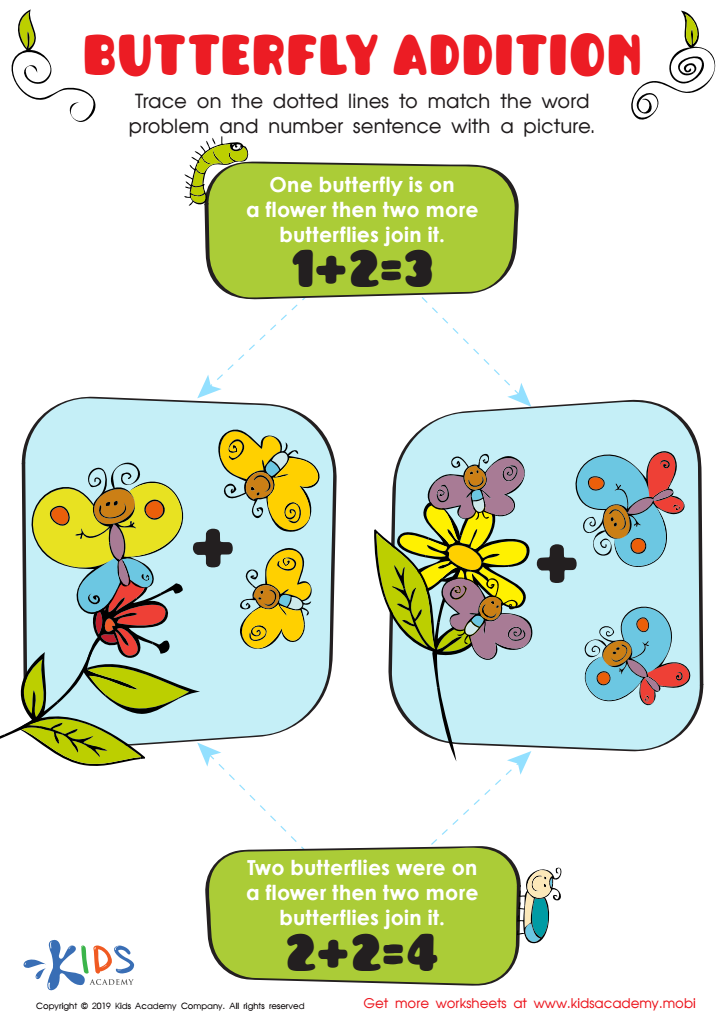
Butterfly Addition Worksheet
 Assign to My Students
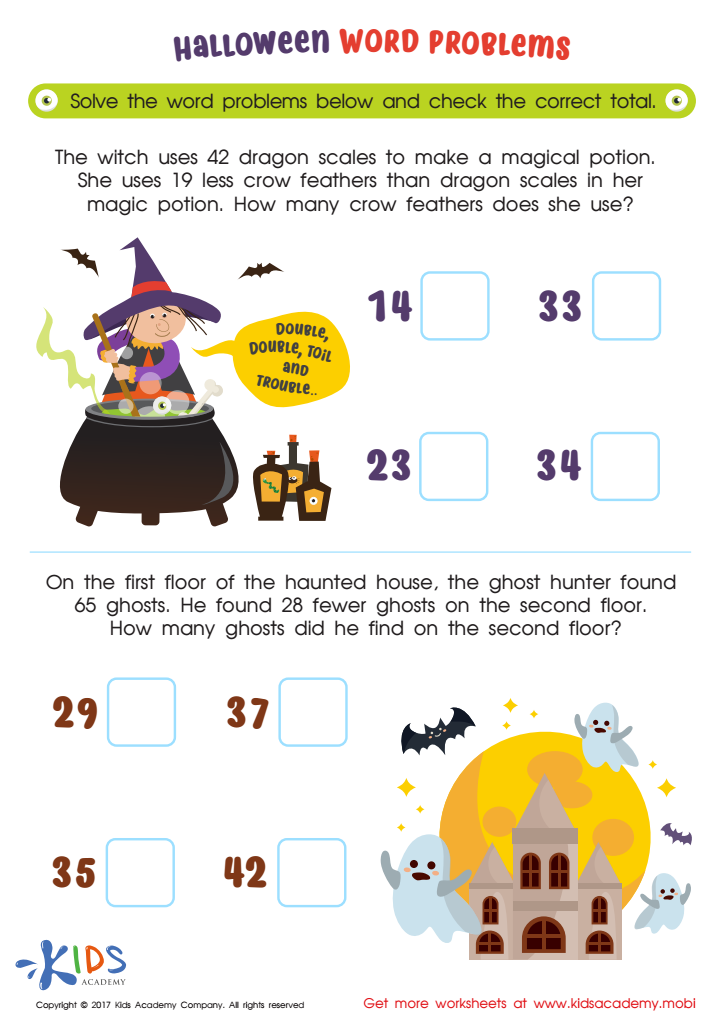
Halloween Word Problems Printable
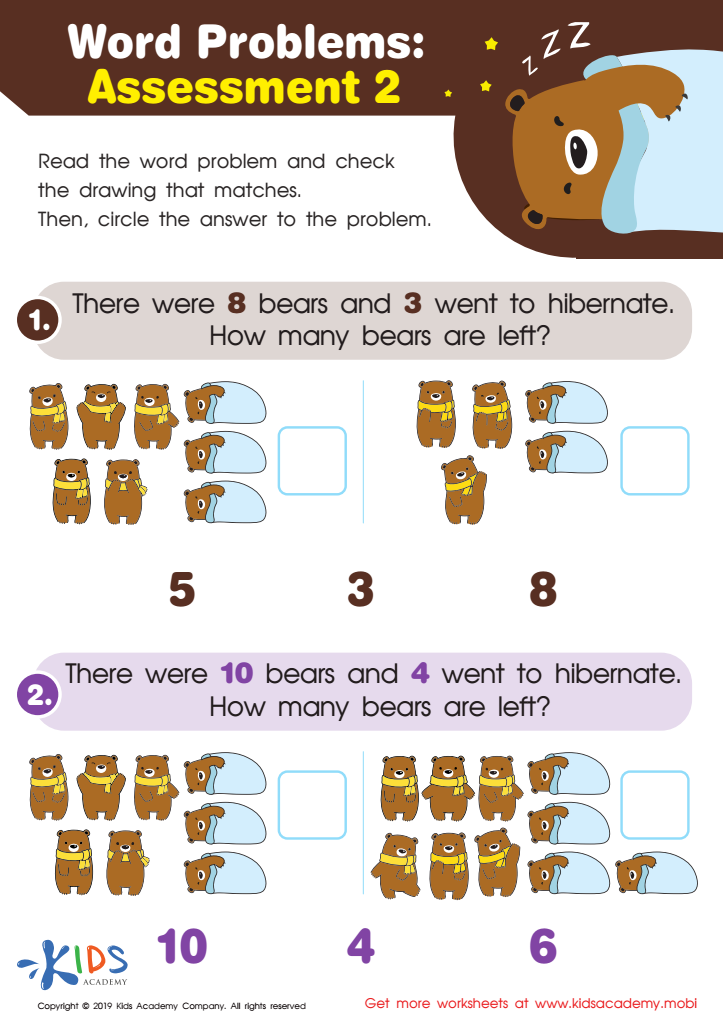
Word Problems: Assessment 2 Worksheet








Basic math operations and word problems are essential for children aged 3-4 as they lay the foundation for critical thinking and problem-solving skills. At this early stage, kids are naturally curious, and engaging them in math through storytelling helps make abstract concepts tangible and relatable. Introducing simple word problems, such as counting toys or sharing snacks, helps children understand core math operations—addition, subtraction, and even basic multiplication—in a fun context.
Parents and teachers should care because these word problems promote literacy alongside numeracy. As children listen to and discuss stories involving math, they develop language skills and comprehend instructions better. Literature combined with math encourages active participation, as children become storytellers of their own experiences.
Additionally, tackling word problems enhances cognitive development by encouraging children to visualize scenarios, ask questions, and seek solutions. This improves their ability to think logically and boosts their confidence in handling numbers. By integrating basic math operations through relatable word problems, parents and teachers equip children with essential skills that will benefit them academically and socially as they progress in their education. Supporting this early foundation ultimately fosters a positive attitude toward math that lasts a lifetime.








