Visual Learning Word Problems Worksheets for Ages 3-4
5 filtered results
-
From - To
Discover our engaging Visual Learning Word Problems Worksheets designed specifically for children ages 3-4! These worksheets simplify complex concepts through colorful visuals and relatable scenarios, making math accessible and fun for young learners. Perfect for developing critical thinking skills, each worksheet encourages kids to solve realistic problems while enhancing their understanding of numbers and basic math operations. Our resources support early childhood education by fostering a love for learning in a playful environment. Empower your little ones with essential problem-solving abilities that form the foundation for future success. Explore our collection today and make math an enjoyable adventure!
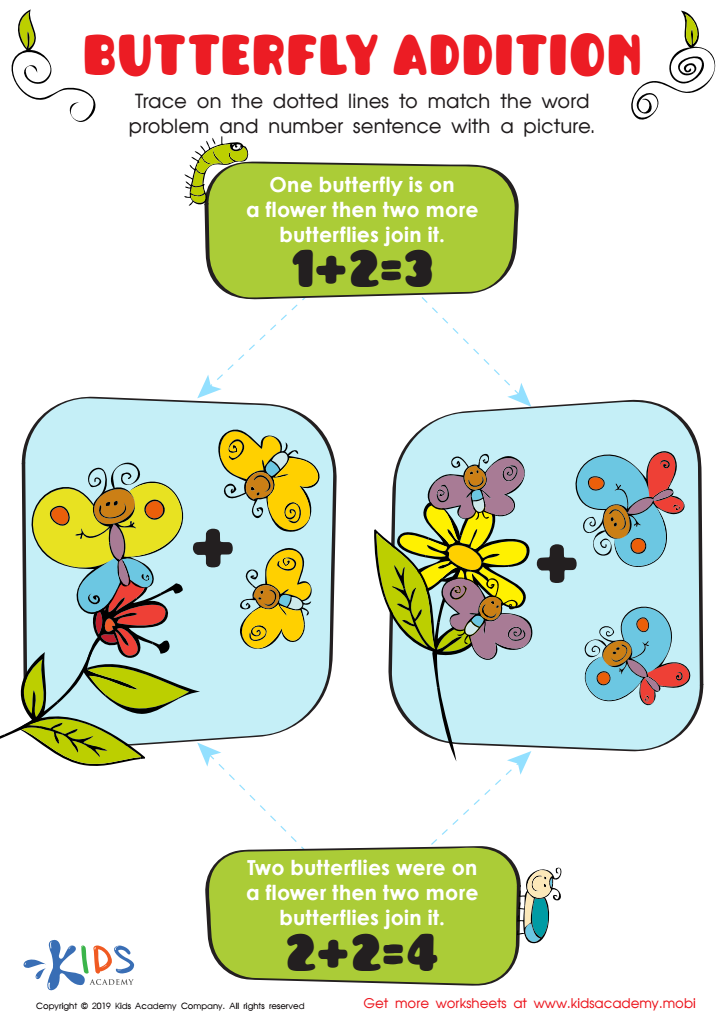
Butterfly Addition Worksheet
 Assign to My Students
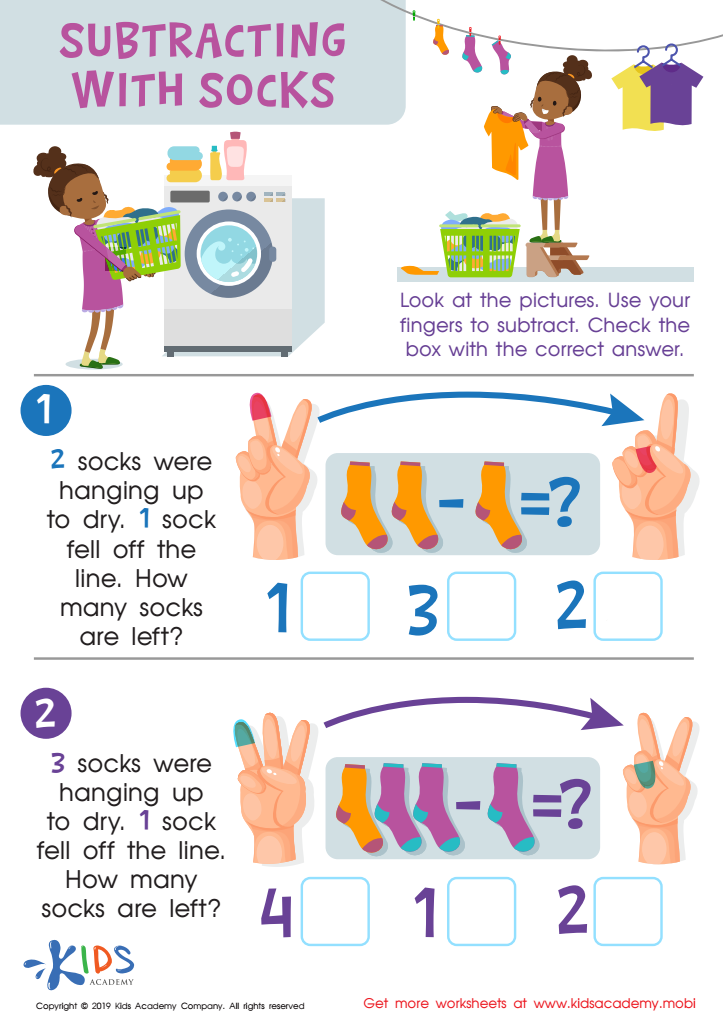
Subtracting Socks Worksheet
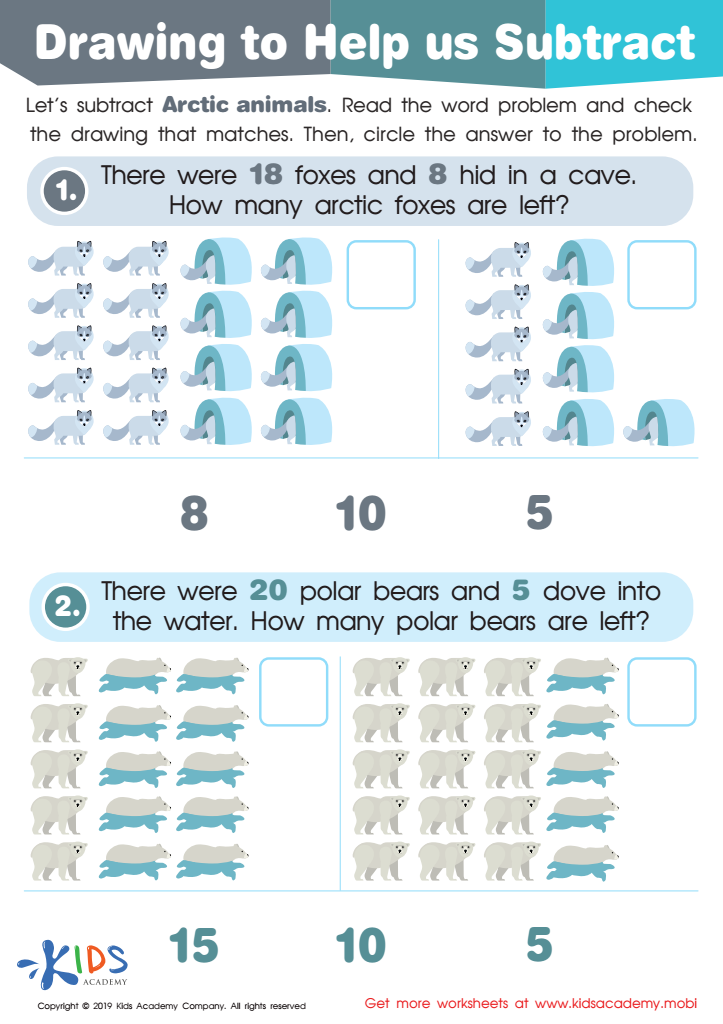
Drawing to Help Us Subtract Worksheet
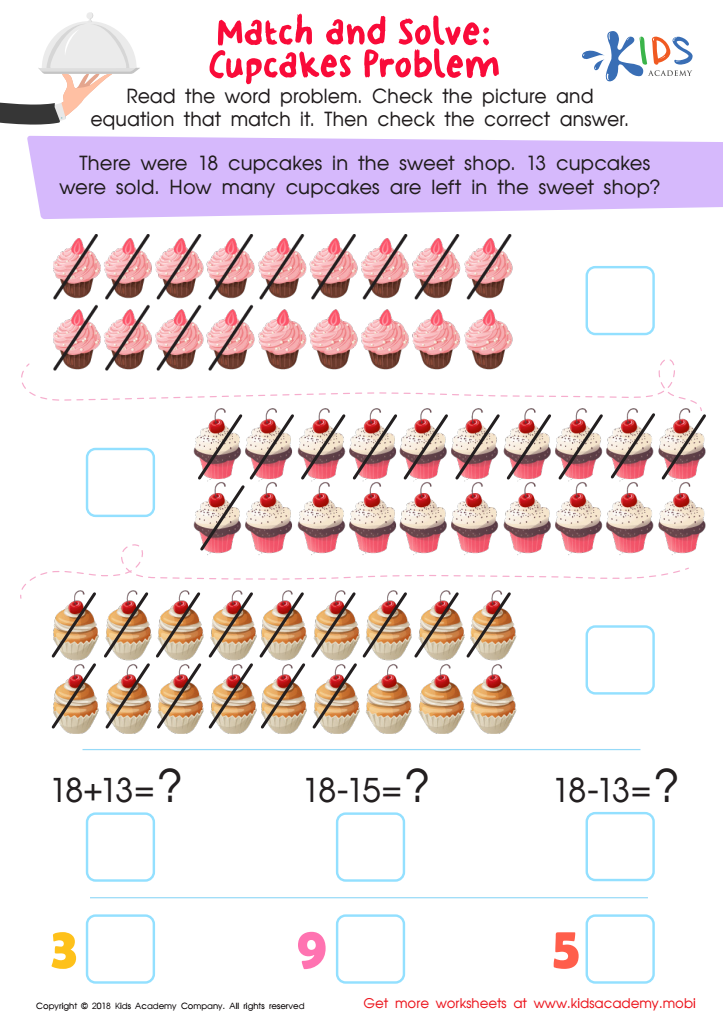
Match and Solve: Cupcakes Problem Worksheet
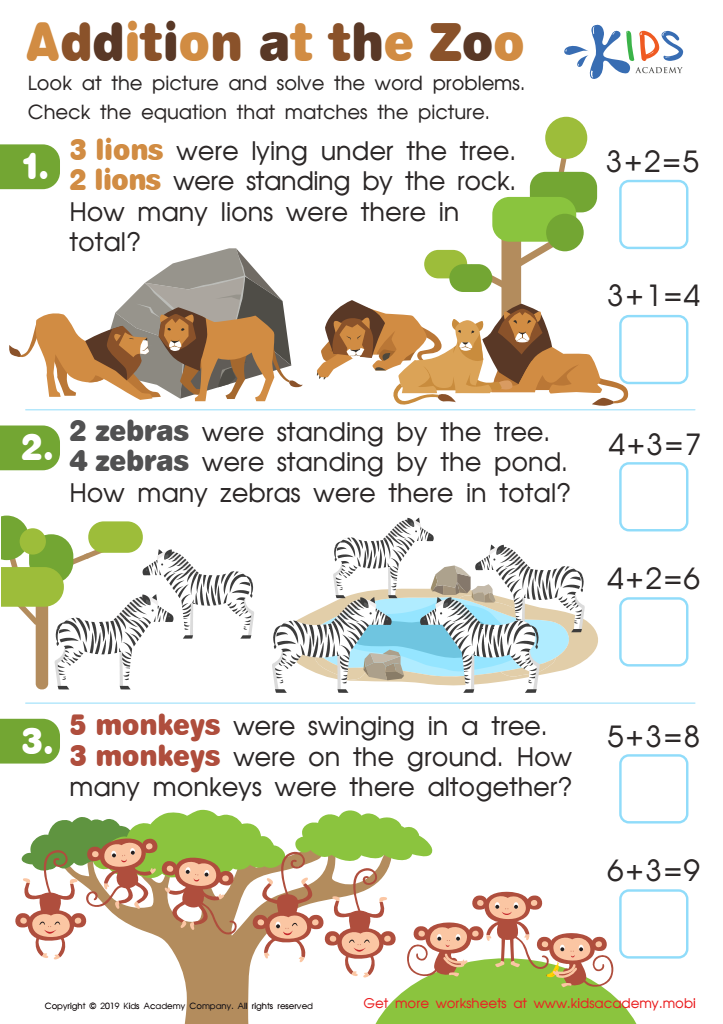
Addition at the Zoo Worksheet








Visual learning word problems are essential for children aged 3-4 as they serve a foundational role in developing critical cognitive skills. At this stage, children are naturally curious and learn best through engaging visuals. Incorporating visual elements into word problems captures their attention and enhances comprehension, making abstract concepts more tangible.
Additionally, visual learning fosters problem-solving abilities. By using pictures or visual symbols, children can manipulate and explore the elements of a word problem, breaking it down into manageable parts. This approach not only aids in understanding but also encourages children to express their thought processes creatively.
Moreover, visual learning supports the development of language skills. When discussing visual word problems, children learn new vocabulary in context and recognize the associated concepts. This heightened language engagement is crucial for their overall literacy development.
By prioritizing visual learning word problems, parents and teachers are better equipped to nurture a love for learning. Engaging children in these activities at an early age lays the groundwork for future academic success, strengthens critical thinking skills, and promotes collaboration and communication. Encouraging visual exploration in problem-solving helps children build confidence in their abilities, setting a positive tone for their educational journey.








