Coloring skills Building Vocabulary Worksheets for Ages 3-4
3 filtered results
-
From - To
Enhance your child's vocabulary and fine motor skills with our "Coloring Skills Building Vocabulary Worksheets" designed for ages 3-4. Each worksheet features engaging illustrations that not only captivate young learners but also encourage them to practice essential vocabulary words. Through coloring activities, children will explore new words in a fun, interactive way, making language acquisition exciting. As they color, they develop their artistic abilities and improve hand-eye coordination. These worksheets seamlessly integrate learning with play, fostering a positive early education experience. Download our worksheets today and watch your little ones joyfully build their vocabulary while honing their coloring skills!
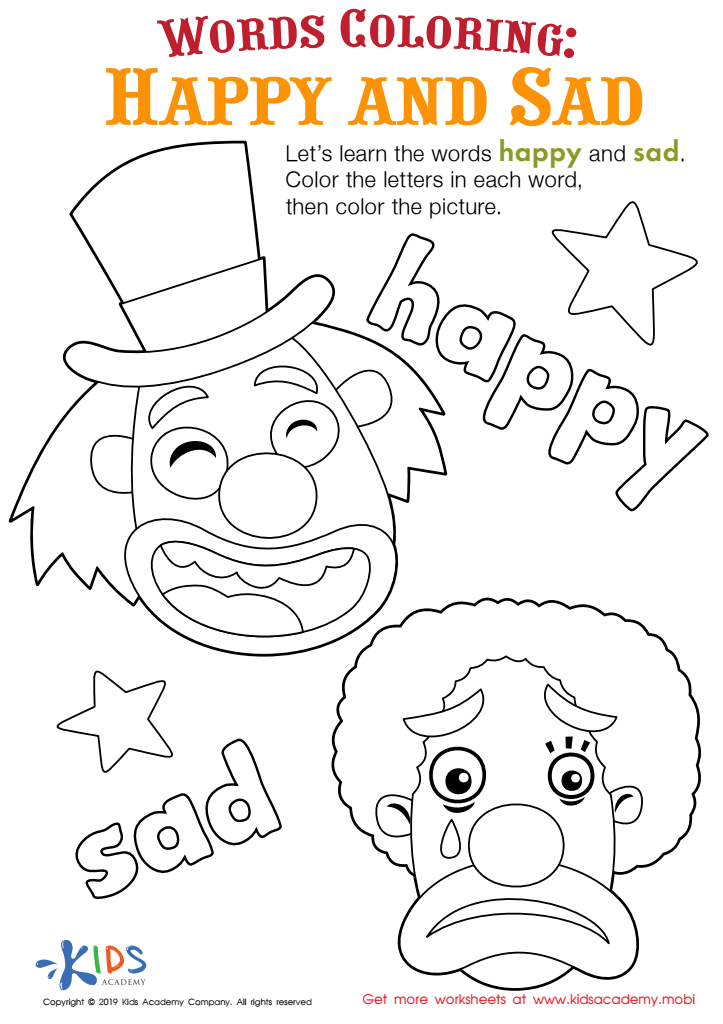
Happy and Sad Words Coloring Worksheet
 Assign to My Students











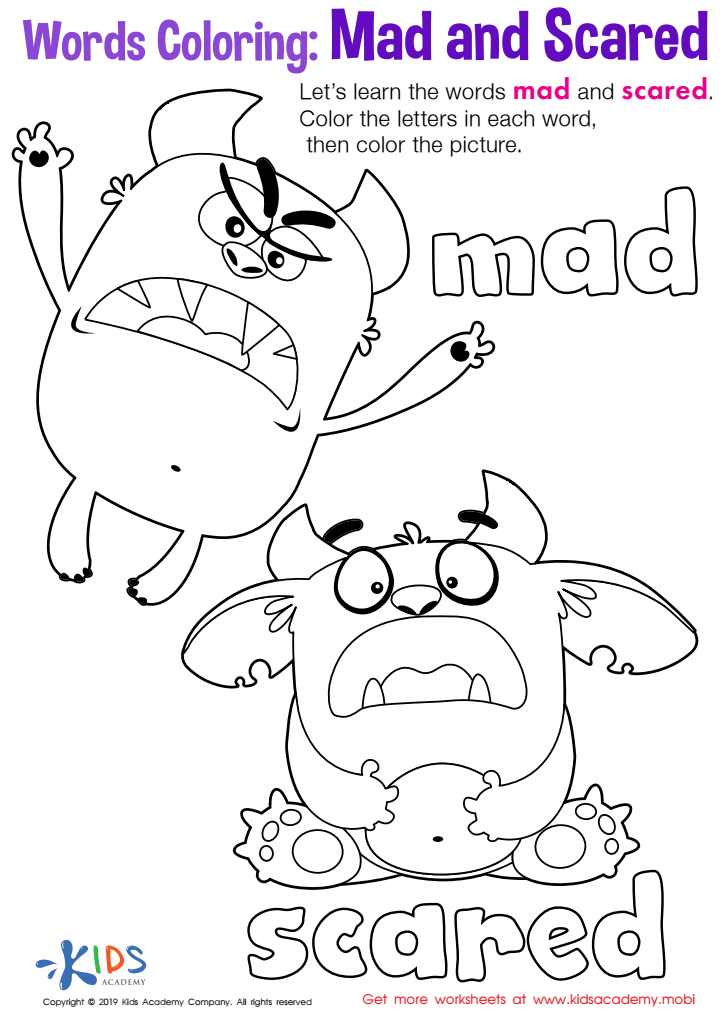
Mad and Scared Words Coloring Worksheet
Assign to My Students
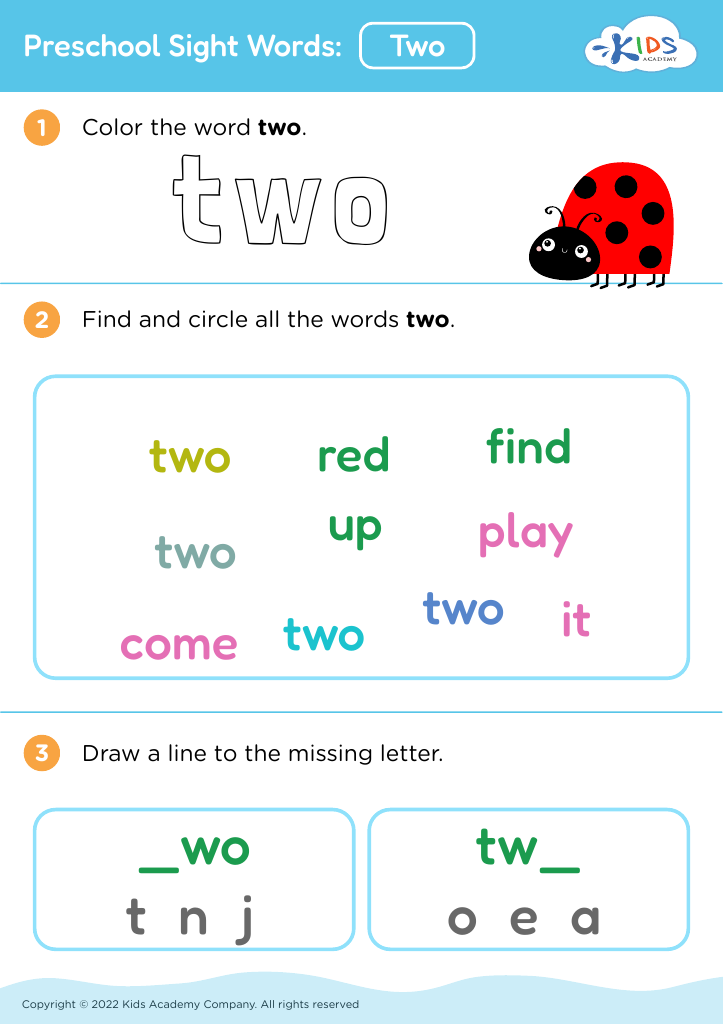


.jpg)



.jpg)

Parents and teachers should prioritize coloring skills in children aged 3-4 because these activities are vital for both fine motor development and vocabulary building. Engaging in coloring helps young children strengthen their hand-eye coordination and control over their writing instruments, which lays the groundwork for future writing skills. It requires precision and focus, allowing them to improve dexterity and muscle strength in their fingers.
Additionally, coloring can enhance vocabulary development. When children color, they often engage in discussions about colors, shapes, and the objects they are coloring. This interactive element encourages them to use new words, enhancing their language development. For instance, specific discussions about a "red apple" or a "green tree" help children learn adjectives and expand their descriptive vocabulary, making their speech richer and more engaging.
Moreover, coloring can serve as a tool for storytelling, where children can narrate what they have created or describe their process, thereby integrating language skills with artistic expression. By fostering these developmental skills through coloring, parents and teachers create a foundation for literacy and creativity that will benefit learning throughout early childhood and beyond.








