Spatial awareness Building Vocabulary Worksheets for Ages 3-4
3 filtered results
-
From - To
Enhance your child's spatial awareness skills with our engaging vocabulary worksheets designed specifically for ages 3-4. These printable resources introduce young learners to important spatial concepts such as position, direction, and size. By participating in fun activities and colorful illustrations, children will expand their vocabulary while developing essential cognitive skills. Our carefully curated worksheets promote critical thinking and encourage children to describe and organize their environment effectively. Perfect for early grade educators and parents, these worksheets are an excellent way to support your child's growth while making learning enjoyable. Foster a love for learning and watch your child's vocabulary flourish with our spatial awareness activities!
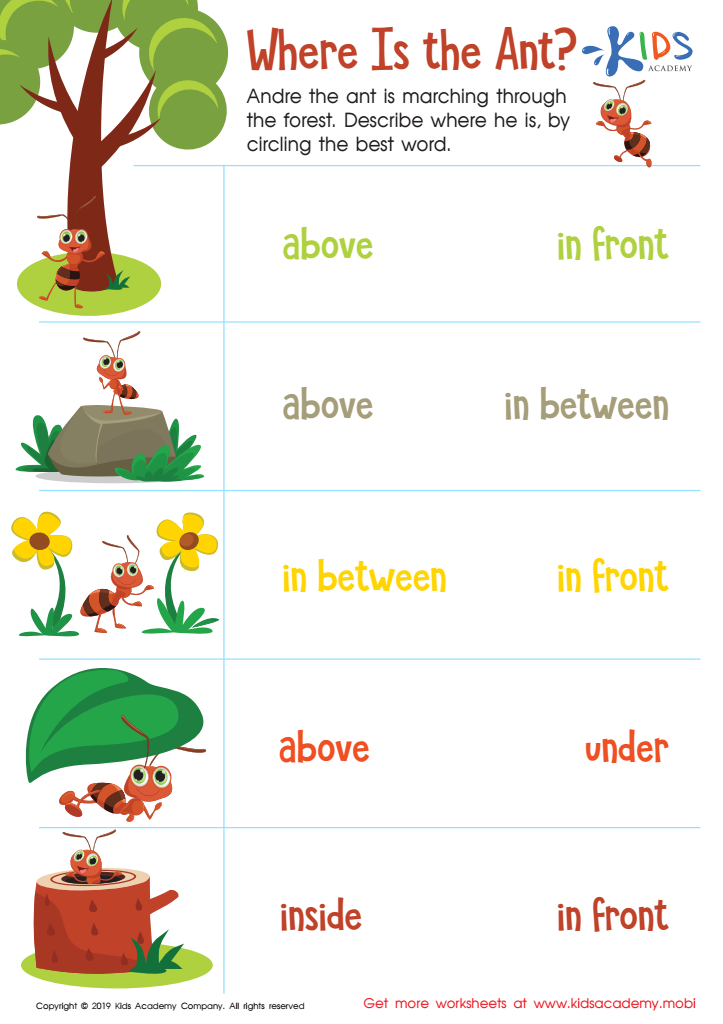
Where Is the Ant? Worksheet
 Assign to My Students











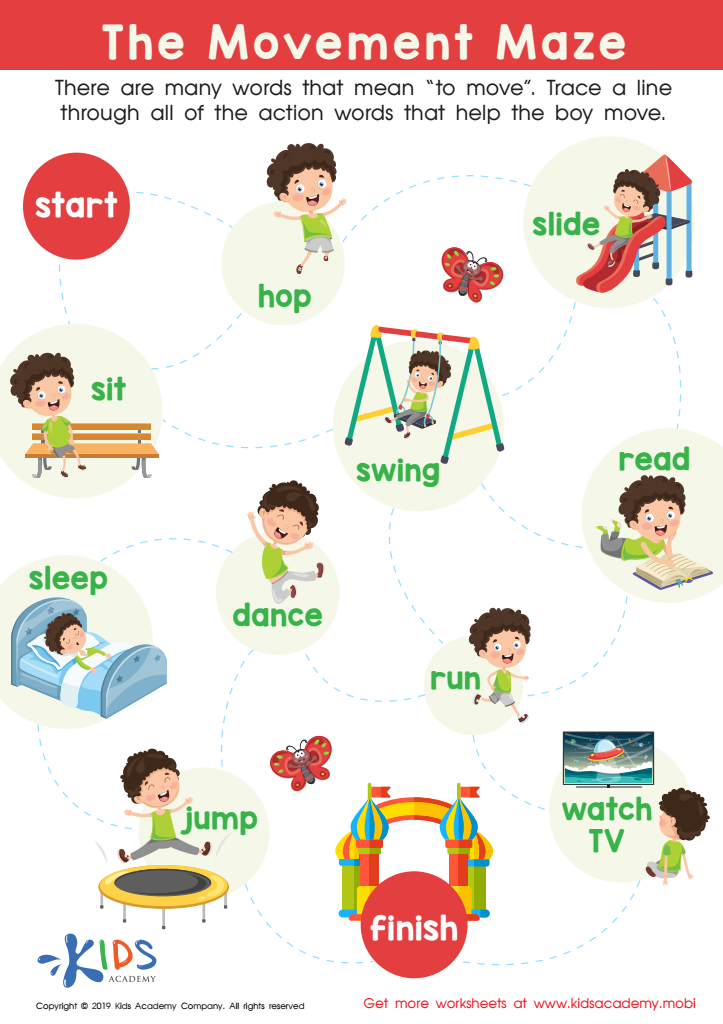
The Movement Maze Worksheet
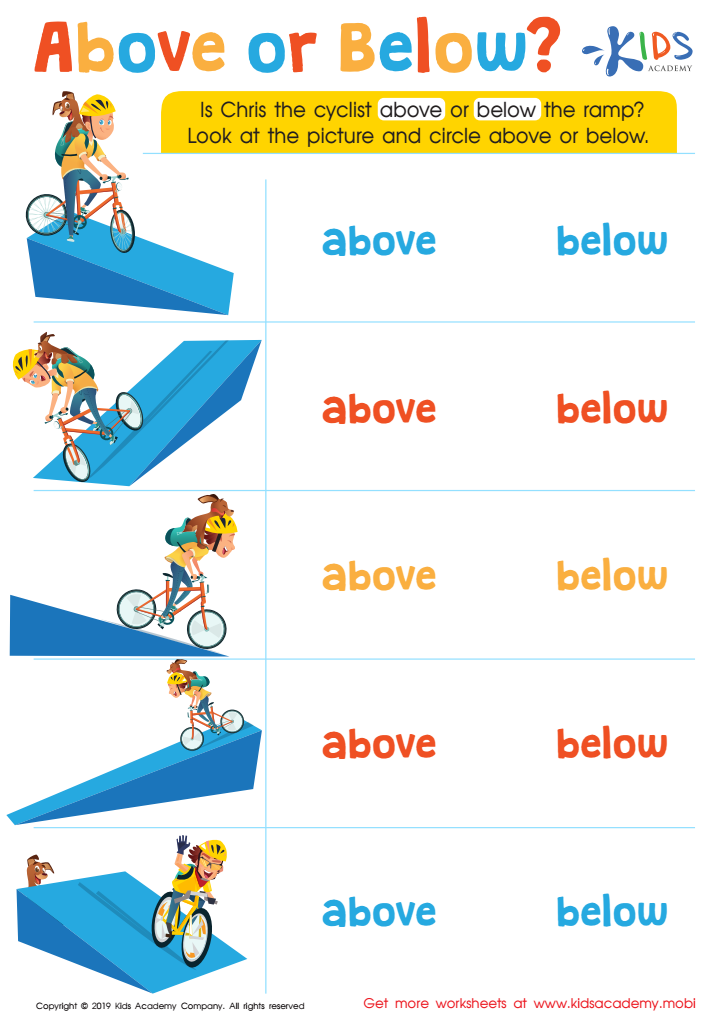
Above or Below? Worksheet








Spatial awareness and vocabulary building are crucial for children aged 3-4, as they lay the foundation for future learning and development. At this age, children are naturally curious about the world around them, and fostering spatial awareness helps them understand concepts such as size, shape, distance, and direction. These cognitive skills are not only essential for daily activities—like navigating spaces and coordinating motor skills—but they also enhance problem-solving abilities important in early mathematics and science.
Simultaneously, building vocabulary enriches a child's language skills, improving their ability to express thoughts, understand instructions, and communicate effectively. A robust vocabulary enables children to link words to their spatial experiences, encouraging them to describe places, objects, and their relationships within the environment—further enriching their cognitive development.
Parents and teachers should care because integrating spatial concepts into playful, everyday activities can meaningful influence their understanding of the world, boosting critical thinking. Engaging in conversations about spatial relationships during play fosters curiosity, sparks imagination, and strengthens linguistic abilities, which are essential for social interaction, academic success, and emotional well-being. Ultimately, nurturing spatial awareness and vocabulary together empowers children to navigate, explore, and appreciate their surroundings—vital skills for lifelong learning.








