
Spelling improvement Building Vocabulary Worksheets for Ages 3-4
4 filtered results
Difficulty Level
Grade
Age
-
From - To
Subject
Activity
Standards
Discover our engaging "Spelling Improvement Building Vocabulary Worksheets" designed specifically for children aged 3-4. These interactive worksheets support early literacy development by introducing key spelling skills while enhancing vocabulary. Each activity focuses on making learning fun through colorful visuals and playful themes, capturing young learners’ attention and curiosity. Our thoughtfully crafted exercises help strengthen phonemic awareness and practice letter recognition, laying a foundation for reading readiness. Perfect for parents and educators alike, these worksheets promote essential language skills through enjoyable practice, ensuring children embark on their reading journey with confidence. Explore our collection today and watch their vocabulary bloom!
Favorites
With answer key
Interactive
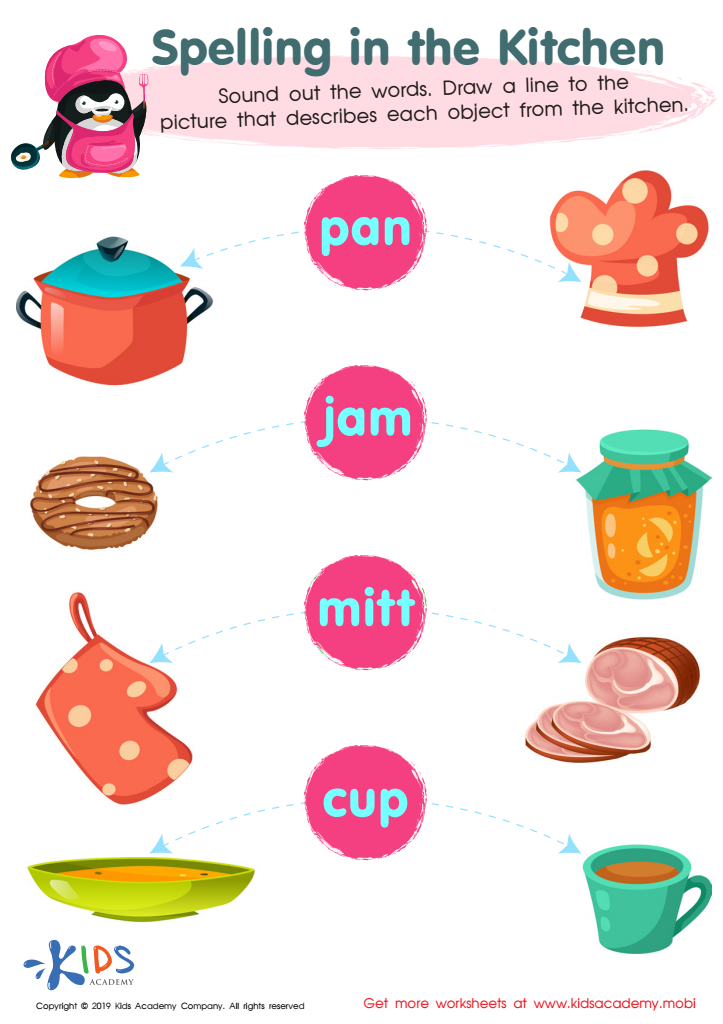
Spelling in the Kitchen Worksheet
Your little ones can learn a lot if they help in the kitchen. Get them to identify and say the name of each item in the picture in this worksheet. Sound out the words for them and help draw a line to the right picture. It's a great way for them to learn about kitchen items!
 Assign to My Students
Spelling in the Kitchen Worksheet
Worksheet











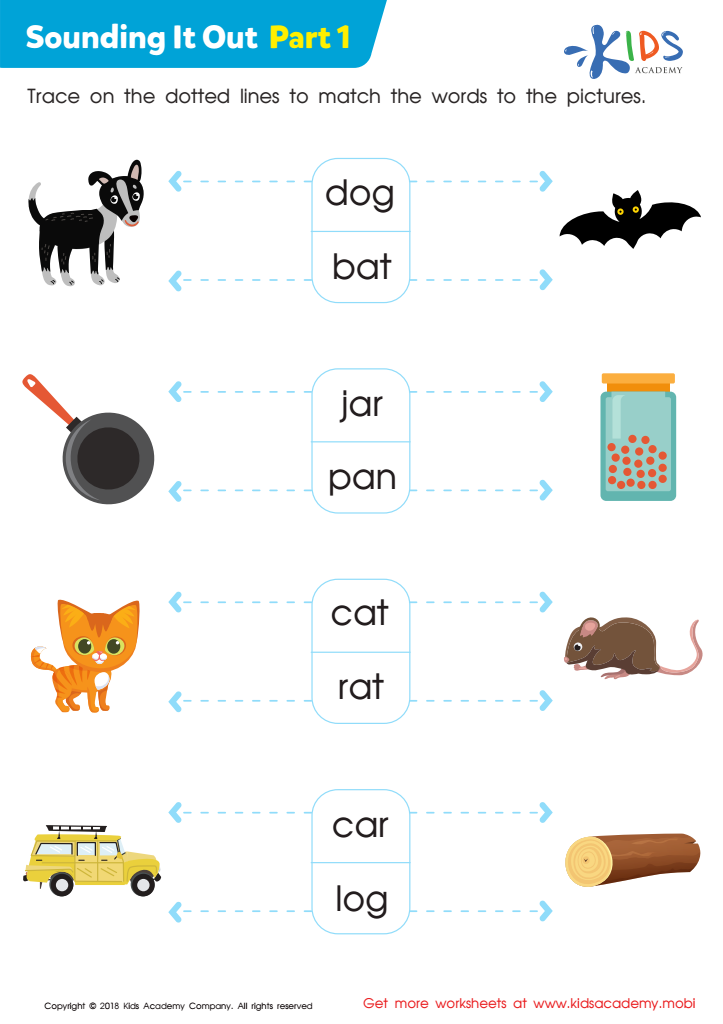
Sounding it Out: Part 1 Worksheet
Help kids learn to read with this fun worksheet! Kids use picture clues to sound out words and trace the dotted lines to match each word to its corresponding image. Stimulating and interactive, this printable is a great way for little learners to practice phonics.
Sounding it Out: Part 1 Worksheet
Worksheet
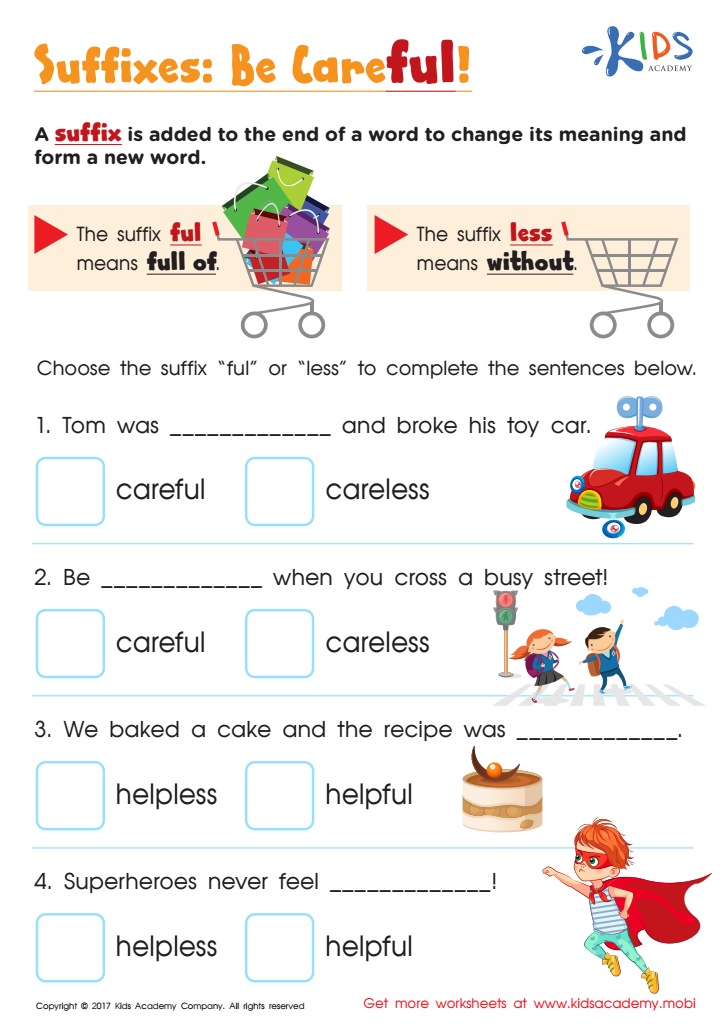
Suffixes Ful and Less Worksheet
Uh oh! Careful and careless might look similar, but have very different meanings. To avoid mix-ups, learn to spot and use the right suffixes. Use this suffixes ful and less worksheet to help your child master common suffixes!
Suffixes Ful and Less Worksheet
Worksheet
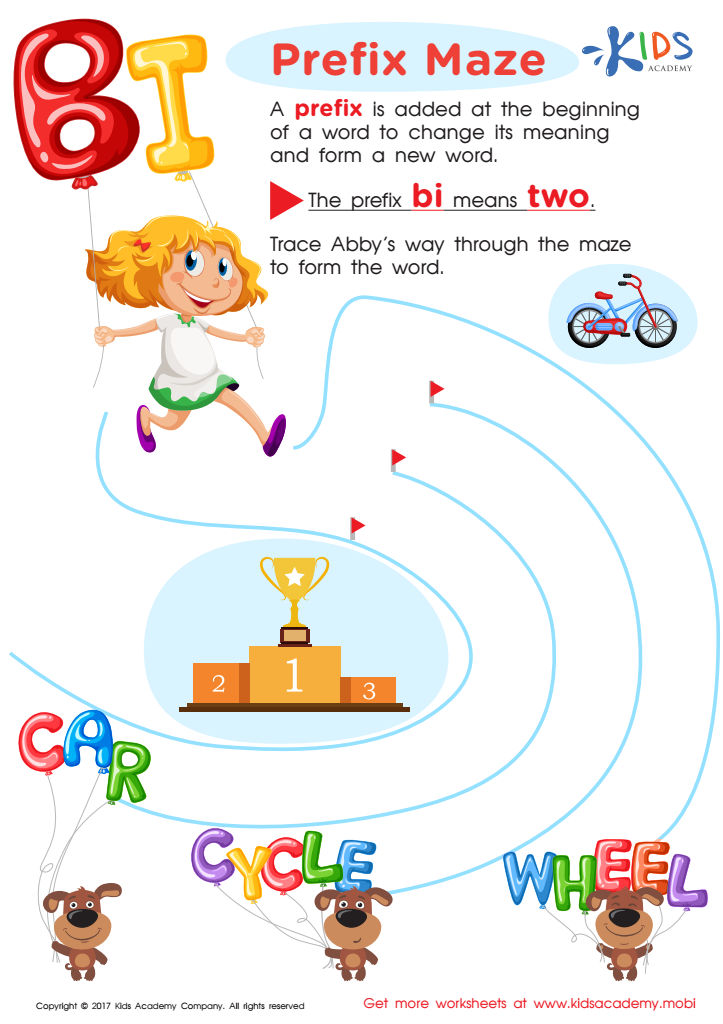
Prefix Bi Words Worksheet
Help "bi" find its root word in this fun and colorful prefix worksheet! Your child will learn how words are built while having a great time!
Prefix Bi Words Worksheet
Worksheet
Join Kids Academy for Free
Who is primarily going to use this learning content?






.jpg)

Spelling improvement and vocabulary building in children aged 3-4 are crucial for their early language development and future academic success. At this formative stage, children are rapidly absorbing language through interactions with adults and peers. By focusing on spelling and vocabulary, parents and teachers can nurture essential cognitive and communication skills that lay the foundation for literacy.
Improving spelling helps children develop an understanding of letter patterns and sounds, fostering phonemic awareness—an essential skill for reading. Introducing new words through engaging activities and conversations can significantly expand their vocabulary, enriching their ability to express thoughts and feelings. This not only boosts their confidence in speaking and writing but also enhances their comprehension skills as they progress to more complex texts.
Moreover, a robust vocabulary supports social interactions and emotional intelligence. Children who can articulate their needs and emotions are more likely to build relationships with peers and adults. Overall, investing time in spelling and vocabulary improvement creates a more literate, confident, and socially adept child—skills that will benefit them throughout their educational journey and beyond. Therefore, parents and teachers should prioritize these developmental milestones, ensuring a strong linguistic foundation for lifelong learning.








