Story analysis Reading Comprehension Worksheets for Ages 3-4
4 filtered results
-
From - To
Discover our engaging Story Analysis Reading Comprehension Worksheets designed specifically for children ages 3-4. These colorful and interactive sheets foster critical thinking and early reading skills in young learners. By identifying story elements like characters, settings, and basic plot structures, children enhance their comprehension and analytical abilities. Our worksheets are perfect for both classroom and at-home learning, offering a fun and educational way to build a strong literacy foundation. Help your little ones embark on an exciting reading adventure and watch their confidence soar with our expertly crafted Story Analysis resources. Start nurturing lifelong readers today!
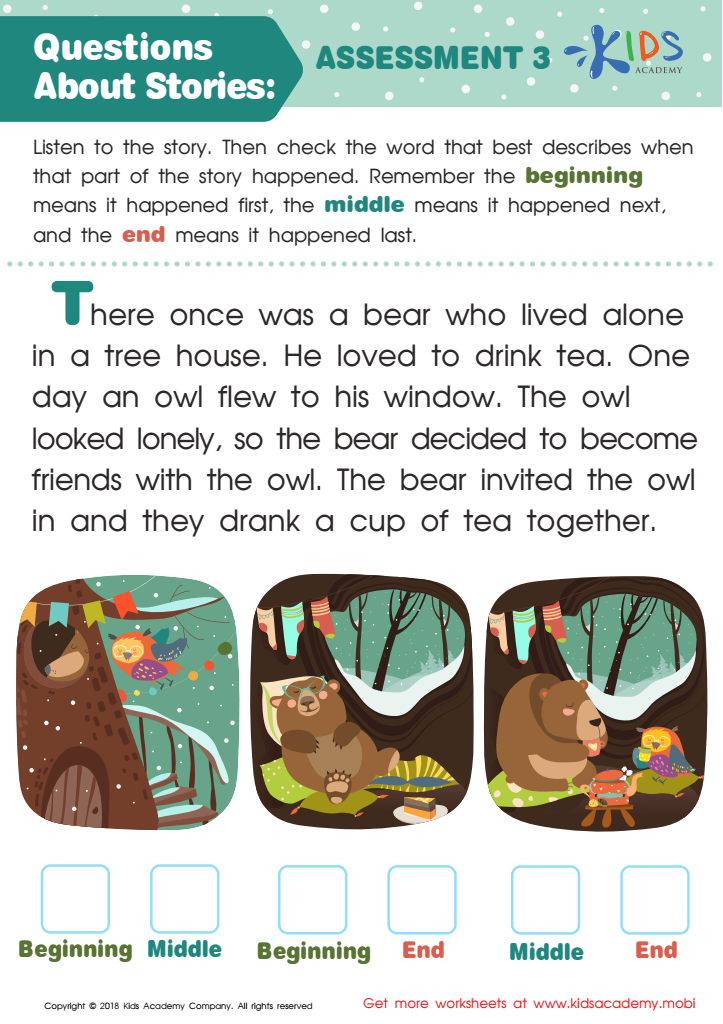
Questions About Stories: Assessment 3 Worksheet
 Assign to My Students
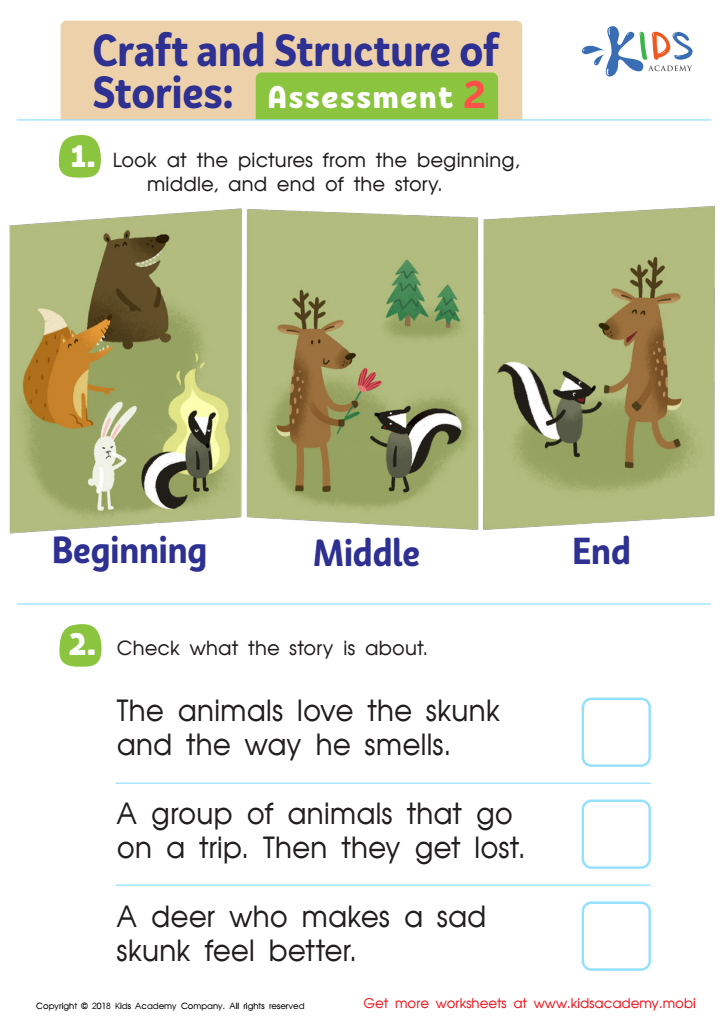
Craft and Structure of Stories: Assessment 2 Worksheet
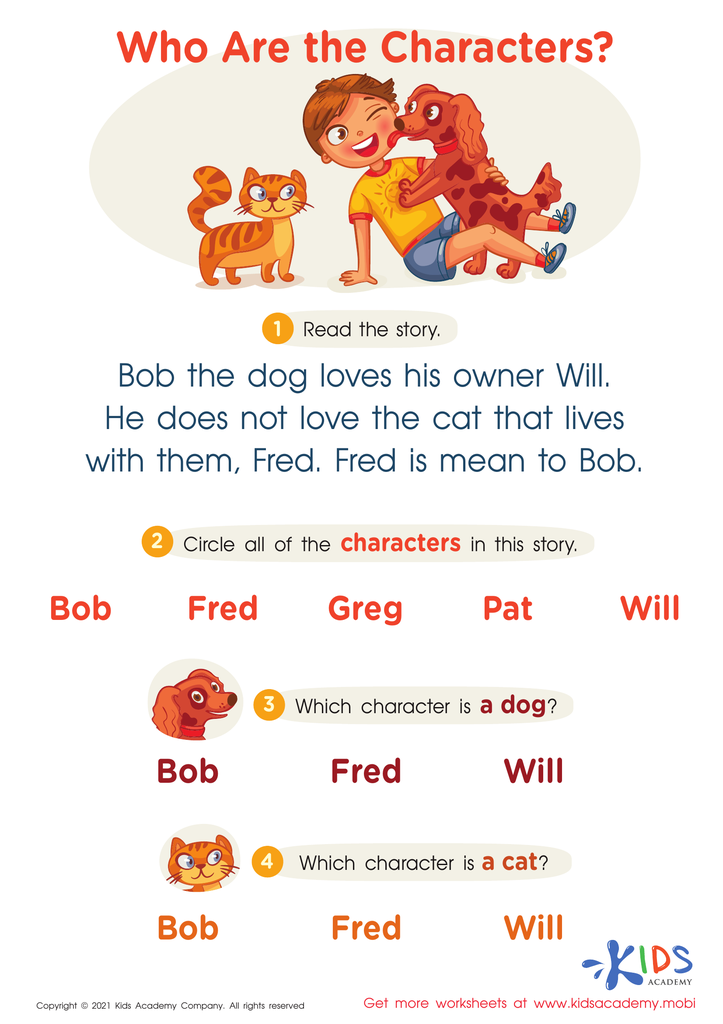
Who Are the Characters? Worksheet
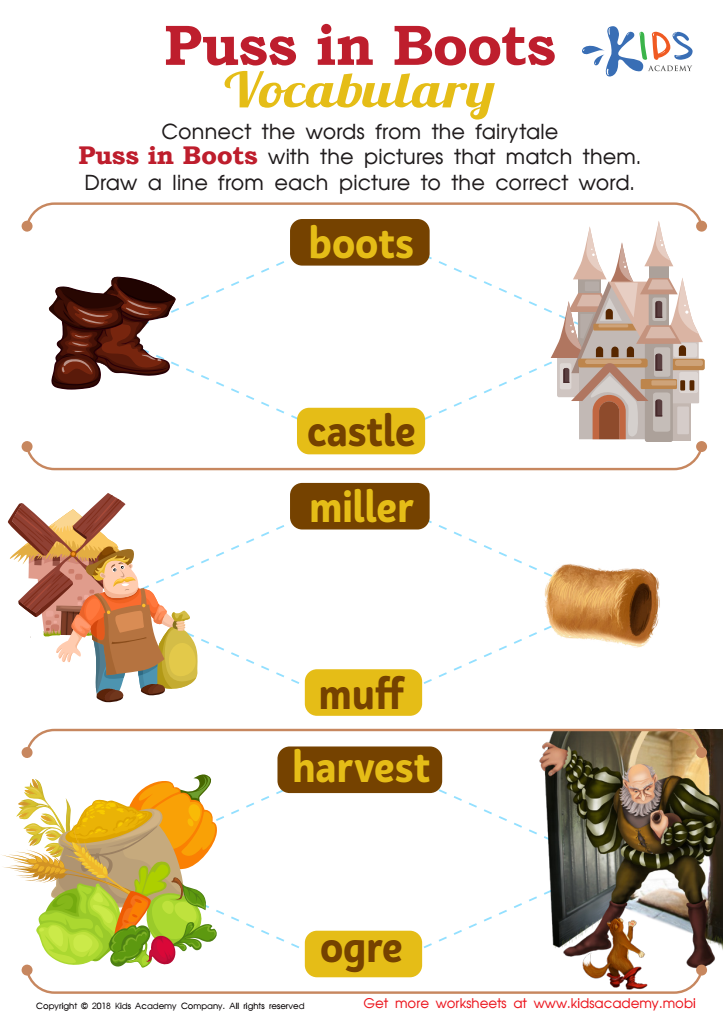
Puss in Boots Vocabulary Worksheet






.jpg)

Story analysis and reading comprehension for ages 3-4 are crucial for early childhood development. At this formative stage, young children are rapidly developing their cognitive and language skills. Engaging them in story analysis helps build essential abilities such as listening, understanding, and critical thinking. When parents and teachers dissect stories with children, they enable them to make connections, predict outcomes, and understand sequences. This process enhances memory retention and lays a foundational understanding of narrative structures, such as beginnings, middles, and ends.
Moreover, story analysis introduces new vocabulary and concepts, enriching language development. Children learn to articulate thoughts and ask questions, which fosters active communication skills. By discussing a character's actions and emotions, they develop empathy and a deeper understanding of diverse perspectives. Critical thinking is also nurtured as children learn to distinguish between cause and effect and differentiate reality from fiction.
Furthermore, shared reading experiences create a bonding opportunity, fostering a love for reading and learning. Encouraging regular story analysis and comprehension at this age sets a strong academic foundation and ignites lifelong curiosity and a desire to understand the world. Both parents and teachers play pivotal roles in cultivating these early analytical skills, contributing to the child's overall intellectual and emotional growth.








