Story comprehension Reading Comprehension Worksheets for Ages 3-4
5 filtered results
-
From - To
Enhance your child’s reading journey with our "Story Comprehension Reading Comprehension Worksheets for Ages 3-4." Designed to build foundational literacy skills, these engaging worksheets help young learners understand and recall stories. Through colorful illustrations and simple exercises, children practice recognizing key elements of a story such as characters, settings, and main events. Our age-appropriate activities are perfect for developing early reading comprehension, fostering a love for stories, and boosting confidence. Ideal for at-home practice or supplementary classroom learning, our worksheets make reading fun and interactive. Give your child the best start in their reading adventure!
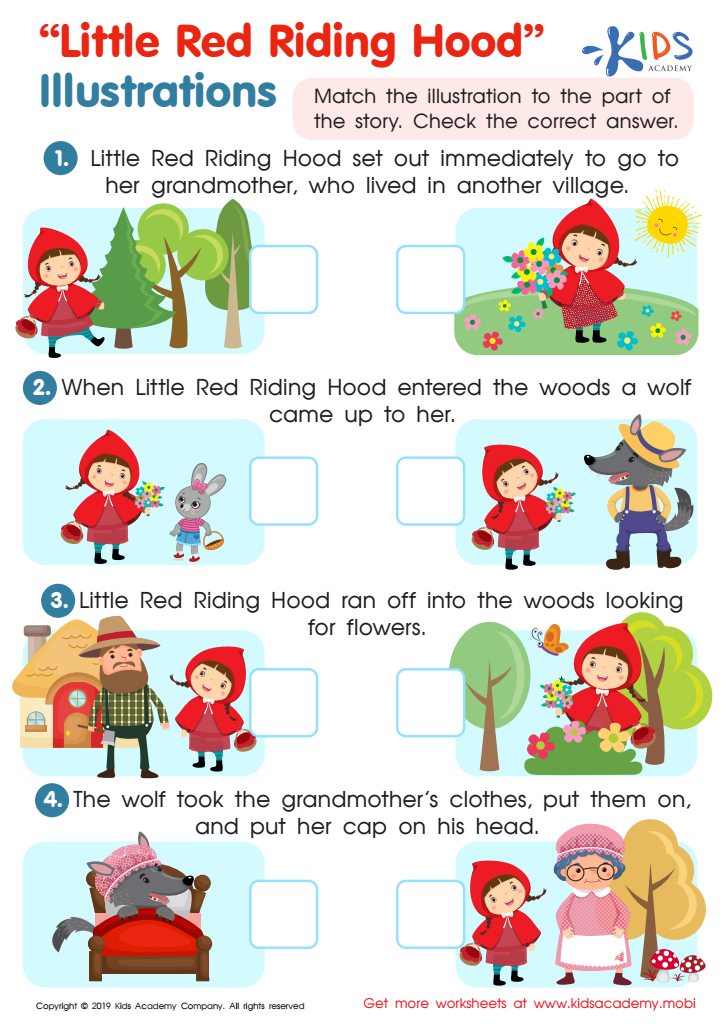
Little Red Riding Hood: Illustrations Worksheet
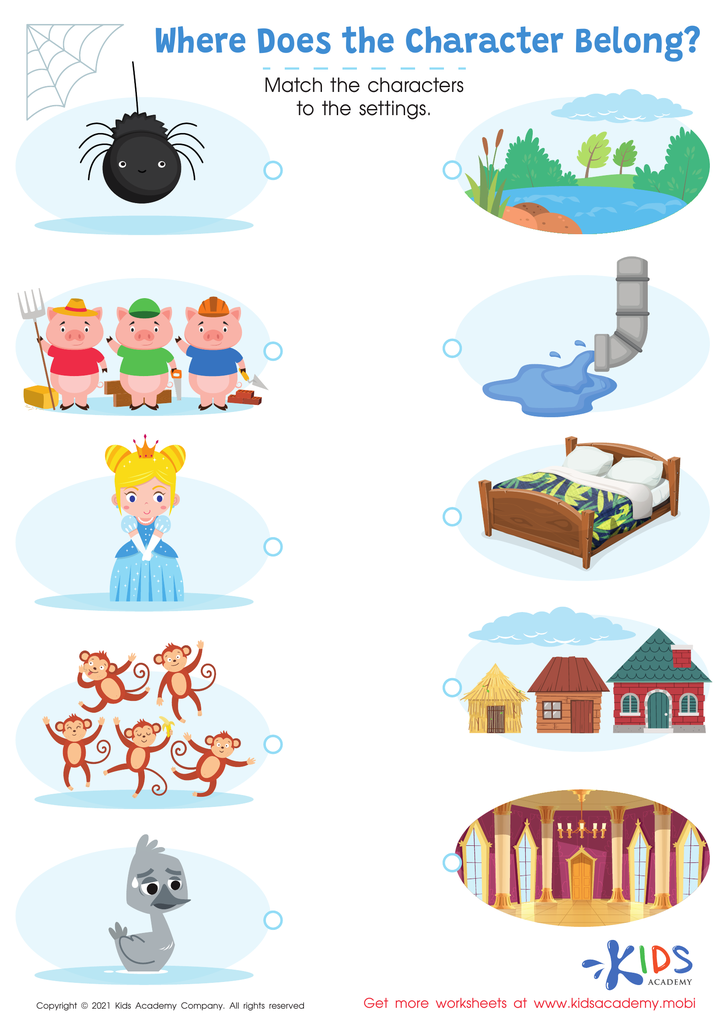
Where Does the Character Belong? Worksheet
Red Riding Hood Coloring Page
 Assign to My Students
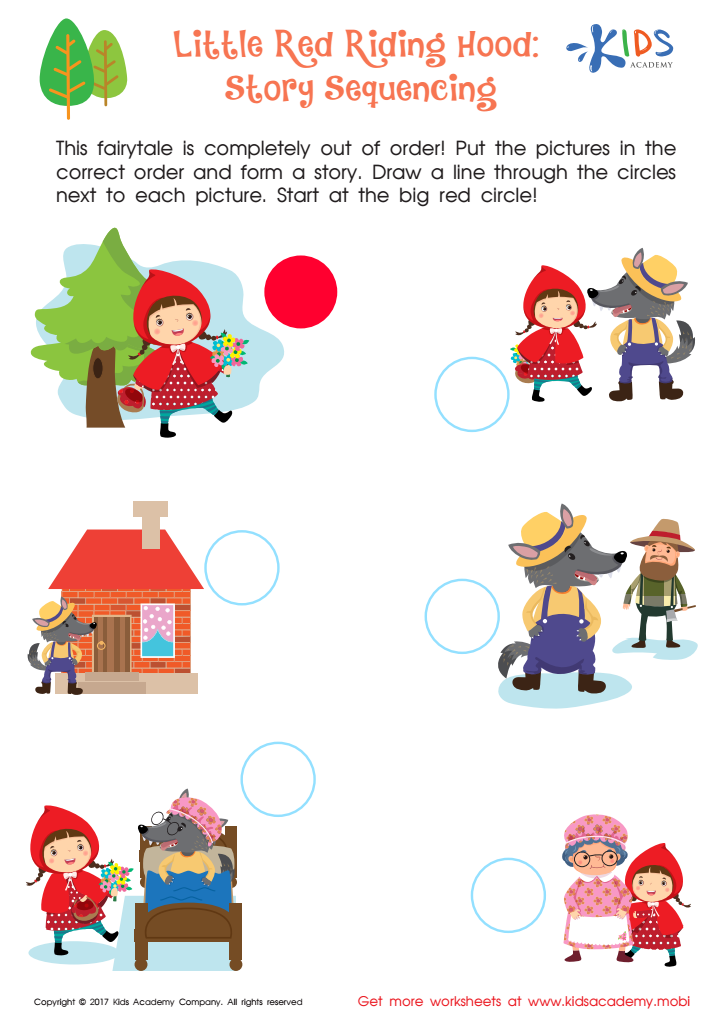
Story Sequencing Printable
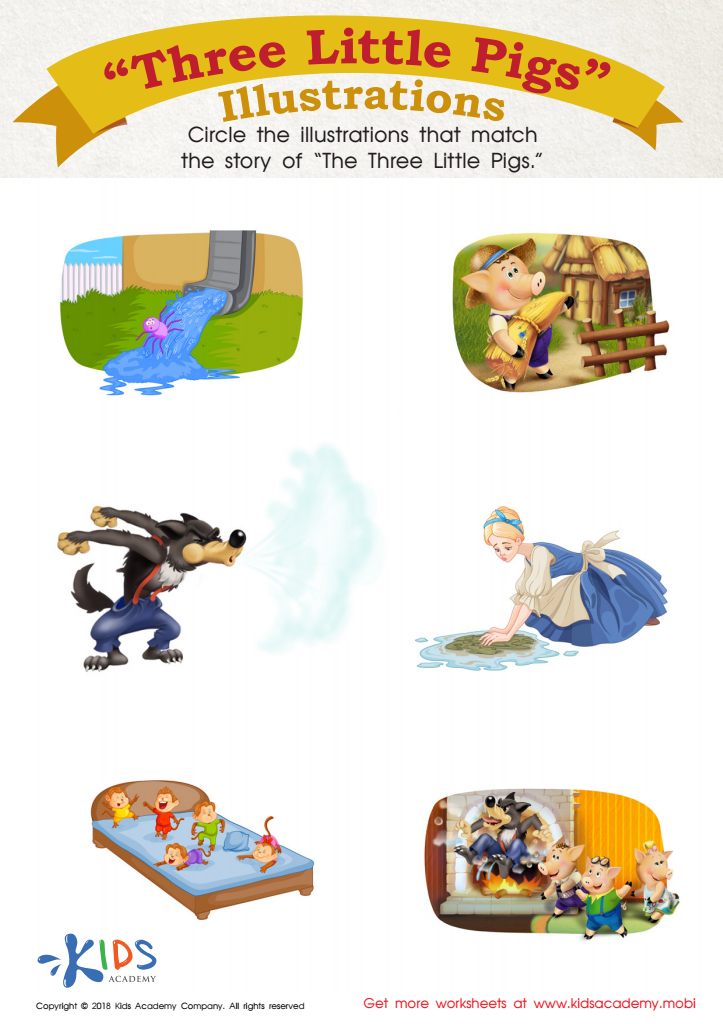
Three Little Pigs: Illustrations Worksheet








Parents and teachers should care about story comprehension for children aged 3-4 because it is foundational to their cognitive and linguistic development. At this formative stage, story comprehension helps enhance a child's vocabulary, introduces them to complex sentence structures, and improves their listening skills. Consistent exposure to stories aids in the development of narrative skills, giving children the ability to understand and relay events logically.
Furthermore, story comprehension kindles imagination and creativity, allowing children to picture scenarios, characters, and settings. It fosters empathy by enabling young minds to understand and identify with different emotions and perspectives, which is crucial for social development and forming interpersonal relationships.
Cognitively, it develops critical thinking skills. By asking questions like “What do you think will happen next?” or “Why did the character do that?”, children learn to predict, infer, and analyze, key components of higher-order thinking skills.
Additionally, early story comprehension sets the stage for academic success. As these children grow, strong comprehension skills are vital for learning across all subjects. So, putting effort into nurturing this skill early on provides children with a robust toolset for future educational pursuits. In essence, story or reading comprehension for ages 3-4 isn't just about reading; it's about building essential skills for life.








