Story analysis Reading Fiction Worksheets for Ages 3-4
4 filtered results
-
From - To
Unlock your preschooler’s potential with our "Story Analysis Reading Fiction Worksheets for Ages 3-4". These engaging and educational worksheets are designed to develop early literacy skills by helping young learners understand characters, settings, and simple plot elements. Perfect for home or classroom use, our worksheets encourage imagination and critical thinking through fun, interactive activities. Each worksheet is carefully crafted to be accessible to little ones, ensuring they enjoy and learn from the process. Start your child's reading journey with tools that make learning both effective and exciting! Visit our page to explore our wide range of resources tailored for ages 3-4.
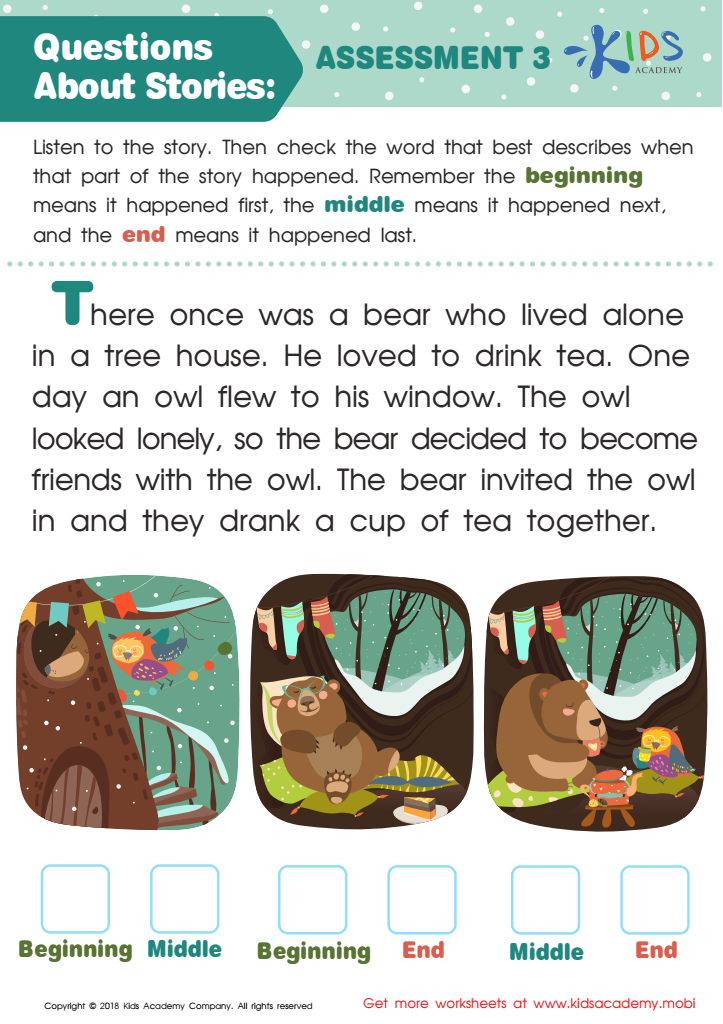
Questions About Stories: Assessment 3 Worksheet
 Assign to My Students
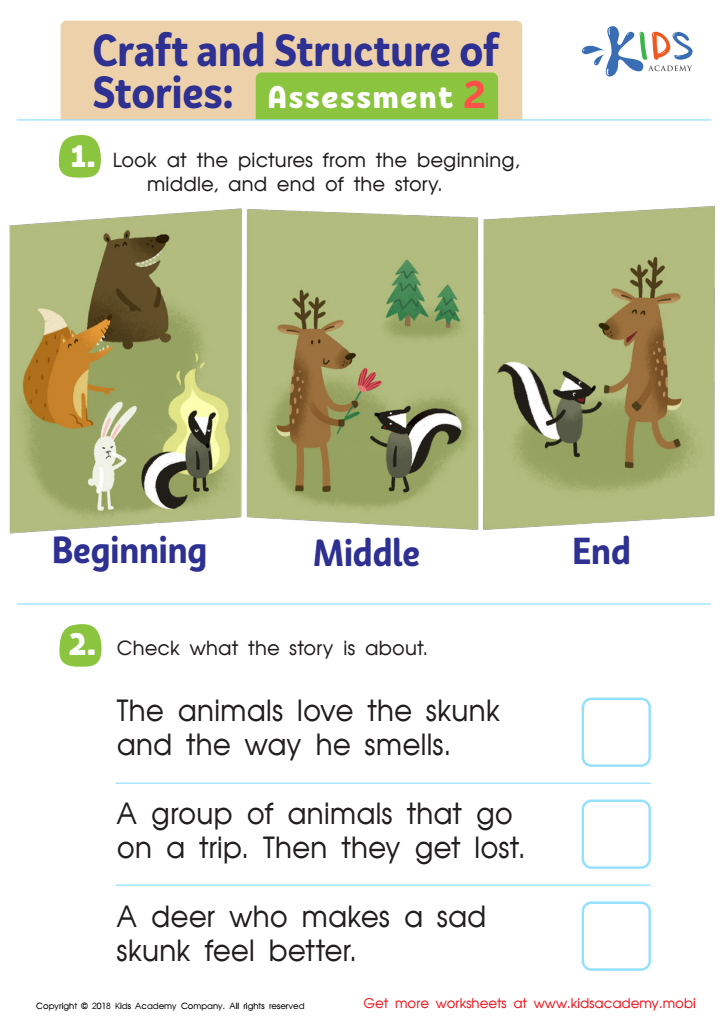
Craft and Structure of Stories: Assessment 2 Worksheet
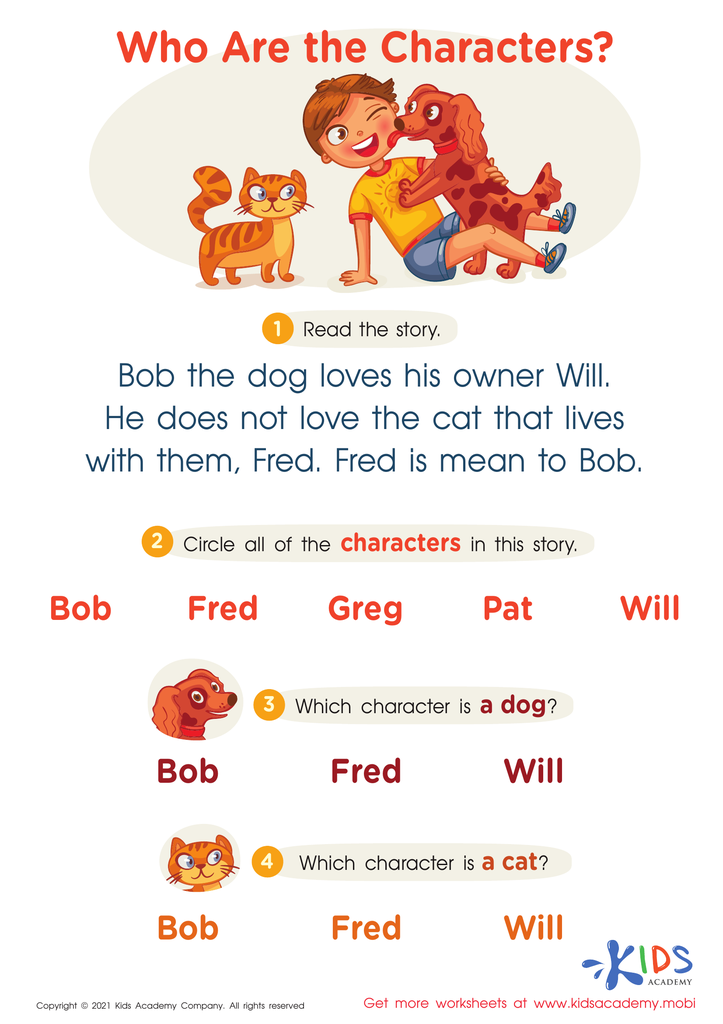
Who Are the Characters? Worksheet
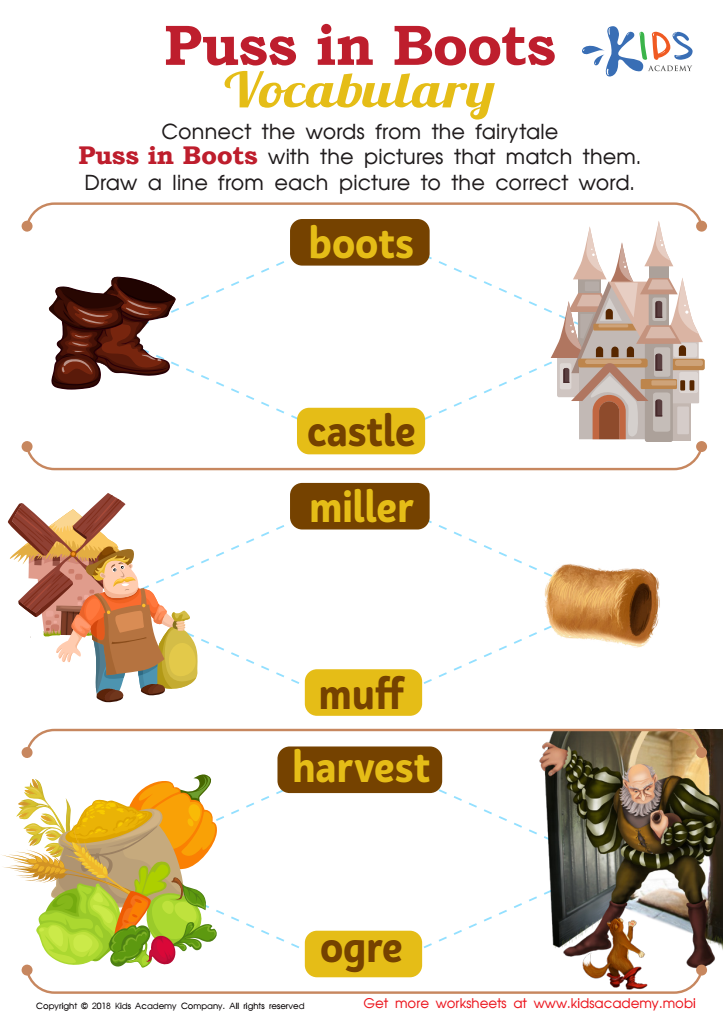
Puss in Boots Vocabulary Worksheet








Parents and teachers should prioritize story analysis and reading fiction for children aged 3-4 because it lays a crucial foundation for cognitive and emotional development. At this formative stage, young children's brains are rapidly growing, and engaging with stories helps stimulate creativity and imagination. Analyzing stories enhances their comprehension and vocabulary, making language learning a fun and interactive process.
Moreover, fiction introduces children to a variety of characters and scenarios, fostering empathy and social understanding. Through these stories, children can explore different emotions and situations in a safe environment, helping them to better understand themselves and others. This type of reading develops key listening skills and attention spans, important for later academic success.
Story analysis encourages critical thinking as children begin to predict what might happen next and analyze characters’ actions and motivations. These skills are fundamental not only in academics but in life as well, as they enable young kids to better understand the world around them.
Finally, shared story time with parents or teachers strengthens bonds and creates a positive association with reading. Enjoyable and educational, fiction opens a child's mind to endless possibilities, giving them the tools to grow into thoughtful and creative individuals.








