Understanding context Reading Fiction Worksheets for Ages 3-4
4 filtered results
-
From - To
Unlock your child's potential with our "Understanding Context Reading Fiction Worksheets" designed specifically for ages 3-4. These engaging worksheets help young learners develop essential reading comprehension skills by focusing on context clues within stories. With vibrant illustrations and simple narratives, children will enjoy exploring and discovering meaning beyond the text. Our age-appropriate activities promote critical thinking, enhance vocabulary, and foster a love for reading from an early age. Perfect for parents and educators alike, these worksheets make learning fun and interactive. Start your child’s reading journey today and empower them with the skills needed for successful literacy development!
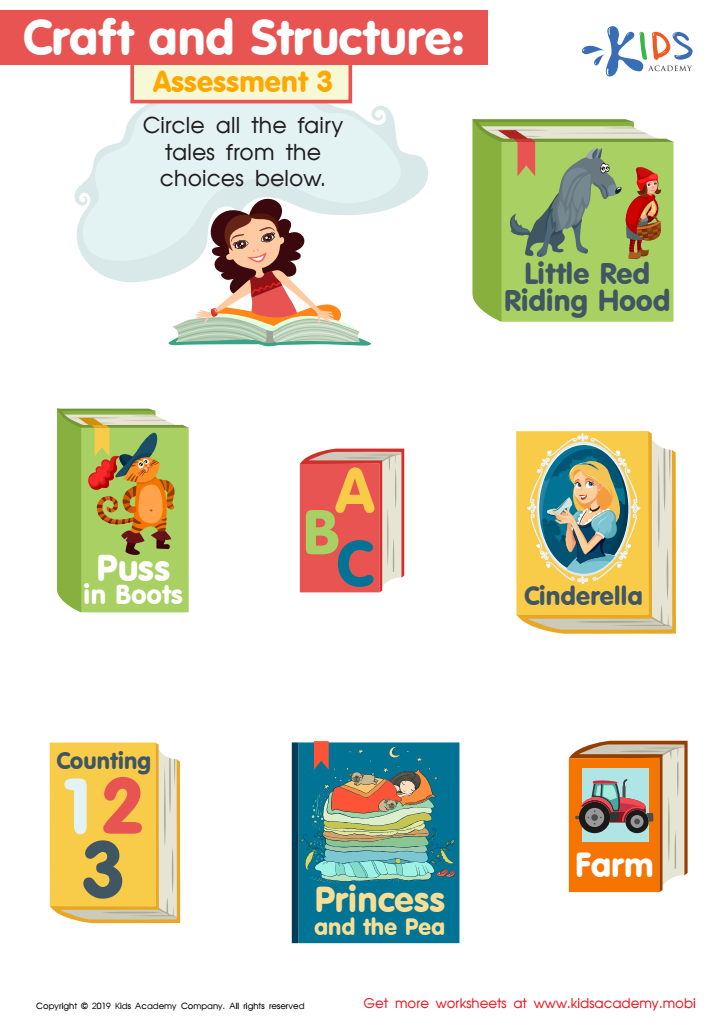
Craft and Structure: Assessment 3 Worksheet
 Assign to My Students
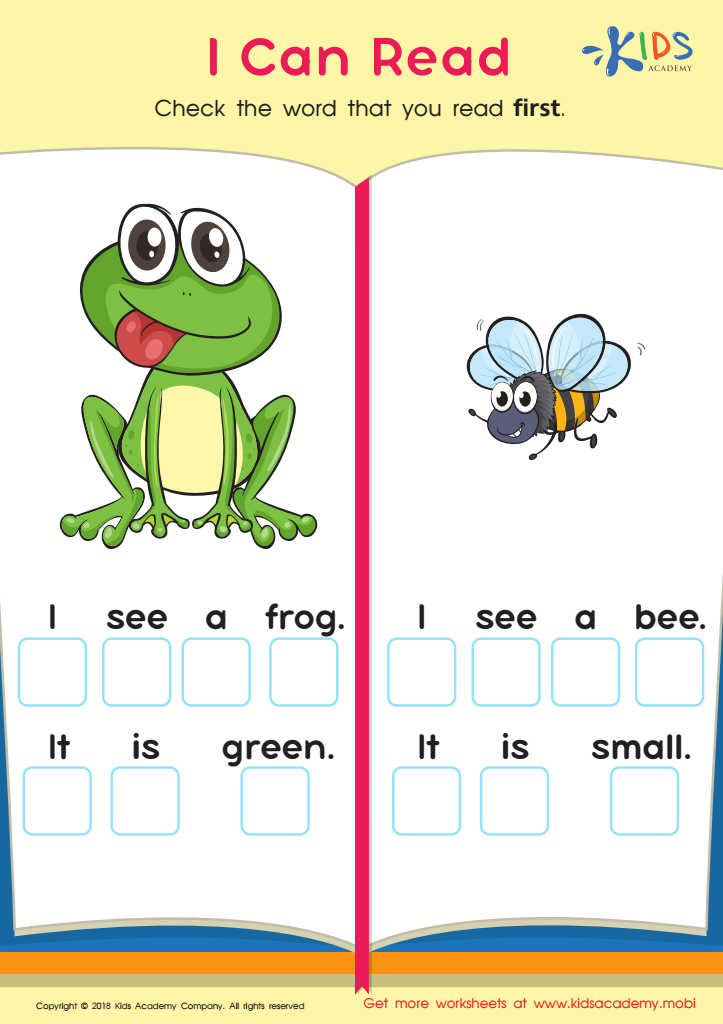
I Can Read Worksheet
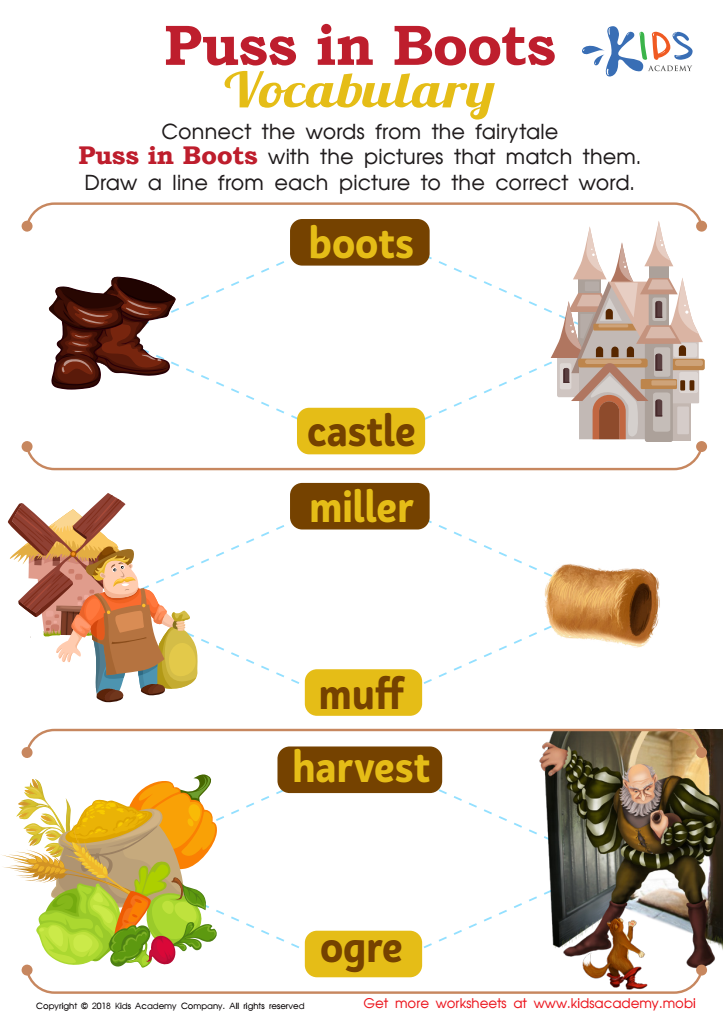
Puss in Boots Vocabulary Worksheet
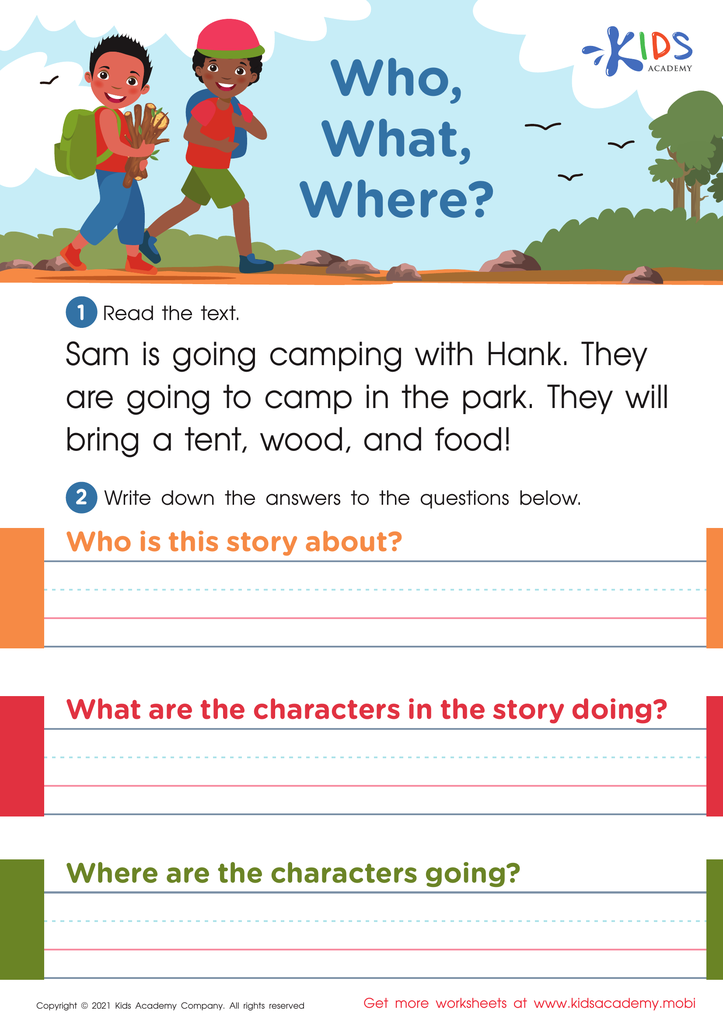
Who, What, Where? Worksheet







Understanding context while reading fiction is crucial for children aged 3-4 as it lays the groundwork for cognitive and linguistic development. At this developmental stage, children are eager to explore stories, which offer more than just entertainment—they provide vital learning opportunities. When parents or teachers guide young children through narratives, they can highlight context, such as the setting, emotions of characters, and the relationships between them. This helps children make connections between the story and the real world, enhancing their comprehension skills.
Moreover, discussing context encourages children to engage in critical thinking; they learn to predict outcomes, understand motives, and empathize with characters—skills integral to their emotional and social development. Analyzing context also enriches vocabulary and strengthens language skills as children encounter new words and phrases linked to familiar experiences or feelings.
For educators and caregivers, recognizing the importance of context in reading not only contributes to literacy but also supports holistic child development. By fostering a rich, interactive reading environment, adults can nurture curious, expressive, and empathetic young learners who are equipped with essential skills for future academic success.








