Vocabulary enhancement Animals Worksheets for Ages 3-4
3 filtered results
-
From - To
Discover our engaging Vocabulary Enhancement Animals Worksheets designed specifically for children ages 3-4! These interactive worksheets provide a fun way to introduce young learners to the fascinating world of animals while expanding their vocabulary. Each activity encourages exploration through colorful illustrations and age-appropriate language. From identifying different animal names to describing their habitats, these worksheets support essential language skills and promote early literacy. Perfect for home or classroom use, our resources foster a love of learning and curiosity about nature. Enhance your child's vocabulary today and watch their excitement grow as they learn about the animal kingdom!
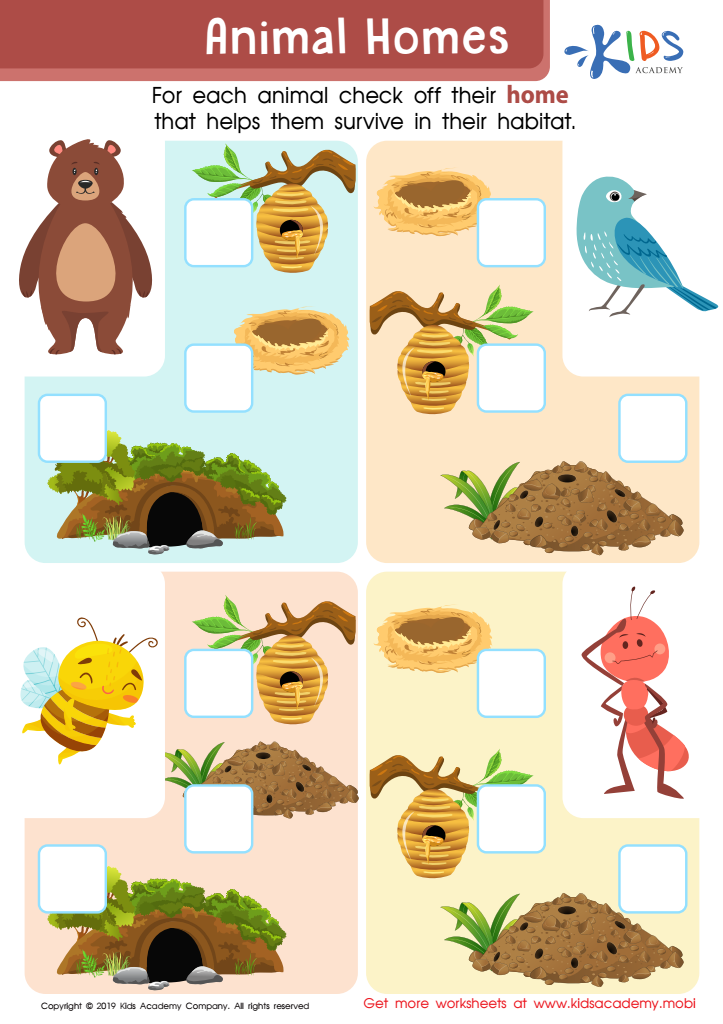
Animal Homes Worksheet
 Assign to My Students
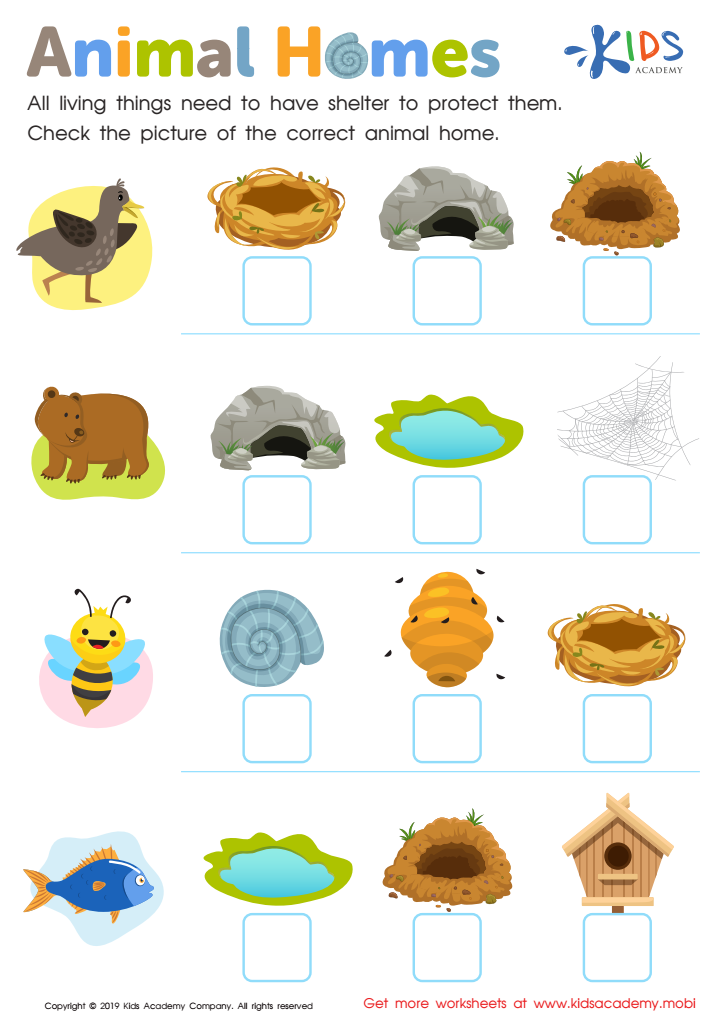
Animal Homes Worksheet








Vocabulary enhancement is crucial for children aged 3-4, as it lays the foundation for their communication skills, cognitive development, and overall learning. During this formative stage, children are highly receptive to language learning, absorbing new words and concepts through their interactions with adults and peers. Introducing vocabulary related to animals can be especially engaging and effective, as young children are often fascinated by animals, encouraging curiosity and motivation to learn.
Parents and teachers should focus on expanding children's vocabulary in this domain as it helps develop their descriptive abilities, nurtures empathy towards living beings, and fosters an appreciation for biodiversity. Stories, songs, and playful activities centered on animals not only enhance language development but also stimulate critical thinking and imagination.
Furthermore, a strong vocabulary leads to improved literacy skills, enabling children to express their thoughts more clearly and understand what they read more effectively, setting the stage for academic success in the future. By promoting vocabulary enhancement with animal themes, caregivers can create a positive, enriching learning environment that supports children’s social and emotional growth, ultimately preparing them for a lifelong journey of exploration and discovery.