Categorization skills World Around Us Worksheets for Ages 3-4
3 filtered results
-
From - To
Enhance your child's cognitive development with our "Categorization Skills: World Around Us Worksheets for Ages 3-4." These engaging worksheets are designed to help young learners understand and organize the world around them by grouping similar items, identifying differences, and establishing connections. Perfect for preschoolers, they integrate fun activities that make learning enjoyable and effective. Each worksheet is crafted to boost problem-solving skills, improve focus, and nurture early academic success. Available for easy printing, these resources support parents and teachers in providing essential learning experiences at home or in the classroom. Start exploring today!
 Assign to My Students
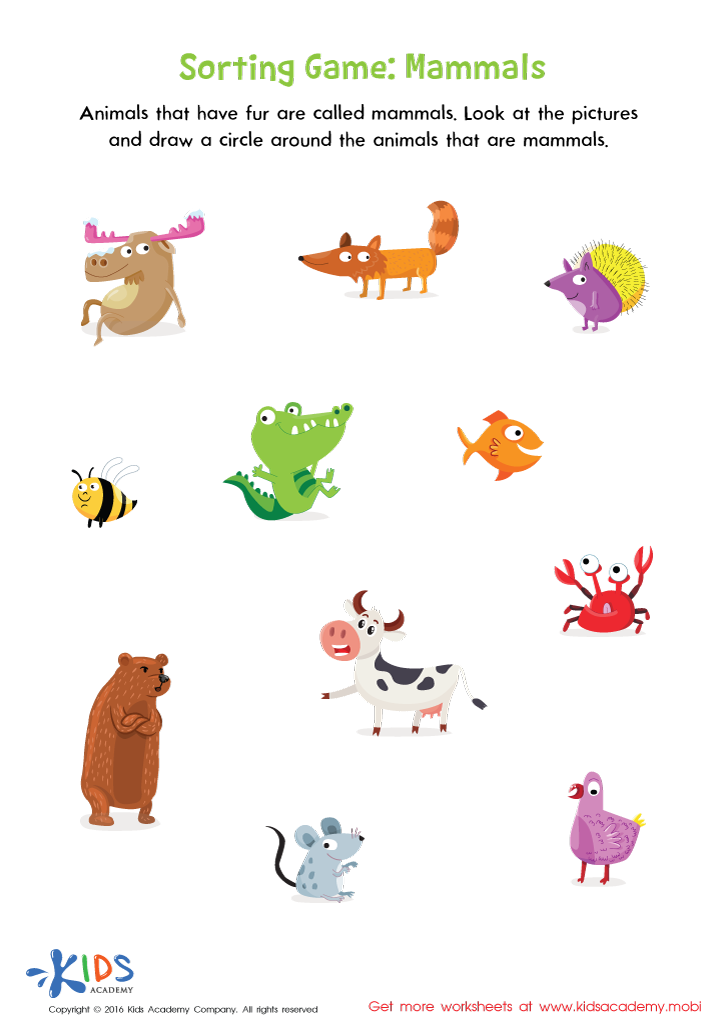
Mammals Sorting Worksheet
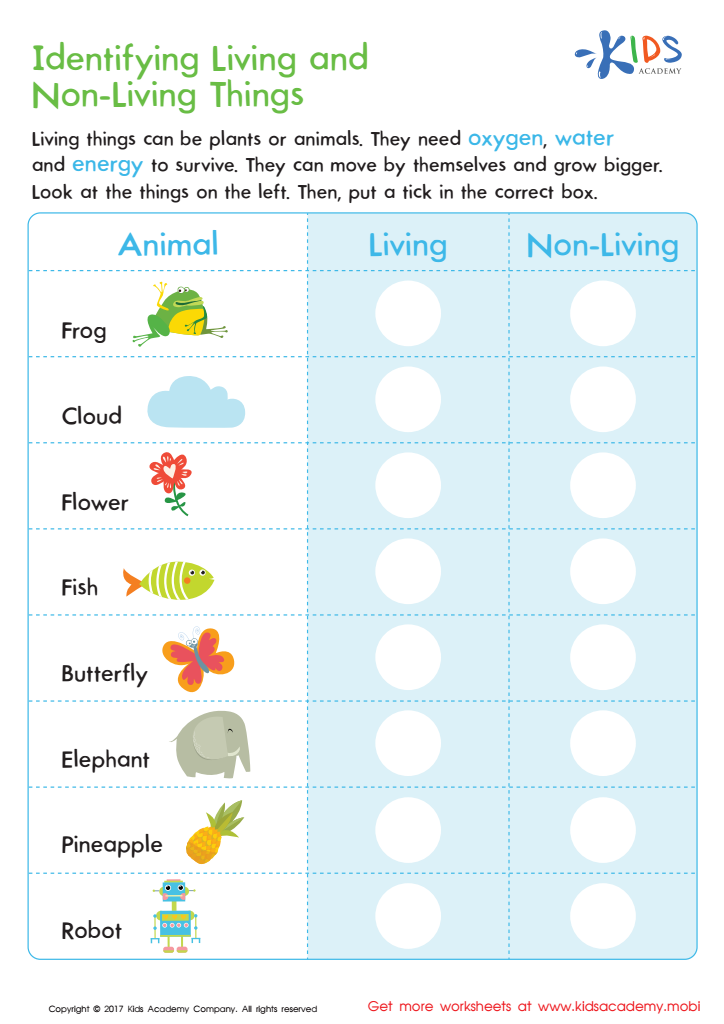
Identifying Living or Non–living Worksheet








Categorization skills are a fundamental part of cognitive development for children ages 3-4. Parents and teachers should care about fostering these skills because they substantially influence how young children understand and interact with the world around them.
At this developmental stage, children are naturally curious and observant. They begin to notice similarities and differences in objects, people, and animals. By categorizing these observations, they learn to organize information, which enhances memory retention and comprehension. This organizing ability is foundational for later academic skills, including math, reading, and critical thinking.
For example, when children learn to group objects by color, shape, or size, they are developing early math skills related to sorting and pattern recognition. Similarly, categorizing animals into groups (e.g., farm animals, pets) supports language development and enriches vocabulary.
Emotional and social benefits are also significant. Understanding categories helps children make sense of social dynamics, like family roles or friendship groups, facilitating smoother social interactions and empathy development.
Parents and educators can nurture these skills through play-based activities, such as sorting games, interactive storytelling, and hands-on exploration. By prioritizing categorization, adults lay a strong foundation for a child's future learning and everyday problem-solving skills.