Sight word recognition Writing Worksheets for Ages 3-4
4 filtered results
-
From - To
Discover our engaging Sight Word Recognition Writing Worksheets designed specifically for children ages 3-4. These interactive worksheets foster early literacy skills by helping young learners identify and write essential sight words. With a blend of fun activities, such as tracing, coloring, and creative writing, children will build confidence in their reading skills while developing fine motor abilities. Our worksheets align with playful learning methods, making it easy for parents and educators to incorporate sight word practice into daily routines. Encourage your child’s love for reading and writing with our thoughtfully crafted resources that make learning an enjoyable experience!
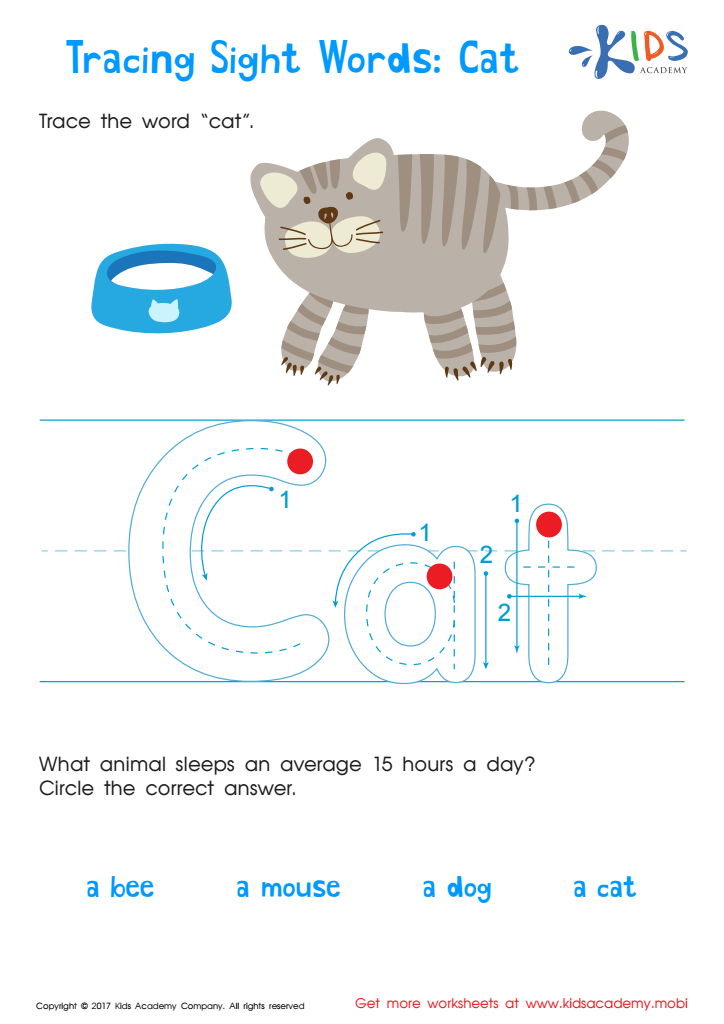
Cat Printable Sight Words Worksheet
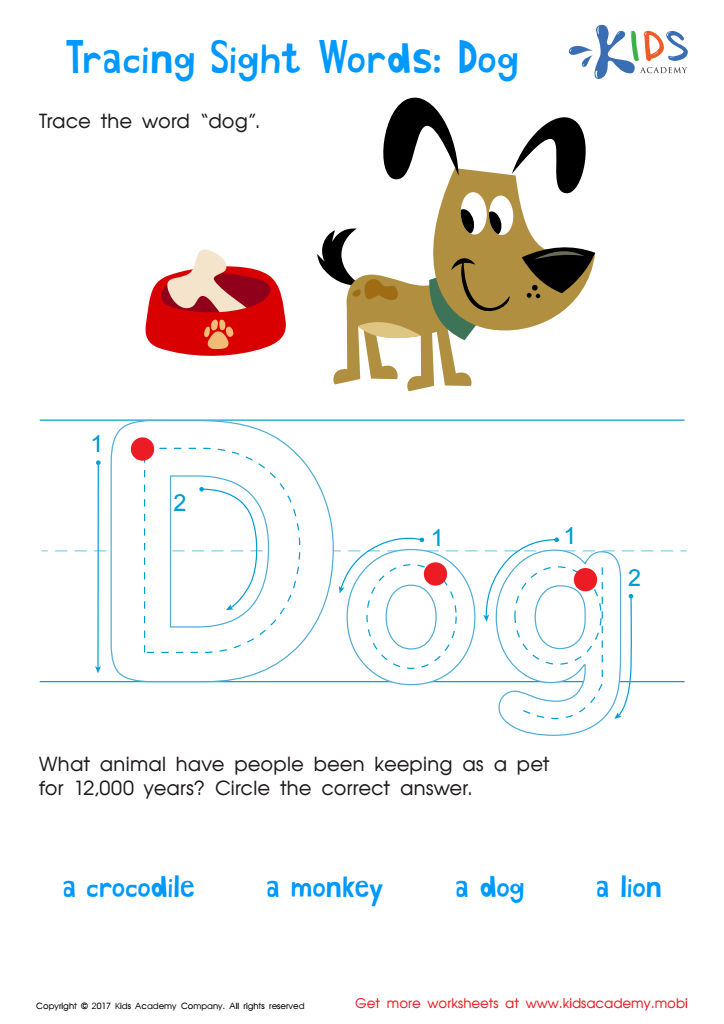
Dog Worksheet Sight Words Worksheet
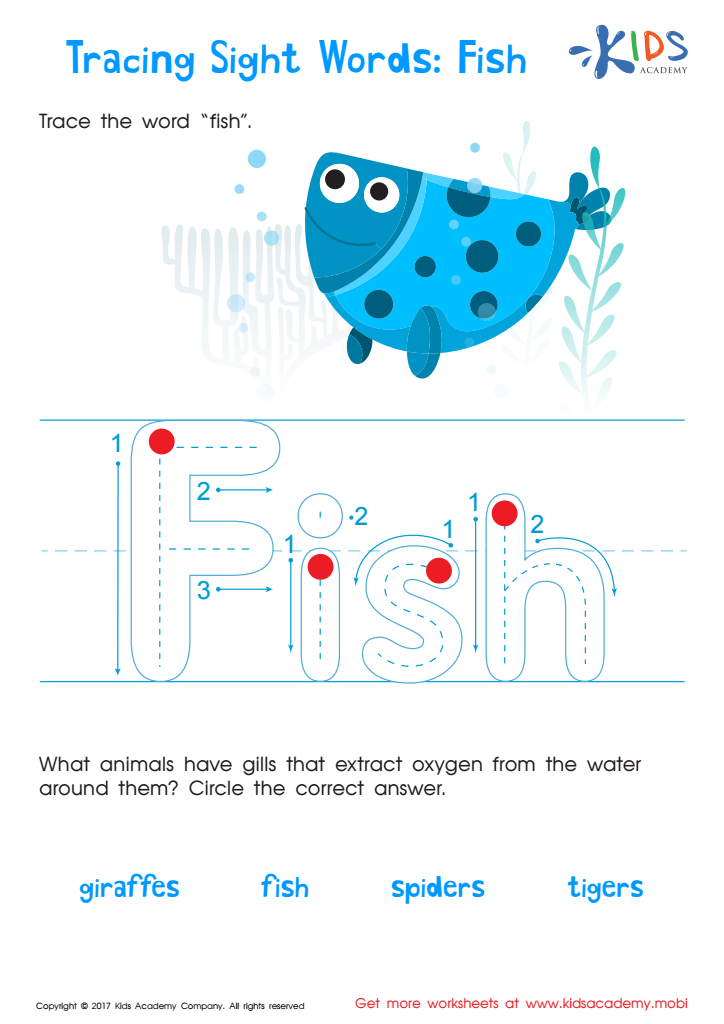
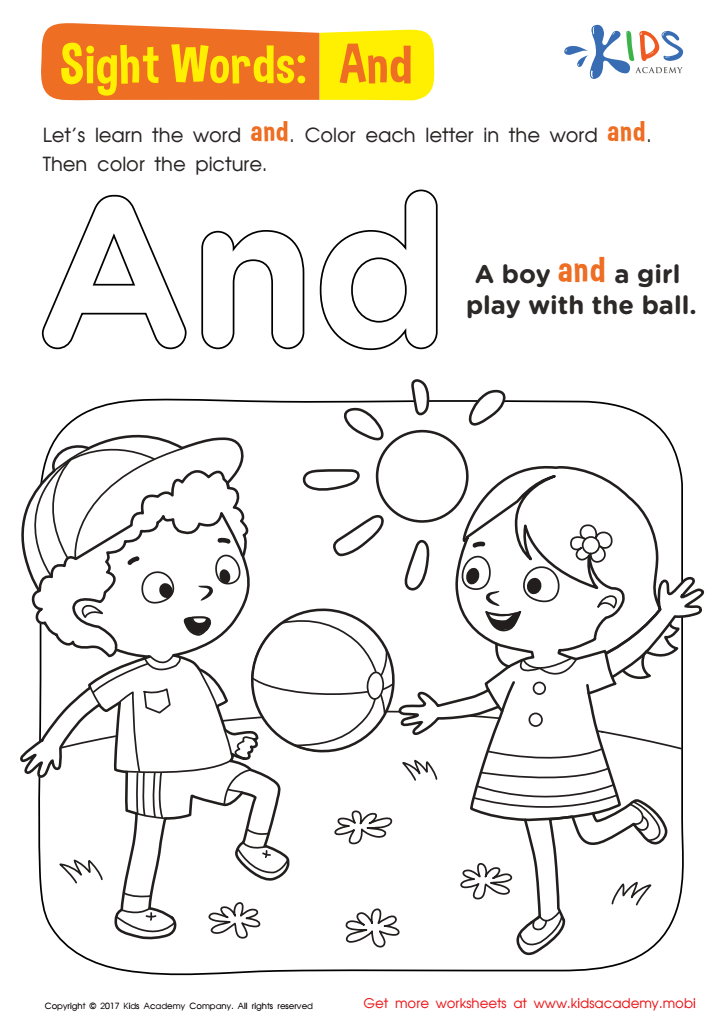
And Worksheet Sight Words Worksheet
 Assign to My Students








Sight word recognition is crucial for early literacy development in children ages 3-4. During this formative stage, young learners begin to understand that letters form words, and recognizing common sight words—such as "the," "and," and "is"—can significantly enhance their reading skills. By focusing on sight word recognition through engaging writing activities, parents and teachers can foster a strong foundation for early reading.
Firstly, sight word recognition supports fluency, making reading more enjoyable and less taxing. Children who recognize sight words instantly can focus on comprehension rather than decoding every single word, which enhances their overall engagement with texts. As they practice writing these words, children reinforce their memory and understand the concept of word formation.
Secondly, this skill plays a vital role in promoting self-confidence. When children can recognize and write sight words, they feel accomplished, encouraging a positive attitude toward learning. This motivation can lead to a lifelong love for reading and writing.
In summary, prioritizing sight word recognition through writing activities not only boosts early literacy skills but also nurtures a confident, enthusiastic learner, paving the way for future academic success. Therefore, it is essential for parents and teachers to actively engage children in this vital learning process.








