Understanding suffixes Writing Worksheets for Ages 3-4
3 filtered results
-
From - To
Welcome to our "Understanding Suffixes Writing Worksheets" crafted specifically for children ages 3-4! Our engaging worksheets are designed to help young learners recognize and understand suffixes, enhancing their reading and writing skills. Each activity includes colorful illustrations and simple, fun exercises that make learning enjoyable. By introducing suffixes like "-ing," "-ed," and "-s" in an interactive way, kids will improve their vocabulary and grammar while boosting their confidence as emerging writers. Perfect for home or classroom use, these worksheets provide essential foundational skills for early literacy. Start your child’s journey to mastering suffixes today!
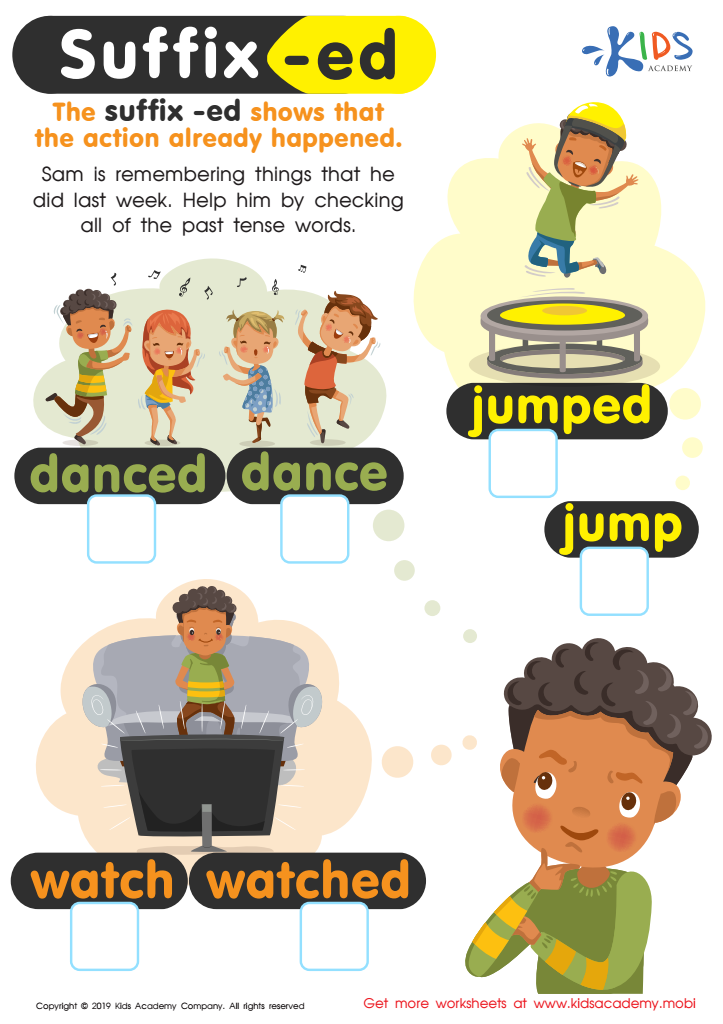
Suffix-ed Worksheet
 Assign to My Students
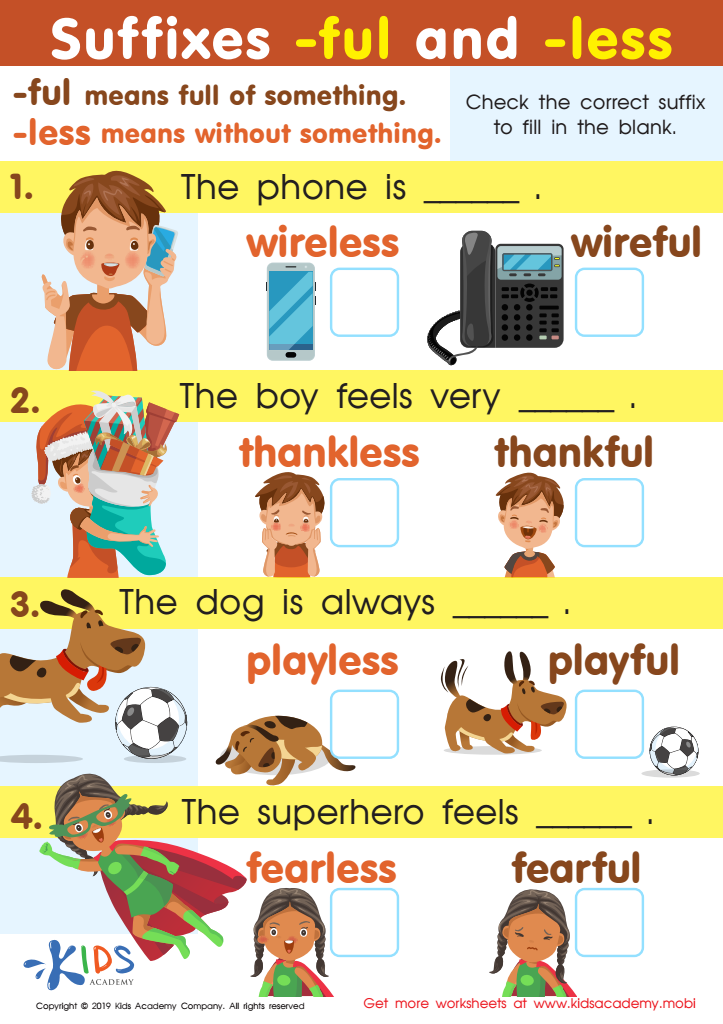
Suffixes –ful and –less Worksheet
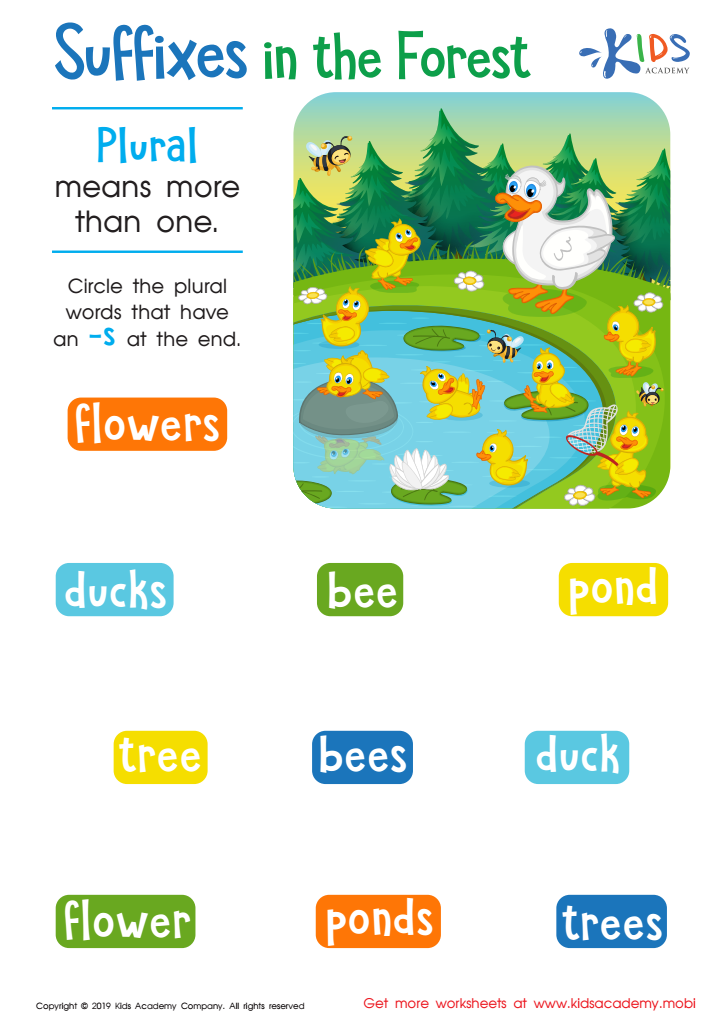
Suffixes in the Forest Worksheet








Understanding suffixes is vital for children aged 3-4 as it lays the foundation for language development and literacy skills. Suffixes, or letter groups added to the end of words, alter their meanings and grammatical function, helping children grasp how language works. For instance, adding “-ing” to “play” transforms a noun into a verb, highlighting actions.
When parents and teachers introduce suffixes early, it enhances vocabulary, encourages word formation skills, and builds confidence in language use. This understanding also promotes reading comprehension, as children encounter various words with suffixes in their stories and educational materials.
Additionally, learning suffixes at this early age fosters critical thinking and creativity. Children can experiment with language, developing their own words to express thoughts, thereby improving their communication skills.
Moreover, teaching suffixes aligns with early literacy goals, which emphasize phonemic awareness and vocabulary expansion. Engaging activities—like word games or storytelling—can make learning fun and effective, ensuring children have a rich linguistic foundation as they progress to higher grades.
In summary, grasping suffixes supports overall cognitive development, facilitating both verbal and written expression, making it essential for parents and educators to emphasize this skill from a young age.








