Filters

6 filtered results

Clear all filters
Favorites
With answer key
Interactive

6 filtered results

Difficulty Level

Grade


Unlock your child's potential with our Vocabulary Expansion Beginning Sounds Worksheets for ages 3-5! Designed to boost early literacy skills, these engaging and printable worksheets help young learners recognize and connect letters and their corresponding beginning sounds. By focusing on initial phonemes, children enhance their listening abilities and vocabulary, laying a solid foundation for future reading success. Ideal for preschool and kindergarten, these worksheets feature vibrant images and interactive activities that make learning fun. Equip your little ones with the tools they need to succeed and watch their confidence soar! Explore our collection today.

Check out this FREE Trial Lesson on Beginning Sounds for age 3-5!

The Letter H Sound

Favorites
With answer key
Interactive
  • 3-5
  • Vocabulary expansion
  • Beginning Sounds
Beginning Sounds Worksheet

Beginning Sounds Worksheet

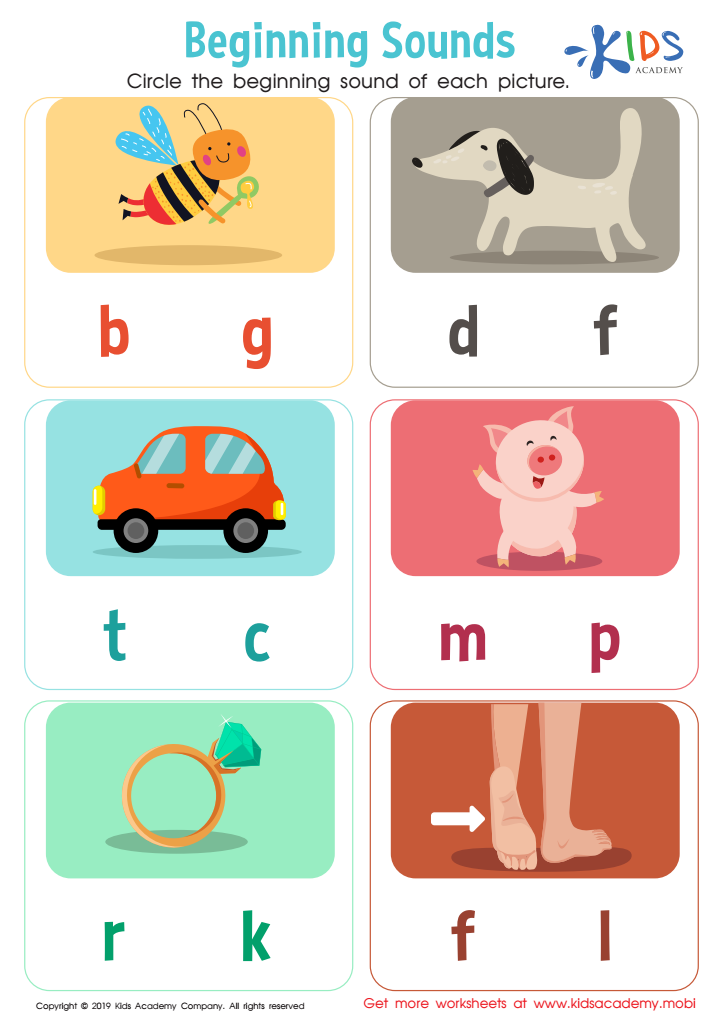
Test your child's knowledge with this colorful worksheet! Before beginning, have your kids recite the alphabet and sound them off. Give examples and ask them to do the same, then help them circle the beginning sound of each picture to complete the exercise.
Beginning Sounds Worksheet
Worksheet
Words with sound h Reading Worksheet

Words with sound h Reading Worksheet

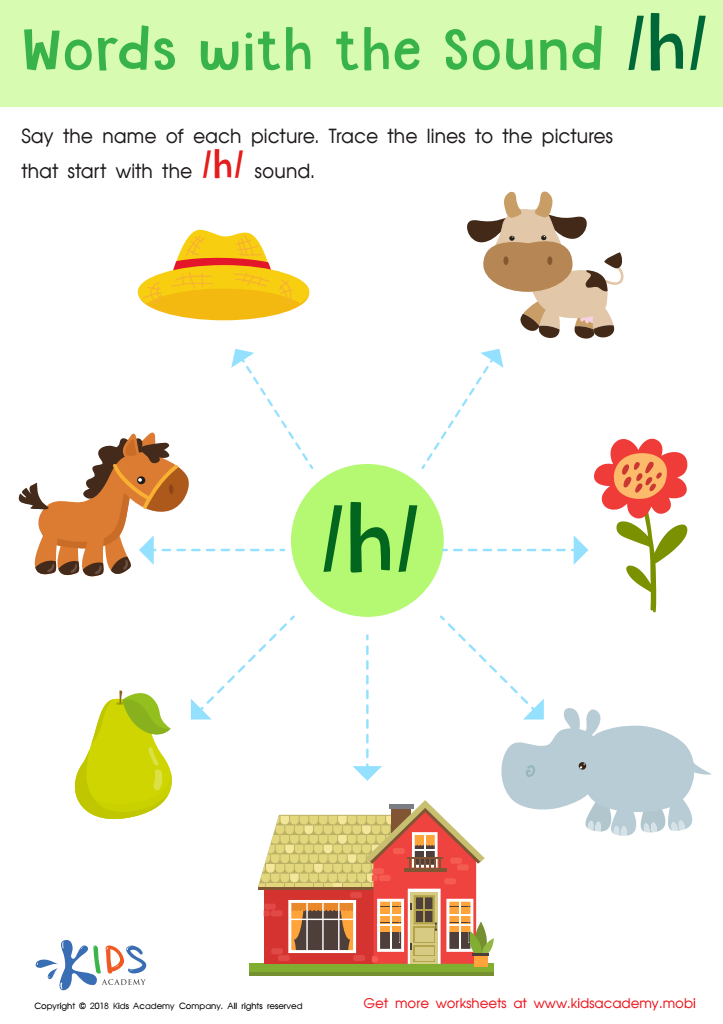
The letter H can often be heard in words! Check your child's knowledge with an engaging worksheet from Kids Academy. Ask them to go around a circle and name each image aloud. Listen for the starting sound and trace the line from the middle letter to the images with the sound. This is a great way to practice phonics!
Words with sound h Reading Worksheet
Worksheet
Words with sound j Reading Worksheet

Words with sound j Reading Worksheet

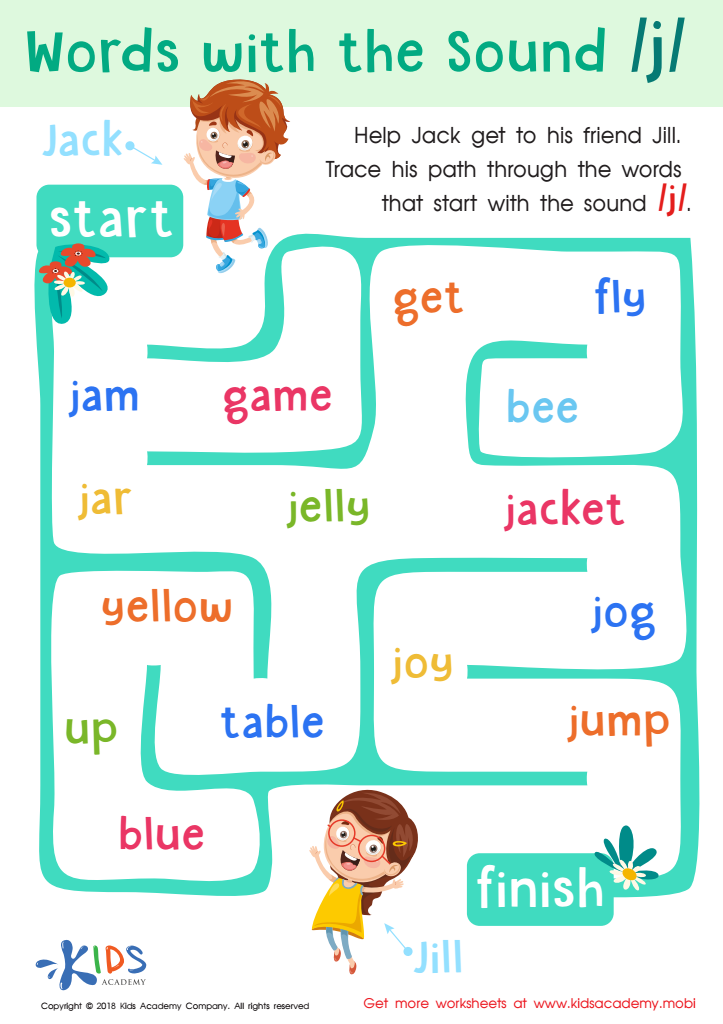
Don't be fooled: The letter J sounds like G in this letter sounds maze! Kids will enjoy helping Jack find Jill by listening to beginning sounds and tracing a path to the exit. Choose words that start with the letter J sound to complete the challenging maze!
Words with sound j Reading Worksheet
Worksheet
Can you Guess Which Letter? Worksheet

Can you Guess Which Letter? Worksheet

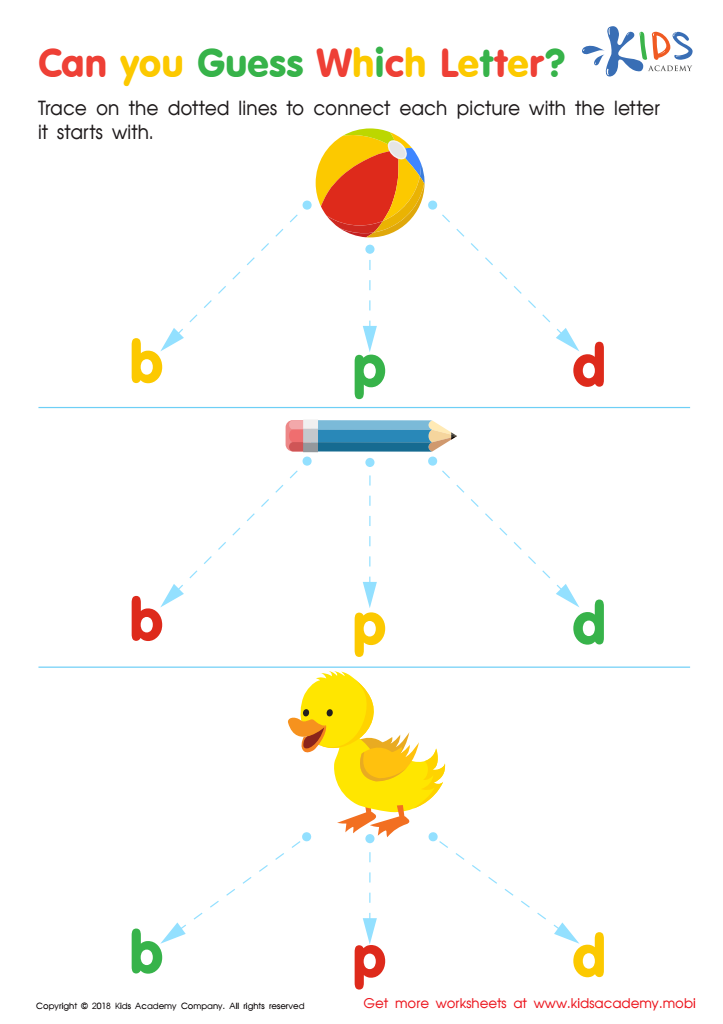
Connect the pictures with their corresponding letters with this fun worksheet! Ask your child what each picture is, then what letter it begins with. Download the PDF for colorful images and engaging texts to hold their attention, making learning an enjoyable activity.
Can you Guess Which Letter? Worksheet
Worksheet
Words with sound f Reading Worksheet

Words with sound f Reading Worksheet

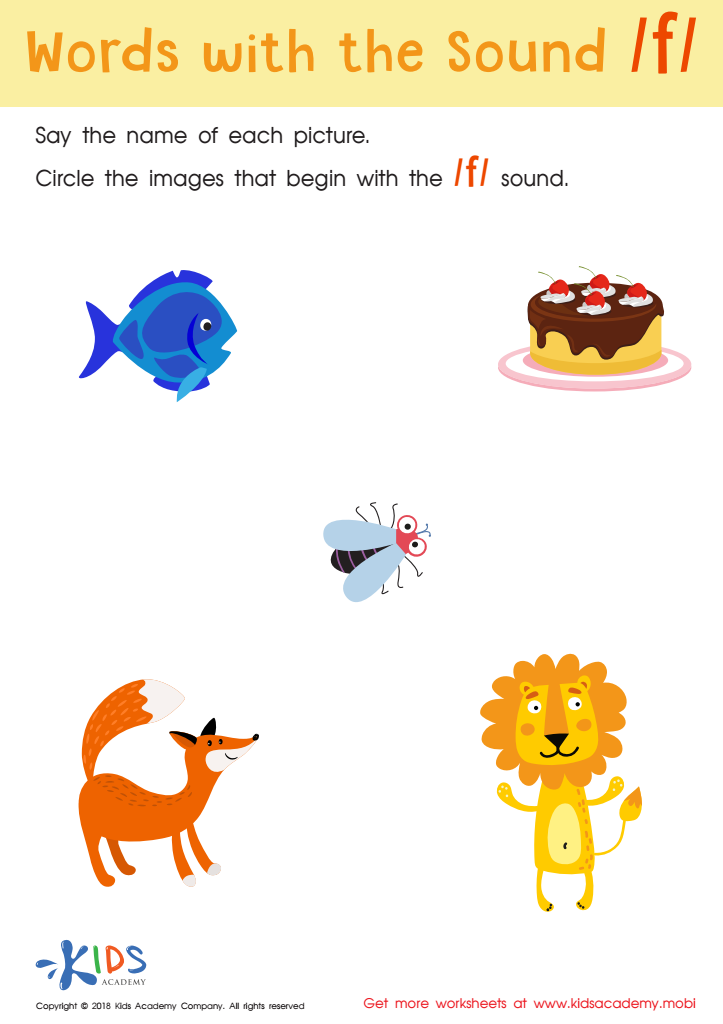
This illustrated phonics worksheet is ideal for preschool or kindergarten. It helps boost learners' literacy skills with a focus on the letter "f". Ask your child to name all the pictures, listening for that sound. Examples are fish, fox, lion, bug. When they can identify which words start with "f", have them circle the images. Congratulate them on a job well done!
Words with sound f Reading Worksheet
Worksheet
Beginning sound d worksheet

Beginning Sound D Worksheet

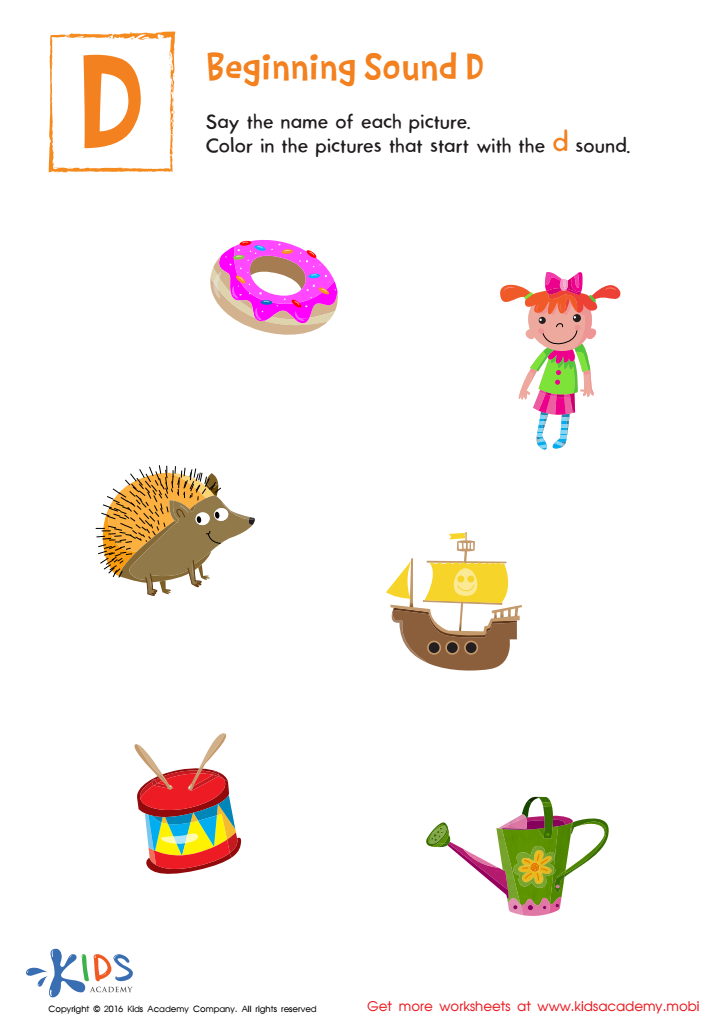
Reinforce phonics with this vibrant beginning sound d worksheet! Pictures help kids identify words beginning with 'd' and develop early reading skills. Sounding out each word increases literacy!
Beginning Sound D Worksheet
Worksheet


Vocabulary expansion and mastery of beginning sounds for children ages 3-5 are crucial aspects of early literacy development. At this age, children are like sponges, rapidly absorbing new information and skills. A strong vocabulary sets a solid foundation for reading and writing, skills essential for academic success. When children learn new words, they improve their communication abilities, enabling them to express thoughts and emotions more accurately. It also enhances their understanding of the world around them, facilitating cognitive development.

Beginning sounds are particularly important as they are the building blocks of phonemic awareness, the ability to recognize and manipulate sounds in spoken words. This skill is a strong predictor of future reading success. Children who can identify beginning sounds can learn to decode words more easily, which helps them become proficient readers. By focusing on developing these skills, parents and teachers give children the tools they need to decode new words, build their vocabulary, and gain confidence in their reading abilities. Thus, prioritizing vocabulary expansion and phonemic awareness in early childhood education lays the groundwork for lifelong learning and academic achievement, making it an essential focus for both parents and teachers.