Alphabet Recognition Letter Sounds Worksheets for Ages 3-5
4 filtered results
-
From - To
Discover fun and educational Alphabet Recognition Letter Sounds Worksheets designed specifically for ages 3-5! Our engaging activities help young learners identify and pronounce letters while enhancing their early reading skills. Perfect for preschool and kindergarten, these printable worksheets make learning the alphabet enjoyable and interactive. Boost your child's confidence with exercises that combine bright visuals, playful themes, and phonetic sounds. With our expert-crafted resources, your little one will be recognizing letters and mastering sounds in no time. Visit us at Kids Academy to start your child on a successful literacy journey today!
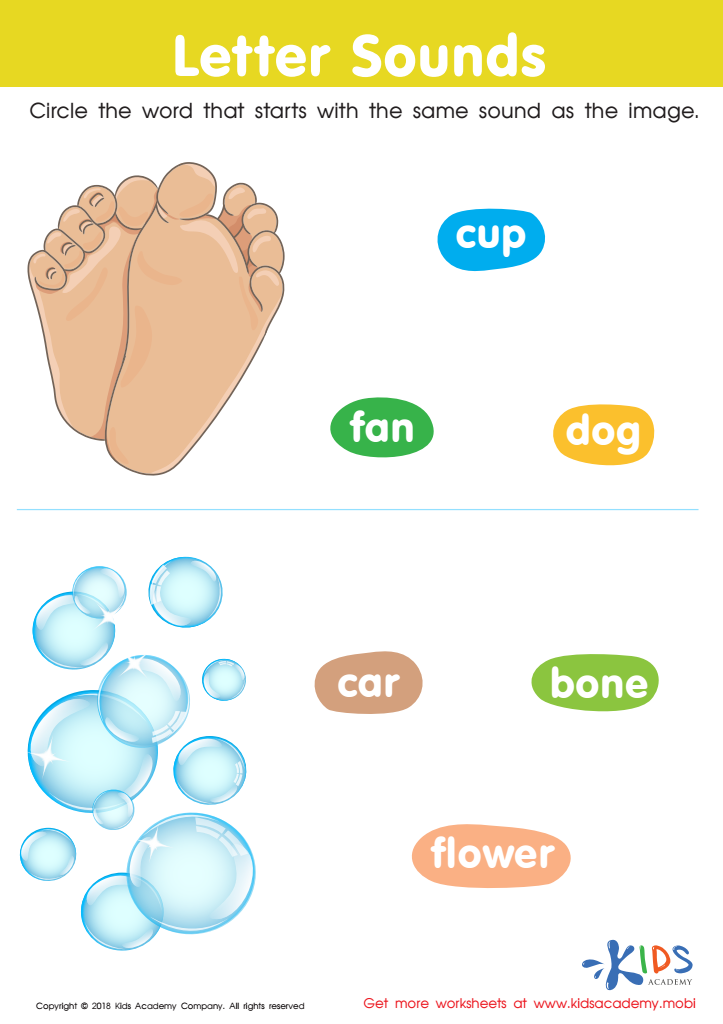
letter sounds Worksheet
 Assign to My Students
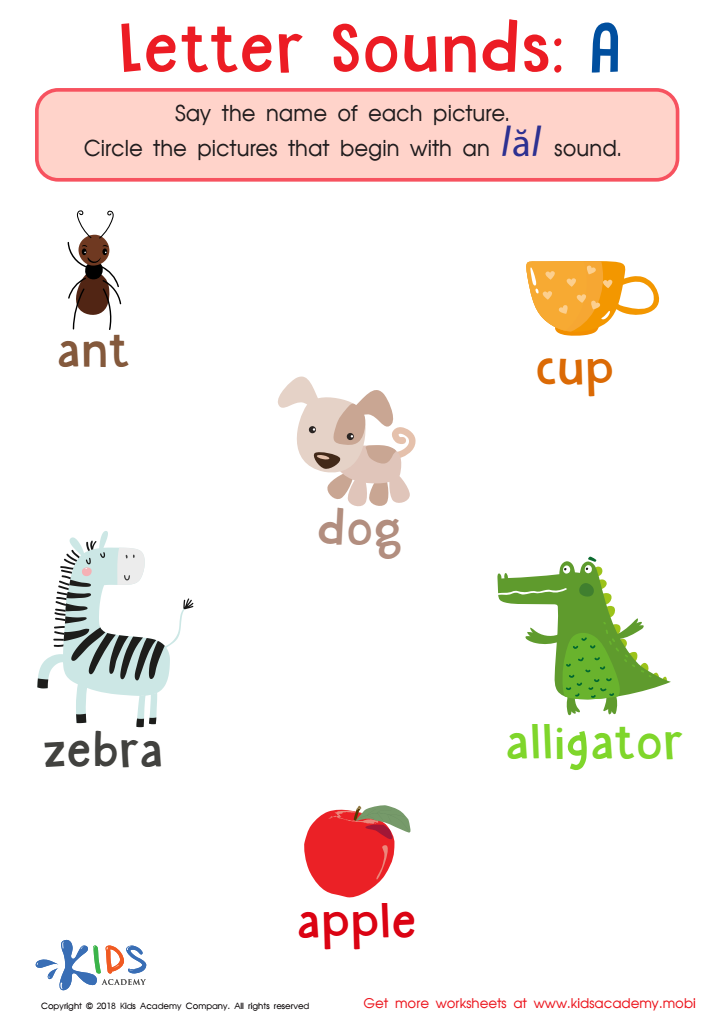
Letter A Sounds Worksheet
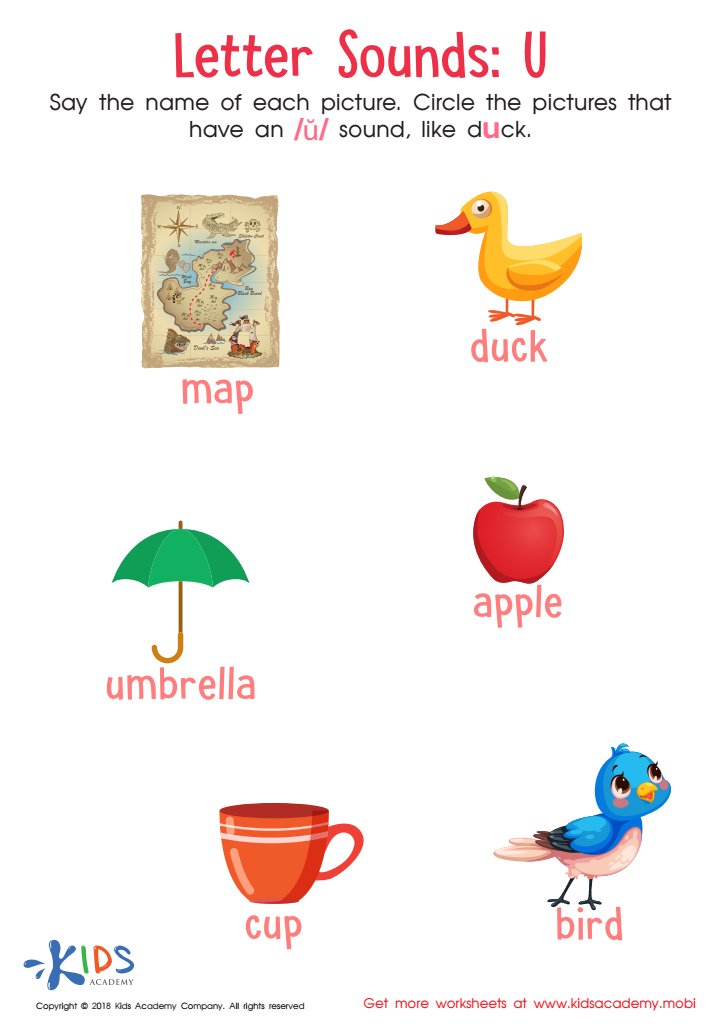
Letter U Sounds Worksheet
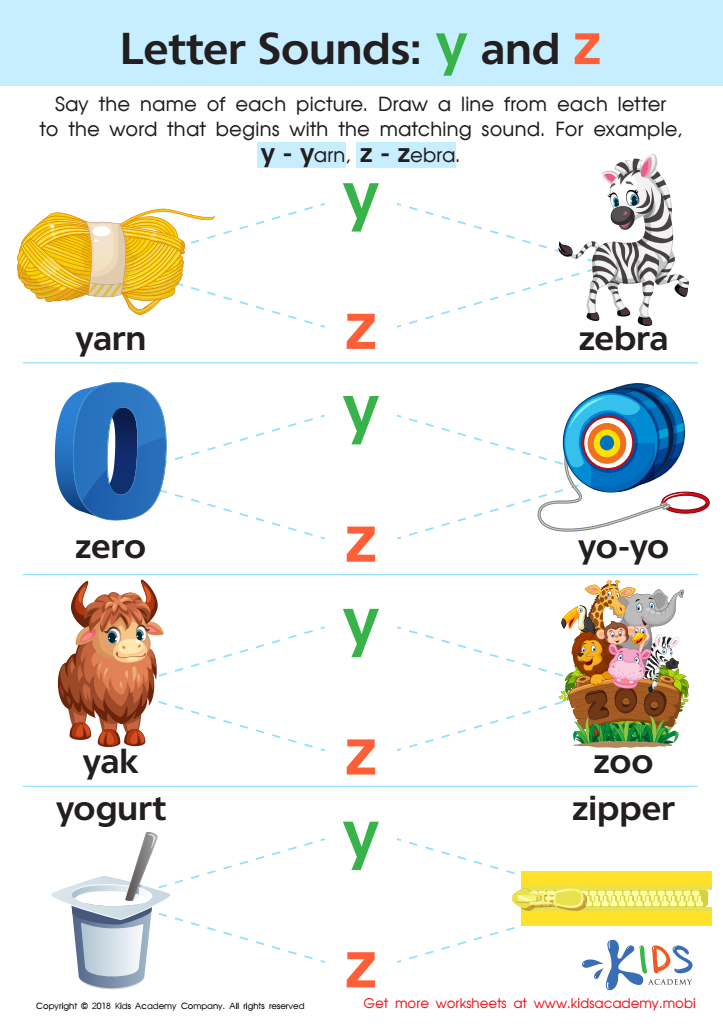
Letter Y and Z Sounds Worksheet








Developing alphabet recognition and letter-sound knowledge in ages 3-5 is crucial for young children's literacy development. This foundational skill is a cornerstone for reading and writing proficiency, key academic areas essential for classroom success and lifelong communication abilities.
During these early years, children’s brains are highly receptive and adaptable, making it an ideal period for introducing alphabet recognition and phonemic awareness. When children learn the names and sounds of letters, they begin to understand that written language is a code for spoken language. This decoding ability is necessary for reading, enabling children to sound out words and recognize patterns.
Moreover, early alphabet knowledge boosts children's confidence. When children feel adept at identifying letters and associated sounds, they exhibit greater enthusiasm and interest in reading activities. This enthusiasm fosters a positive learning environment at home and school, fostering a lifelong love for reading.
Early literacy also supports vocabulary expansion and comprehension skills. As children associate letters with sounds, they are more equipped to absorb new words, understand their meanings, and use them appropriately.
Therefore, both parents and teachers should prioritize alphabet recognition and letter-sound skills to equip children with the building blocks for future academic achievement and effective lifelong communication. Fostering these skills in a fun, engaging manner can encompass games, songs, and interactive reading sessions, making learning enjoyable and impactful for young minds.







