Fine Motor Skills Letter T Worksheets for Ages 3-5
3 filtered results
-
From - To
Enhance your child's fine motor development with our engaging Letter T worksheets, designed for ages 3-5. These fun, printable activities feature tracing, coloring, and matching exercises that build foundational skills while making learning enjoyable. Ideal for preschool and kindergarten young learners, each worksheet encourages proper pencil grip, hand-eye coordination, and letter recognition. Our expertly crafted worksheets ensure children strengthen their fine motor abilities, setting them up for success in writing and beyond. Make learning alphabet letters fun and effective with our specialized Letter T worksheets available for free at Kids Academy. Download now and start practicing today!
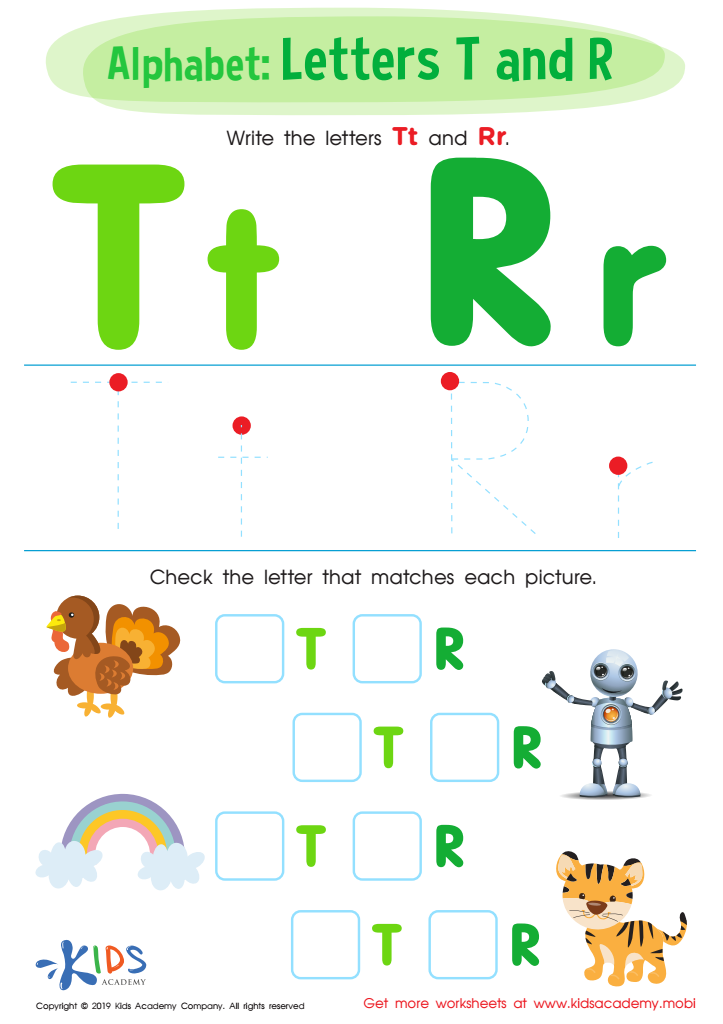
Letters T and R Worksheet
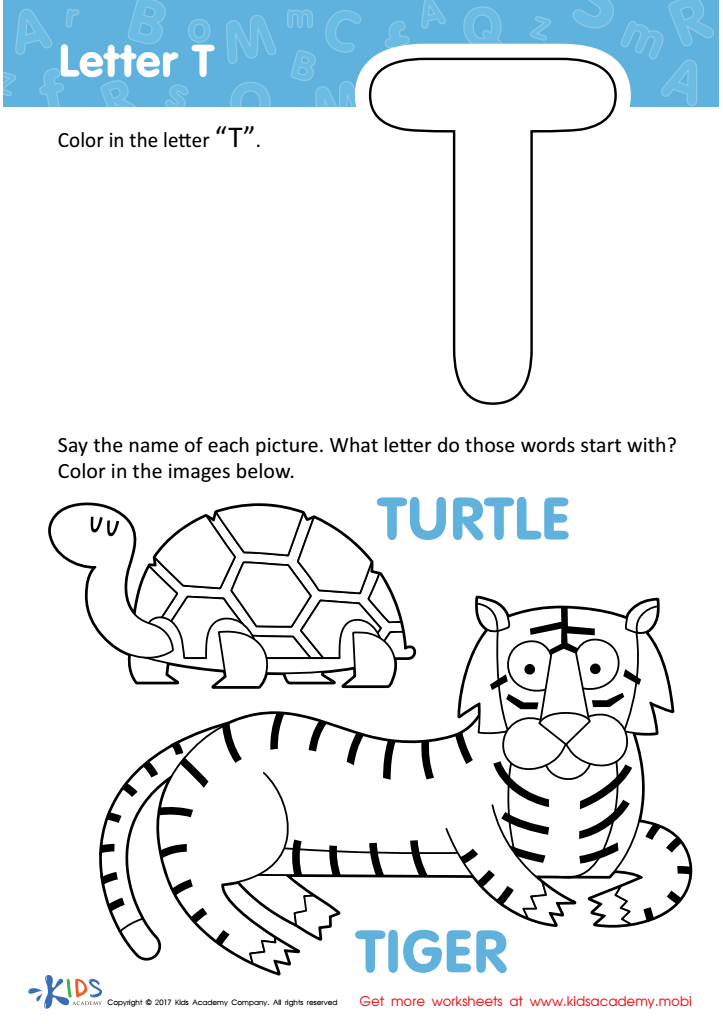
Letter T Coloring Sheet
 Assign to My Students
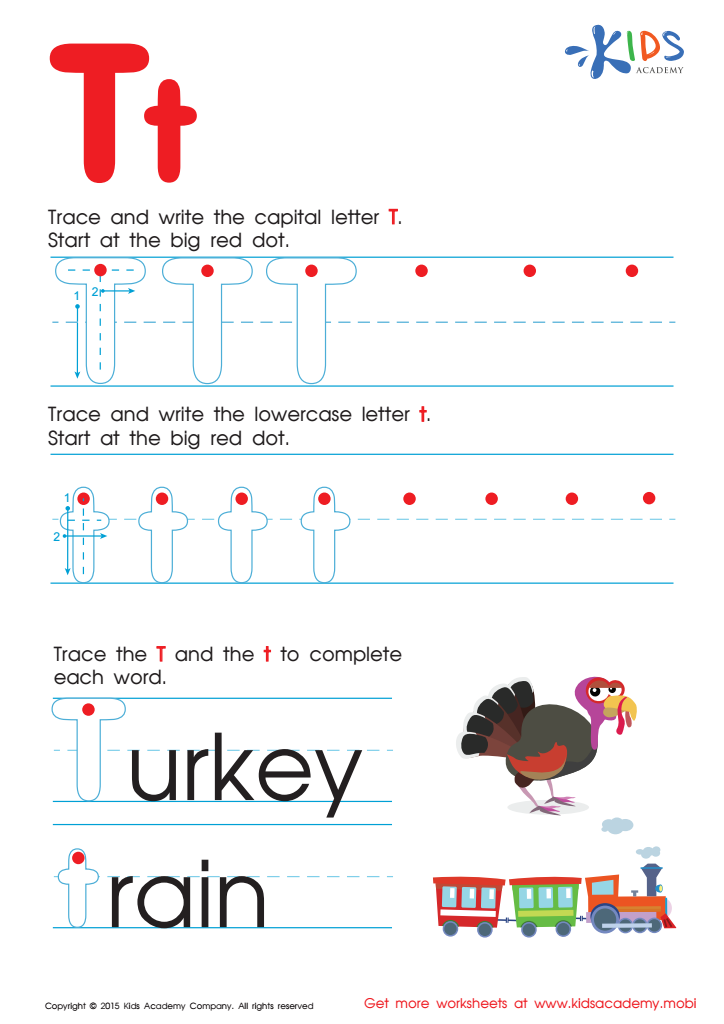
Letter T Tracing Page







Fine motor skills are crucial for early childhood development, as they lay the foundation for essential tasks like writing, buttoning clothes, and using utensils. The letter "T" serves as a perfect tool in practicing and developing these skills for children ages 3-5. Here's why:
First, tracing or drawing the letter "T" encourages proper pencil grip and control, which are fundamental for handwriting. The horizontal and vertical lines of "T" require children to coordinate their hand movements precisely, fostering better motor control.
Second, fine motor skills are linked to cognitive development. Engaging in activities that involve precision, like forming the letter "T", strengthens neural pathways and assists in developing spatial awareness and hand-eye coordination.
Parents and teachers can also use letter "T" activities to make learning multisensory. For example, children can trace "T" in sand, on textured surfaces, or using finger paint. These variations can boost sensory processing and make learning more engaging and effective.
Furthermore, mastering fine motor skills fosters independence in young children. It enhances their capability in daily tasks, leading to self-confidence and reducing frustration levels.
In summary, focusing on fine motor skills with activities like forming the letter "T" is not merely about learning letters but also about developing broader physical, cognitive, and emotional competencies that benefit young children immensely.