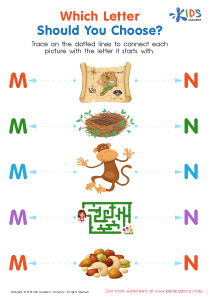
Alphabet sequencing Lowercase/Small Letters Worksheets for Ages 3-5
3 filtered results
-
From - To
Boost your child's literacy skills with our engaging Alphabet Sequencing Lowercase/Small Letters Worksheets, specifically designed for ages 3-5. These worksheets provide an interactive way for young learners to recognize, sequence, and reinforce their understanding of the lowercase alphabet. Packed with colorful illustrations and age-appropriate activities, your little ones will enjoy connecting letters while enhancing their fine motor skills. Ideal for both home and classroom use, these worksheets encourage early learning through play, making it a fun educational experience. Help your child build a strong foundation in reading and writing with our thoughtfully crafted resources. Start their alphabet adventure today!
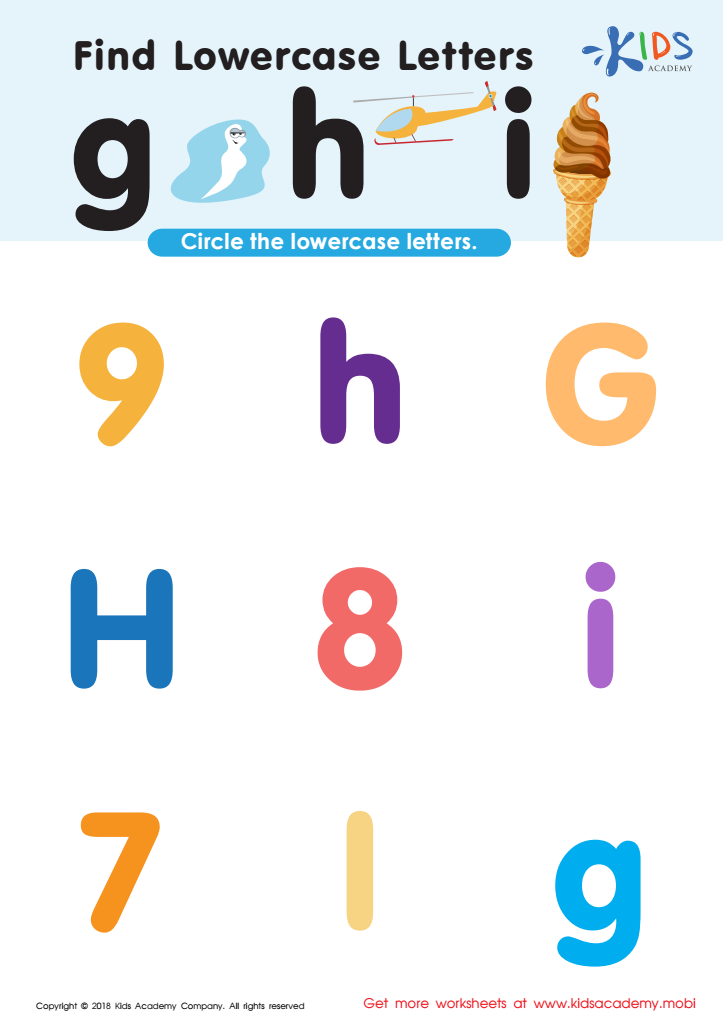
Find Lowercase Letters g h i Worksheet
 Assign to My Students
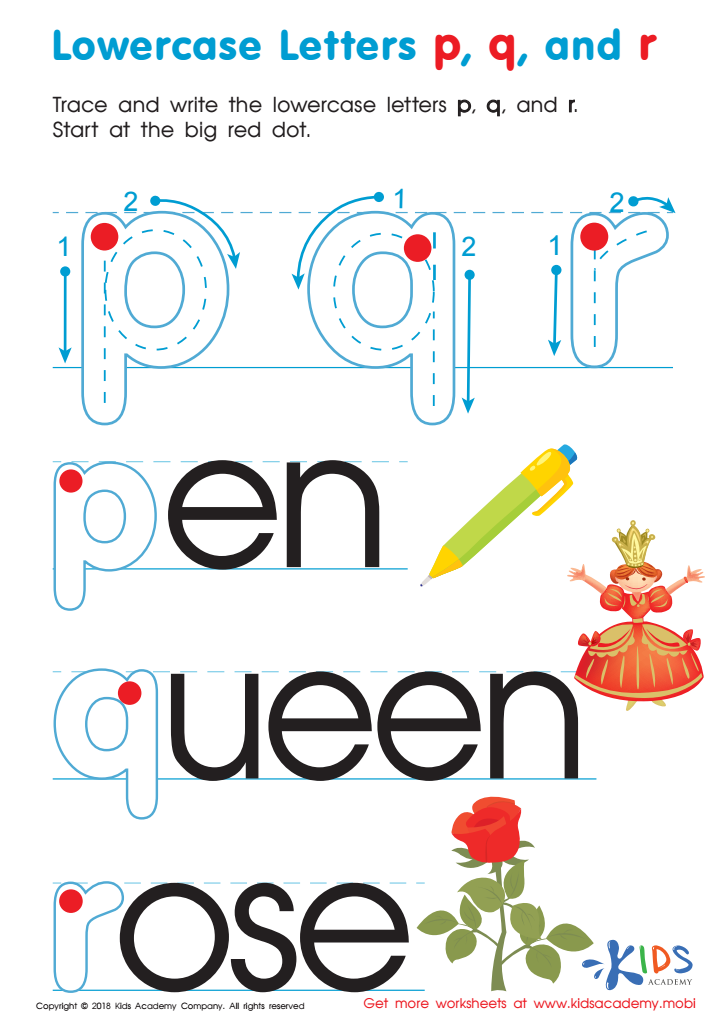
Lowercase Letters p q r Worksheet
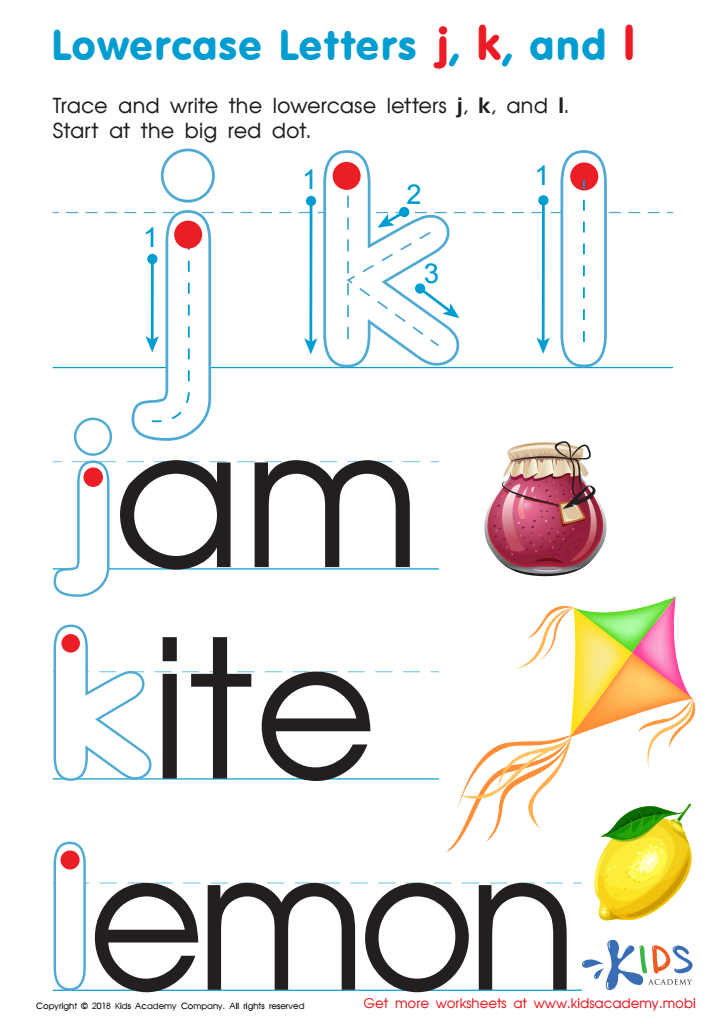
Lowercase Letters j k l Worksheet


Alphabet sequencing of lowercase letters is crucial for children aged 3-5 because it lays the foundation for early literacy skills. During this developmental stage, children begin to recognize letters, and understanding their correct sequence supports letter identification and phonemic awareness. By learning to sequence lowercase letters, children develop the ability to differentiate between similar-looking letters and improve their handwriting skills, leading to better spelling and reading in the future.
Moreover, sequencing reinforces cognitive skills, such as memory and problem-solving, as children practice ordering letters in a structured manner. Engaging parents and teachers in this process can create a cohesive learning environment where consistency promotes retention. Fun activities like songs, games, and crafts can make learning enjoyable and increase children's motivation.
This early exposure cultivates a love for reading and writing, important as children transition into more complex literacy tasks. As children progress, the ability to sequence lowercase letters enhances their understanding of words and sentences, further facilitating their overall language development. For these reasons, parents and teachers play a vital role in supporting this aspect of early education, ensuring that children are well-prepared for the next stages of learning.