
Sight word recognition Three Letter Words Phonics Worksheets for Ages 3-5
3 filtered results
Difficulty Level
Grade
Age
-
From - To
Subject
Activity
Standards
Enhance your child's reading skills with our engaging Sight Word Recognition Three Letter Words Phonics Worksheets designed for ages 3-5! These worksheets focus on helping young learners recognize and read essential three-letter sight words. Tailored for preschool and kindergarten readiness, our fun, interactive activities foster phonemic awareness and boost vocabulary. Each worksheet includes colorful visuals to make learning enjoyable and maintain your child's interest. Ideal for parents and educators, these resources promote early literacy development, laying a strong foundation for future reading success. Explore our collection today and watch your little ones become confident readers with every completed worksheet!
Favorites
With answer key
Interactive
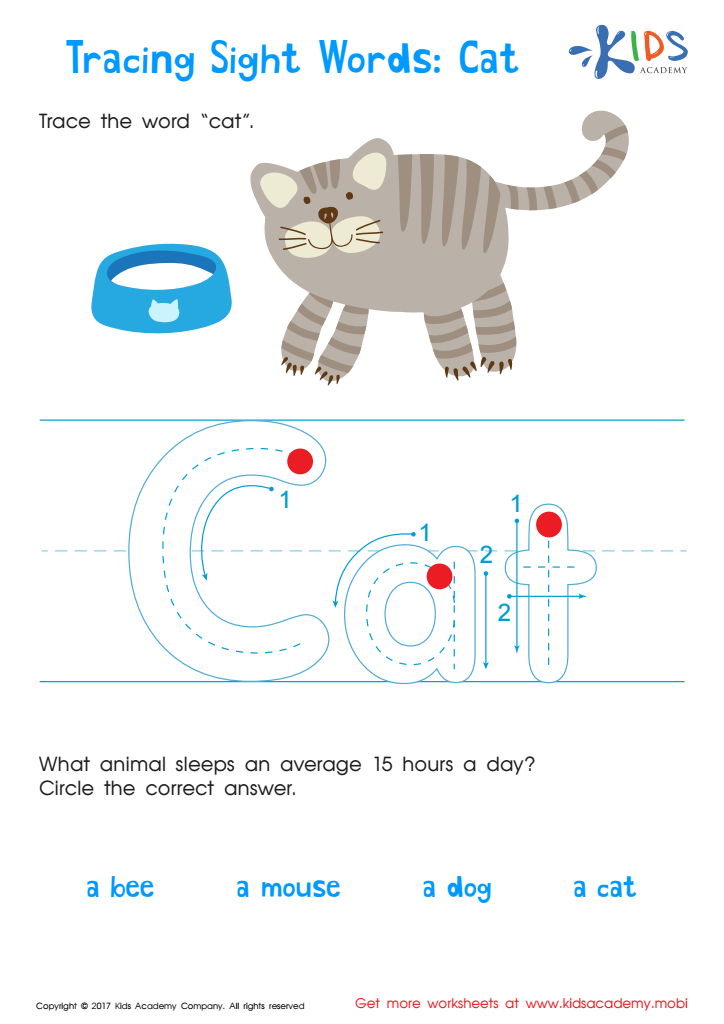
Cat Printable Sight Words Worksheet
Encourage your child's literacy with this fun sight words worksheet: cat PDF! It helps build a solid foundation for reading, featuring activities such as reading and tracing the word cat, and finding it amongst other sight words. With its cute cat, Kids Academy makes learning to read a delight!
Cat Printable Sight Words Worksheet
Worksheet
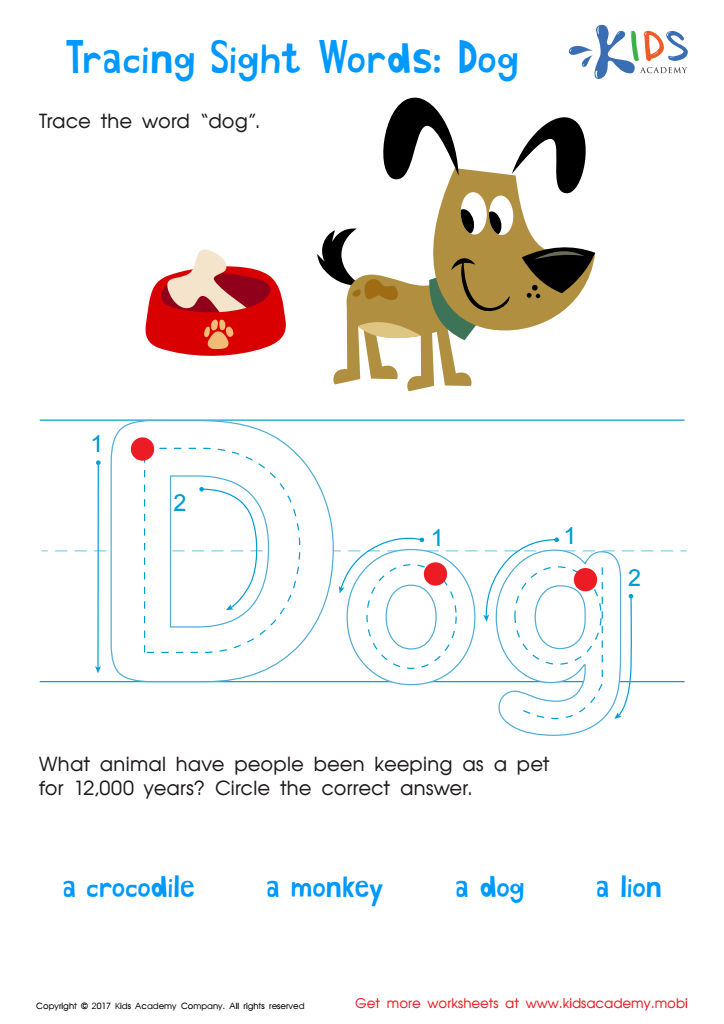
Dog Worksheet Sight Words Worksheet
Get your kids excited to read with our dog-themed sight words worksheet!
Excite your child to read with our sight words worksheet: dog edition! Featuring a lovable dog character to put a smile on any kid's face, this worksheet helps kids practice reading and writing the word "dog". Build a library of words they can read quickly and promote increasing literacy skills with early fluency! Get them ready for reading with our dog-themed sight words worksheet!
Dog Worksheet Sight Words Worksheet
Worksheet
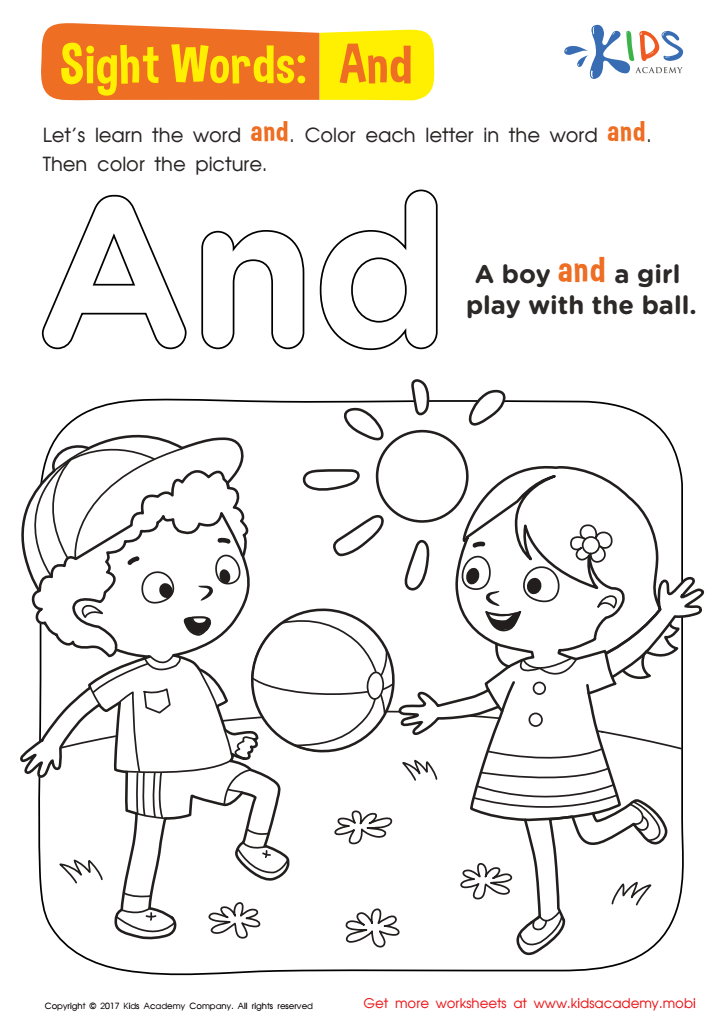
And Worksheet Sight Words Worksheet
Help your child get a jumpstart on reading with sight words! Print out this fun worksheet and get your child to read the sentence. Point out the word "and", then color the word and enjoy the rest of the scene! It's a great way to introduce sight words and get their early reading skills going!
Download (PDF)
 Assign to My Students
Assign to My Students
And Worksheet Sight Words Worksheet
Worksheet
Join Kids Academy for Free
Who is primarily going to use this learning content?




Sight word recognition and phonics skills, particularly with three-letter words, are crucial for early literacy development in children ages 3-5. By recognizing sight words, young learners build a foundation for reading fluency and comprehension. Sight words, which often cannot be phonetically sounded out, allow children to quickly identify common words, making reading more enjoyable and less frustrating.
Phonics, especially with three-letter words, helps children understand the connectedness of sounds and letters. This systemic approach aids in decoding unfamiliar words, ultimately enhancing their capacity to read independently. Mastery of three-letter words encourages confidence, setting the stage for more complex vocabulary in the future.
Parents and teachers play a pivotal role in supporting this learning process. Engaging children with playful activities, such as rhymes, games, and visuals, can stimulate interest and excitement about reading. Additionally, repeated exposure to these foundational elements assists children in retaining and using language in context. This creates a more profound understanding of written language.
Ultimately, investing time in sight word recognition and phonics at this young age fosters a lifelong love of reading, essential for academic success and personal growth. It's a vital stepping stone toward effective communication and cognitive development, benefiting children immensely.







