Uppercase identification Uppercase Letters Worksheets for Ages 3-5
5 filtered results
-
From - To
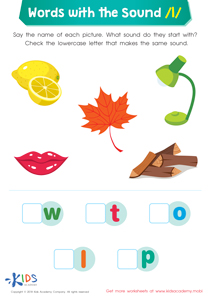
Introduce your little learners to uppercase letters with our engaging Uppercase Identification Worksheets designed for ages 3-5. These colorful and interactive worksheets will help preschoolers recognize and differentiate uppercase letters, laying the foundation for essential reading and writing skills. Each worksheet features vibrant images and fun activities that promote letter identification through tracing, matching, and coloring. Perfect for homeschooling or classroom use, these resources make learning enjoyable and effective. Encourage your child’s creativity and boost their confidence as they explore the world of letters. Start their educational journey today with our Uppercase Letters Worksheets, fostering lifelong literacy skills in a playful way!
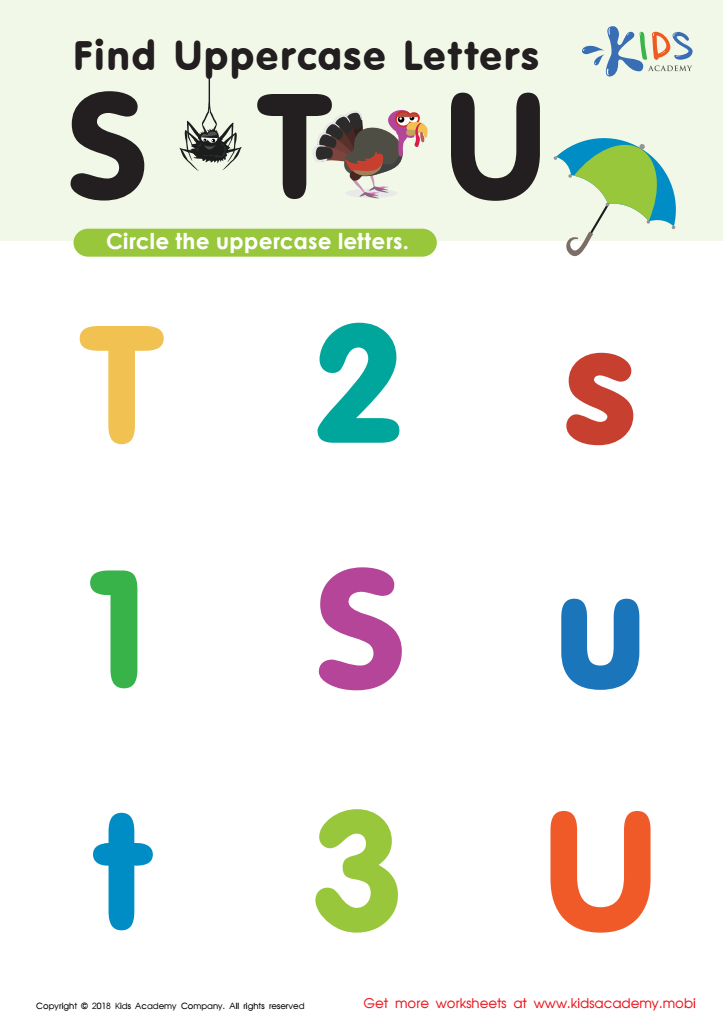
Find Uppercase Letters Worksheet
 Assign to My Students
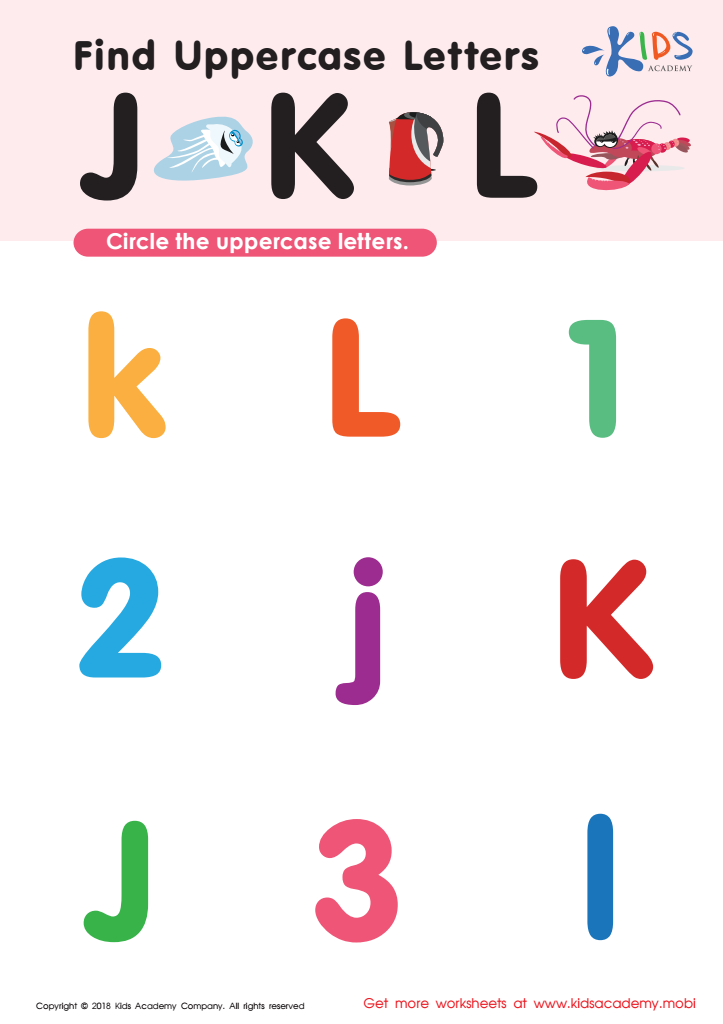
Find Uppercase Letters J, K, and L Worksheet

Find Uppercase Letters A, B, and C Worksheet
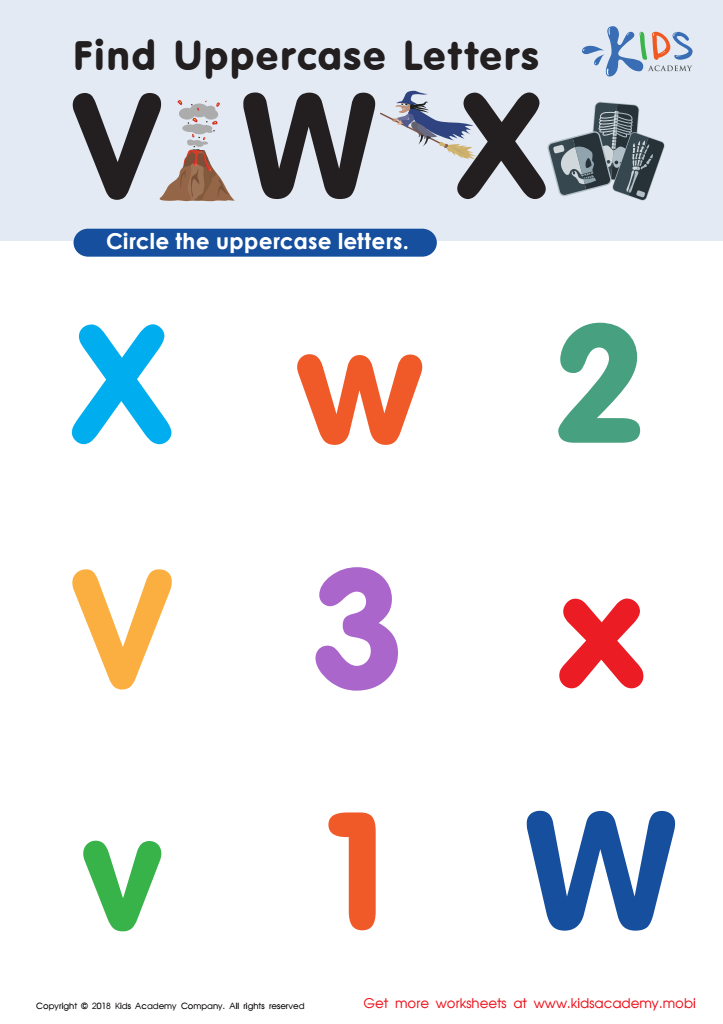
Find Uppercase Letters V, W, X Worksheet
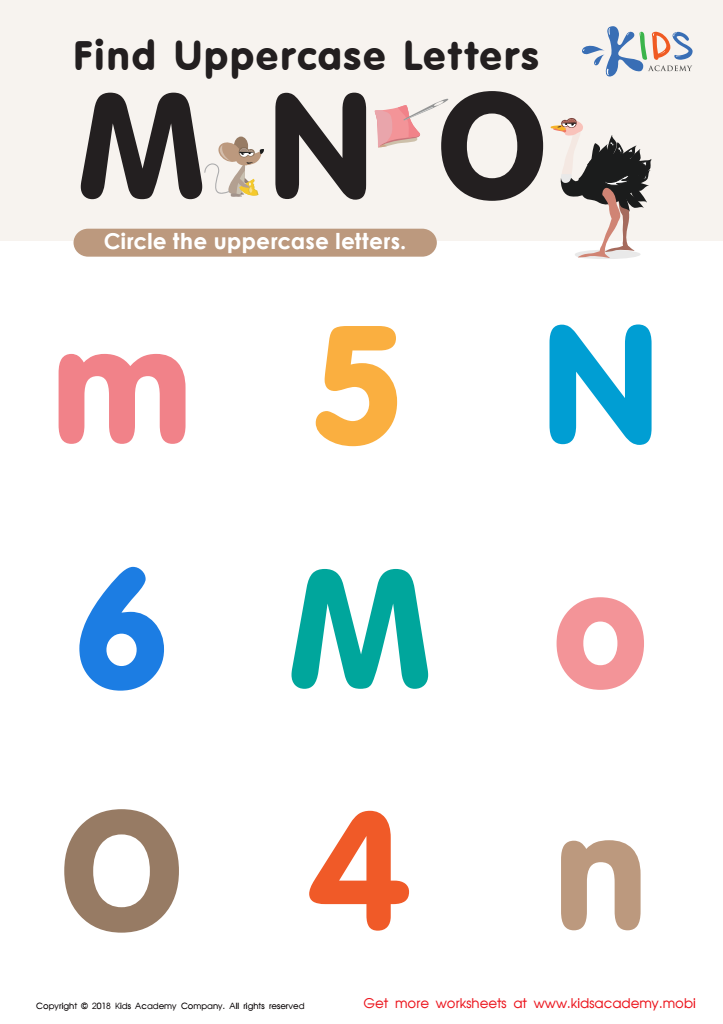
Find Uppercase Letters M, N, and O Worksheet








Uppercase letter identification is a crucial milestone in early literacy development for children ages 3-5. Understanding uppercase letters lays the foundation for reading and writing, enabling kids to begin recognizing words and forming sentences. Since many children's books, signs, and print materials are written predominantly in uppercase, early familiarity with these letters boosts children’s confidence and motivation to engage with text.
When parents and teachers emphasize uppercase letter identification, they are not just helping children With their alphabet but also enhancing important skills such as memory, phonics, and critical thinking. Recognizing uppercase letters contributes to children’s ability to differentiate between print and express themselves through writing, a crucial life skill as they progress academically.
Moreover, interest in uppercase letters can support early numeracy through related activities, such as counting objects in the environment and recognizing patterns. Positive engagement in this stage fosters a lifelong love of reading and learning. By making uppercase letter identification an interactive and enjoyable experience, parents and teachers set the stage for successful literacy development, paving the way for future academic achievement and building essential communication skills. Overall, caring about uppercase identification ultimately enriches children's language experiences and cognitive growth.