Reading comprehension Vowels and Consonants Worksheets for Ages 3-5
4 filtered results
-
From - To
Enhance early literacy skills with our engaging "Reading Comprehension Vowels and Consonants Worksheets" designed for children aged 3-5. These worksheets introduce the fundamental concepts of vowels and consonants through fun, interactive activities that promote reading comprehension. Each sheet is crafted to support children's understanding of letter sounds, enabling them to decode words effectively. Colorful visuals and age-appropriate exercises captivate young learners, making education enjoyable. Perfect for classrooms or homeschooling, these resources foster a solid foundation for reading fluency and a love for learning. Explore our comprehensive collection to empower your child's literacy journey today!
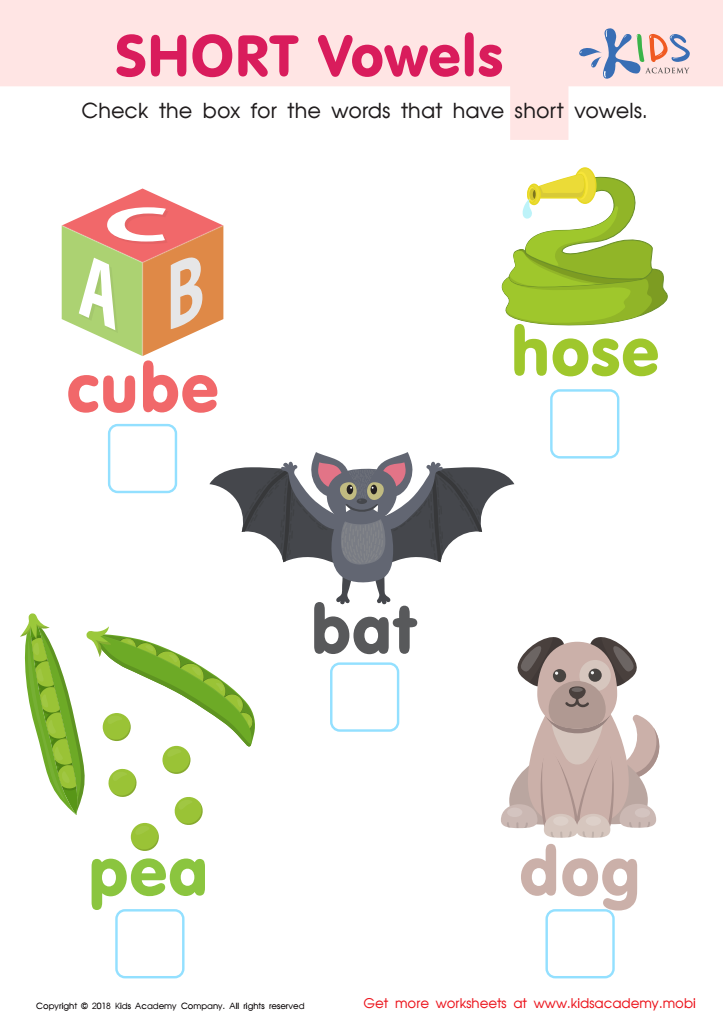
short vowels Worksheet
 Assign to My Students
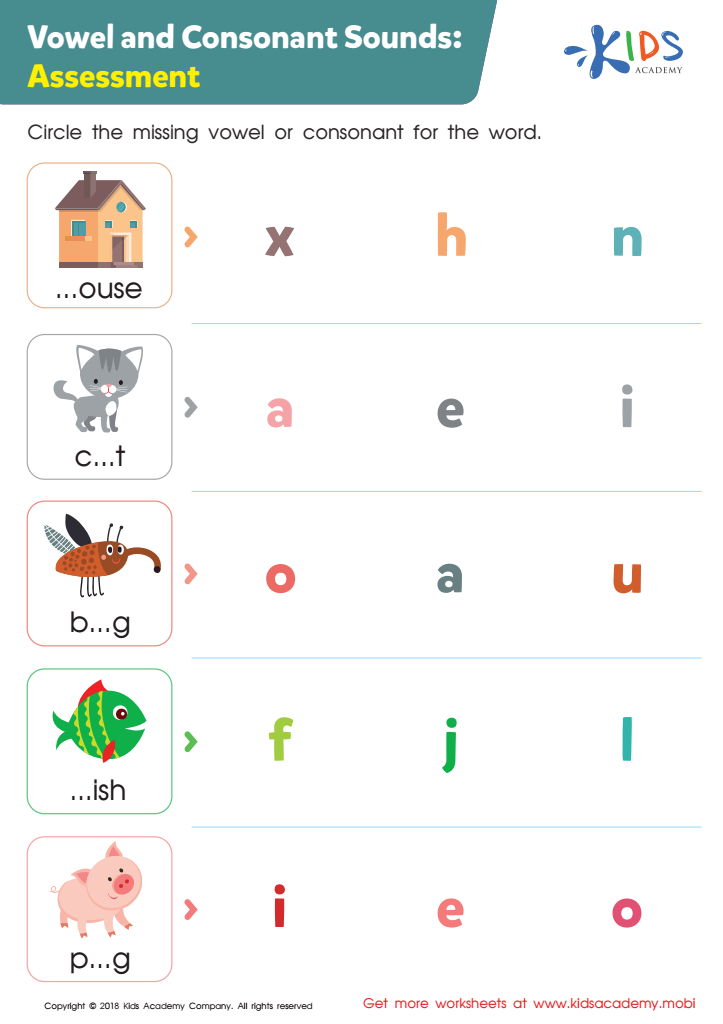
Vowel and Consonant Sounds: Assessment Worksheet
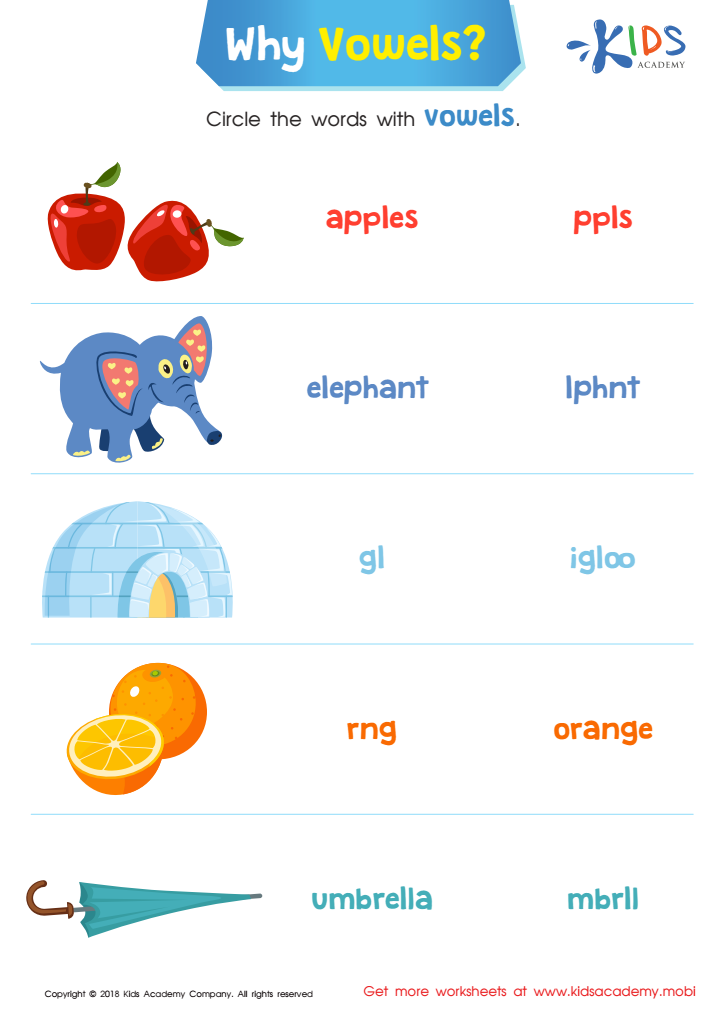
Why Vowels? Reading Worksheet
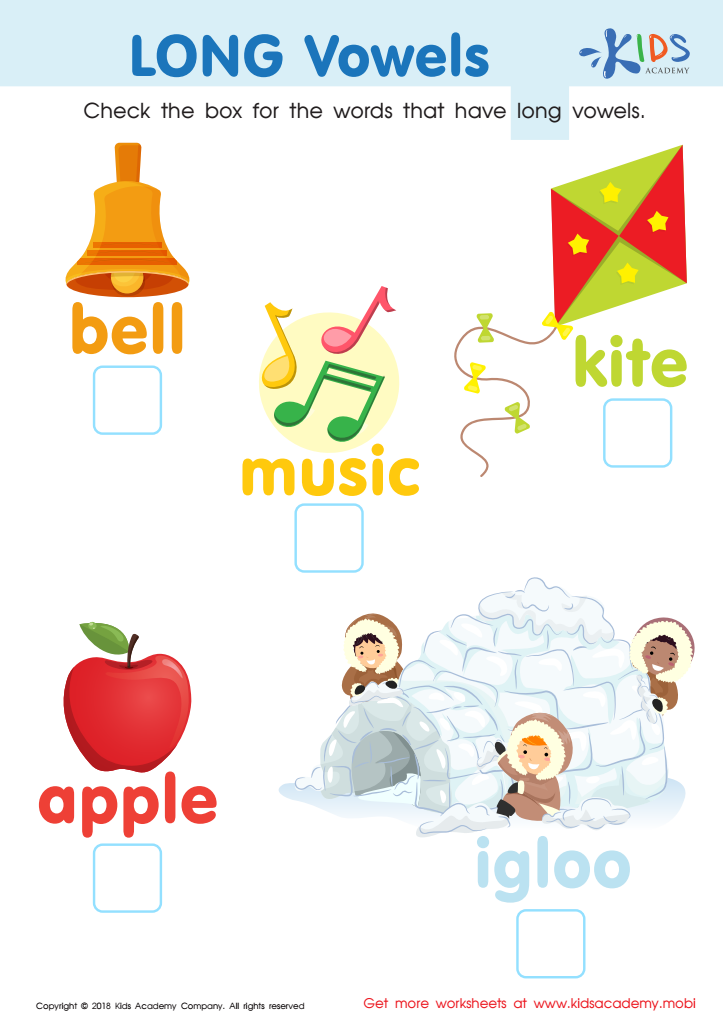
long vowels Worksheet



Reading comprehension, particularly understanding vowels and consonants, is crucial for children aged 3-5 as it forms the foundation of literacy skills. At this age, children are naturally curious and receptive to learning new concepts, making it an ideal time to introduce phonics—the relationship between letters and sounds. Vowels and consonants play a vital role in this process, as they are the building blocks of words.
When parents and teachers focus on helping children distinguish between vowels (a, e, i, o, u) and consonants (the remainder of the alphabet), they not only enhance phonemic awareness but also promote effective decoding skills. This understanding allows young learners to sound out words and identify familiar ones, which is essential for bolstering reading comprehension.
Moreover, early mastery of these concepts leads to increased confidence in reading, encouraging children to engage with books more often. Engaging activities such as songs, games, and simple storybooks can make learning fun, fostering a lifelong love for reading. In sum, prioritizing vowels and consonants in early education empowers children to develop essential reading skills, laying the groundwork for academic success and a deeper comprehension of the world around them.







