
Fine Motor Skills Color Words Worksheets for Ages 3-5
4 filtered results
Difficulty Level
Grade
Age
-
From - To
Subject
Activity
Standards
Enhance your child's fine motor skills with our engaging Color Words Worksheets designed specifically for ages 3-5. These worksheets provide fun and interactive activities that help little learners improve their hand-eye coordination and dexterity while exploring essential color vocabulary. Children will enjoy tracing, coloring, and completing various tasks that promote cognitive development in an entertaining way. Perfect for early education settings or at-home learning, these worksheets combine play and education, making every activity a joy. Help your preschooler develop vital motor skills while discovering the vibrant world of colors and expanding their vocabulary with our brightly illustrated resources!
Favorites
With answer key
Interactive
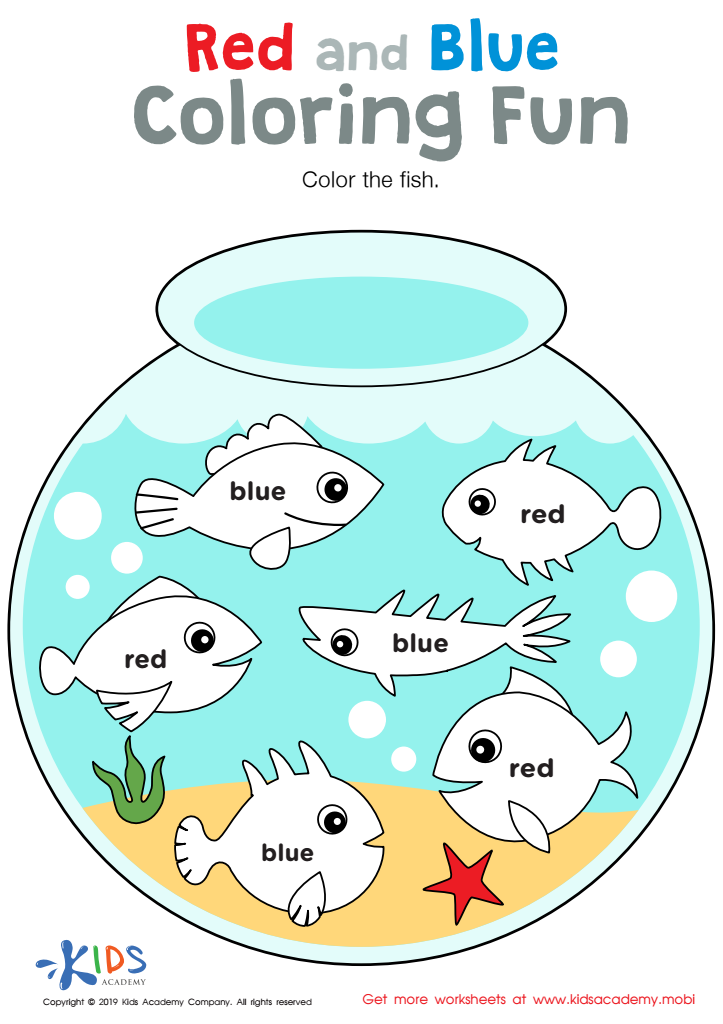
Red and Blue Coloring Fun Worksheet
Kids know colors like red and blue. But can they read these words? Give them practice with this fun fish bowl coloring sheet. They'll look at the fish, then color them the corresponding hue. Home or classroom, they'll be sure to get a kick out of learning colors in this creative way!
Download (PDF)
 Assign to My Students
Assign to My Students
Red and Blue Coloring Fun Worksheet
Worksheet
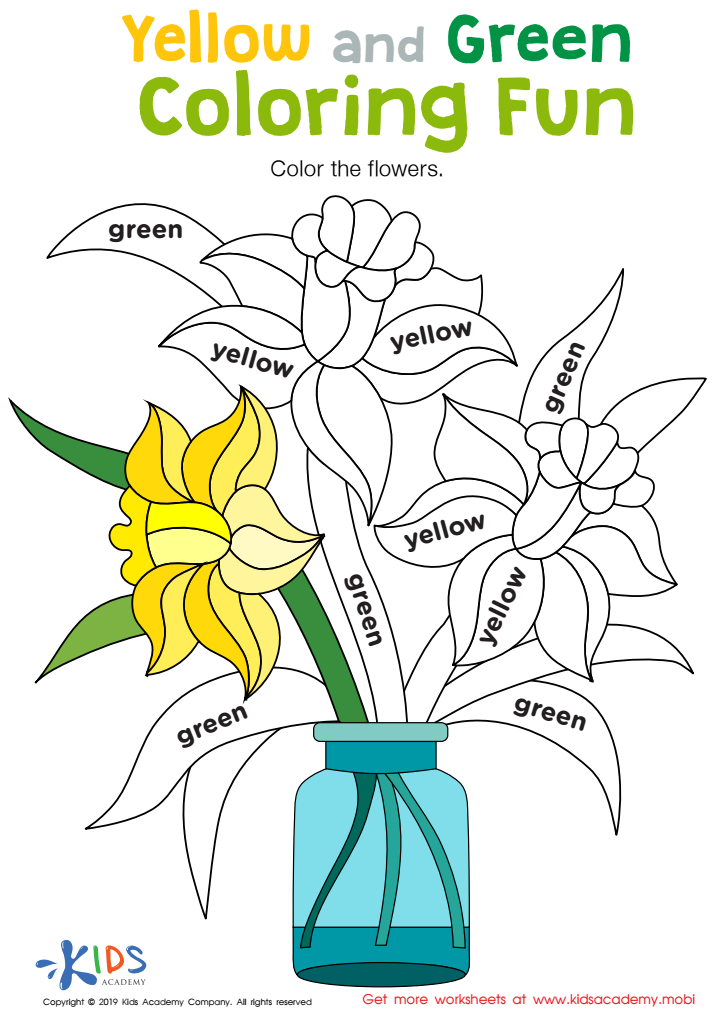
Yellow and Green Coloring Fun Worksheet
Sight words like "yellow" and "green" are easy to teach and fun for kids to learn. This free downloadable worksheet has kids read the color words and color the flower with yellow and green. A great activity for learning to read color words!
Download (PDF)
Assign to My Students
Assign to My Students
Yellow and Green Coloring Fun Worksheet
Worksheet
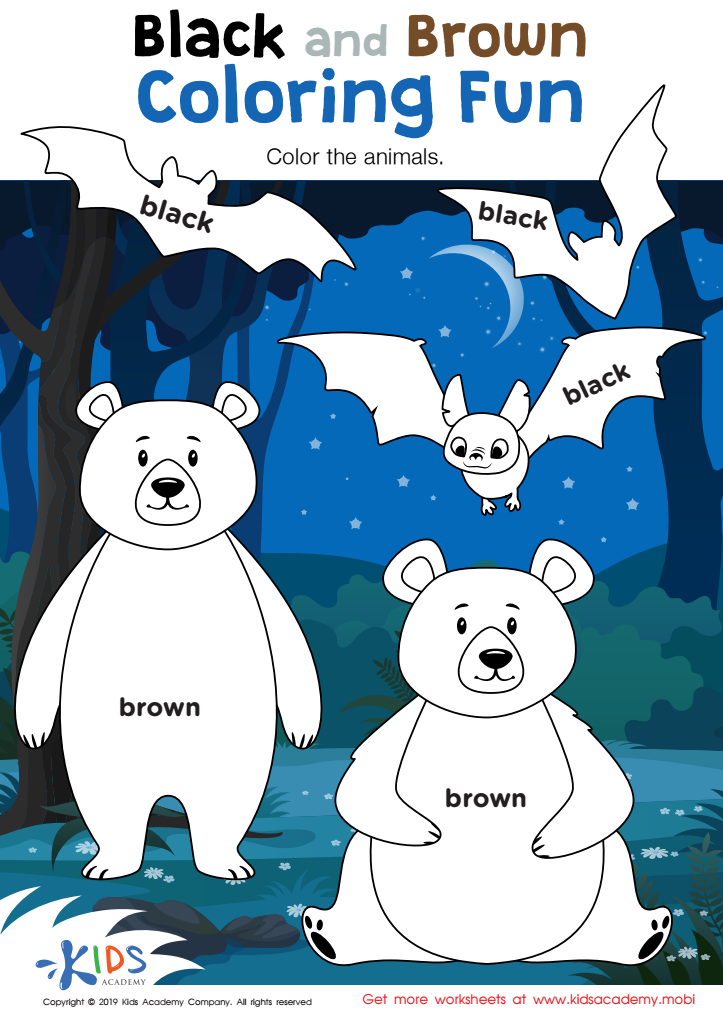
Black and Brown Coloring Fun Worksheet
Young readers can learn the difference between black and brown with this free, downloadable worksheet. The page features coloring activities: students color bears brown and bats black. This helps children learn to read color words by sight, as they are among the first reading experiences for young ones. But black and brown can be tricky as they start with the same consonant sound. This worksheet will help clear up any confusion.
Download (PDF)
Assign to My Students
Assign to My Students
Black and Brown Coloring Fun Worksheet
Worksheet
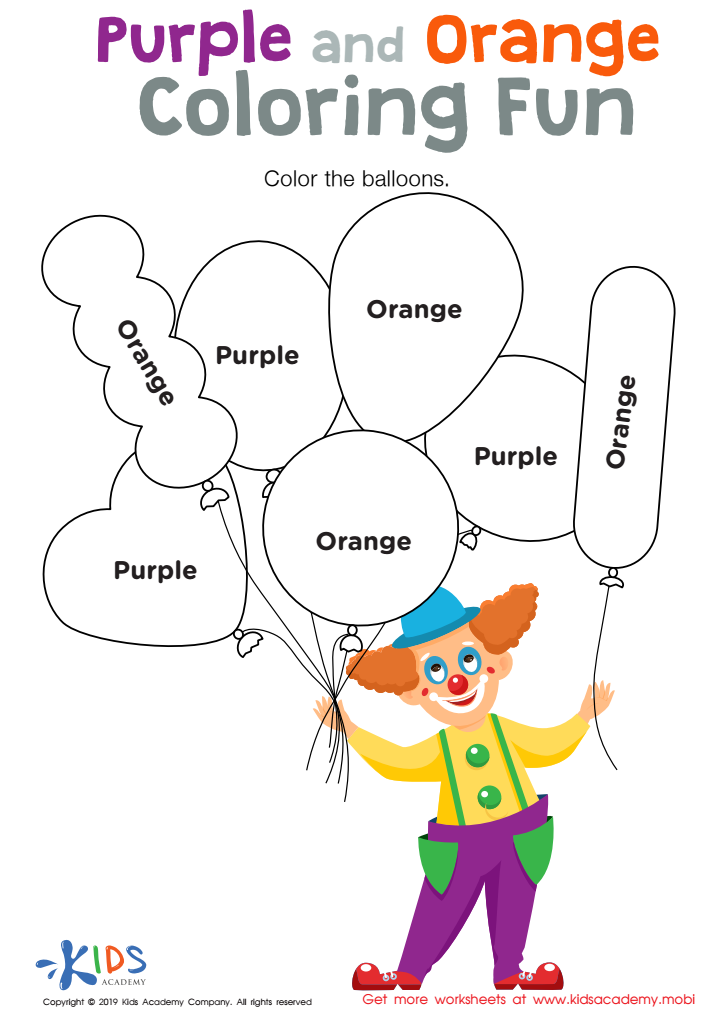
Purple and Orange Coloring Fun Worksheet
Children should learn to read color words early on. This coloring worksheet helps with that! Kids read the words "purple" and "orange" on each balloon and color them accordingly. It's a great activity for boosting literacy and having fun at the same time! Watch your child gain more reading confidence with this cute clown printable.
Download (PDF)
Assign to My Students
Assign to My Students
Purple and Orange Coloring Fun Worksheet
Worksheet
Join Kids Academy for Free
Who is primarily going to use this learning content?



Parents and teachers should prioritize fine motor skills and color word recognition for children aged 3-5 because these foundational abilities play a crucial role in early childhood development. Fine motor skills involve the coordination of small muscles in hand and fingers, essential for tasks like writing, cutting, and buttoning clothes. Developing these skills boosts children's independence and confidence, enabling them to participate in daily activities and prepare for more structured learning in later grades.
On the other hand, color word recognition is equally important as it enhances language development, cognitive skills, and pattern recognition. Recognizing and identifying colors helps children build their vocabulary and understand the world around them. When integrated into engaging activities like arts and crafts, coloring books, or games, these skills naturally intertwine, transforming learning into a fun experience.
Moreover, fine motor skills and color word familiarity lay the groundwork for more complex tasks, such as drawing shapes and recognizing letters. As young learners master these essential skills, they develop patience, focus, and hand-eye coordination, which are indispensable for future academic success. By supporting children's exploration of fine motor skills and color vocabulary, caregivers contribute significantly to their overall growth, encouraging a love for learning that lasts a lifetime.








