Categorization skills Worksheets for Ages 3-5 - Page 2
26 filtered results
-
From - To
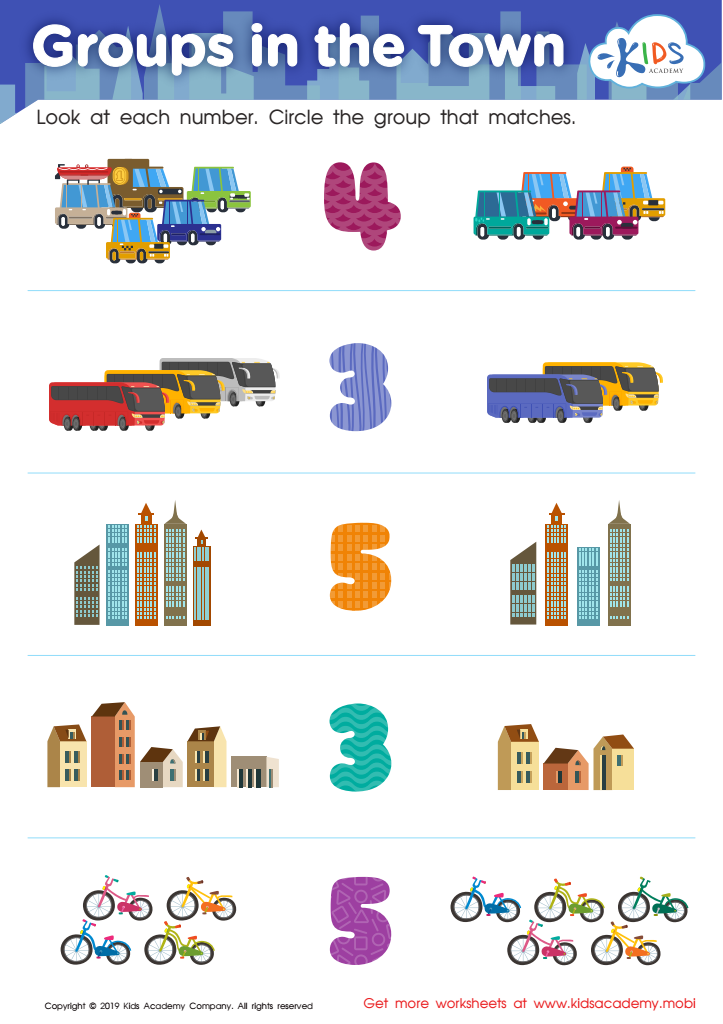
Groups in the Town Worksheet
 Assign to My Students
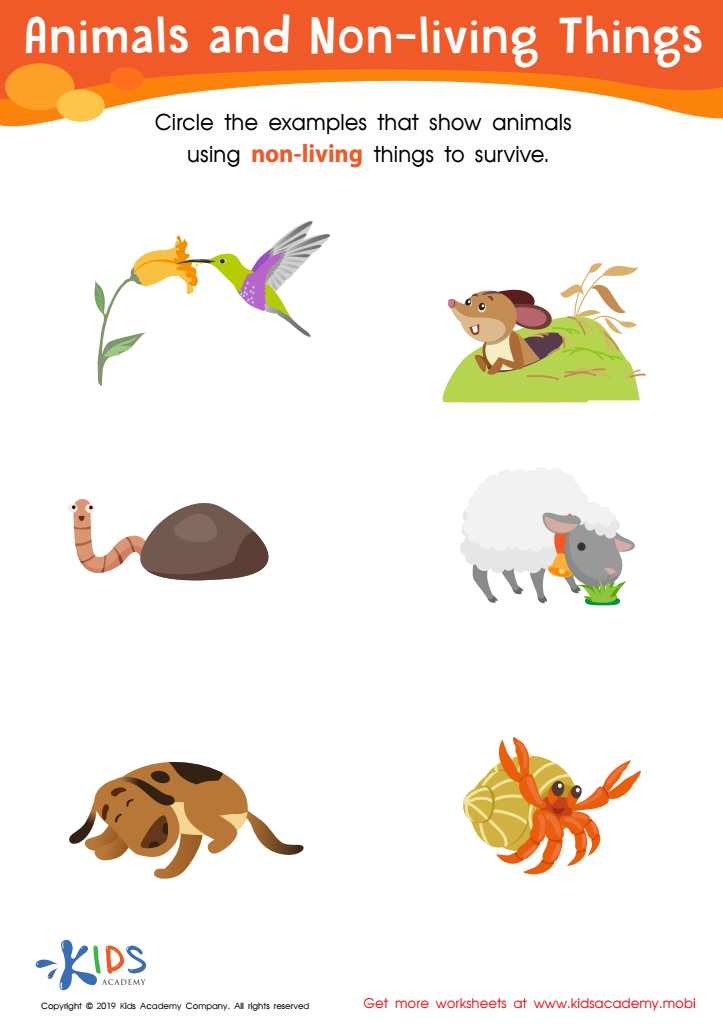
Animals and Non-Living Things Worksheet







Categorization skills are essential for children aged 3-5 as they significantly influence early learning and cognitive development. At this age, children are naturally curious, exploring their environment and making sense of the world around them. By helping young learners develop categorization skills, parents and teachers can enhance critical thinking and problem-solving abilities.
These skills aid in organizing information, enabling children to identify similarities and differences between objects, concepts, or experiences. This foundational cognitive process lays the groundwork for more complex tasks, such as reading and math, as children learn to recognize patterns, group objects, and make connections. For instance, understanding categories like “fruits” versus “vegetables” helps in developing vocabulary and comprehension.
Moreover, categorization supports social development. Knowing how to group peers based on shared interests can improve social interactions and collaboration. As children learn to classify their surroundings, they build confidence in their reasoning skills, contributing to their overall emotional development.
Parents and teachers should prioritize categorization activities through games, sorting exercises, and interactive play, equipping children with the necessary tools to navigate their environment. Encouraging these skills nurtures a love for learning and prepares young minds for future educational challenges.








