
Comparing numbers Worksheets for Ages 3-5
4 filtered results
Difficulty Level
Grade
Age
-
From - To
Subject
Activity
Standards
Welcome to our "Comparing Numbers Worksheets for Ages 3-5"! These engaging resources are designed to help young learners develop essential math skills in a fun and interactive way. Our worksheets focus on comparing and understanding numbers using visuals, colorful graphics, and atividades tailored for preschoolers. Children will learn to identify greater than, less than, and equal concepts through playful exercises. These activities not only foster early mathematics but also promote critical thinking and problem-solving skills. Dive into our collection to make learning about numbers enjoyable and effective for your little ones, setting a strong foundation for their future education.
Favorites
With answer key
Interactive
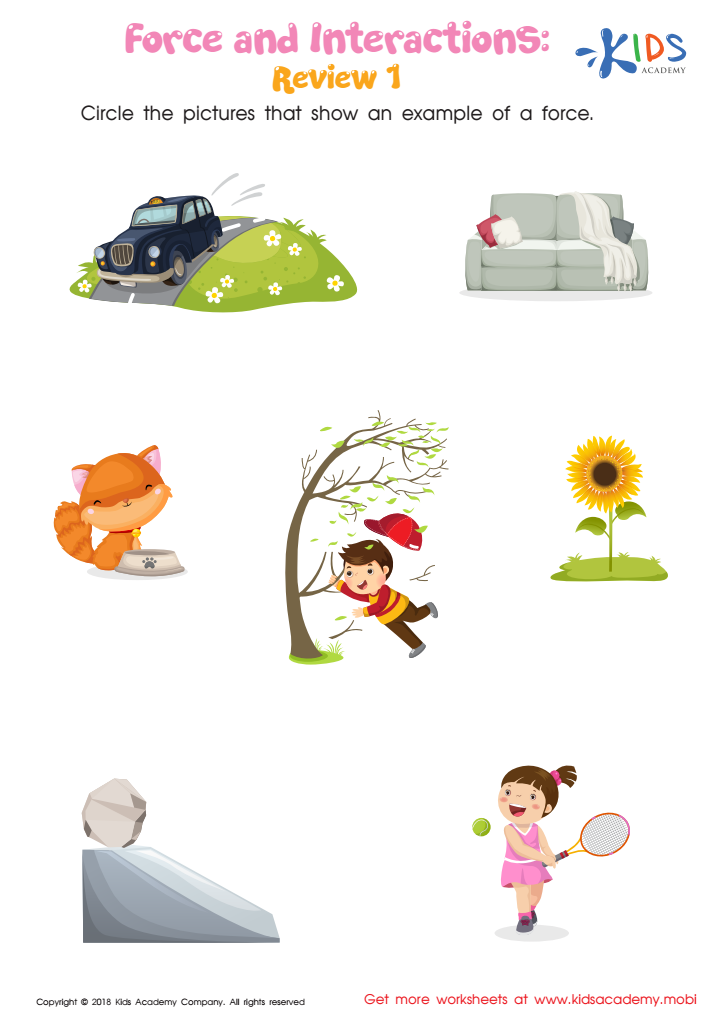
Force and Interactions: Review 1 Worksheet
See how well your child can identify the different forces.
Explain to your child that force is what causes objects to move, such as wind blowing a branch or an object going down a ramp. Ask them to circle images that show a force and assess how well they can identify them.
 Assign to My Students
Force and Interactions: Review 1 Worksheet
Worksheet
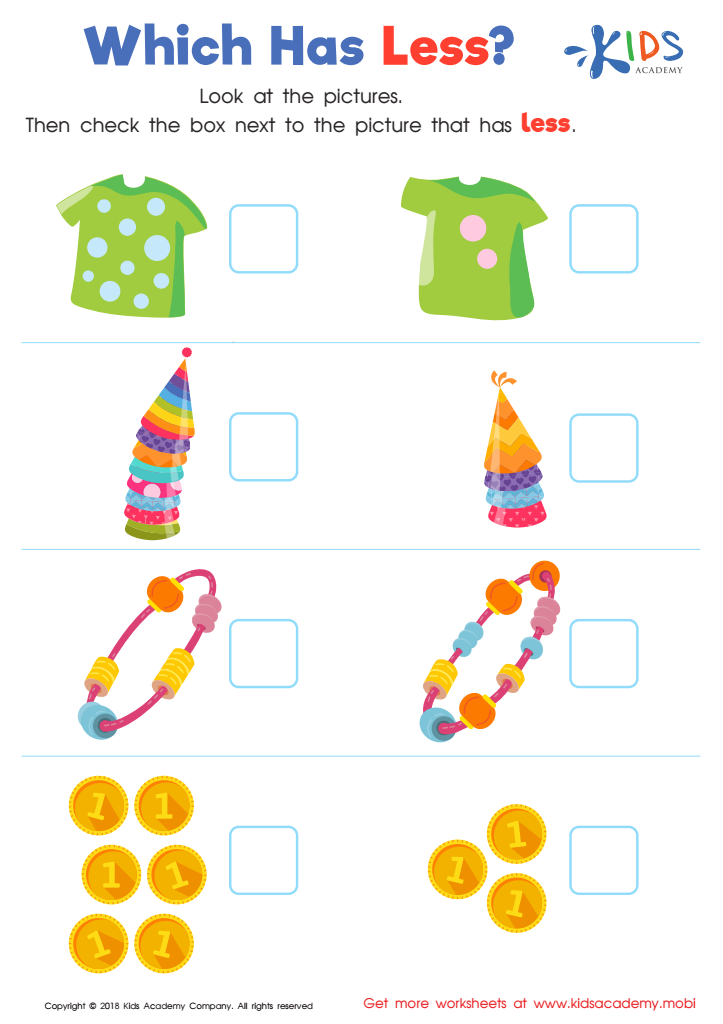
Which Has Less? Worksheet
Kids can develop their number sense by comparing and contrasting objects to identify which has less. This worksheet helps them practice: it's bright and colorful, featuring familiar objects and pictures to count, strengthening basic counting skills. It's the perfect warm-up for comparing and contrasting larger numbers.
Which Has Less? Worksheet
Worksheet
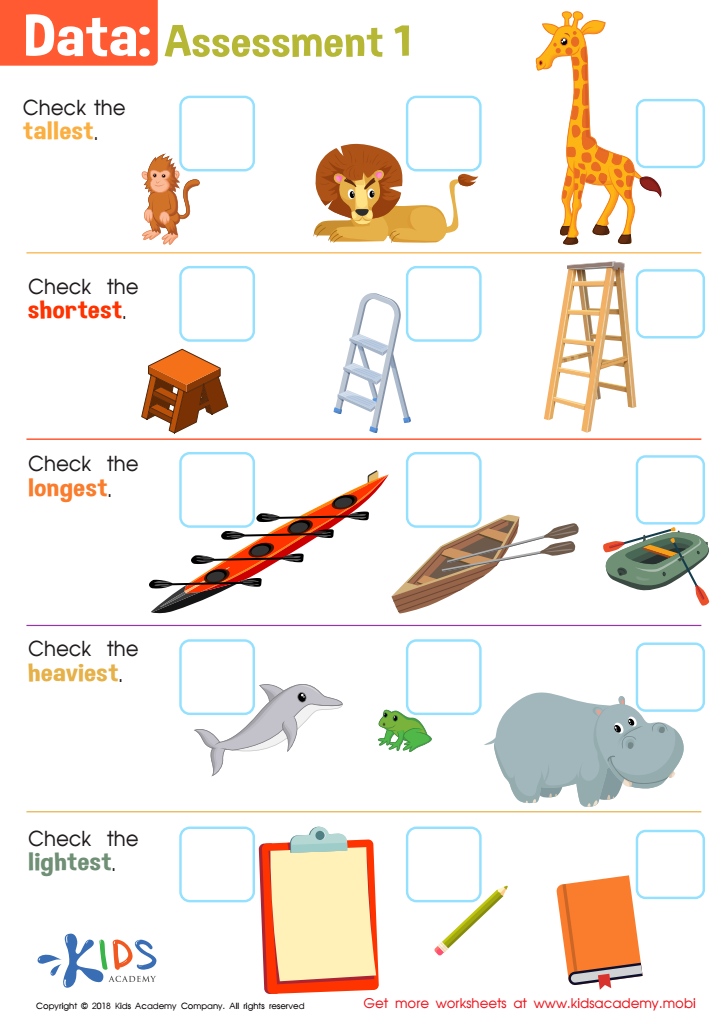
Data: Assessment 1 Worksheet
This free worksheet helps you assess where your young students are with measurement superlatives like tallest, shortest, heaviest, longest and lightest. It features cute, colorful pics of familiar objects so your kids have a reference, and helps you identify areas to work on.
Data: Assessment 1 Worksheet
Worksheet
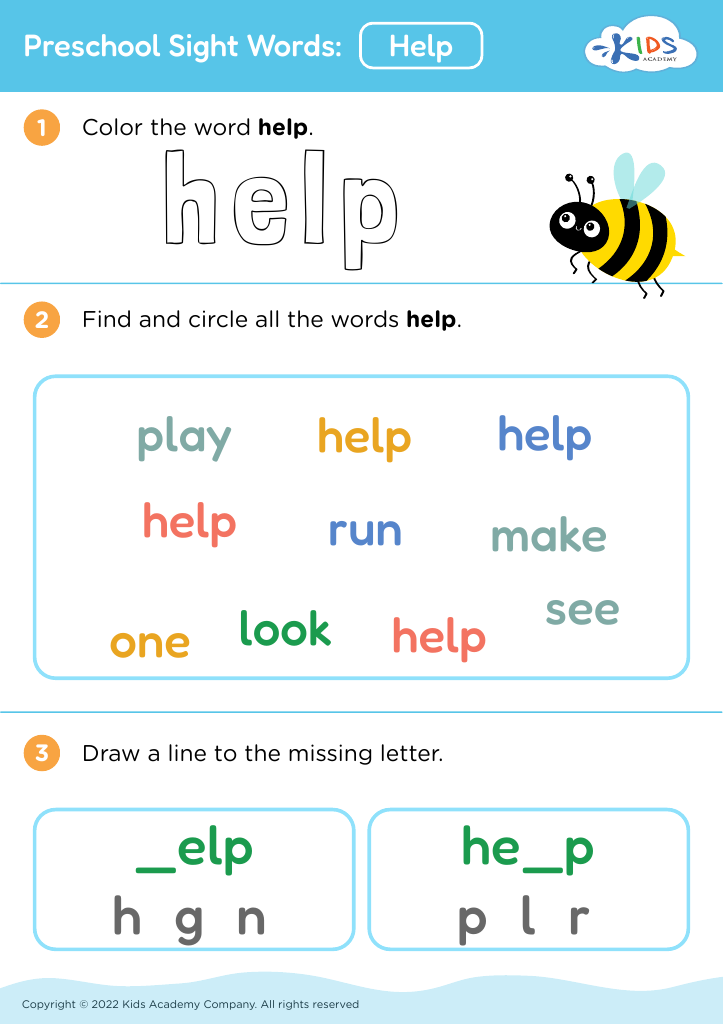
Join Kids Academy for Free
Who is primarily going to use this learning content?







Comparing numbers is a fundamental math skill that lays the groundwork for future learning in young children aged 3-5. This ability helps children understand quantities, recognize patterns, and develop logical thinking skills. By learning to compare numbers, children can grasp concepts such as "more than," "less than," and “equal to,” which are essential for counting, basic arithmetic, and problem-solving.
Parents and teachers should care about this skill because it encourages critical thinking and decision-making. When children engage in comparing numbers, they practice making observations and drawing conclusions—key components of cognitive development. This skill also enhances their vocabulary, as they learn to use terms associated with quantity and value.
Furthermore, comparing numbers also fosters important social skills, as children often engage in discussions and cooperative learning activities when they compare quantities in games or everyday situations. These interactions build their communication abilities and social awareness.
By prioritizing comparing numbers, caregivers can create a rich environment that cultivates curiosity, confidence, and a positive attitude towards mathematics, setting up children for future academic success and a lifetime of numeracy skills. Ultimately, these foundational experiences serve as stepping stones for complex mathematical concepts learned later in school.








