Differentiating shapes Worksheets for Ages 3-5
4 filtered results
-
From - To
Introduce your little learners to the world of shapes with our engaging Differentiating Shapes Worksheets, designed for ages 3-5! These fun, educational worksheets help children recognize and differentiate between various shapes such as circles, squares, triangles, and more. Through colorful, interactive activities, kids enhance their fine motor skills, improve their observational abilities, and lay a solid foundation for geometry. Perfect for both parents and educators, our worksheets cater to preschool and kindergarten students, ensuring a playful yet effective learning experience. Unlock the joy of learning shapes today and watch your child’s confidence soar!
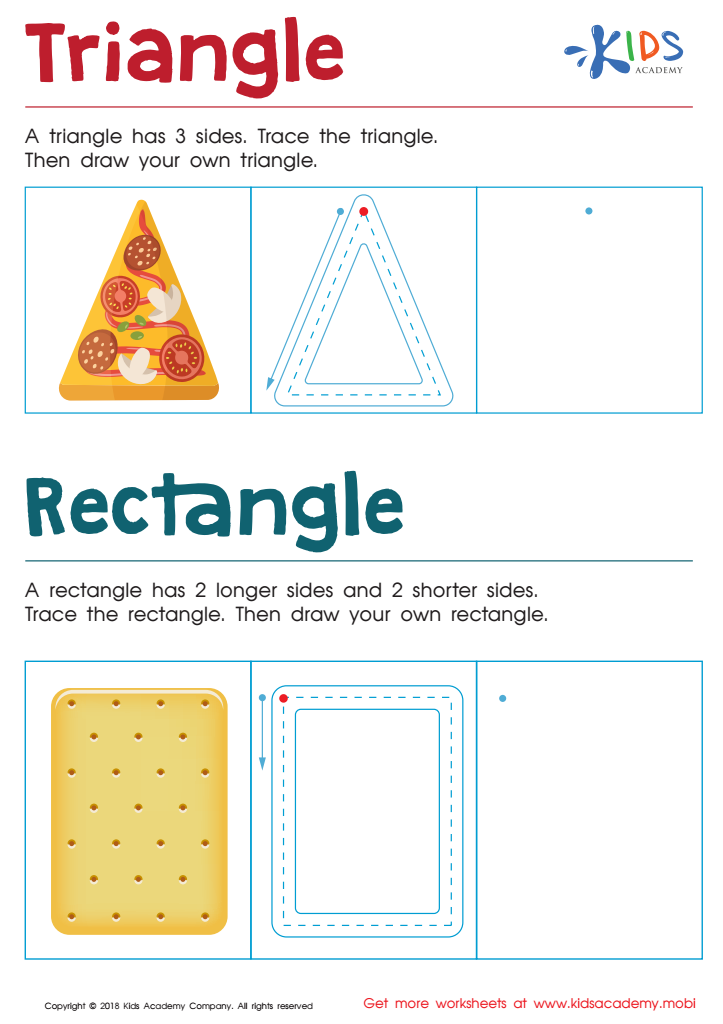
Triangle Rectangle Worksheet
 Assign to My Students
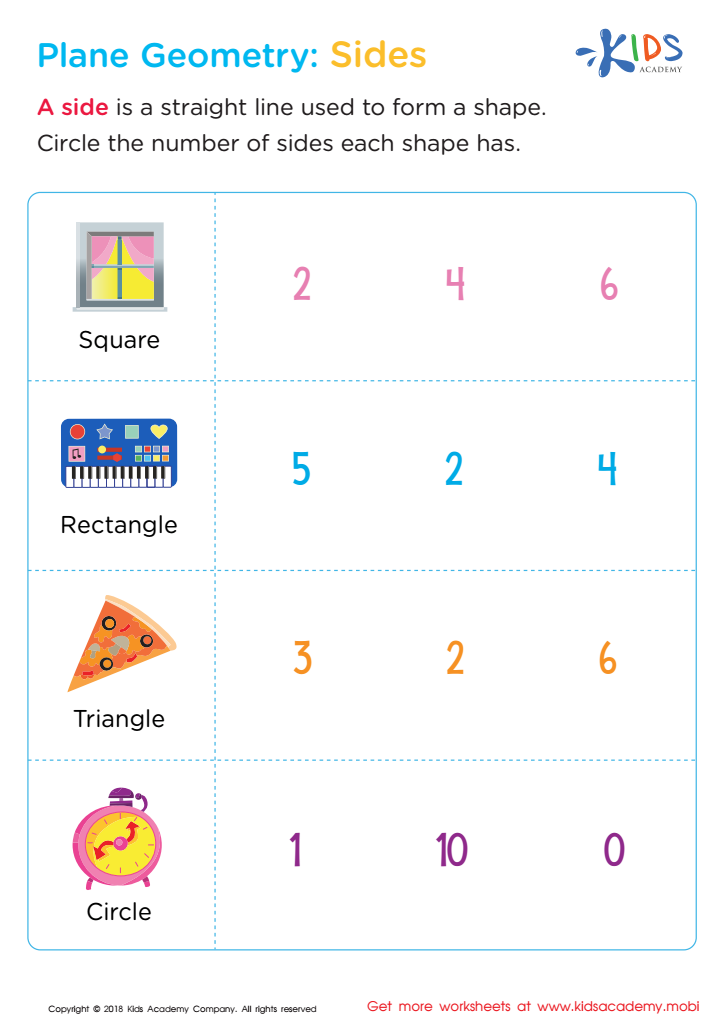
Plane Geometry: Sides Worksheet
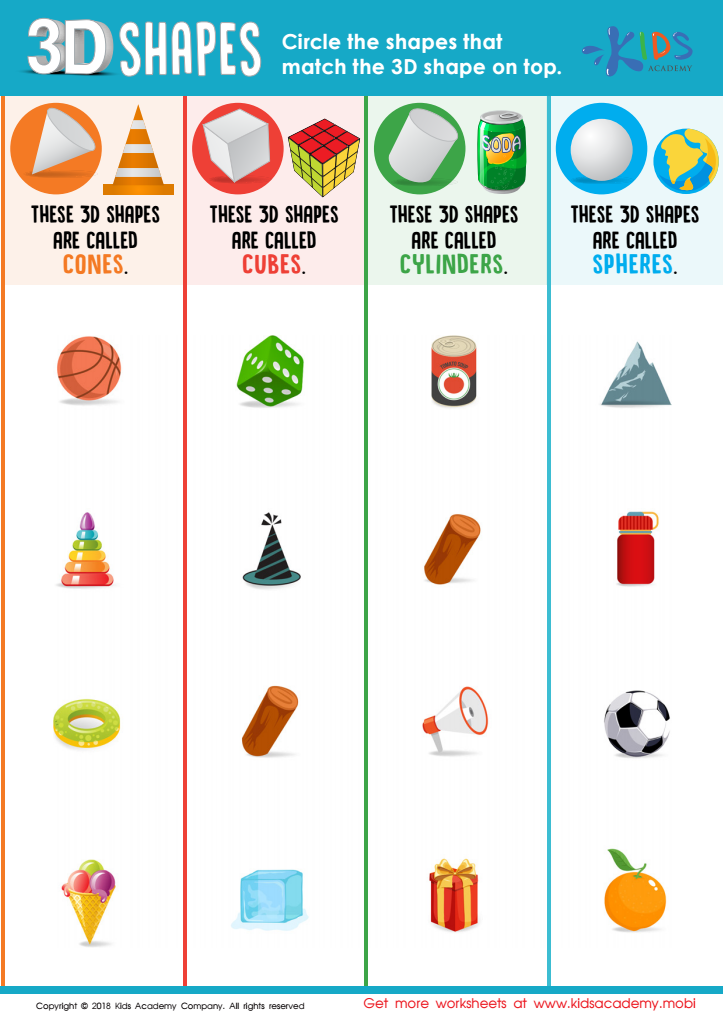
3D Shapes Worksheet








Differentiating shapes for children aged 3-5 is crucial for several developmental reasons. At this stage, young minds are rapidly absorbing information and forming fundamental cognitive skills that will serve as the foundation for future learning. Differentiating shapes enhances their cognitive development by improving visual-spatial awareness, which is important for reading and math later on. For instance, recognizing shapes helps children understand geometry, learn to write, and recognize numbers and letters, as different letters and numbers are essentially different shapes.
Moreover, when children differentiate between shapes, they are also developing language skills. They learn terms like "circle," "square," "triangle," and "rectangle," expanding their vocabulary and enabling them to communicate more effectively. As they describe shapes, they enhance their descriptive language abilities and grasp more abstract concepts.
Additionally, identifying shapes lays the groundwork for better problem-solving skills. Grouping and sorting shapes require logical thinking and categorization skills, strengthening early critical thinking.
Therefore, parents and teachers should prioritize teaching shapes to young children because it nurtures early academic skills, strengthens cognitive abilities, augments language development, and enhances problem-solving capabilities, all of which are vital for their holistic development. Through playful and engaging activities, children can enjoy learning while building essential skills for their future education.








