Identifying objects Worksheets for Ages 3-5
5 filtered results
-
From - To
Discover our engaging "Identifying Objects Worksheets" designed for children ages 3-5! These interactive worksheets help young learners enhance their observation and recognition skills through fun activities that introduce various objects. Each worksheet encourages children to match, label, and classify items, fostering cognitive development while making learning enjoyable. Ideal for parents and teachers, our materials support pre-kindergarten education, promoting essential skills in a playful way. With vibrant illustrations and age-appropriate challenges, these worksheets make early learning exciting and effective. Download now to inspire curiosity and confidence in your child's learning journey!
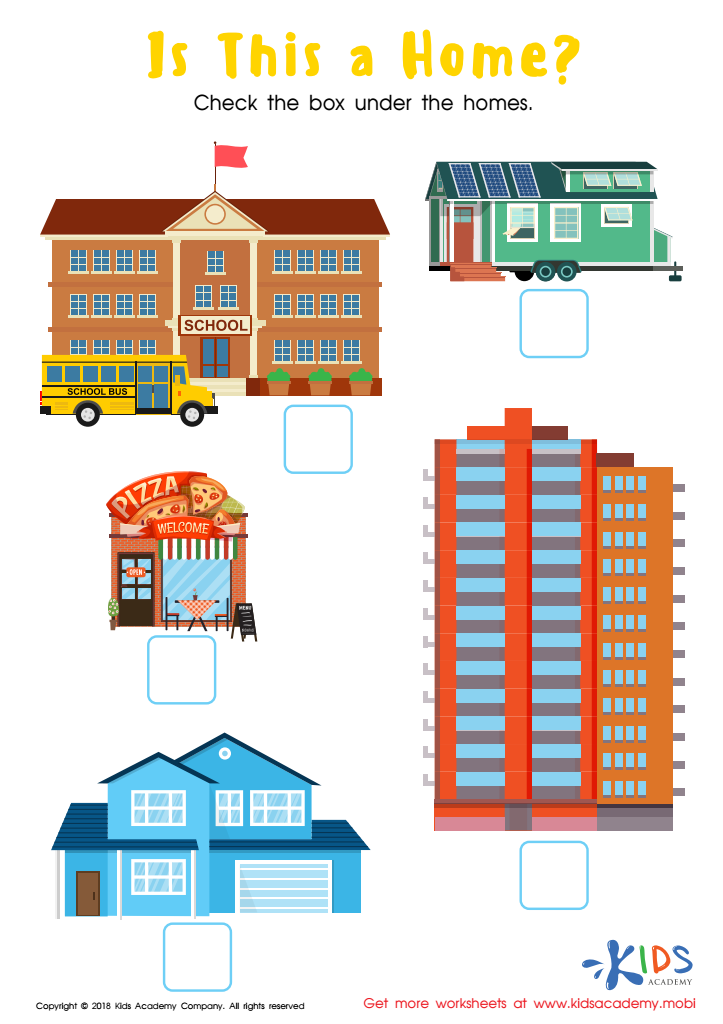
Is this a Home? Worksheet
 Assign to My Students
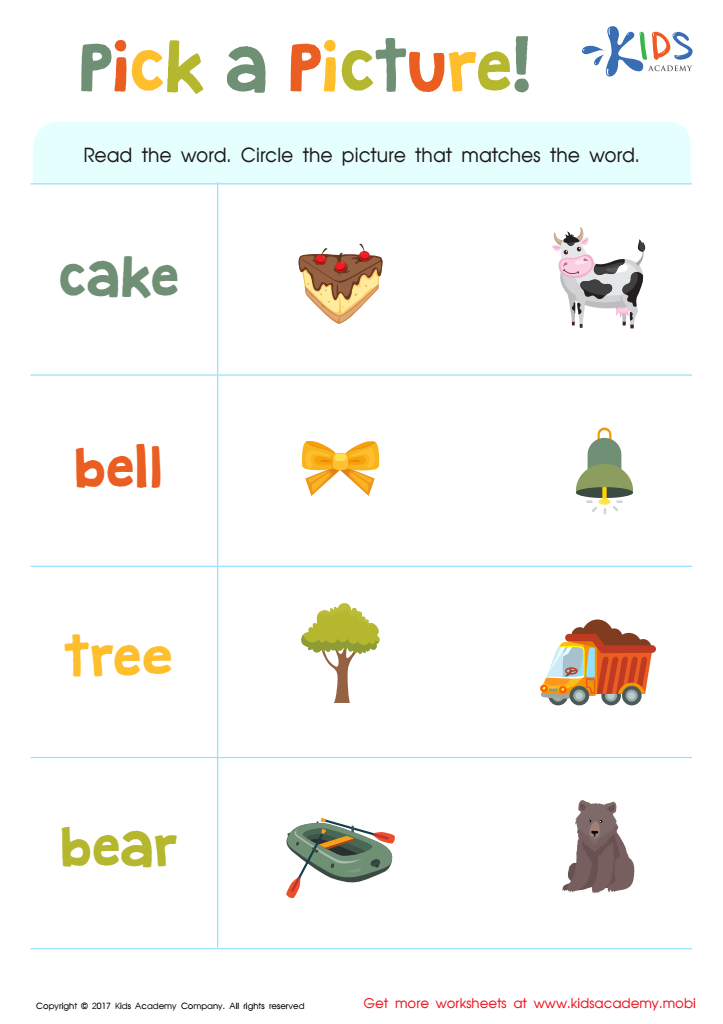
Pick a Picture Word Recognition Worksheet
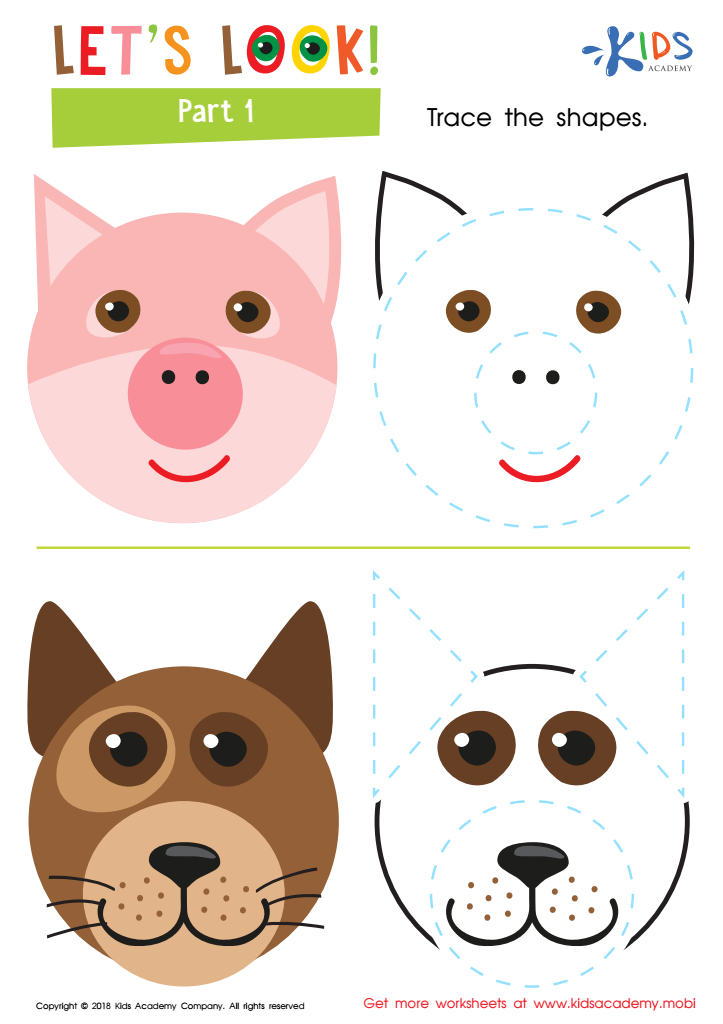
Let's Look! Part 1 Worksheet
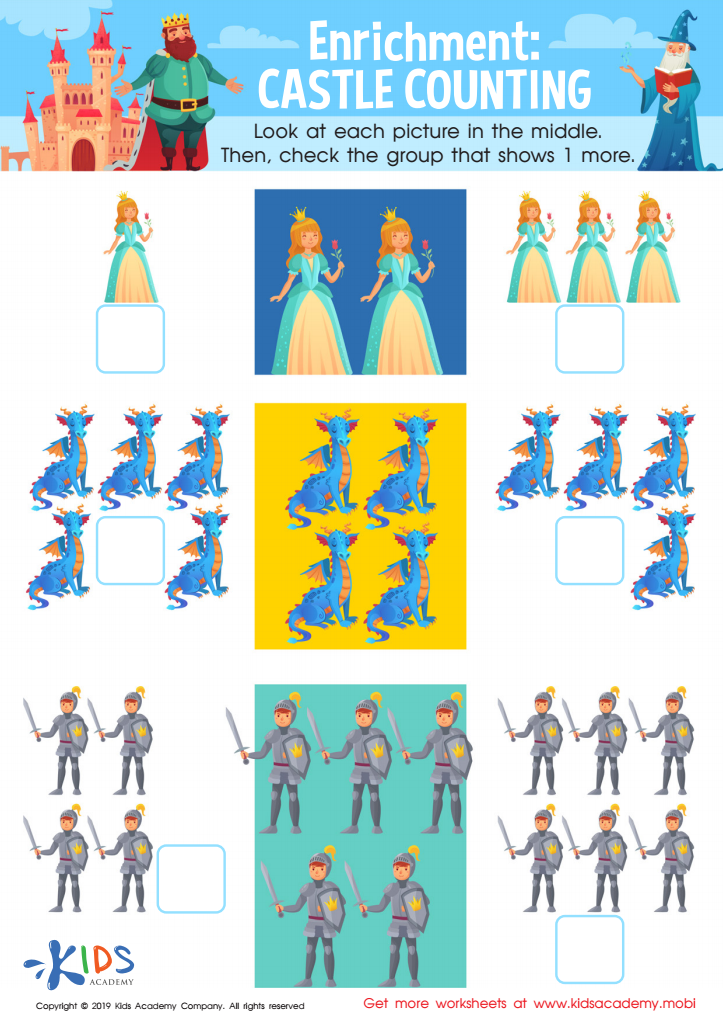
Enrichment: Castle Counting Worksheet
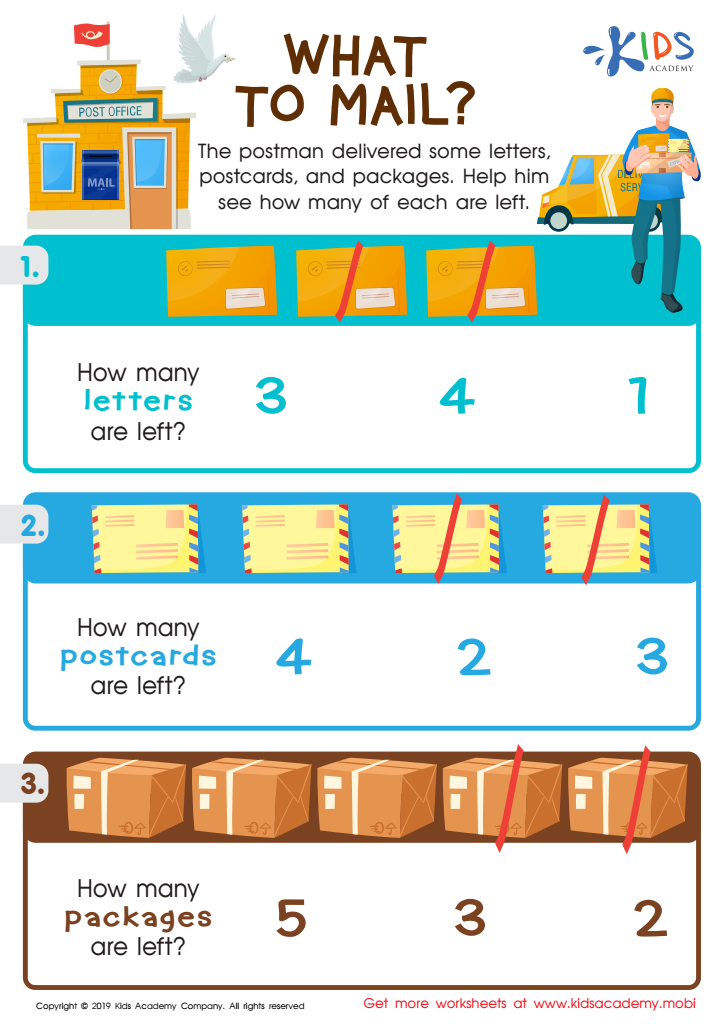
What to Mail? Worksheet







Identifying objects is a fundamental skill for children aged 3-5, laying the groundwork for critical cognitive and language development. Parents and teachers should prioritize this skill because it enhances a child's ability to recognize and categorize their environment, fostering curiosity and observational skills. When children identify objects, they learn to articulate their thoughts and express themselves, which enriches their vocabulary and communication abilities.
Moreover, identifying objects aids in the development of essential cognitive processes such as memory, attention, and problem-solving. It enhances their ability to connect different concepts, as they begin to understand relationships between objects in their surroundings. Engaging in object identification activities can also boost a child's confidence and promote social interaction, as they learn to share their knowledge and experiences with peers.
Furthermore, this skill is crucial for literacy development. As children learn to identify objects, they naturally progress toward recognizing letters and words associated with those items, paving the way for reading readiness. By caring about this skill, parents and teachers ultimately support a child's holistic development, equipping them with the foundational tools needed for future learning and growth. Investing in this critical area is essential for nurturing well-rounded, capable learners.








