Money recognition Worksheets for Ages 3-5
6 filtered results
-
From - To
Discover engaging Money Recognition Worksheets designed for ages 3-5! These interactive worksheets from Kids Academy make learning about coins and bills both fun and educational. Perfect for preschool and kindergarten, these activities help young children identify and differentiate between various denominations. Featuring colorful illustrations and hands-on exercises, our worksheets foster critical thinking and early math skills. Ideal for both classroom and home use, they provide a solid foundation for financial literacy. Start building confidence and money recognition skills in your little ones today with these beautifully crafted, age-appropriate resources!
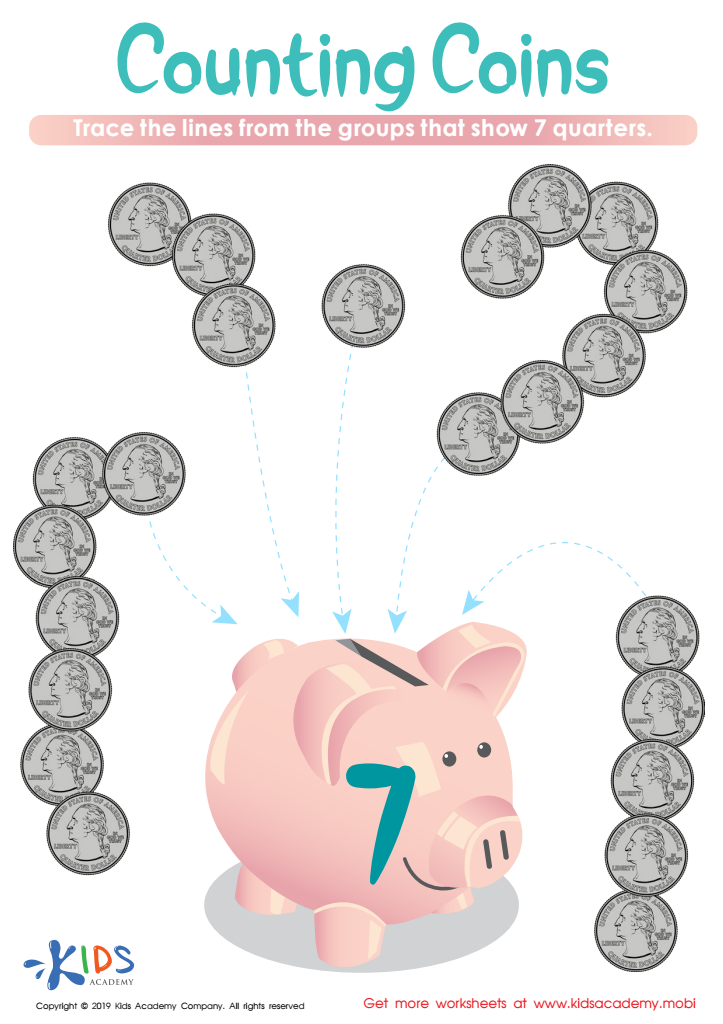
Counting Coins Worksheet
 Assign to My Students
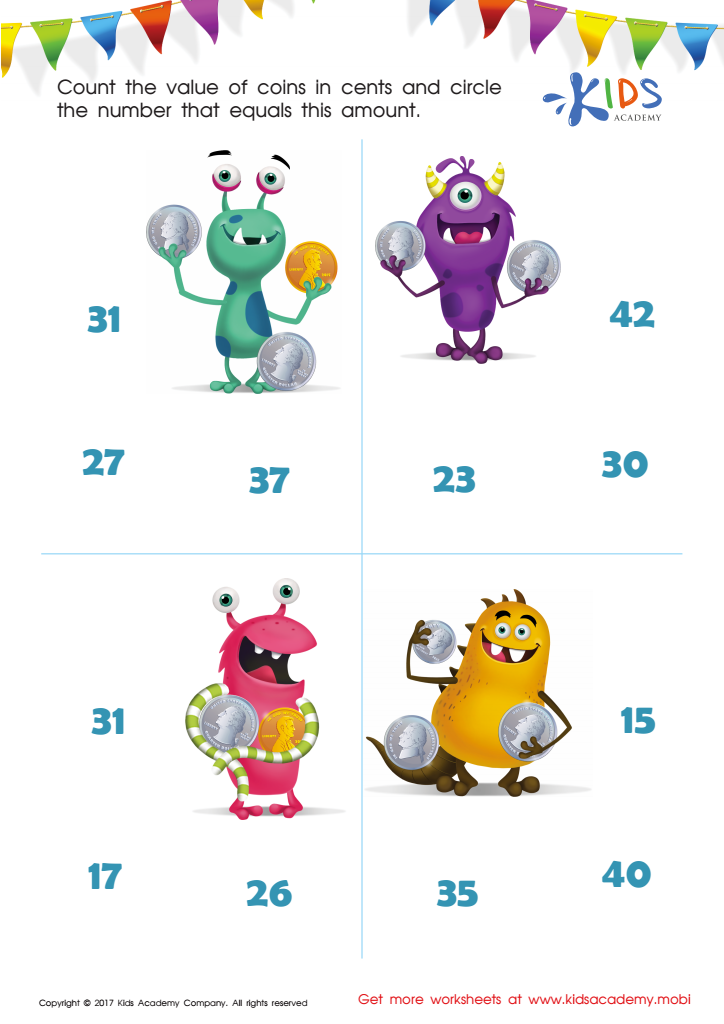
How Many Coins Money Worksheet
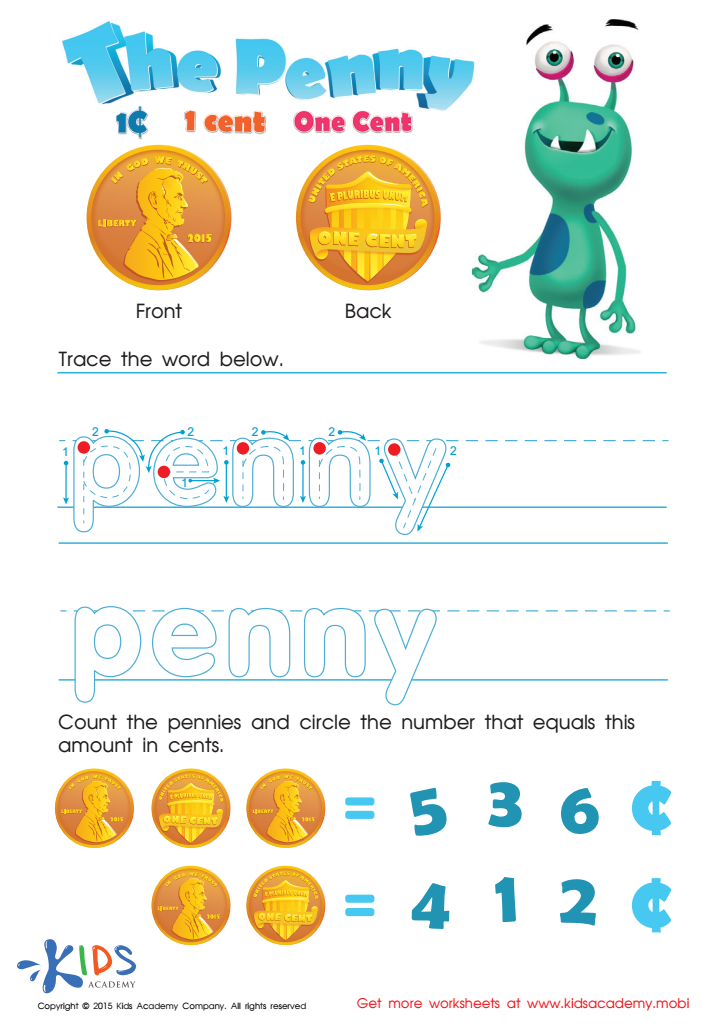
One Cent or the Penny Money Worksheet
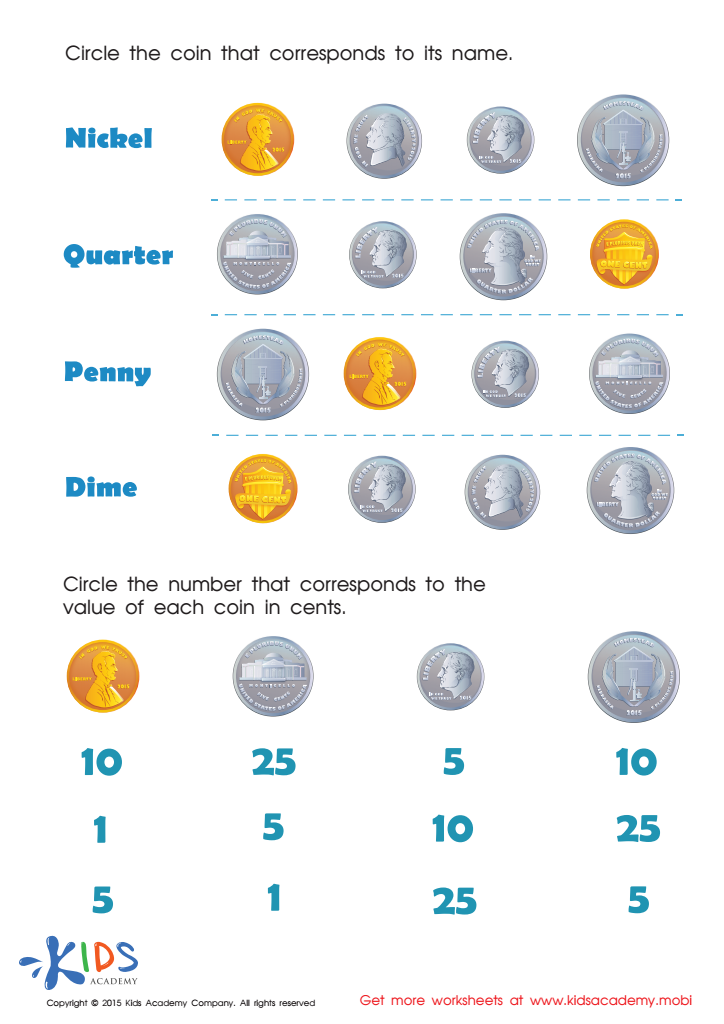
Coin Names and Values Money Worksheet
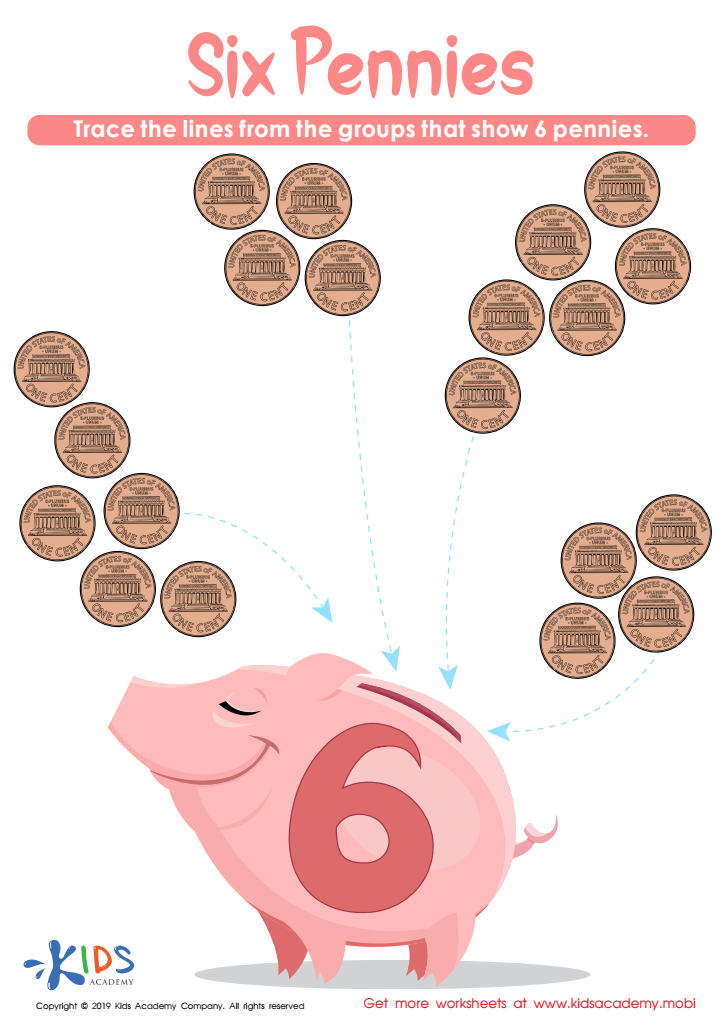
Six Pennies Worksheet
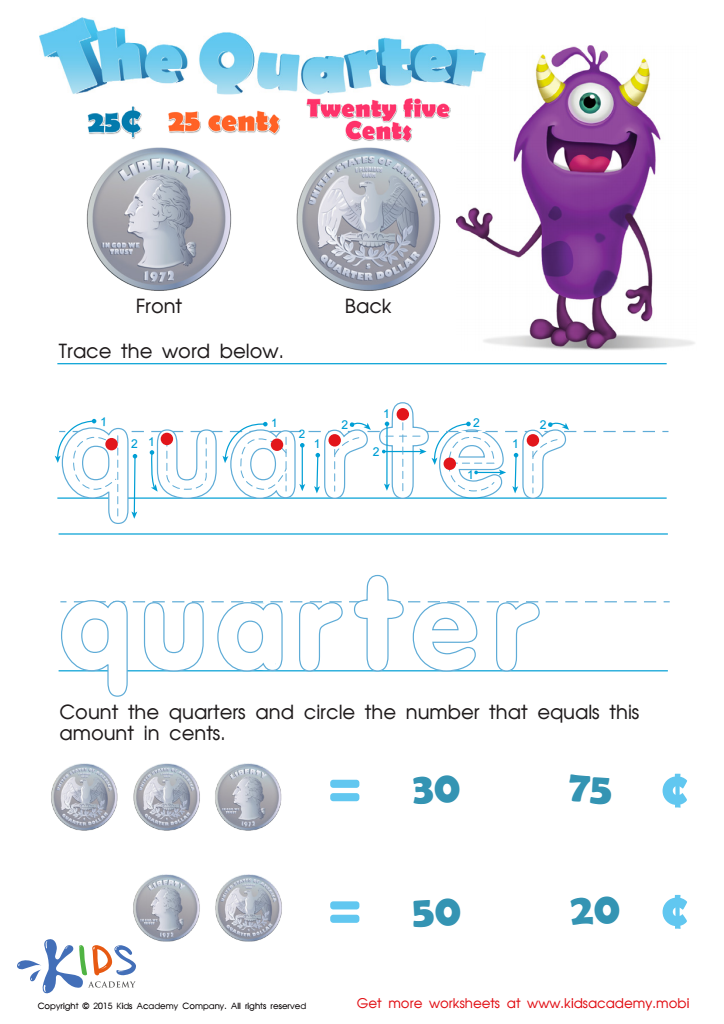
Twenty Five Cents or the Quarter Money Worksheet








Introducing money recognition to children aged 3-5 is essential for several reasons. At this stage, young children are highly curious and absorb new information rapidly. Learning to recognize and understand money early on helps build a strong foundation for practical financial literacy skills that are vital throughout life.
First, recognizing money enables children to develop basic math skills such as counting, addition, and subtraction. When kids can identify coins and bills, they can start to understand concepts like value and quantity, which are fundamental in mathematics.
Second, it fosters a sense of responsibility and decision-making. By understanding that money is used to purchase goods and services, children can learn about making choices, saving for what they want, and comprehending that resources are not unlimited.
Third, it offers real-world learning opportunities. Money recognition ties into everyday experiences, such as grocery shopping, where children can be involved in small tasks like identifying coins or handing money to the cashier. These activities make learning interactive and engaging.
Lastly, early exposure to money management fosters confidence and independence. By allowing young children to handle money and make small purchasing decisions, they gain a sense of accomplishment and understand the value of budgeting and saving.
Overall, introducing money recognition to young children equips them with essential skills that contribute to their overall development and future financial competence.








