
Number formation Worksheets for Ages 3-5
3 filtered results
Difficulty Level
Grade
Age
-
From - To
Subject
Activity
Standards
Introduce your preschoolers and kindergarteners to the world of numbers with our engaging Number Formation Worksheets for Ages 3-5! Designed by early education experts, these fun and interactive worksheets help young learners master the basics of number writing. Each worksheet combines colorful images with easy-to-follow instructions that make learning to write numbers exciting and accessible. Perfect for home or classroom use, our number formation worksheets not only enhance fine motor skills but also build a strong numerical foundation. Encourage your child’s love for learning and watch their confidence grow as they progress through tracing, counting, and writing activities.
Favorites
With answer key
Interactive
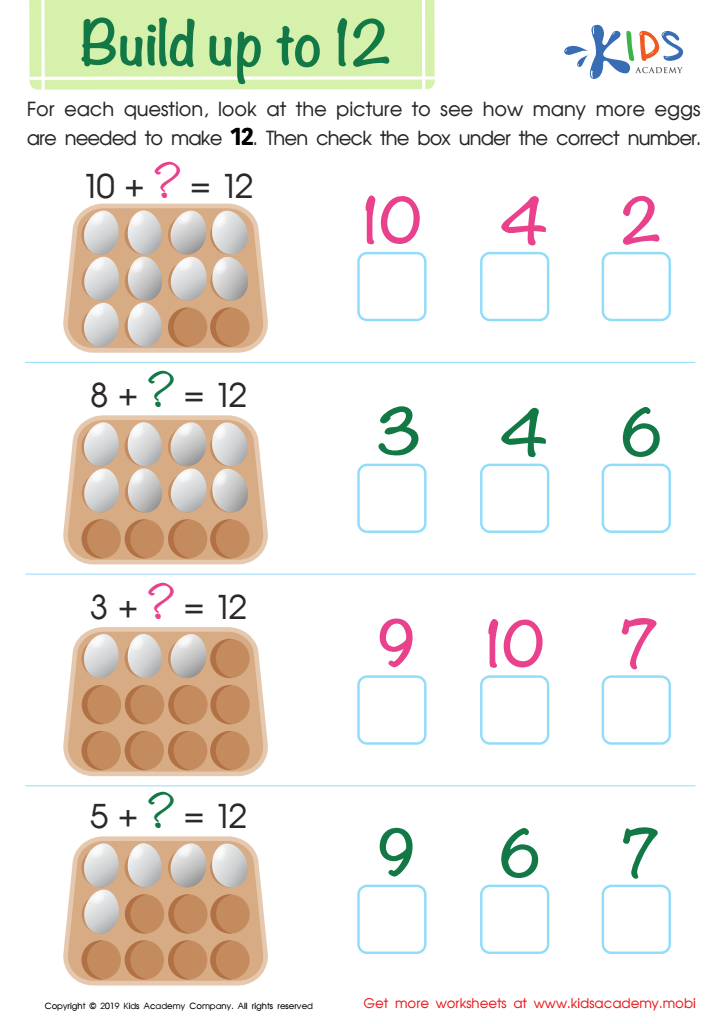
Build up to 12 Worksheet
Love eggs? Kids can identify them in the picture in this worksheet. We need to add numbers to make 12. Look at the picture and see how many eggs are needed. Check the correct number box. Breakfast or baking, eggs are essential!
 Assign to My Students
Build up to 12 Worksheet
Worksheet
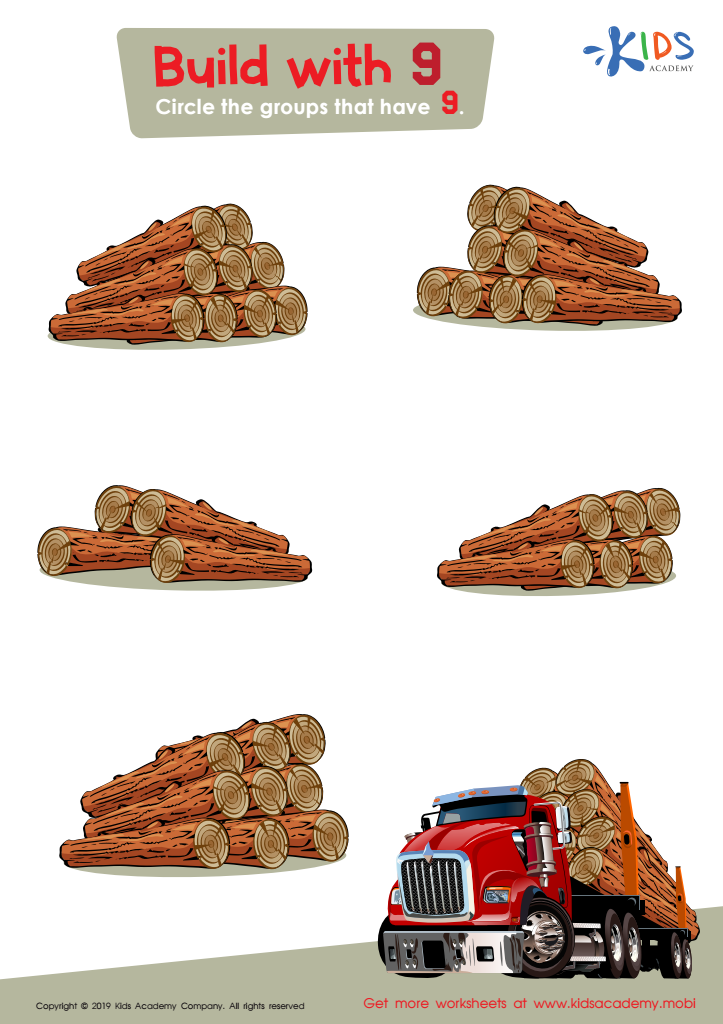
Build with 9 Worksheet
Your students' learning journey can be challenging, but ultimately rewarding. This worksheet helps them practice counting: count the logs in all the groups and circle those with 9 logs.
Build with 9 Worksheet
Worksheet
Join Kids Academy for Free
Who is primarily going to use this learning content?








Caring about number formation for children aged 3-5 is crucial for several reasons. This early stage is when fine motor skills are developing, and learning to write numbers properly can significantly enhance these skills. Proper number formation ensures that children develop the muscle memory required for writing, which can ease their overall learning process.
Furthermore, clear and accurate number formation is foundational for future math success. When kids write numbers correctly, it is easier for them to recognize and work with these numbers later. Poor number formation could lead to confusion, mistakes, and even an aversion to mathematics.
Teaching accurate number formation also helps children understand the concept of order and sequence. This understanding is foundational for all kinds of learning, not just in math but in reading and general cognitive processing. Consistency in number writing promotes discipline and attention to detail, which are valuable skills across all areas of learning.
Moreover, early mastery of number writing builds confidence. When children see that they can do something accurately, it encourages a positive attitude toward learning new and more challenging tasks. Overall, helping children ages 3-5 with number formation is investing in their future academic success and their general ability to process and engage with the world.








