Shape comparison Worksheets for Ages 3-5
3 filtered results
-
From - To
Explore our engaging Shape Comparison Worksheets designed specifically for children aged 3 to 5! These interactive printables help young learners develop essential early math skills by comparing and contrasting different shapes. Your little ones will enjoy fun activities that promote shape recognition, critical thinking, and cognitive development. Each worksheet includes a variety of vibrant illustrations and simple tasks, making learning a delightful experience. Nurture their curiosity while enhancing their understanding of geometrical concepts in a playful way. Ideal for both parents and educators, these worksheets are perfect for home or classroom use. Start your child's shape exploration journey today!
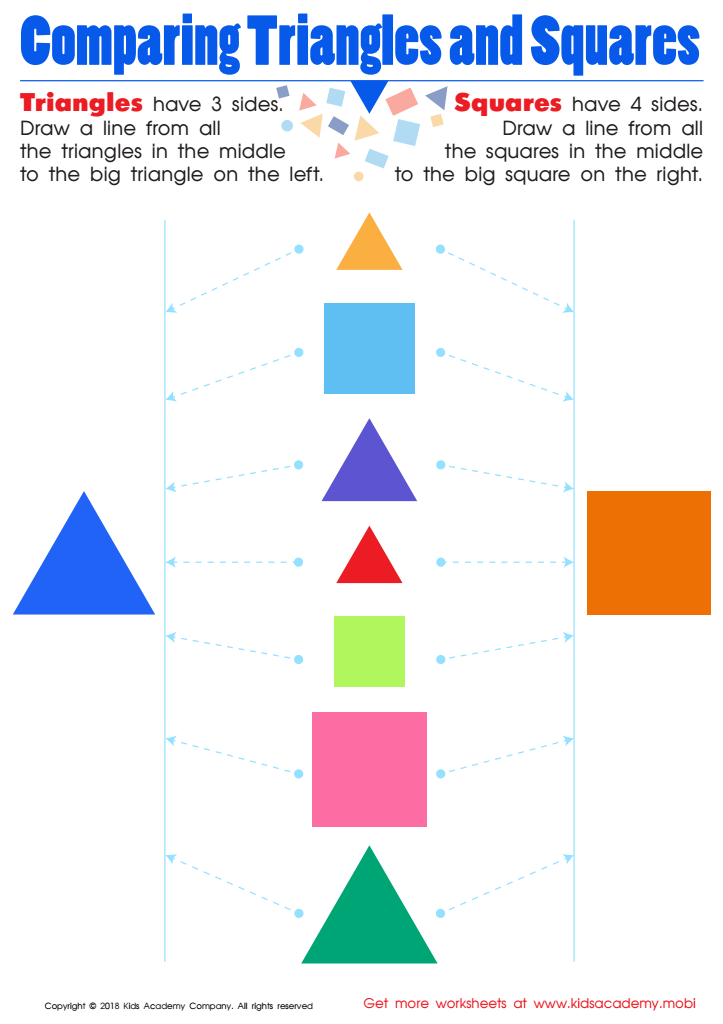
Comparing Triangles Squares Worksheet
 Assign to My Students
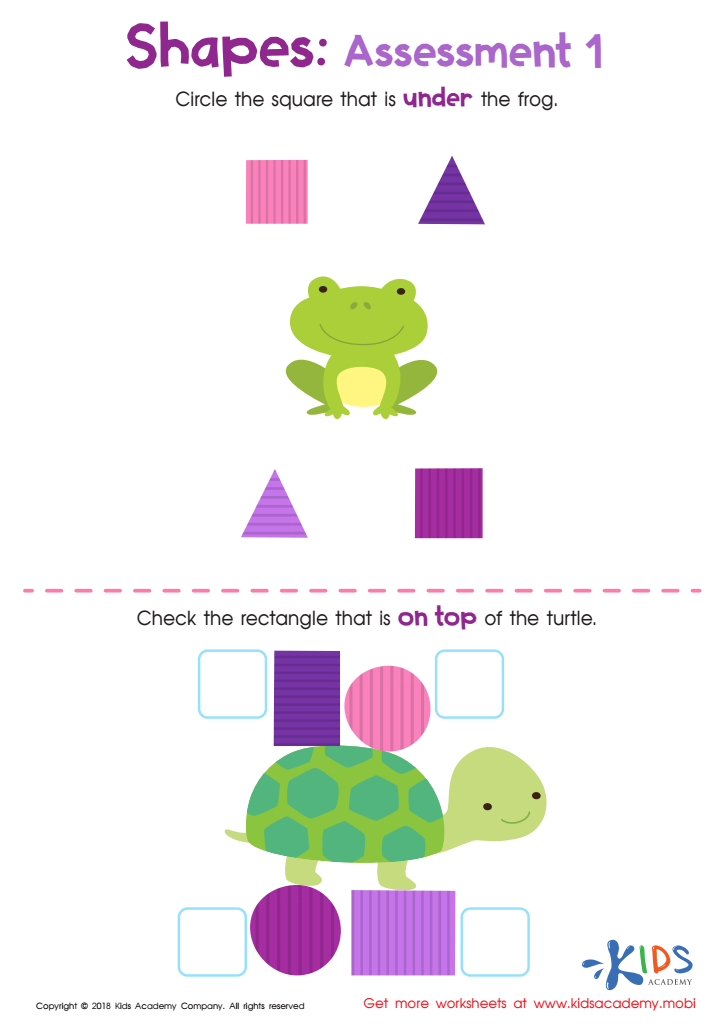
Geometry – Assessment 1 Worksheet
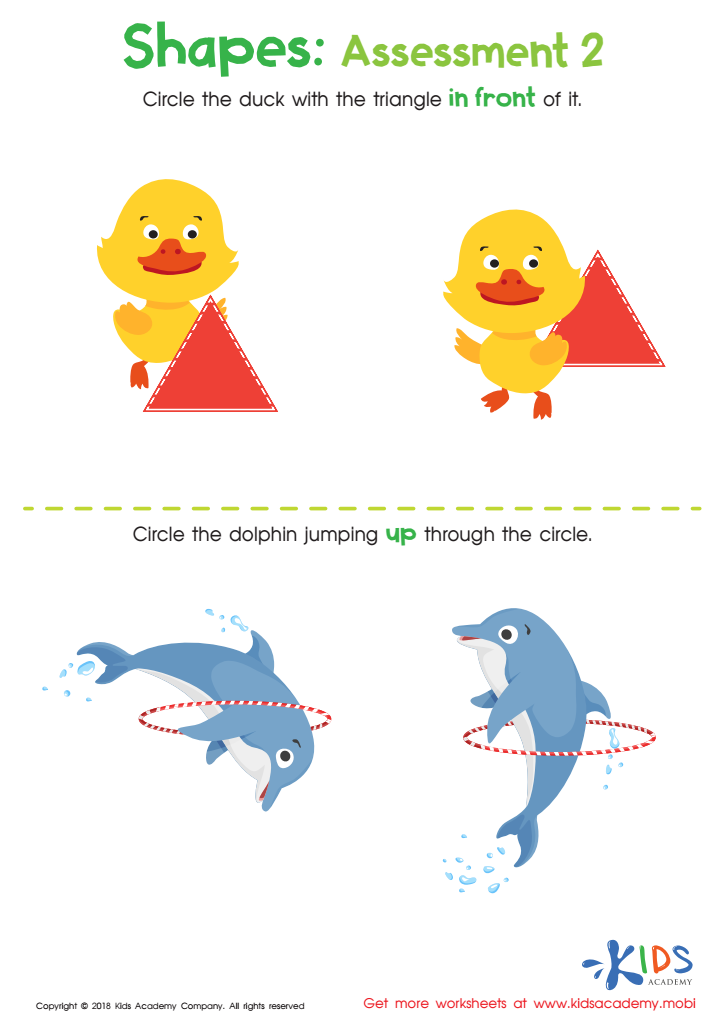
Geometry – Assessment 2 Worksheet



%20(1).jpg)

.jpg)

Shape comparison is a crucial developmental activity for children aged 3-5 as it lays the foundation for essential math and spatial skills. During this period, children begin to understand the world around them, often learning through visual and tactile experiences. By engaging in shape comparison activities, children develop their ability to recognize, classify, and differentiate various shapes, which are fundamental skills in early mathematics.
Understanding shapes enhances their problem-solving abilities and critical thinking. When parents or teachers encourage shape comparison, they help children learn to identify similarities and differences, fostering curation and analytical skills. Additionally, this practice promotes vocabulary development; as children discuss shapes, they learn new terms and enhance their ability to describe their observations.
Furthermore, shape comparison nurtures fine motor skills through hands-on activities, such as sorting or stacking shapes, contributing to overall cognitive development. It also enriches creativity, as children can explore and create designs with different shapes. Ultimately, prioritizing shape comparison activities supports a child's readiness for more complex mathematical concepts in the future, paving the way for a positive attitude towards learning and exploration. Thus, parents and teachers should actively promote such activities as integral to holistic early childhood education.








