Understanding currency Worksheets for Ages 3-5
5 filtered results
-
From - To
Discover the perfect educational tool for young learners with our "Understanding Currency Worksheets for Ages 3-5." Designed to introduce children to the basics of money, these engaging and fun worksheets help kids recognize and understand different coins and bills. Activities include identifying currency, matching coins, and simple counting exercises, ensuring that toddlers develop foundational math and financial skills. Our colorful and age-appropriate worksheets make learning about money enjoyable and interactive. Lay a strong foundation for financial literacy and nurture early math skills with our expertly crafted worksheets. Start your child’s learning journey today!
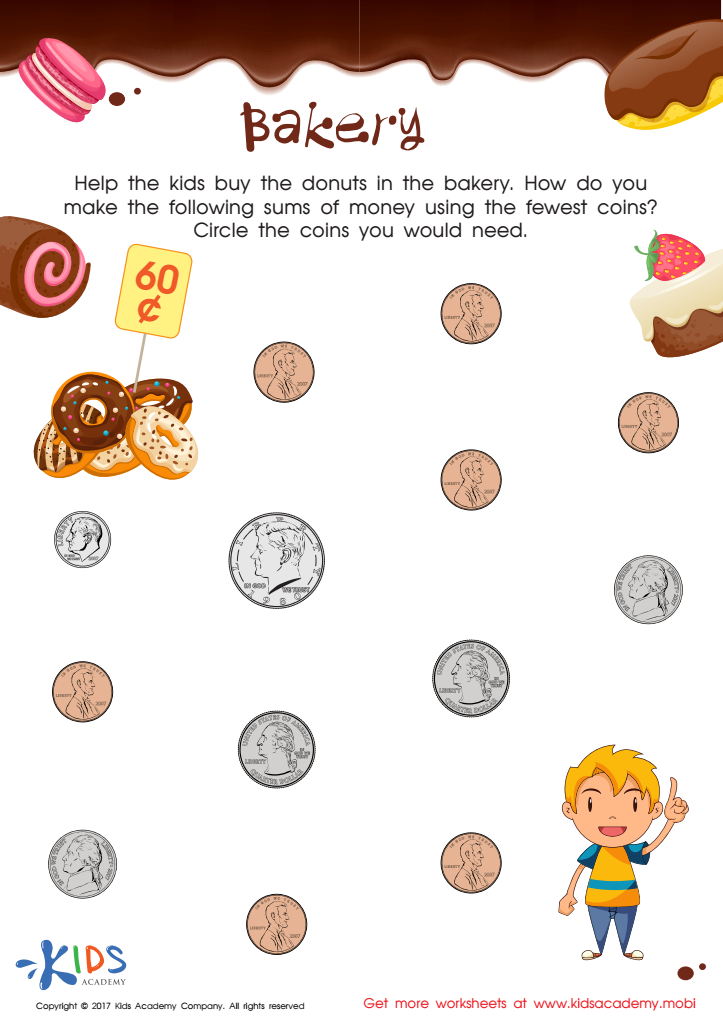
Counting Coins Worksheet
 Assign to My Students
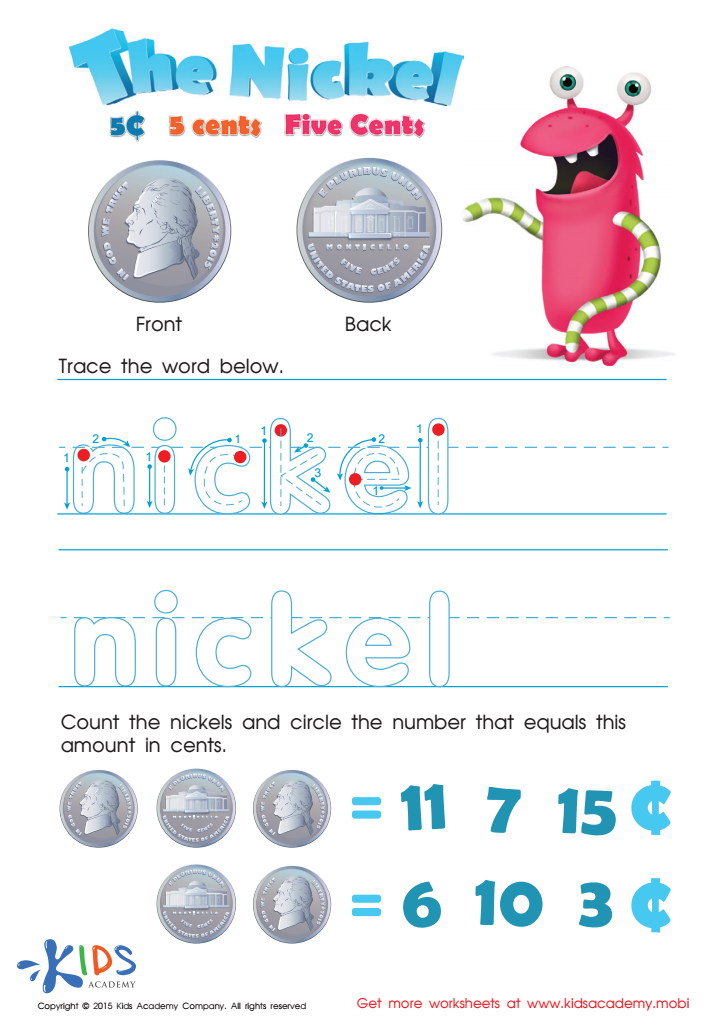
Five Cents or the Nickel Money Worksheet
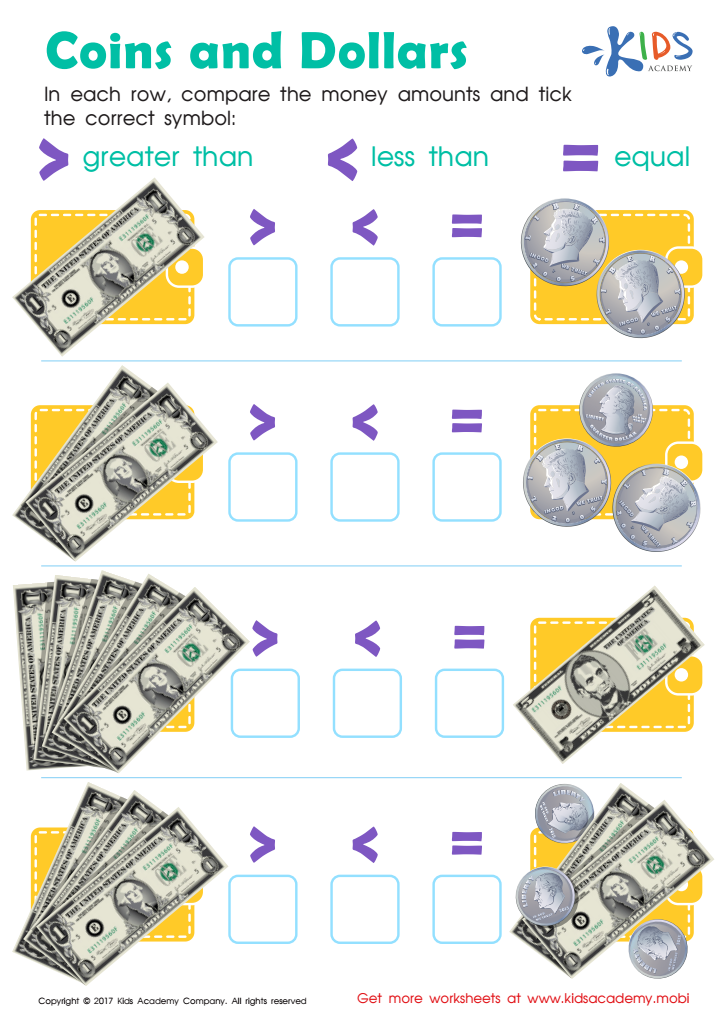
Money: Coins Dollars Printable
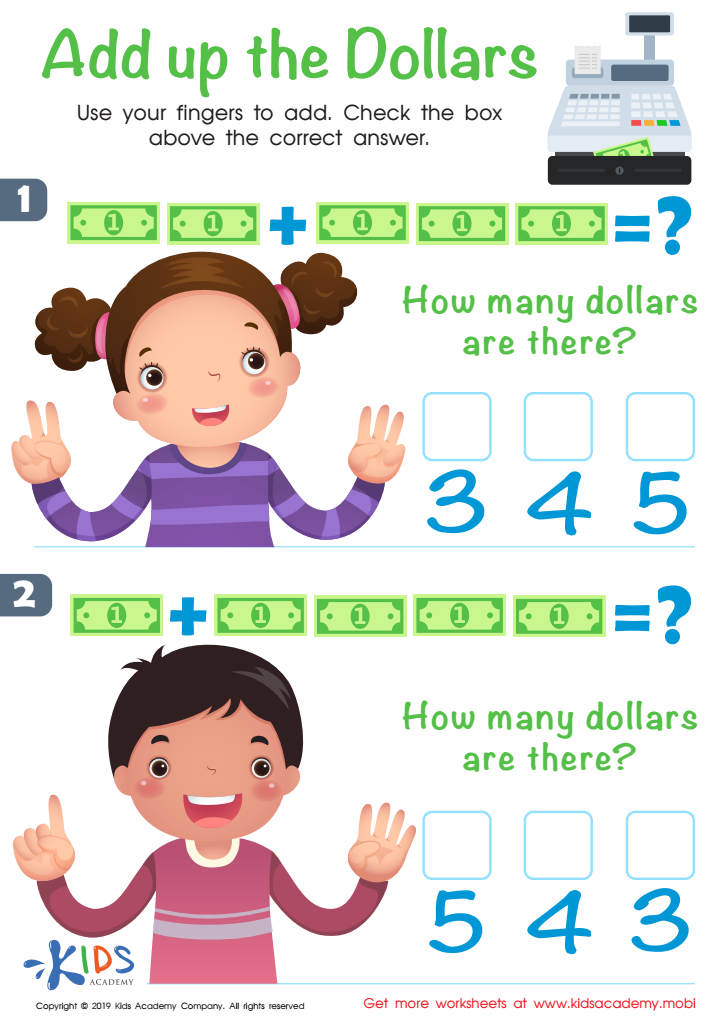
Add up the Dollars Worksheet








Understanding currency at an early age, specifically from ages 3-5, is pivotal for young children as it lays the foundation for essential life skills. During these formative years, children absorb information rapidly, and introducing them to the basics of money can significantly shape their future financial literacy.
First, grasping basic currency concepts helps children develop critical cognitive skills such as numeracy, counting, and the ability to recognize different denominations. Engaging in hands-on activities like playing shop with pretend money can make learning interactive and fun, reinforcing these foundational skills.
Secondly, it fosters practical understanding. When young children learn about money, including values and the concept of transactions, they begin to comprehend the importance of saving, spending, and making choices. This early knowledge can promote responsible habits that benefit them throughout their lives.
In addition, understanding currency can encourage a sense of independence and confidence. As children become familiar with handling money, even in simple forms, they gain self-assurance in everyday situations, like deciding to buy a toy or a snack.
Ultimately, teaching young children about currency equips them with essential skills and values that contribute towards becoming financially responsible individuals. Thus, it's an important aspect of early childhood education and parental involvement.








