Visual learning stimulation Worksheets for Ages 3-5
3 filtered results
-
From - To
Discover our engaging Visual Learning Stimulation Worksheets designed specifically for children ages 3-5. These worksheets harness the power of visual aids to enhance learning skills, helping your little ones sharpen their cognitive abilities while enjoying a fun educational experience. Each worksheet is crafted to stimulate creativity, promote problem-solving, and improve attention through colorful illustrations and interactive activities. Perfect for parents and educators, our printable resources foster an enriching environment that supports early childhood development. Explore a variety of themes that captivate young minds and encourage exploration while building foundational skills. Join our learning journey today!
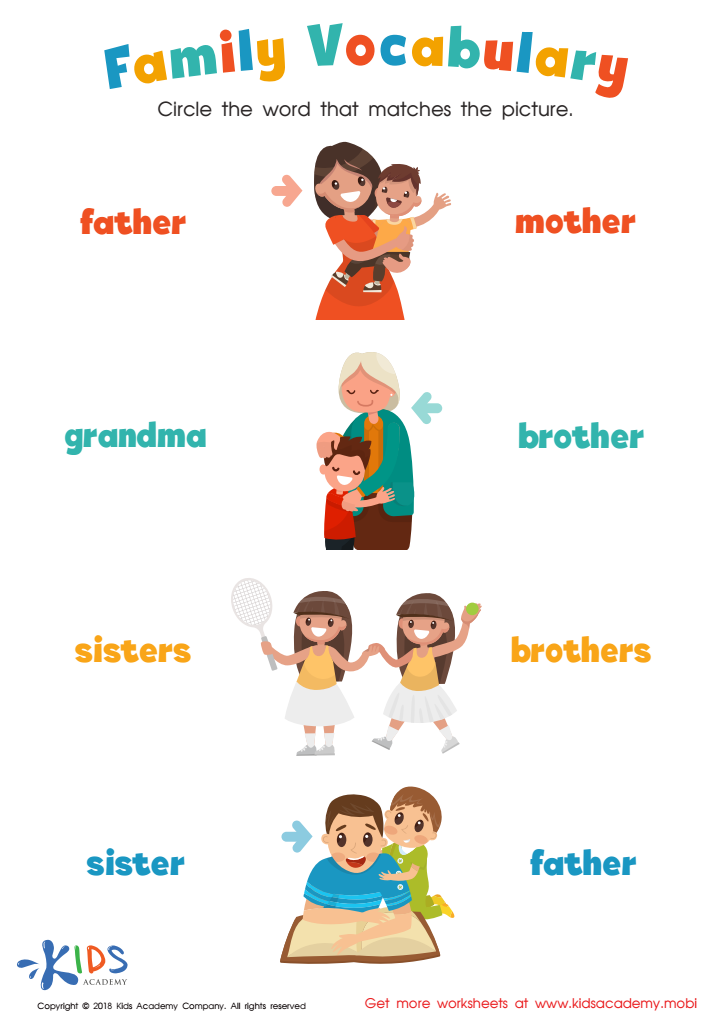
Family Vocabulary Worksheet
 Assign to My Students







Visual learning stimulation is crucial for children aged 3-5 as it significantly enhances their cognitive development and supports various learning styles. At this age, children are naturally curious and learn best through exploration and engagement with their environment. Visual stimuli, such as colorful books, interactive toys, and educational videos, can capture their interest and aid comprehension, making abstract concepts more tangible.
Moreover, visual learning encourages creativity and critical thinking skills. When children interact with visual materials, they develop problem-solving abilities by observing patterns and making connections. This engagement also enhances memory retention, as visuals tend to be more memorable than words alone.
Furthermore, parents and teachers play an essential role in providing these stimuli. By incorporating diverse visual aids into daily activities and learning environments, they can foster a love of learning early on. This early exposure lays the groundwork for later educational success, allowing children to become more effective learners in school settings. As social-emotional skills also develop through collaborative visual activities, fostering teamwork and communication, prioritizing visual learning stimulation becomes imperative for holistic childhood development. Ultimately, investing in visual learning is investing in a child's future success—both academically and socially.








