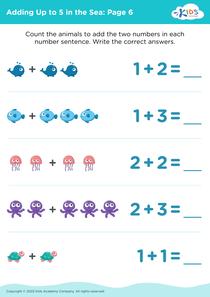
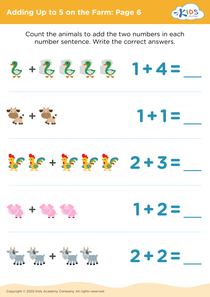
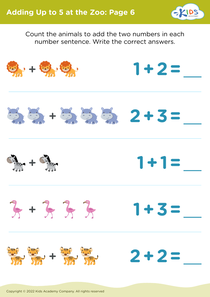
Basic Math Skills Adding in the Forest Worksheets for Ages 3-5
6 filtered results
-
From - To
Discover the joy of learning with our "Basic Math Skills Adding in the Forest Worksheets" designed specifically for ages 3-5! These engaging worksheets not only teach essential addition skills but also immerse young learners in a whimsical forest-themed environment. Children will encounter adorable woodland creatures as they practice adding numbers in a fun and interactive way. Perfect for homeschooling or supplementary learning, these worksheets encourage hand-eye coordination and cognitive development. Let your little ones embark on a mathematical adventure filled with creativity and exploration, fostering a lifelong love for learning while mastering basic math skills in a playful, nature-inspired setting!
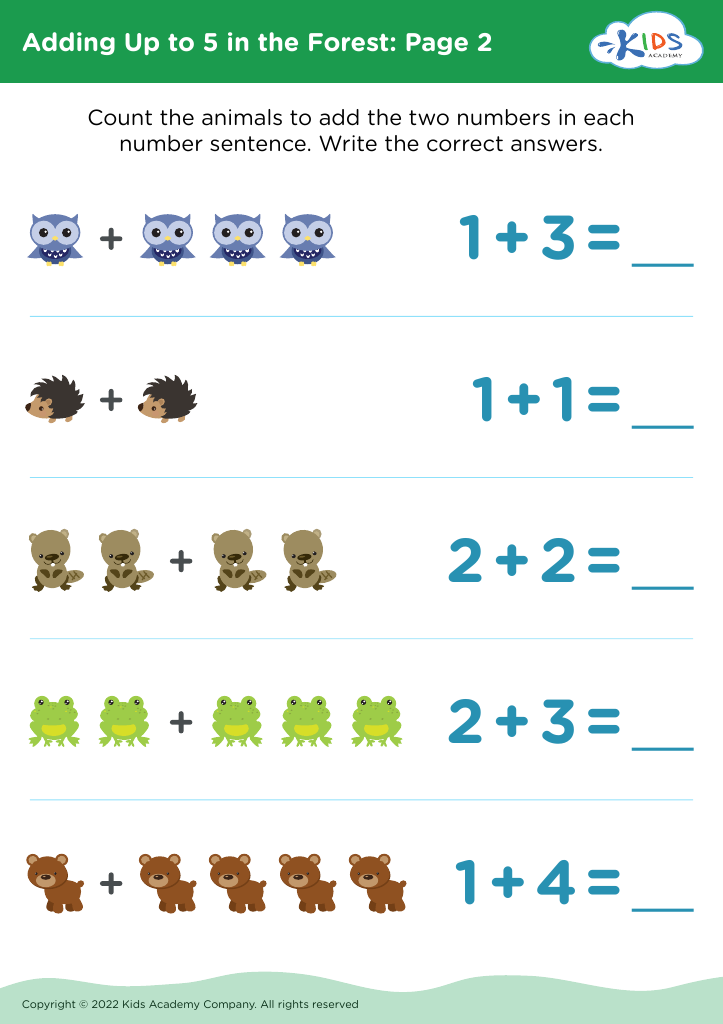
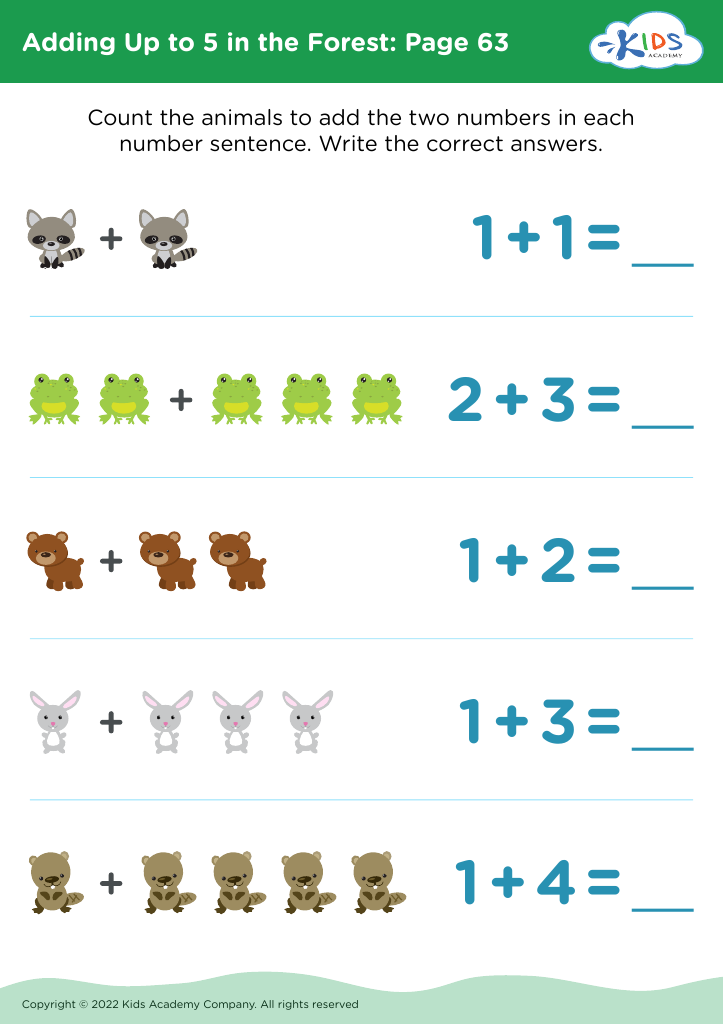
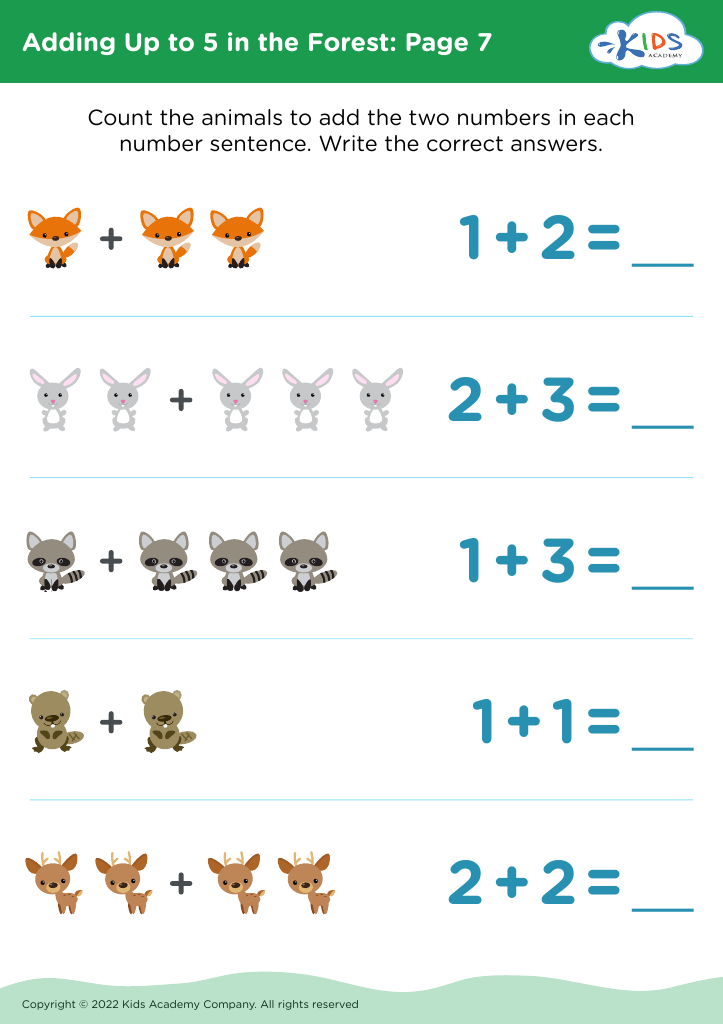
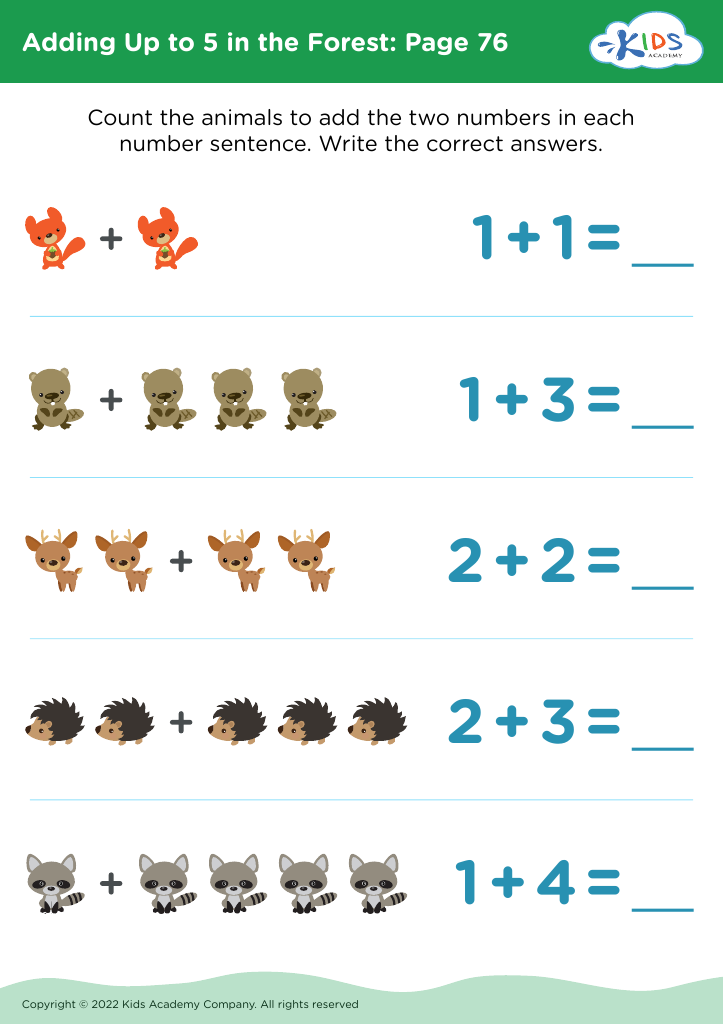
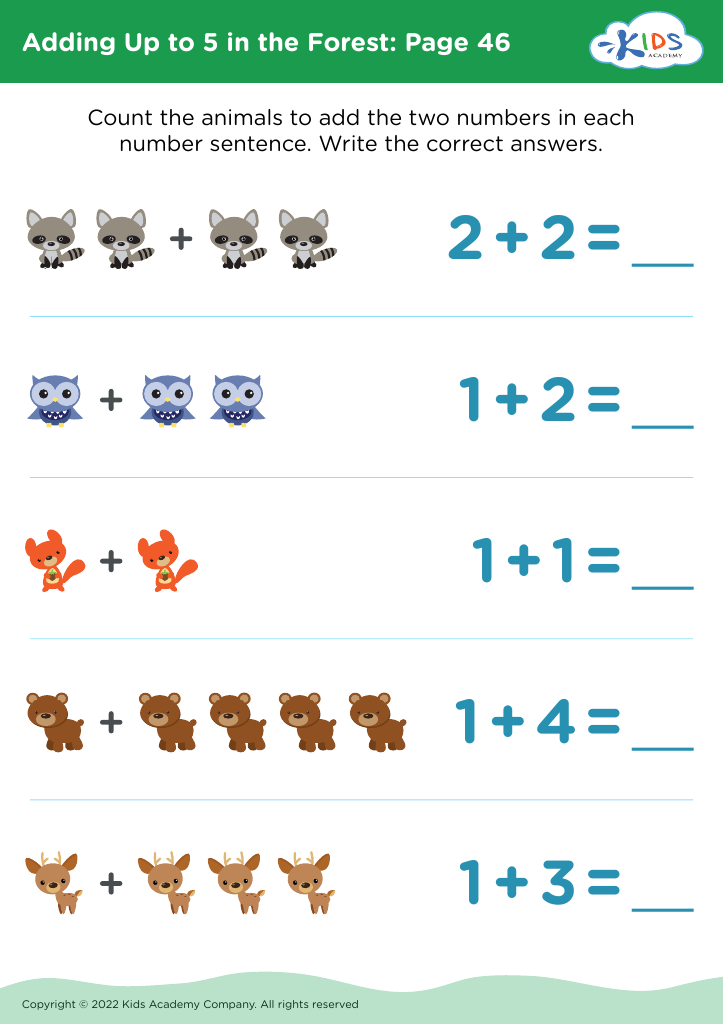
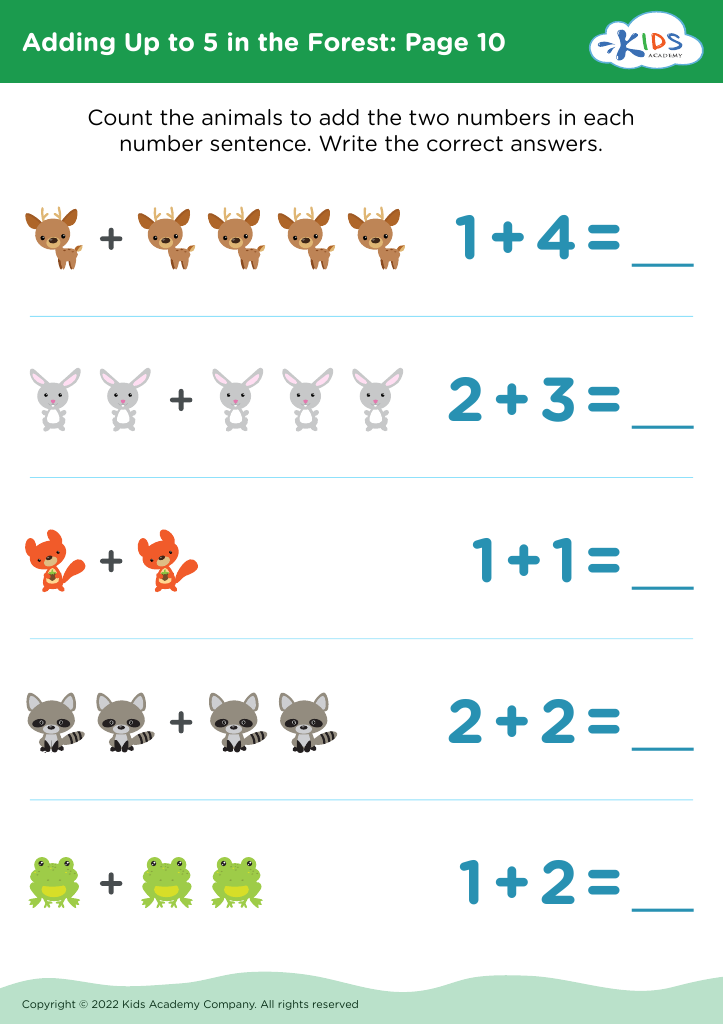



Parents and teachers should prioritize basic math skills, like adding, for children ages 3-5, particularly in engaging contexts like "Adding in the Forest." Early math proficiency lays a strong foundation for future academic success and cognitive development.
Teaching adding within a forest-themed context invites children into nature, sparking their curiosity and creativity. For young learners, incorporating a familiar and interactive environment fosters enthusiasm and makes learning relatable and enjoyable. As they count leaves, gather stones, or spot animals, they develop critical skills of observation and quantitative reasoning.
Moreover, these playful experiences enhance fine motor skills and promote cooperative play, reinforcing social and emotional growth as children work together. Learning to add in such contexts helps build numeracy skills through hands-on activities, closing the gap that often exists in traditional learning settings.
Engaging in these activities teaches essential problem-solving strategies while reinforcing perseverance and resilience. Research shows that positive early math experiences can reduce future math anxiety, improving overall confidence. Therefore, both parents and teachers should advocate for integrating foundational math concepts like adding into rich, engaging experiences, ensuring children gain valuable skills that will serve them well throughout their education and beyond.