Counting practice Adding in the Forest Worksheets for Ages 3-5
43 filtered results
-
From - To
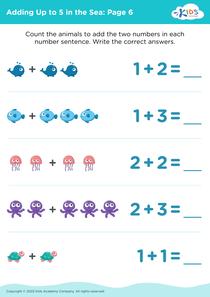
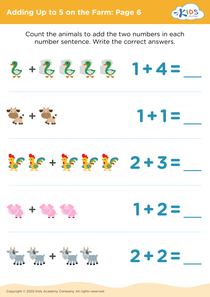
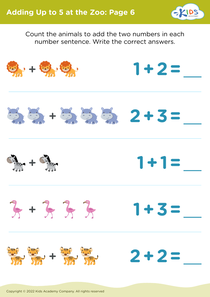
Explore our "Counting Practice: Adding in the Forest" worksheets, specially designed for children aged 3-5. These engaging printable activities make learning addition an adventure. Set in an enchanting forest theme, your little learners will join adorable woodland creatures in counting and adding exercises that build foundational math skills. These worksheets help boost number recognition, counting abilities, and early addition skills through fun, interactive tasks. Perfect for preschoolers and kindergarteners, our materials combine education with playful imagery to keep young minds intrigued and motivated. Start your child's math journey in the enchanting world of the forest today!
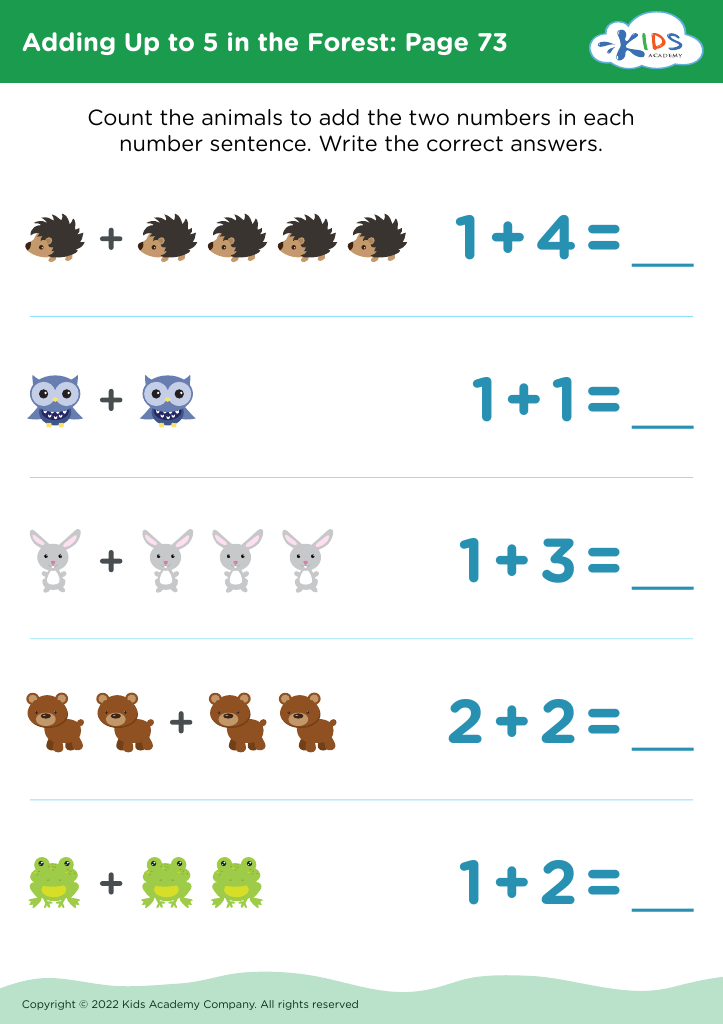
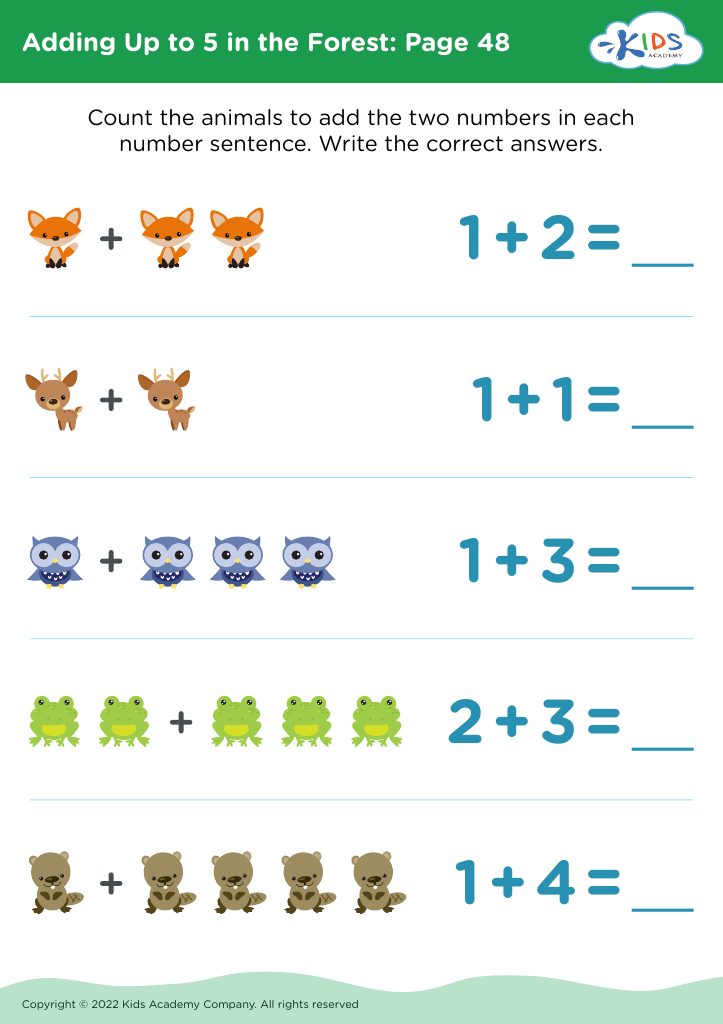
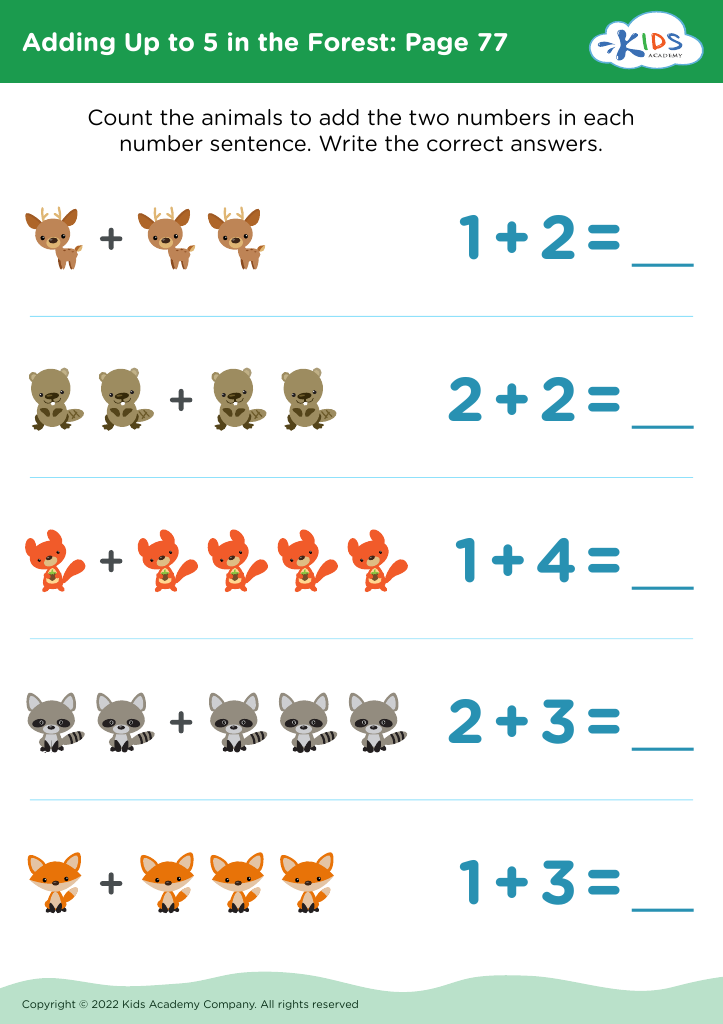
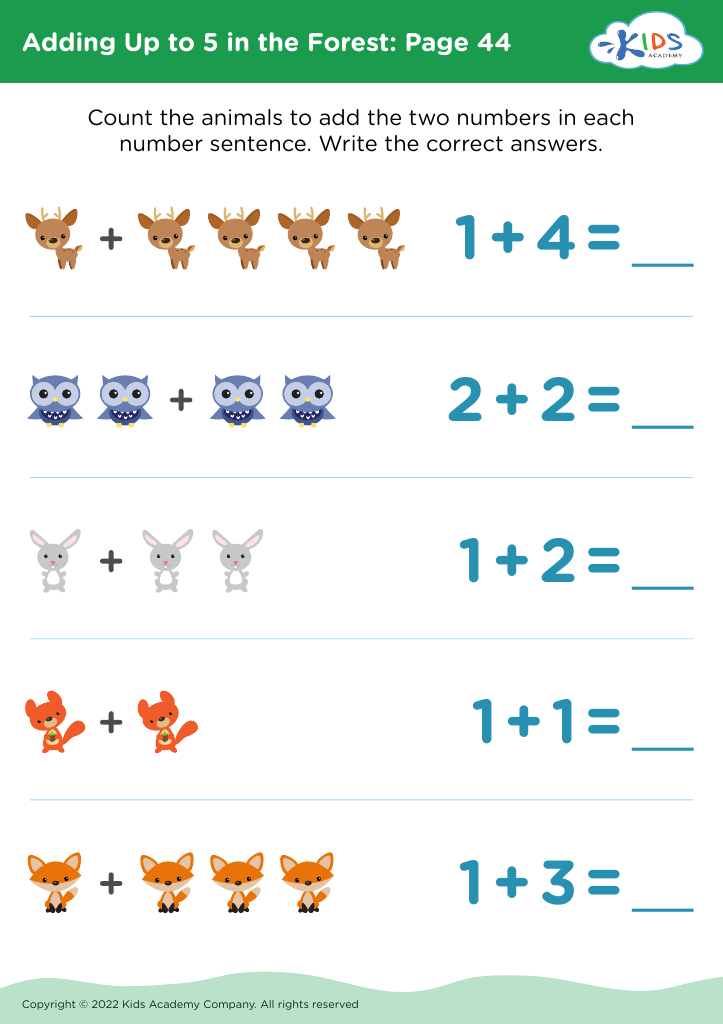
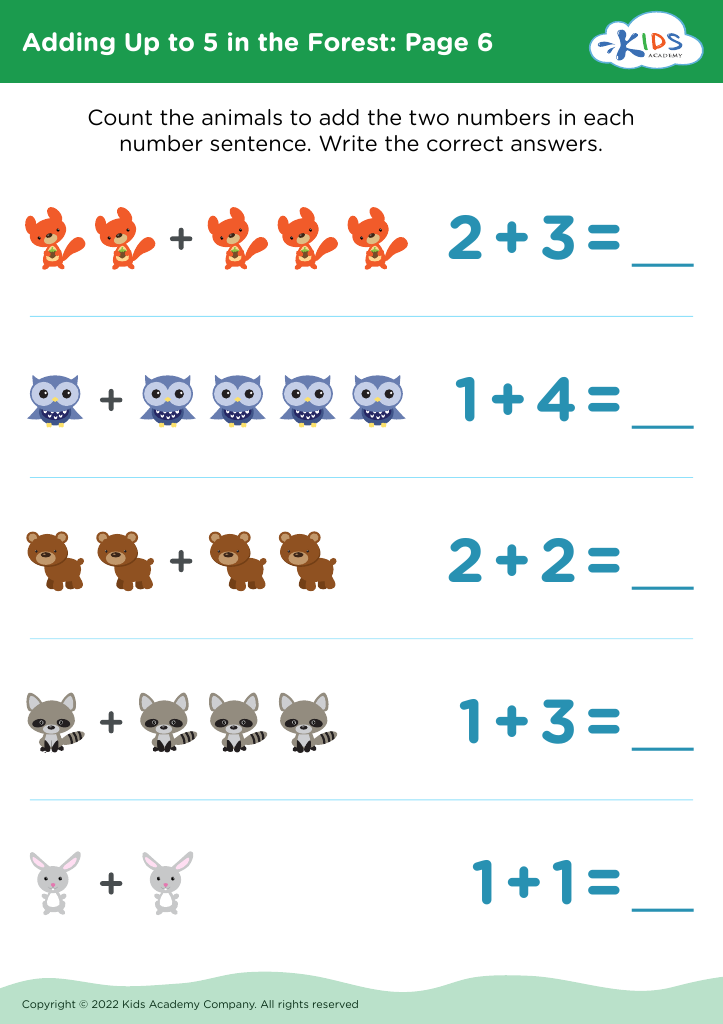
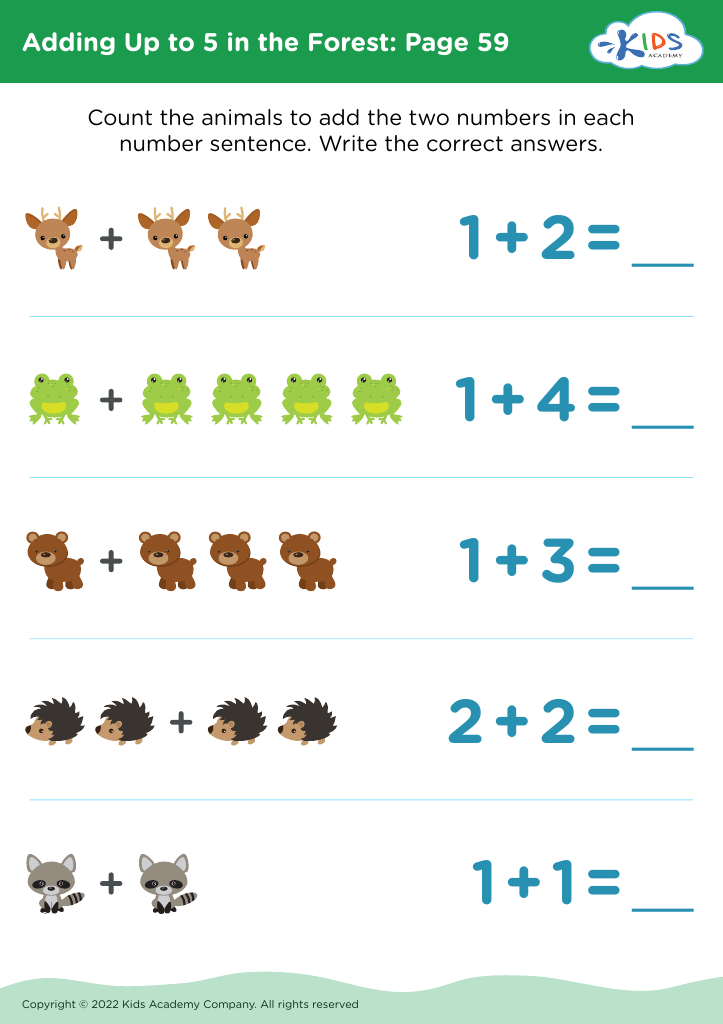
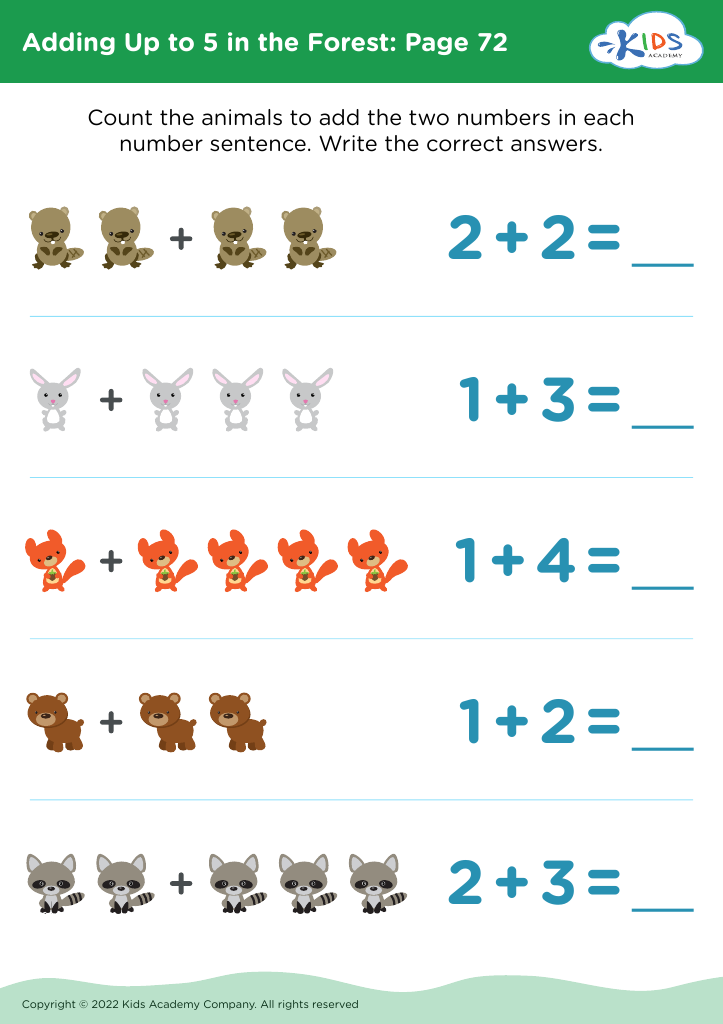
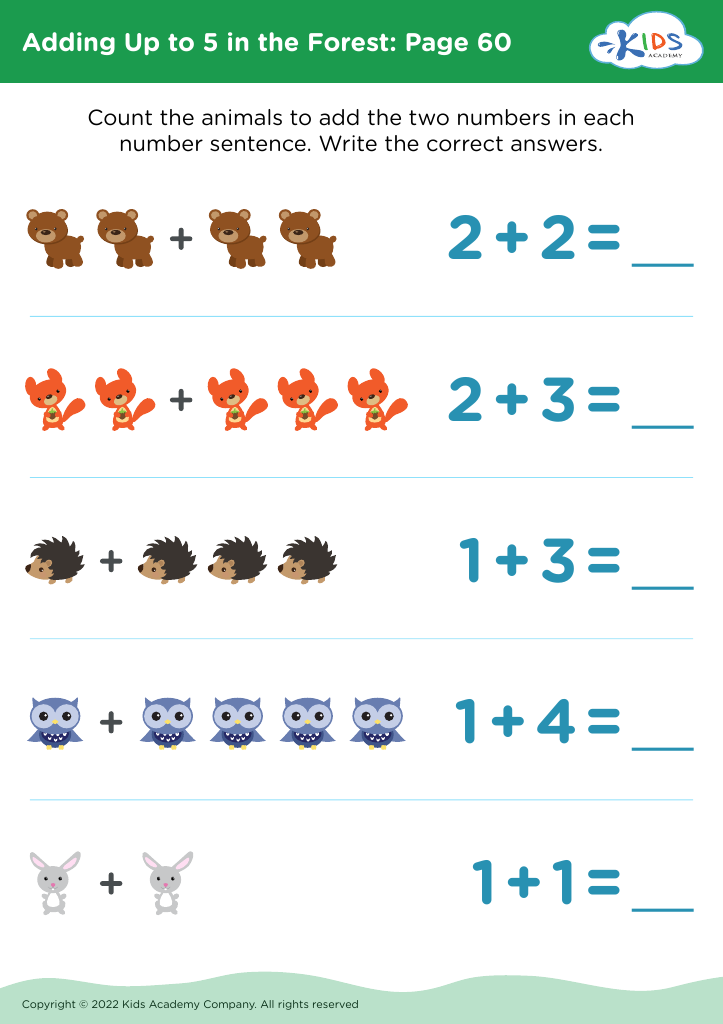
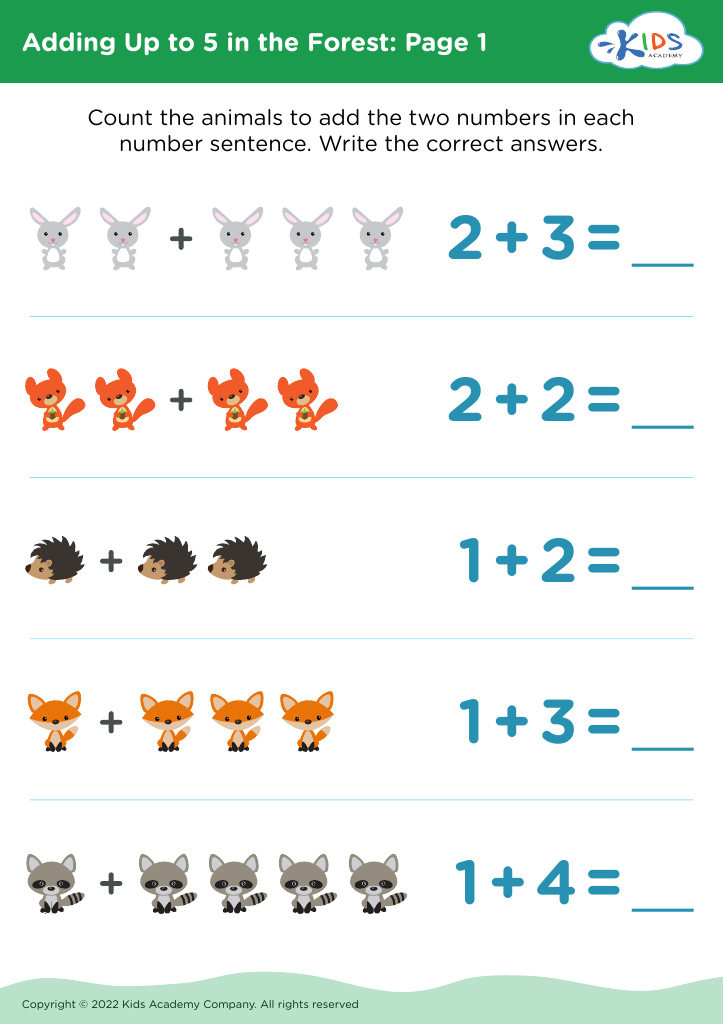
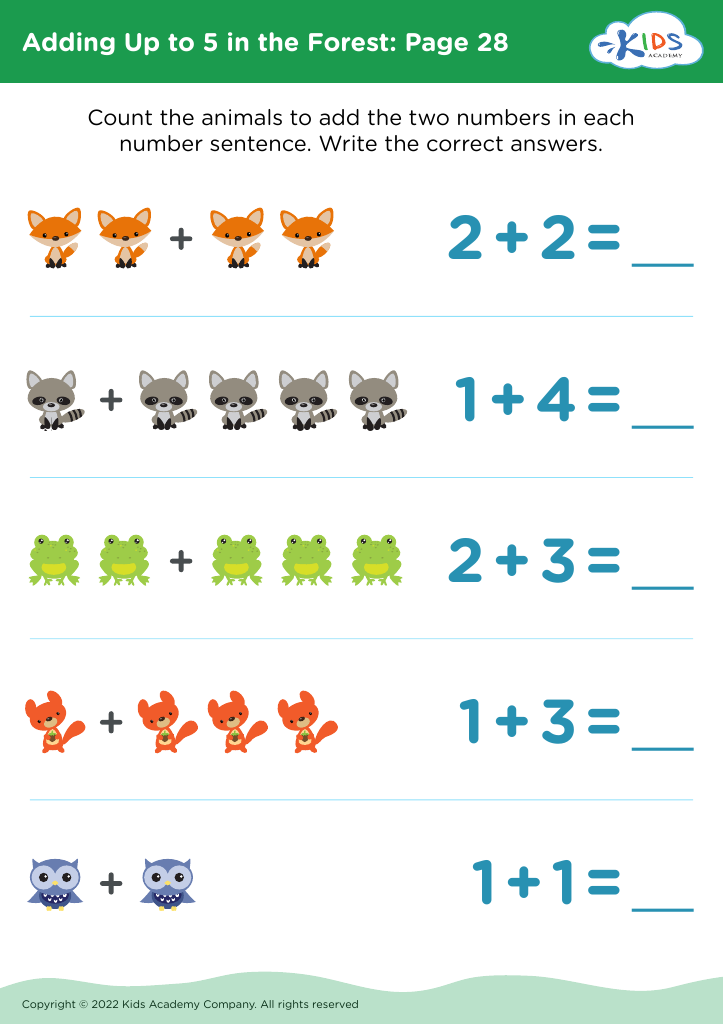
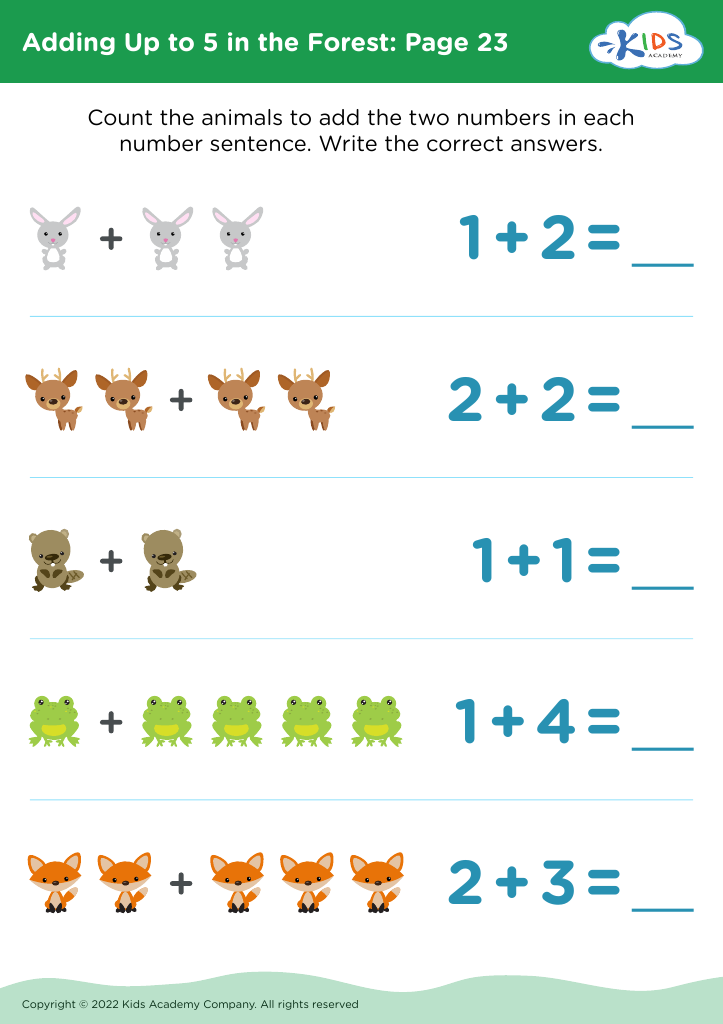
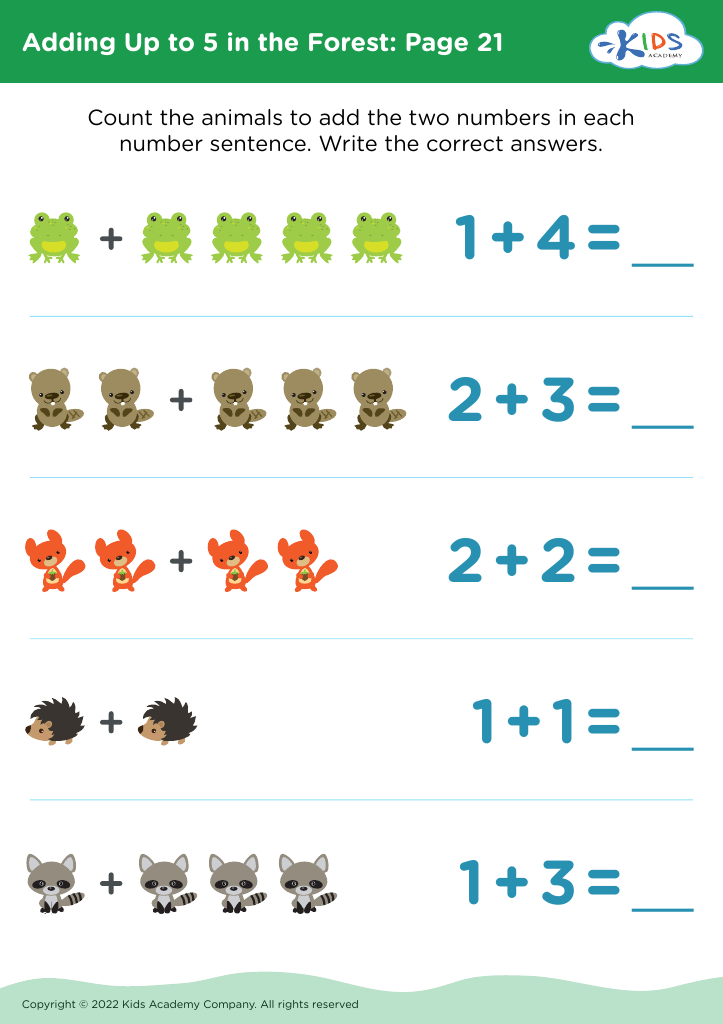
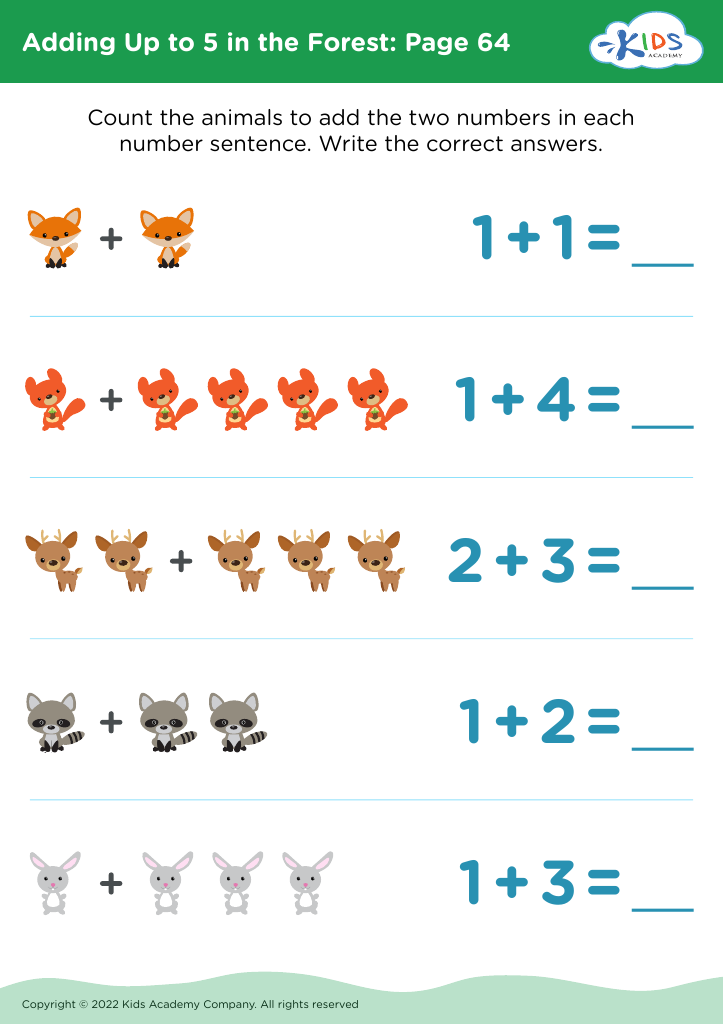
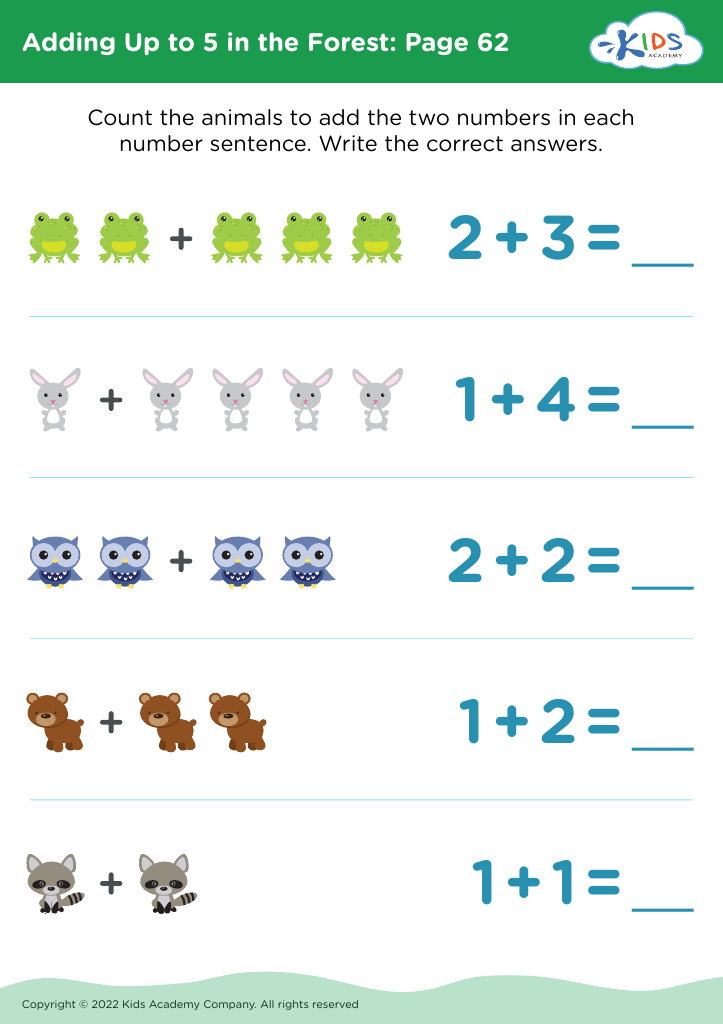
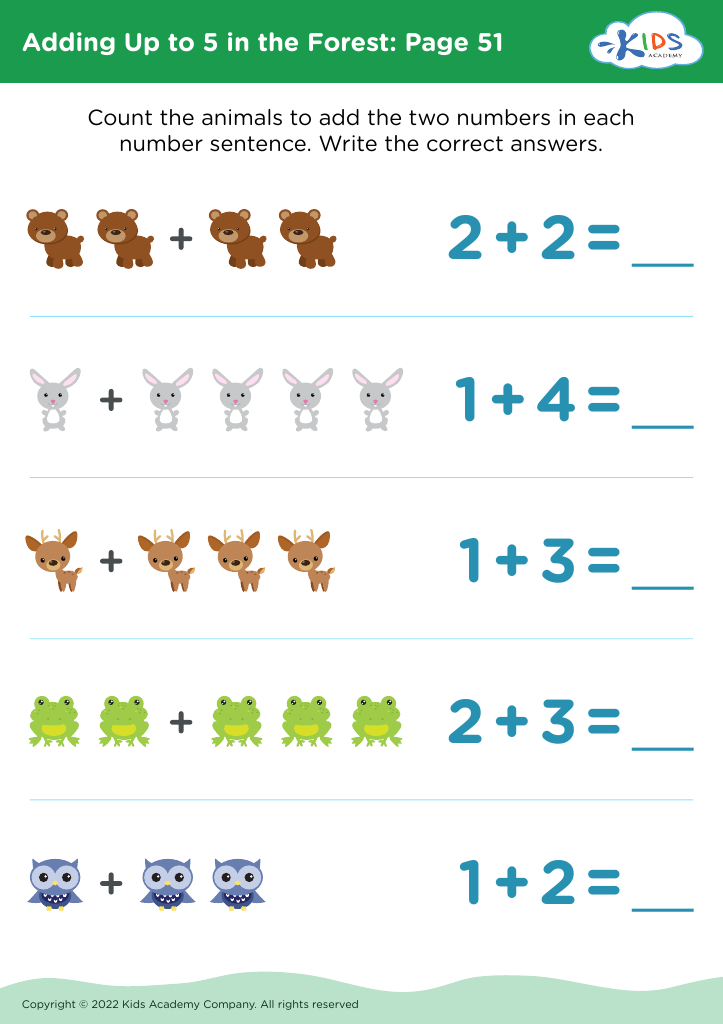
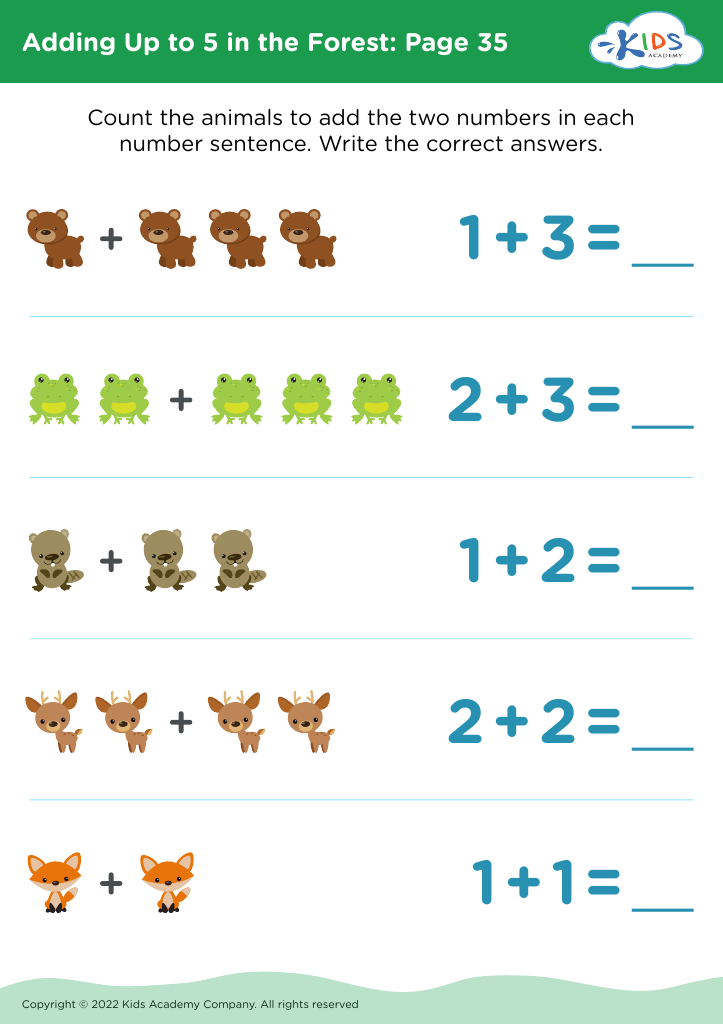
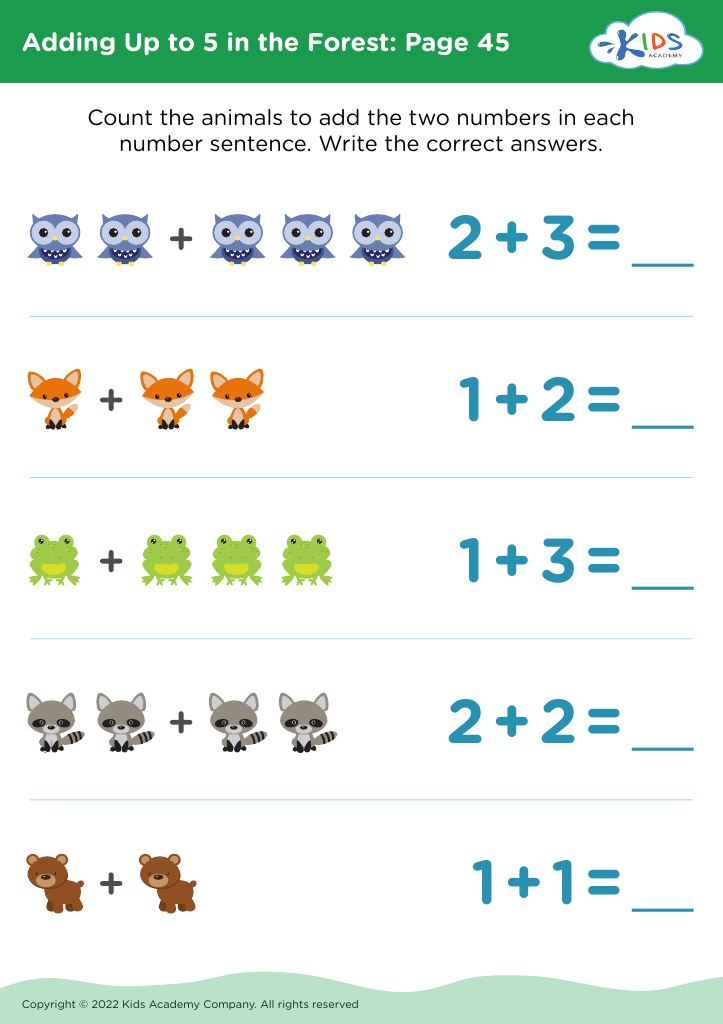
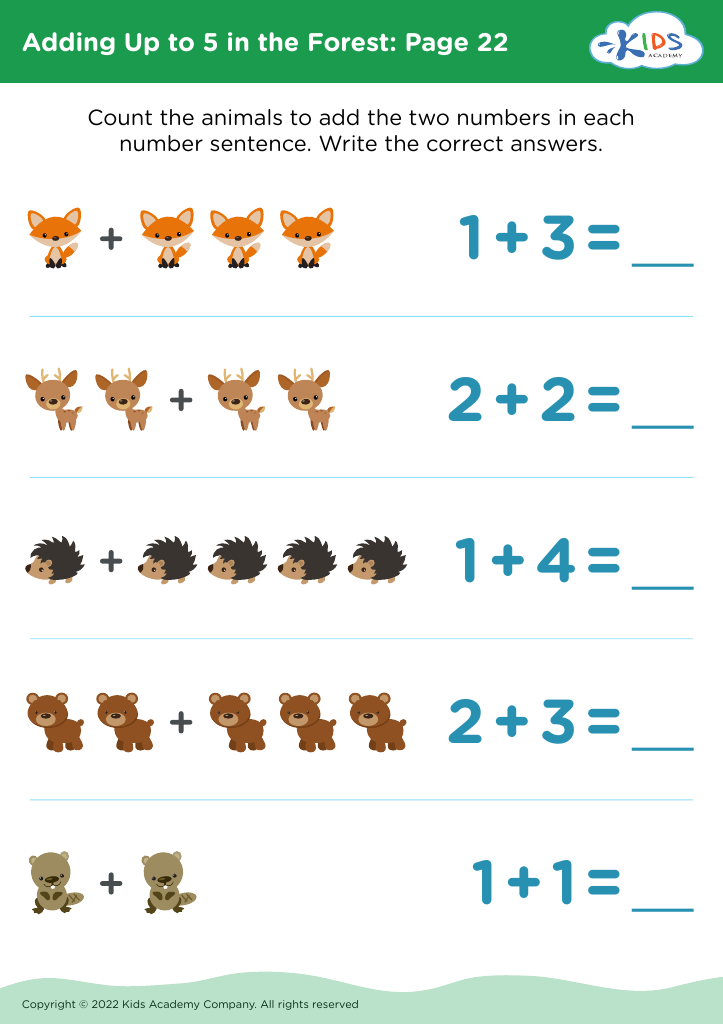
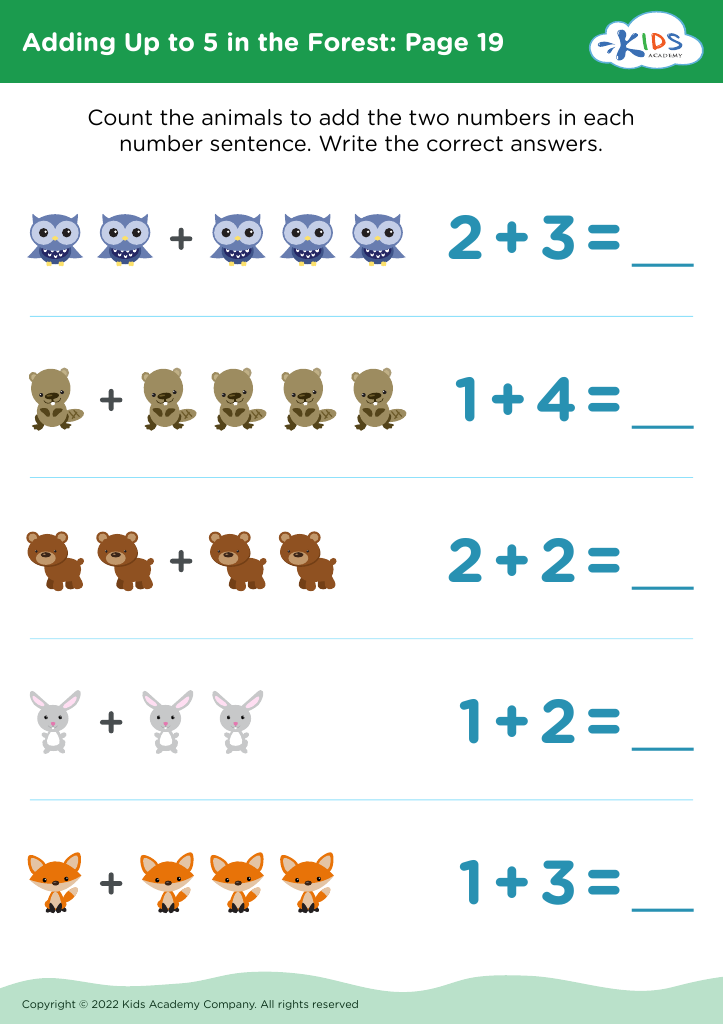
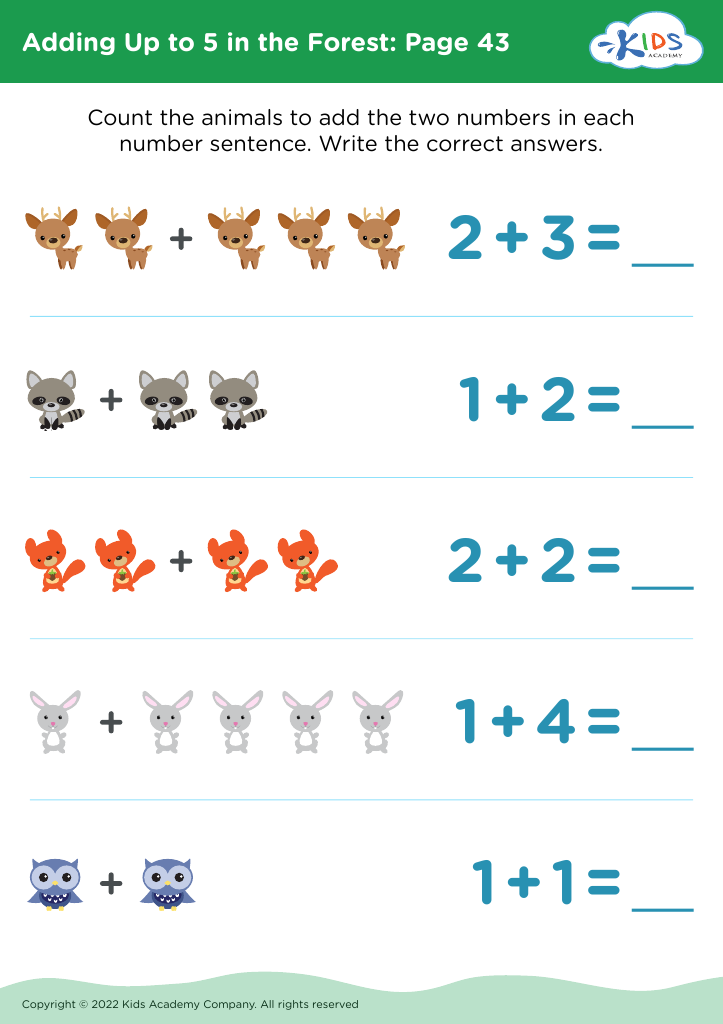
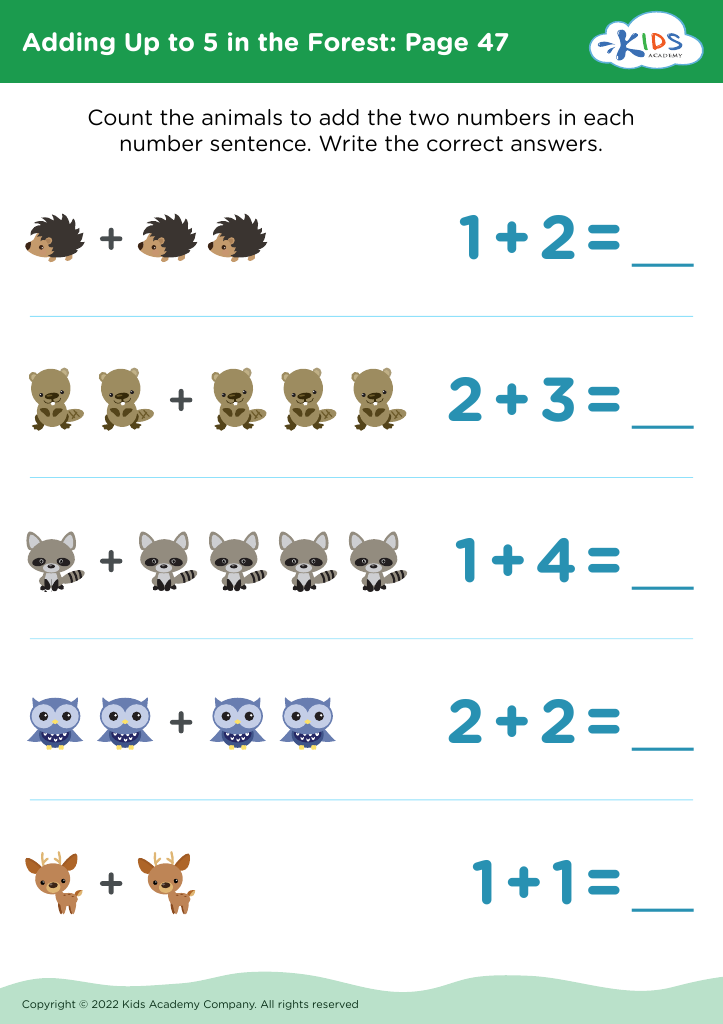
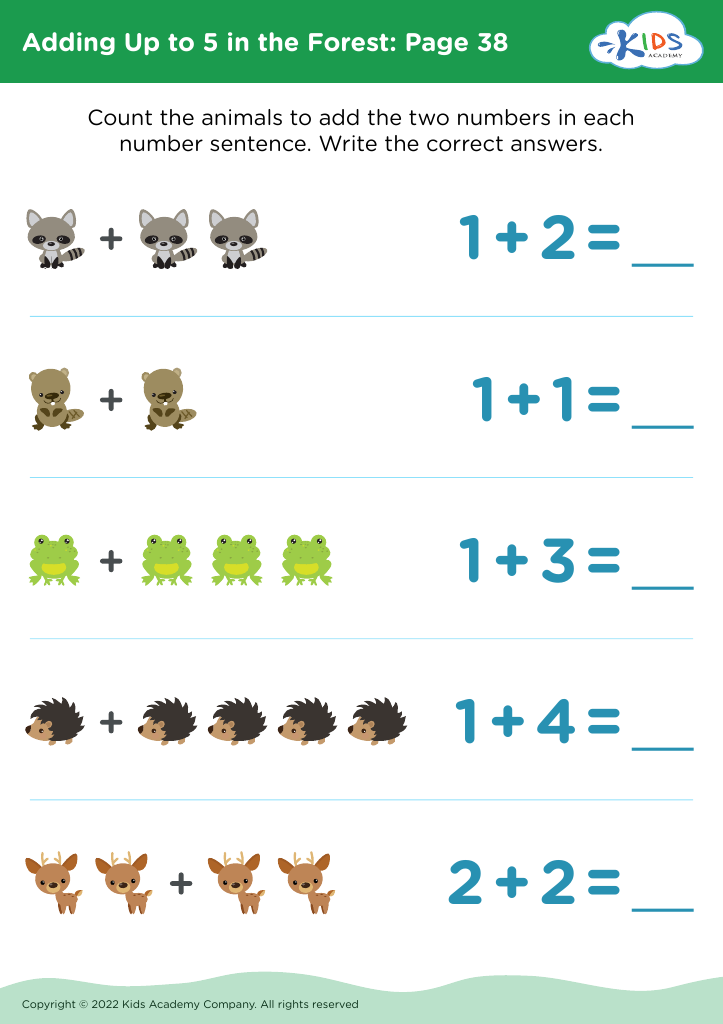
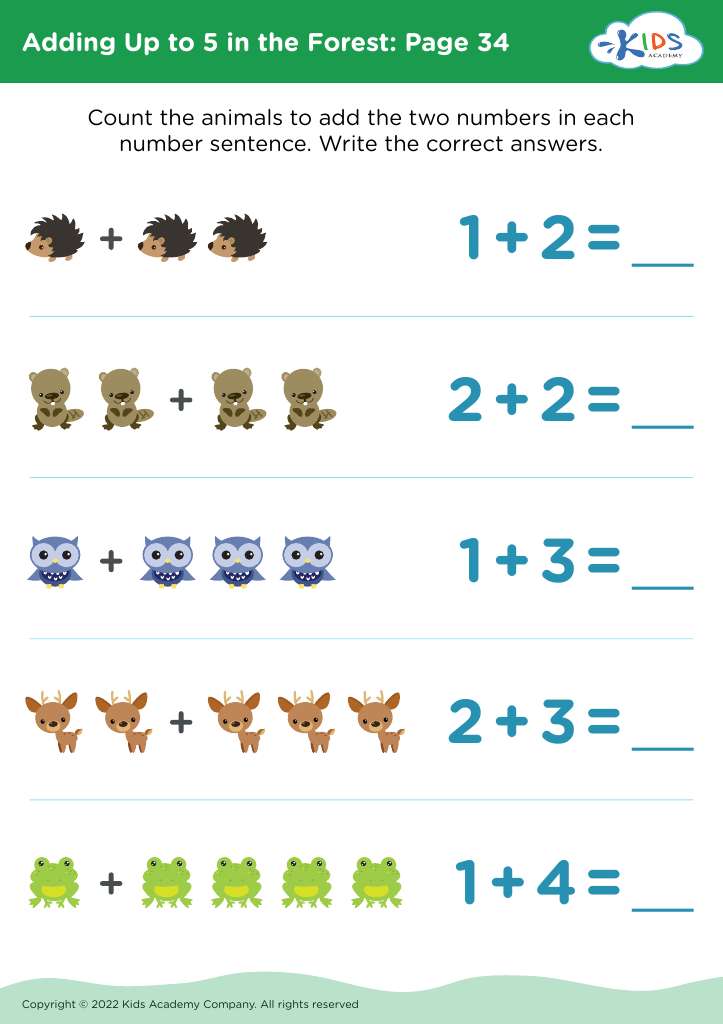
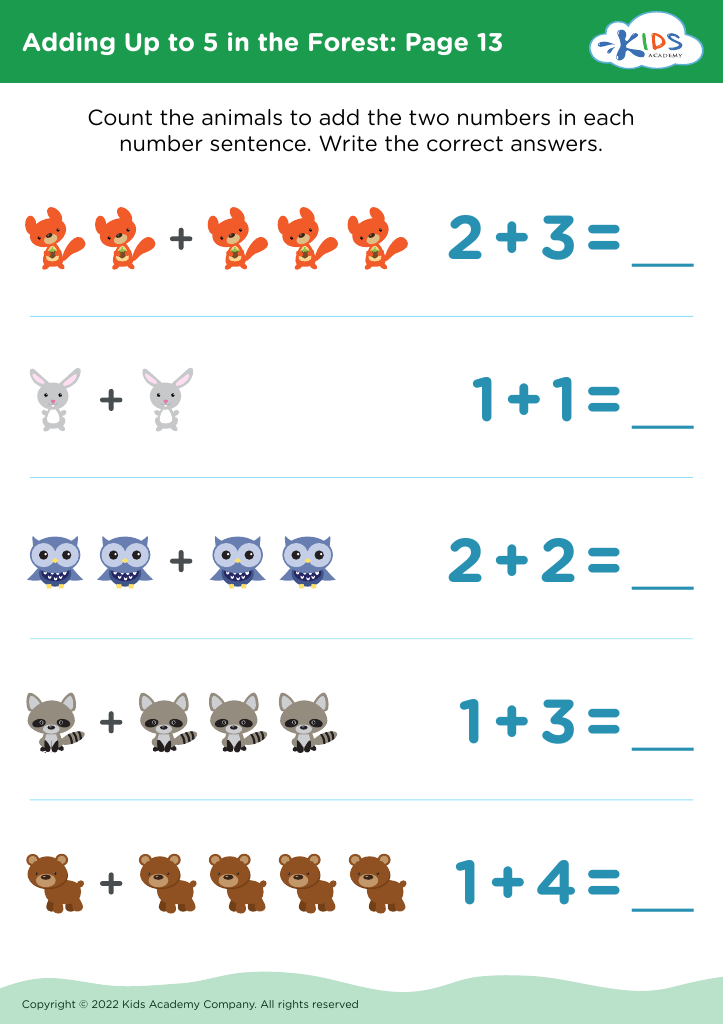



Counting practice using engaging themes like Adding in the Forest for ages 3-5 is crucial for early childhood development. At this age, young children are rapidly developing their cognitive and motor skills, and learning foundational math concepts sets the stage for future academic success. Incorporating counting into a fun and relatable context—such as counting animals, trees, or other forest elements—makes learning enjoyable and impactful.
Firstly, counting practice aids in developing number sense, which is understanding numbers and their relationships. This foundational skill is essential for more complex math problems later in life. Secondly, counting activities enhance fine motor skills as children manipulate objects in their environment. Holding and moving small items, such as toy animals or leaves, builds the muscles needed for writing and other tasks.
Moreover, themed counting practices like Adding in the Forest expose children to basic addition and subtraction in a natural, intuitive way. Seeing that adding one bunny to another results in two bunnies helps children grasp these early arithmetic concepts. Lastly, the thematic approach also stimulates creativity and imagination, making math less intimidating and more approachable.
Hence, integrating counting activities with playful and thematic learning ensures that children acquire essential math skills while having fun and staying engaged, setting them up for lifelong learning success.