Fine Motor Skills Adding in the Forest Worksheets for Ages 3-5
5 filtered results
-
From - To
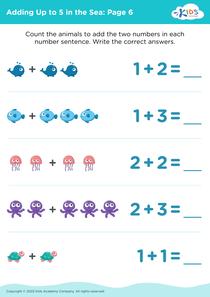
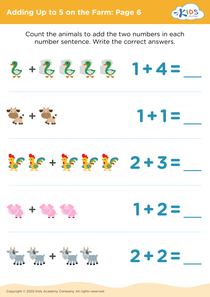
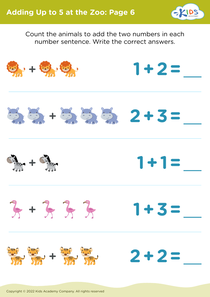
Introduce young learners to the wonders of math with our "Fine Motor Skills Adding in the Forest Worksheets for Ages 3-5". Engaging and whimsical, these printables feature delightful forest-themed activities designed to make addition fun and approachable. Ideal for developing fine motor skills, each worksheet encourages precise movements and attention to detail while fostering foundational math comprehension. Perfect for preschoolers and kindergarteners, our worksheets blend education with playful exploration, making math an adventure. Provide your little scholars with the tools they need to excel in early math and motor skills. Download now for a joyful learning journey!
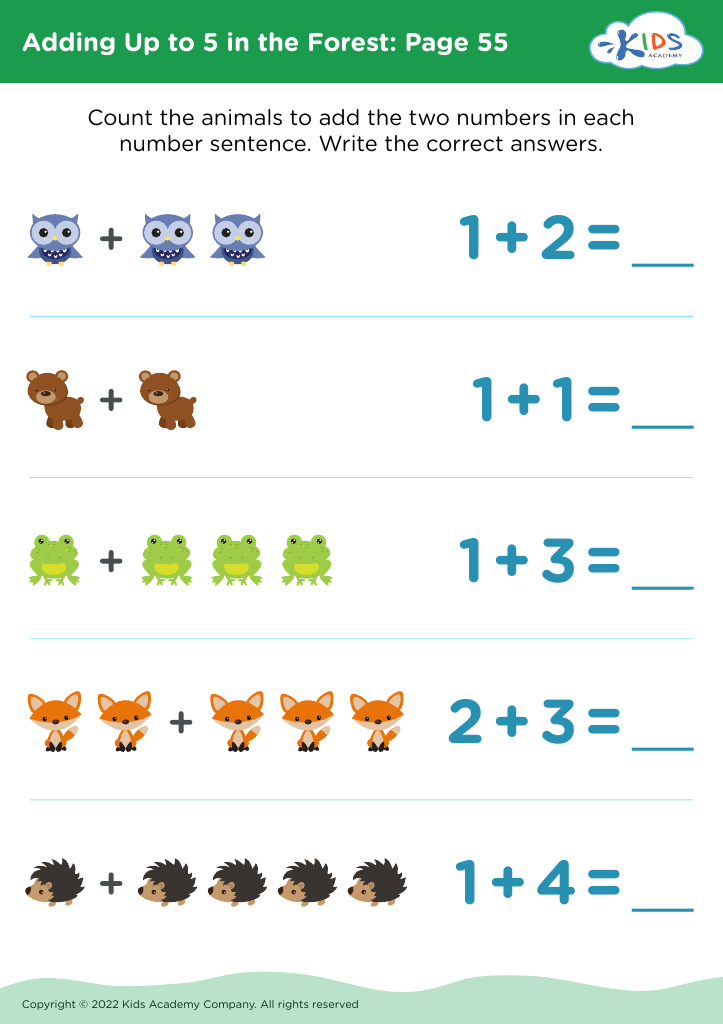
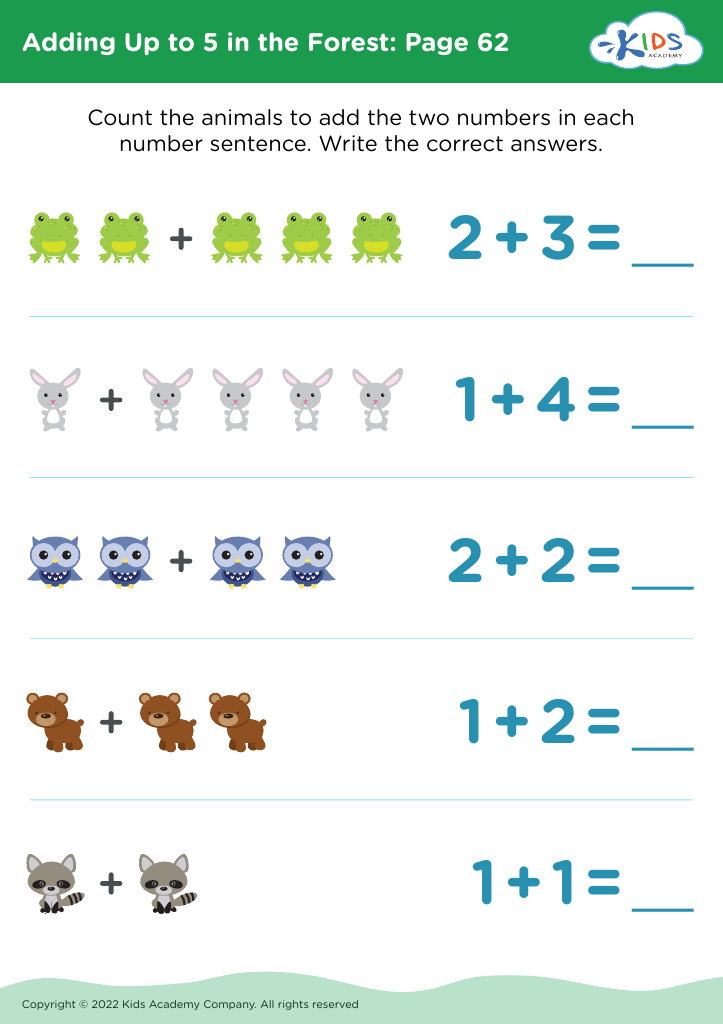
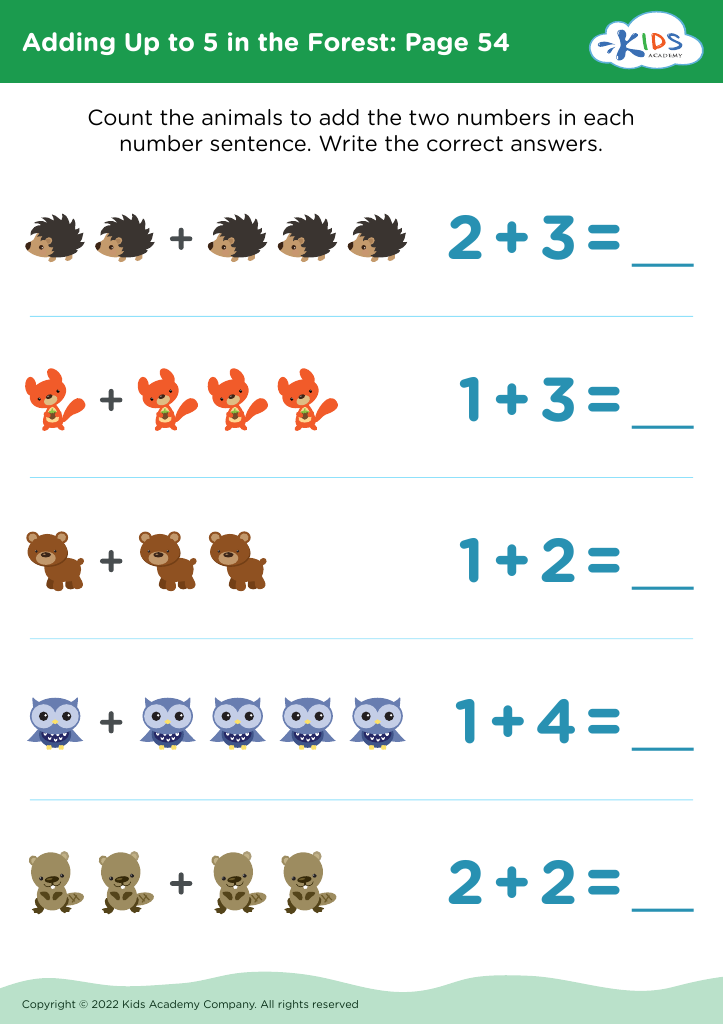
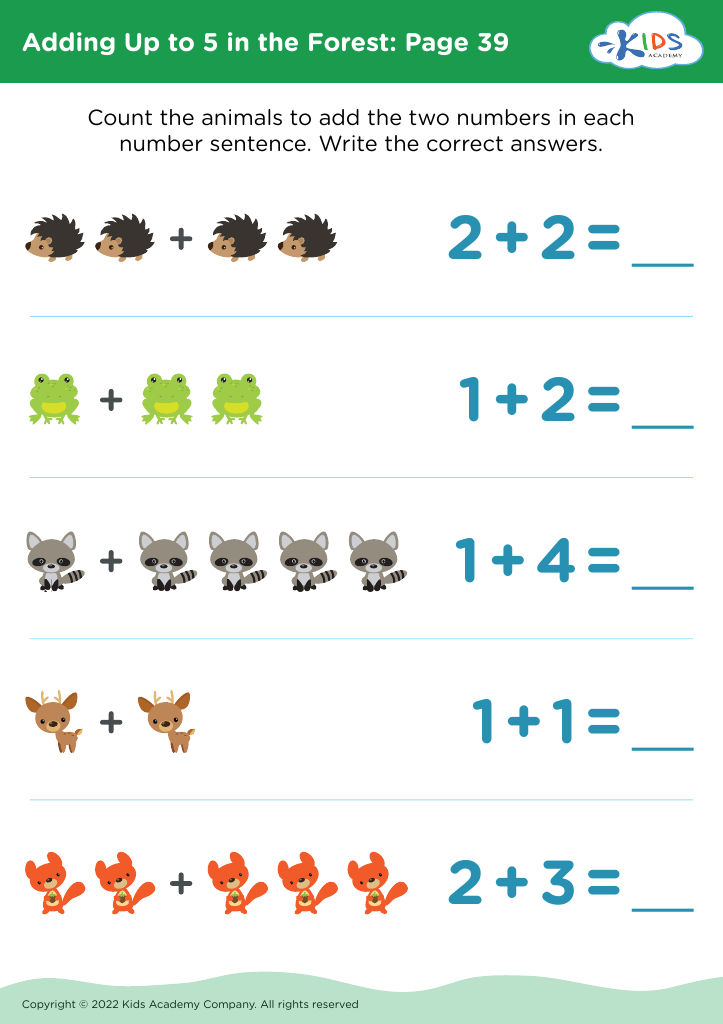
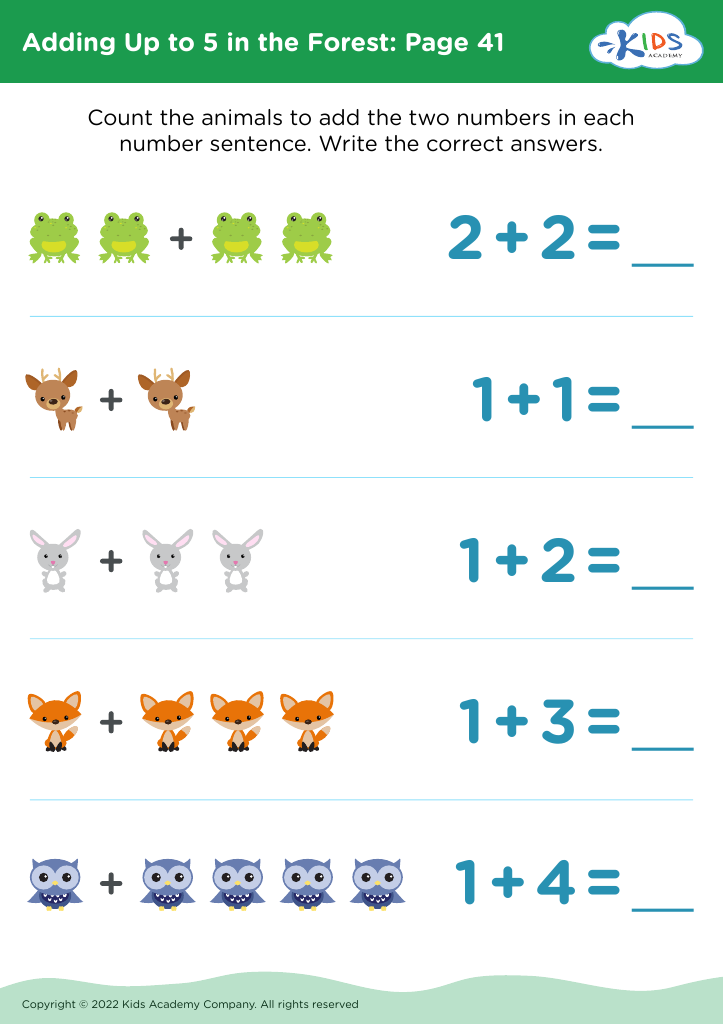



Fine motor skills, involving the control of small muscles in the hands and fingers, are essential for young children's overall development. Parents and teachers should prioritize activities like Fine Motor Skills Adding in the Forest for ages 3-5, as these exercises offer multifaceted benefits.
Firstly, developing fine motor skills lays a foundation for academic success. Skills such as writing, cutting with scissors, and manipulating small objects are integral to early learning, enabling children to participate fully in classroom activities. Strengthening these abilities enhances hand-eye coordination, dexterity, and precision, all vital for future academic tasks.
Secondly, incorporating nature-themed activities, such as those set in a forest context, enriches this developmental process. Interaction with natural elements stimulates curiosity, sensory experiences, and cognitive development. Children benefit from the tactile experience of manipulating twigs, leaves, or acorns, which can make the learning process enjoyable and memorable.
Additionally, these activities promote problem-solving skills and mathematical thinking when combined with basic arithmetic tasks, such as counting and adding objects found in the forest. This holistic approach integrates physical, cognitive, and emotional development.
Incorporating Fine Motor Skills Adding in the Forest for young children is therefore not just about developing small muscles but also about fostering a love for learning and nature, setting the stage for lifelong skills and a balanced development.