Nature appreciation Adding in the Forest Worksheets for Ages 3-5
5 filtered results
-
From - To
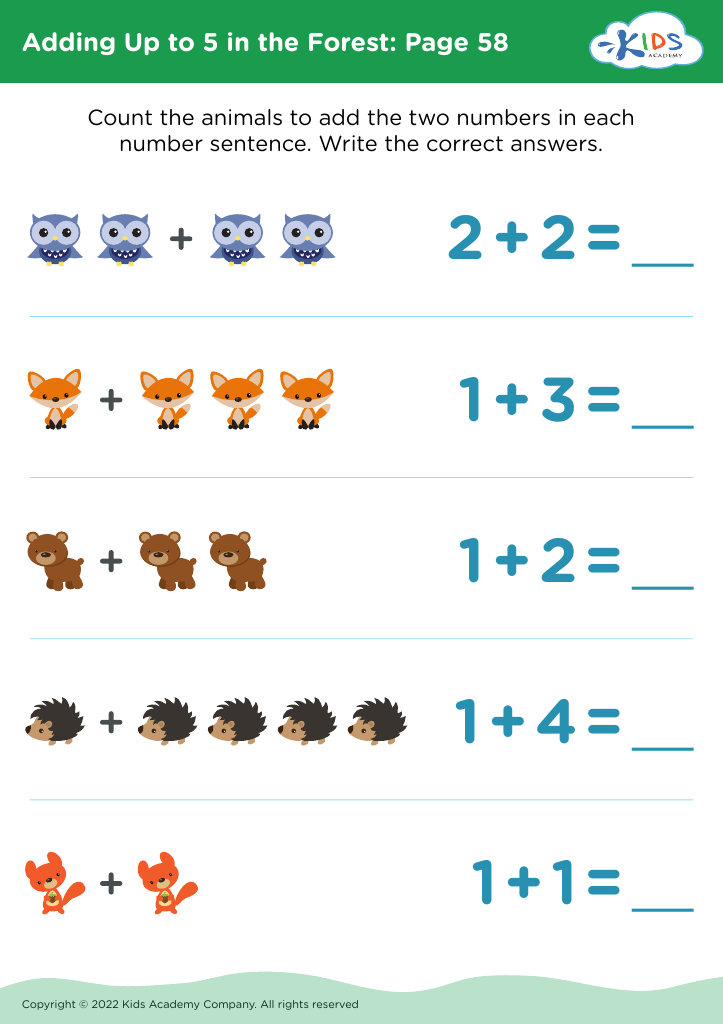
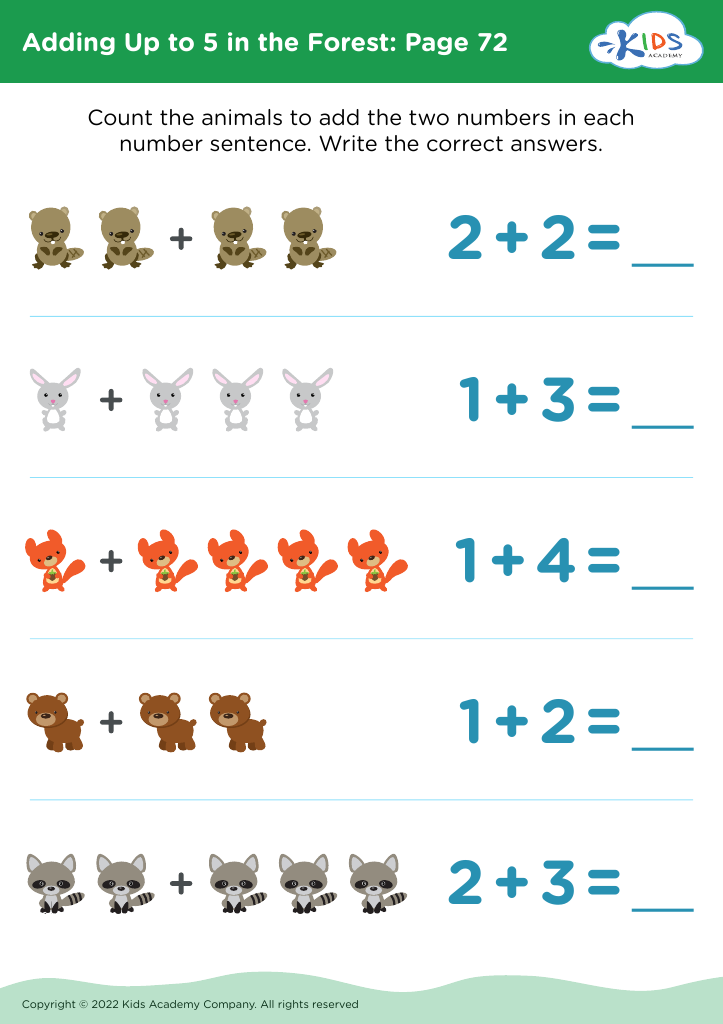
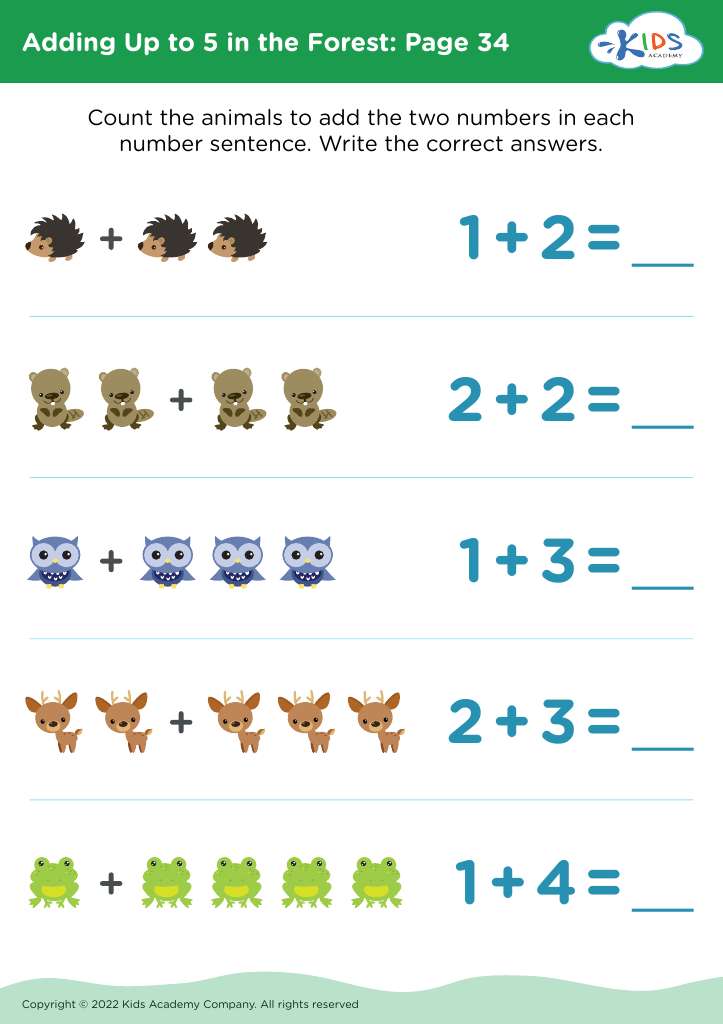
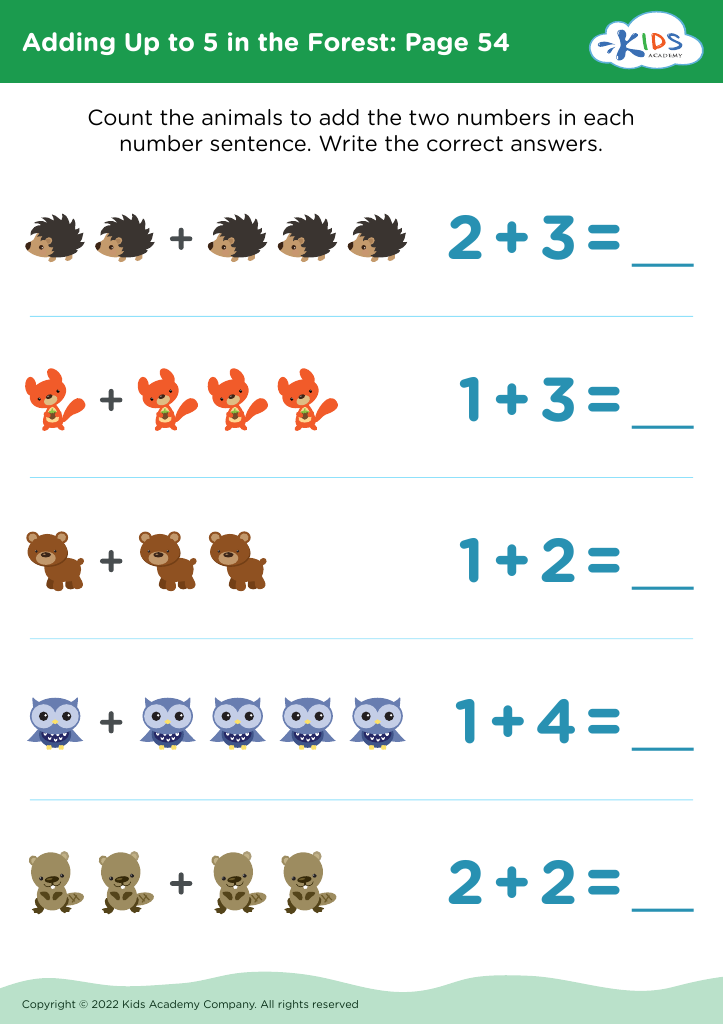
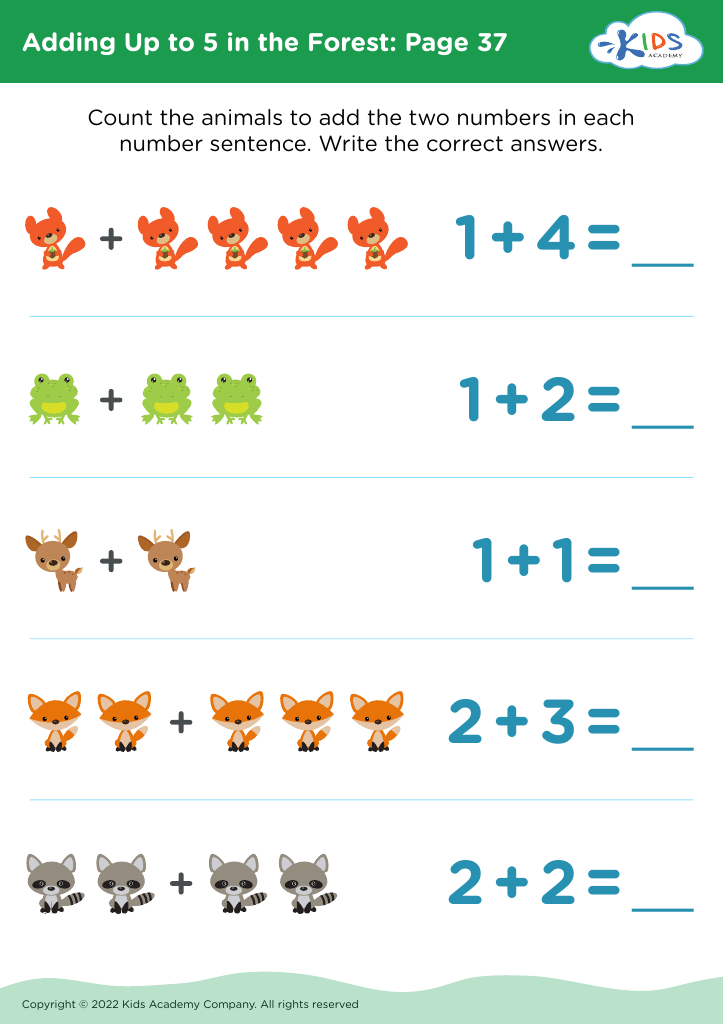
Welcome to our "Nature Appreciation: Adding in the Forest Worksheets" for children aged 3-5! Designed to blend early math skills with a love for the outdoors, these worksheets encourage young learners to explore nature while mastering basic addition. Featuring delightful forest-themed illustrations, children embark on exciting math adventures using cute animal friends and vibrant plants. Each activity promotes critical thinking and reinforces counting skills in a fun, engaging way. Perfect for classroom or home learning, our worksheets inspire curiosity about the natural world while helping little ones develop early numeracy skills. Ignite a passion for learning and nature today!



Nature appreciation, especially through activities like exploring forests, is vital for children aged 3-5 for several reasons. First, it fosters curiosity and wonder about the natural world, allowing children to develop a better understanding of their environment. Engaging with nature also enhances cognitive development as children observe wildlife, plants, and varying weather patterns.
Moreover, spending time in natural settings promotes physical health. Activities like walking on trails, climbing over roots, and playing in open spaces encourage movement, helping to develop motor skills, strength, and coordination. This active play is crucial for holistic growth in early childhood.
Socially, outdoor experiences can strengthen relationships as children explore together, share discoveries, and work collaboratively during nature-based activities. Furthermore, these experiences promote emotional well-being by offering a calming environment that can reduce stress levels and improve mood.
On an educational level, introducing young children to forests and nature supports learning across various subjects. Scientific inquiry, storytelling, and creative expression can all be linked to outdoor experiences. Therefore, for parents and teachers, prioritizing nature appreciation is essential for fostering well-rounded, healthier, and more engaged young learners. Ultimately, cherishing nature helps cultivate a sense of responsibility for the environment in future generations.