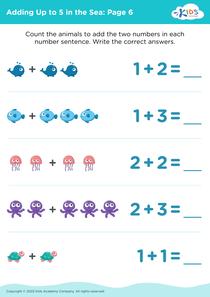
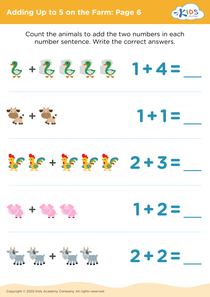
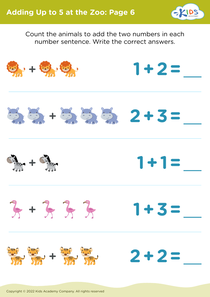
Problem Solving Adding in the Forest Worksheets for Ages 3-5
3 filtered results
-
From - To
Discover our engaging "Problem Solving Adding in the Forest Worksheets" designed specifically for children ages 3-5! These worksheets offer a fun and interactive way to introduce early math concepts through vibrant forest-themed illustrations. As kids navigate various adding challenges, they will enhance their problem-solving skills while developing a solid foundation in basic arithmetic. Each worksheet promotes critical thinking, encouraging young learners to recognize relationships between numbers in a playful context. Perfect for home or classroom use, these resources aim to make math enjoyable and approachable for your little ones. Let’s embark on a learning adventure in the magical forest of numbers!
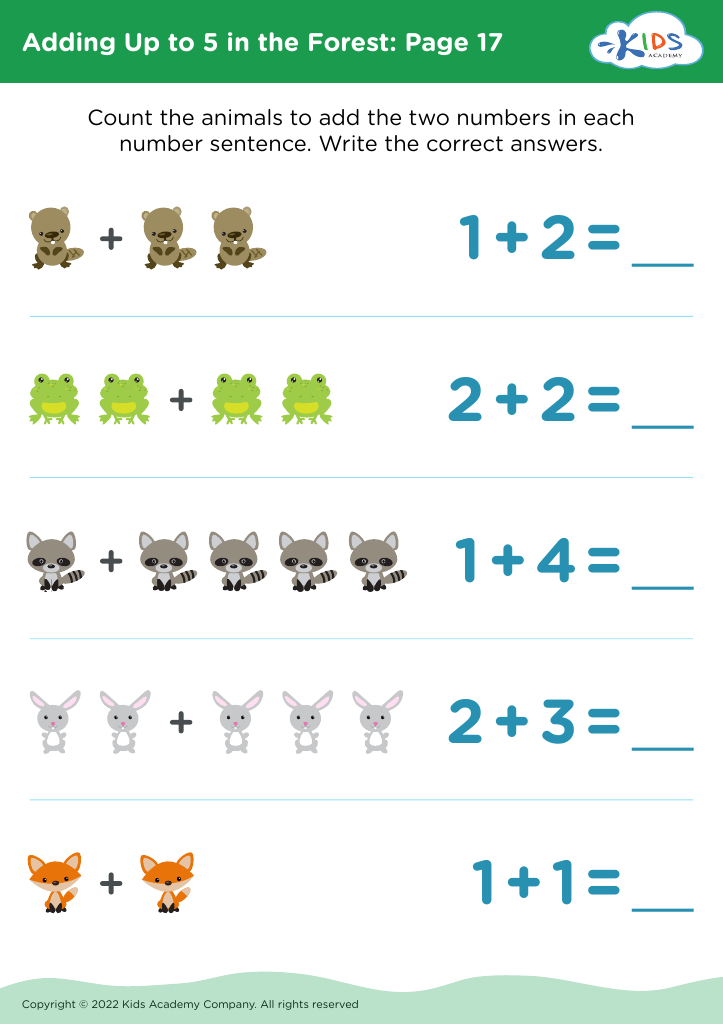
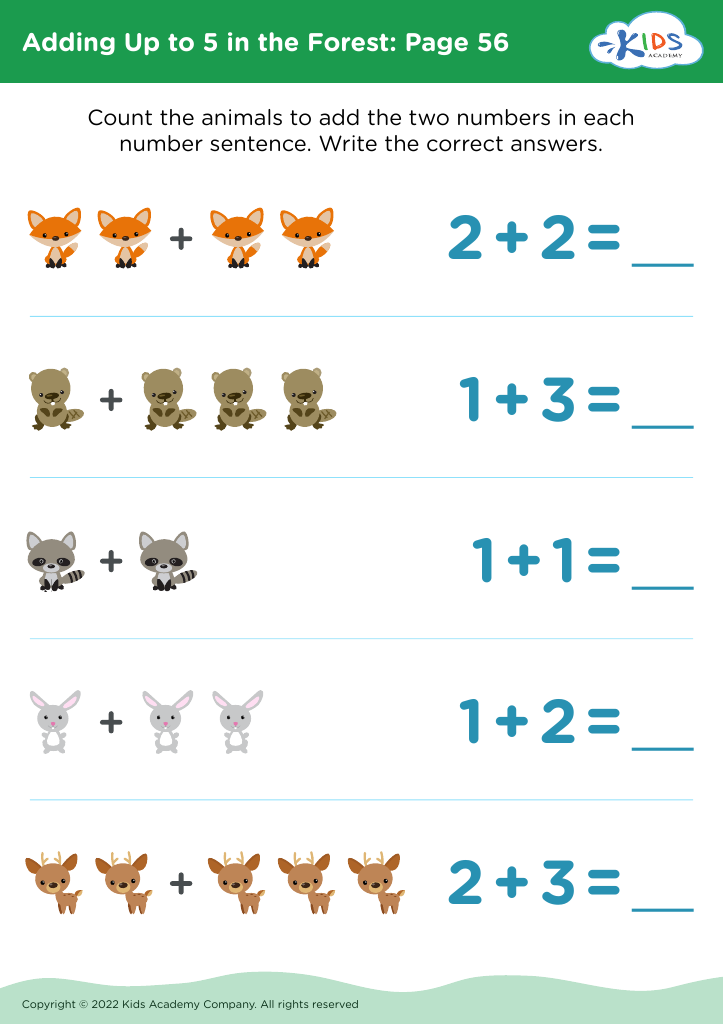
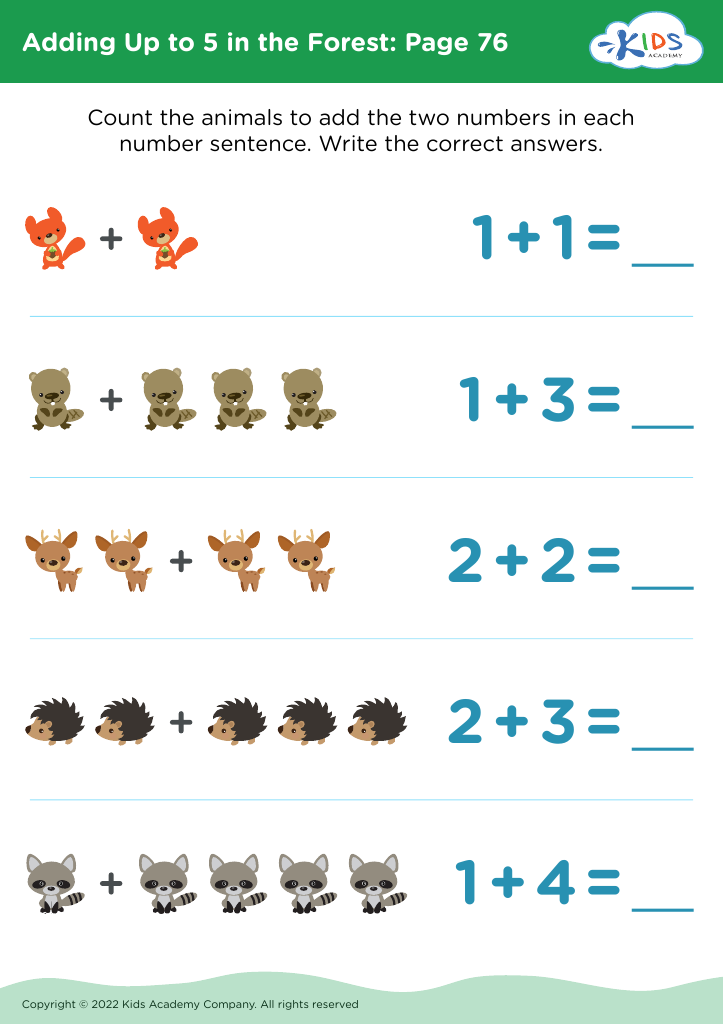



Problem Solving in the context of a "Adding in the Forest" activity is essential for early childhood development, particularly for children aged 3-5. At this age, children are naturally curious and eager to explore their environment. Engaging them in problem-solving activities fosters critical thinking and cognitive skills as they manipulate objects, explore quantities, and make comparisons.
First, this type of activity encourages foundational math skills. By integrating real-world contexts, such as nature, children can visualize addition in a concrete manner, making mathematical concepts more relatable and easier to grasp. For instance, while collecting pinecones, they can learn to add quantities together, enriching their understanding of numbers.
Moreover, these activities promote social skills as children often work together, negotiating roles and discussing their thought processes. This collaboration is key for developing communication abilities and teamwork.
Additionally, "Adding in the Forest" supports emotional growth, as children may encounter challenges that require persistence and resilience to overcome. Guiding them through these obstacles builds confidence and prepares them for future learning challenges.
Ultimately, by facilitating problem-solving in a creative, outdoor setting, parents and teachers not only enhance academic capabilities but also contribute to holistic development during these formative years.