Enhances concentration Adding Up to 5 Worksheets for Ages 3-5
4 filtered results
-
From - To
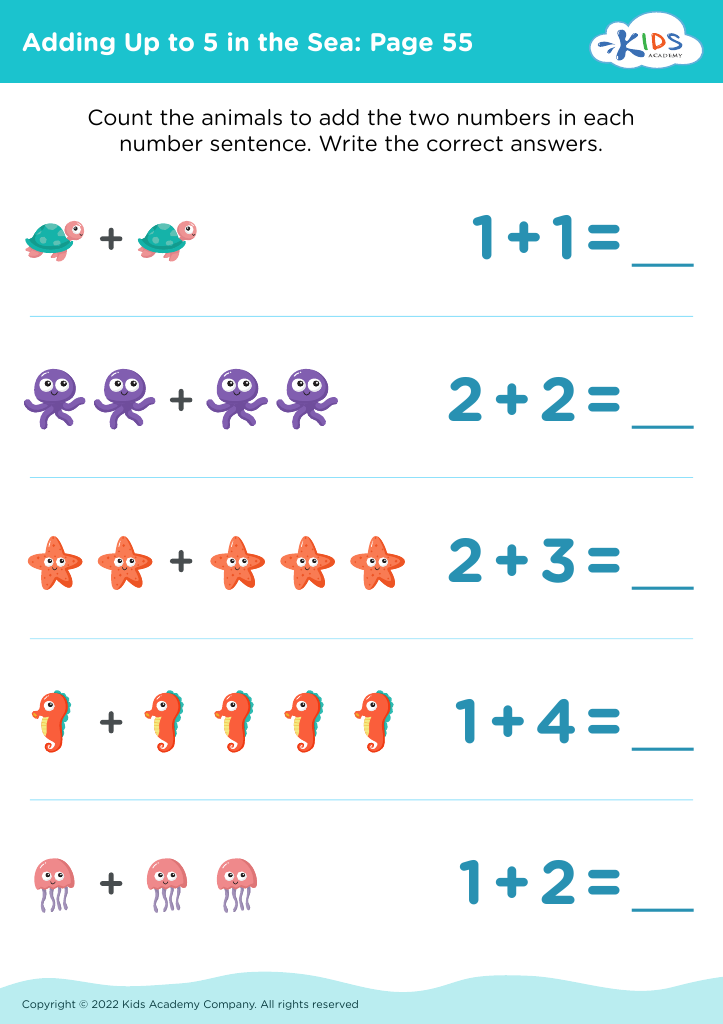
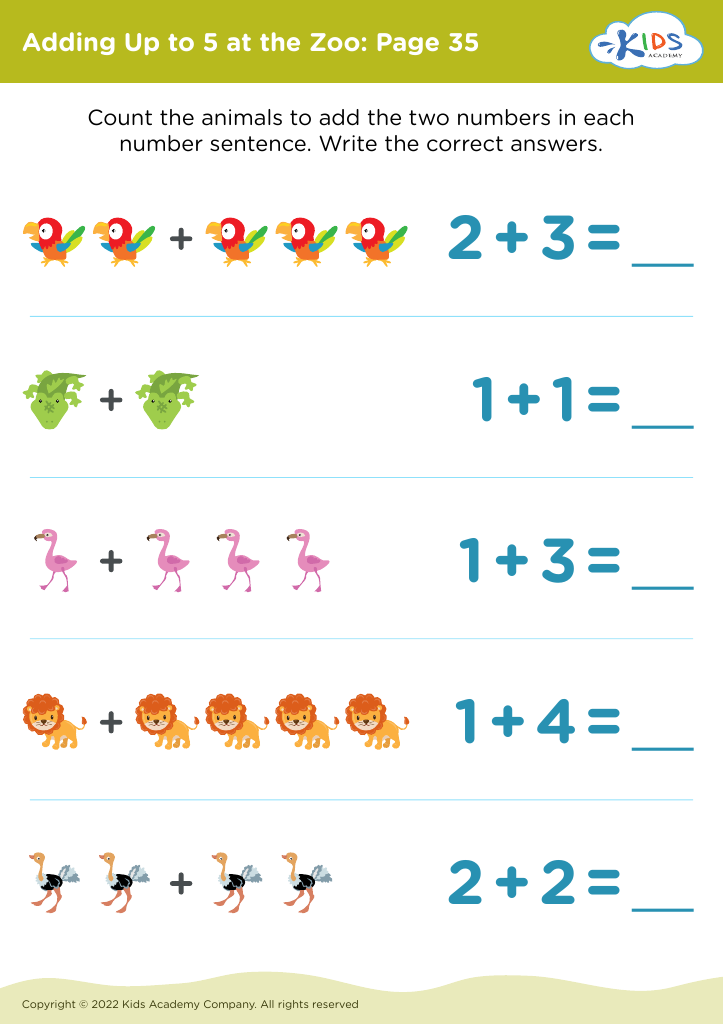
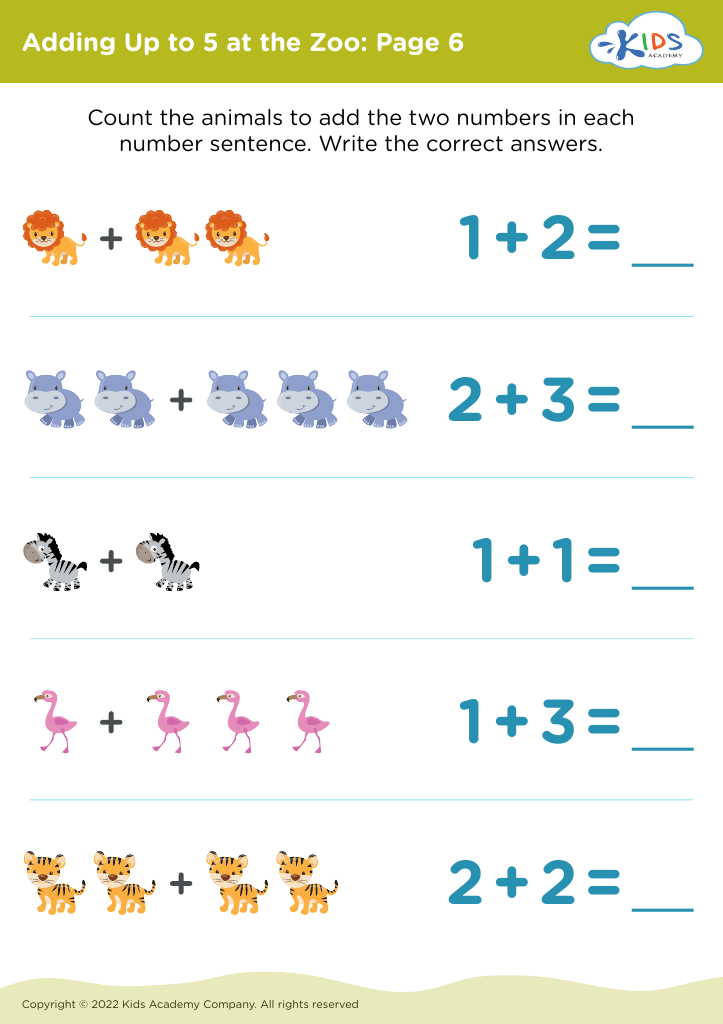
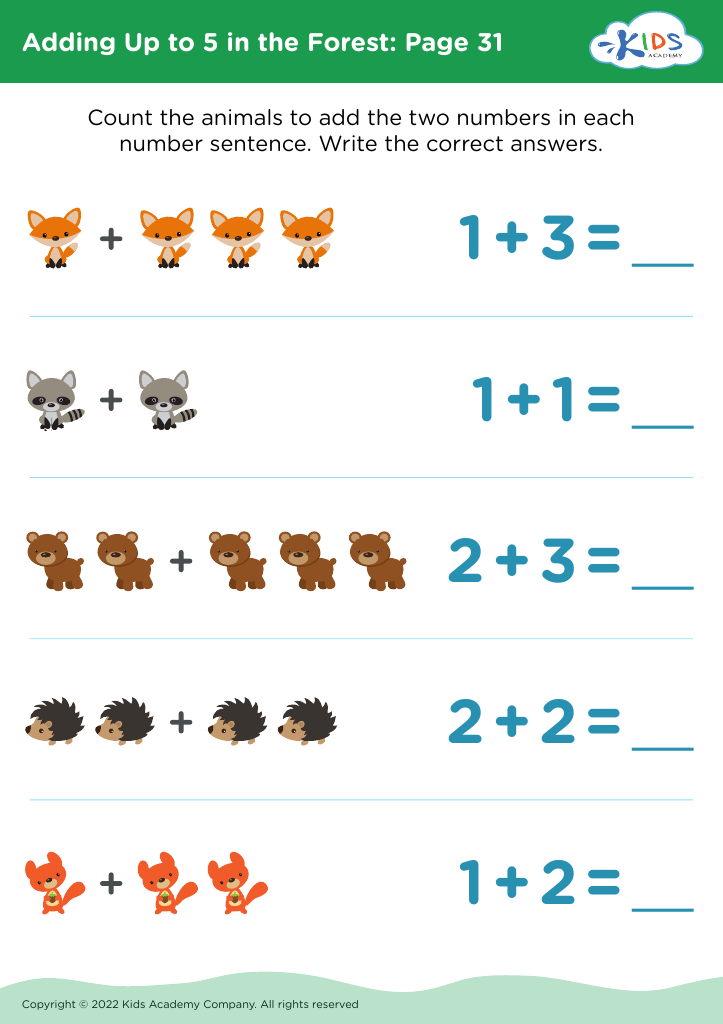
Boost your child's concentration with our “Adding Up to 5” worksheets designed for ages 3-5! These engaging, age-appropriate activities encourage young learners to focus while mastering foundational math skills. Each worksheet features colorful illustrations and fun, interactive exercises that make learning enjoyable. By working on these addition tasks, children enhance their ability to concentrate, improve memory retention, and develop critical thinking skills. Whether at home or in the classroom, these worksheets serve as a valuable resource to keep your child engaged while building confidence in their math abilities. Make math fun and foster concentration today!






.jpg)

Enhancing concentration through activities like "Adding Up to 5" is vital for children aged 3-5 for several reasons. During these formative years, children's cognitive skills, including focus and concentration, are rapidly developing. Engaging in structured activities that encourage adding small numbers not only lays the foundation for mathematical skills but also fortifies their attention span.
Parents and teachers should care about this developmental milestone because improved concentration directly impacts academic performance and social interactions. When children successfully engage in counting and simple addition, they learn to follow directions, stay on task, and think critically—skills that are essential for effective learning.
Moreover, interactive and fun activities cater to various learning styles, making math less intimidating while promoting a positive attitude toward education. By incorporating games and hands-on experiences, educators and parents create a stimulating environment where children can flourish.
Finally, focusing on enhancing concentration while introducing math concepts nurtures a love for learning, setting children on a path toward lifelong academic success. By recognizing the importance of activities like "Adding Up to 5," caregivers can equip children with the tools they need to thrive both in school and in everyday life.








